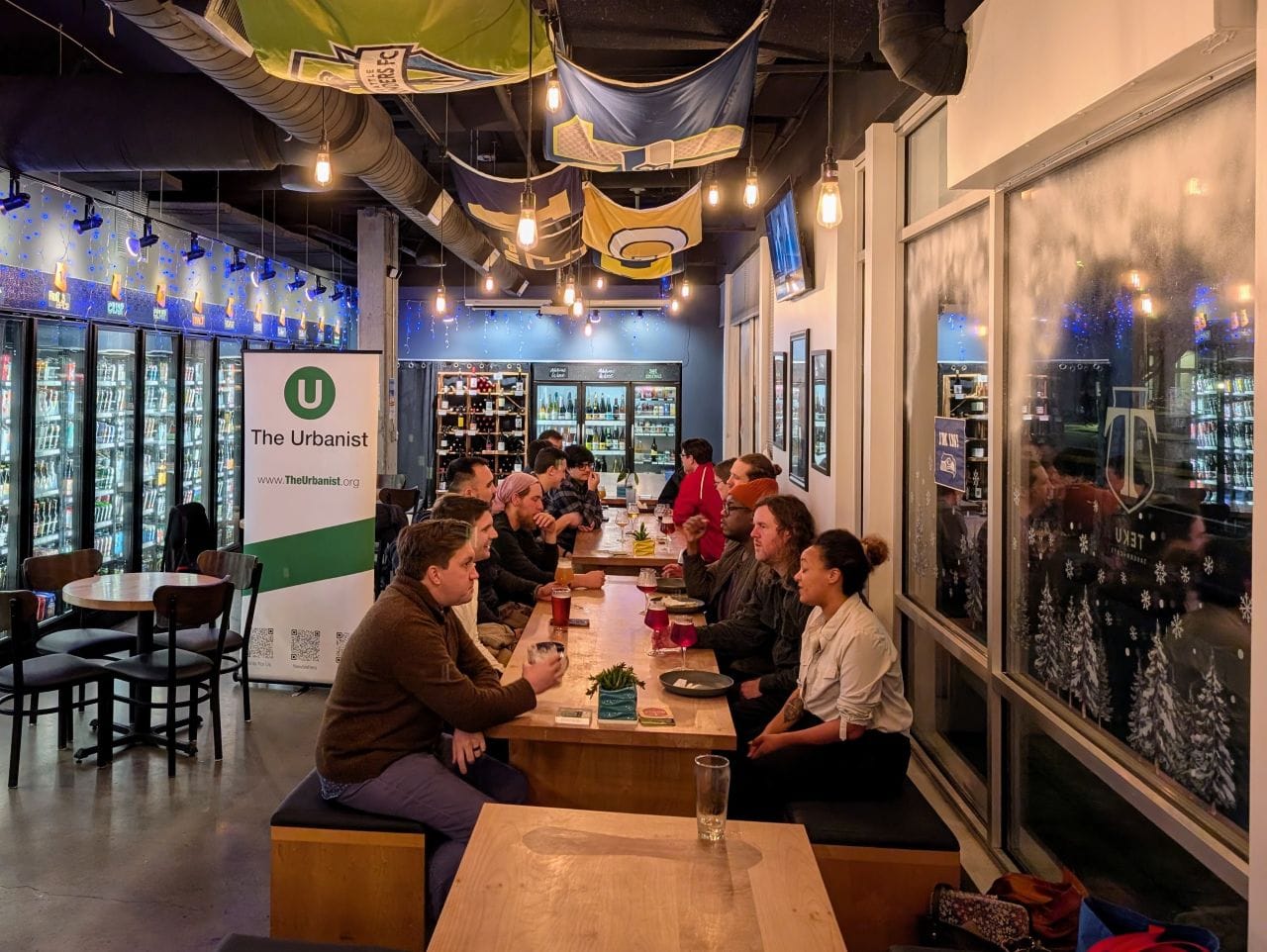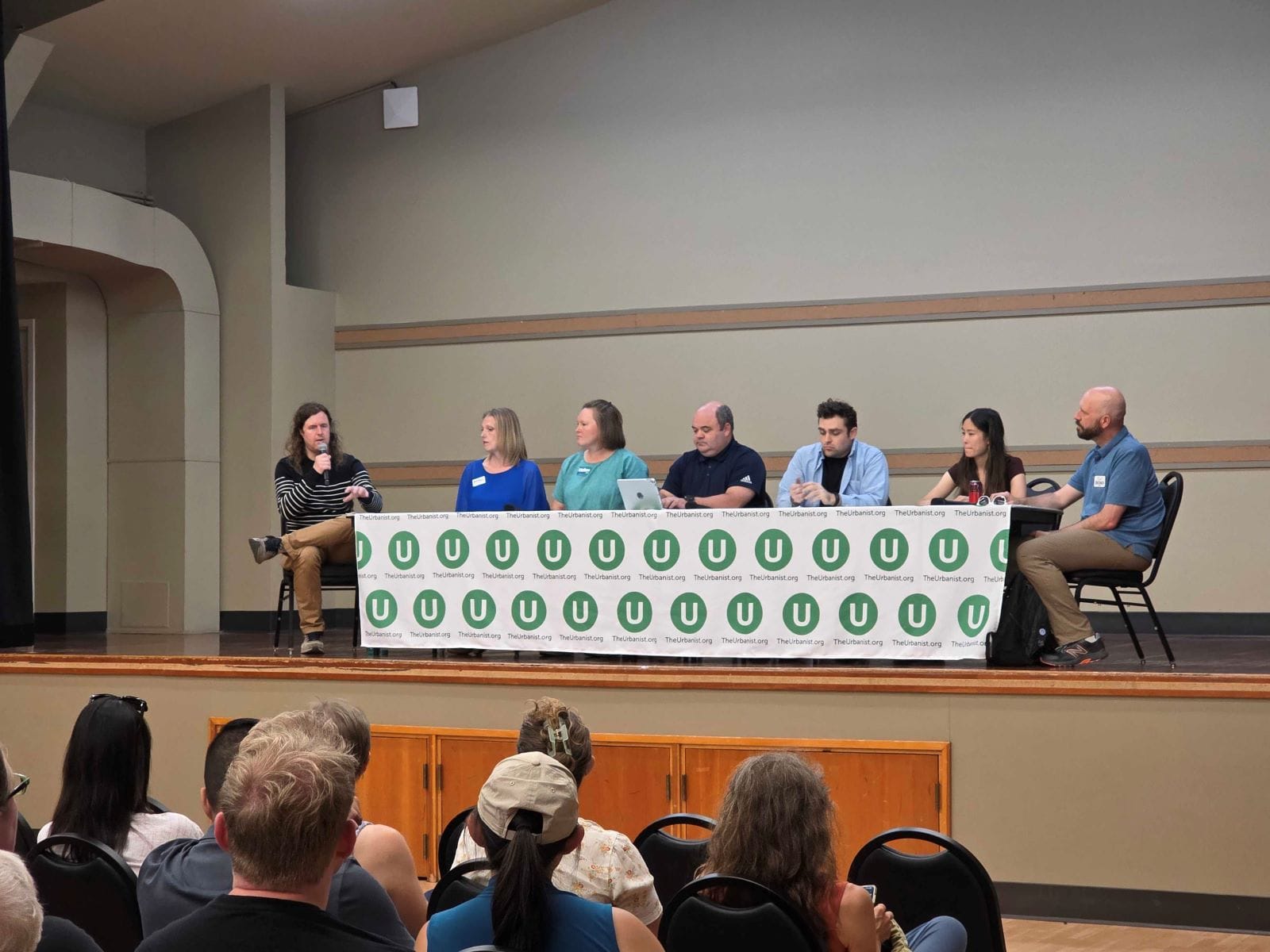
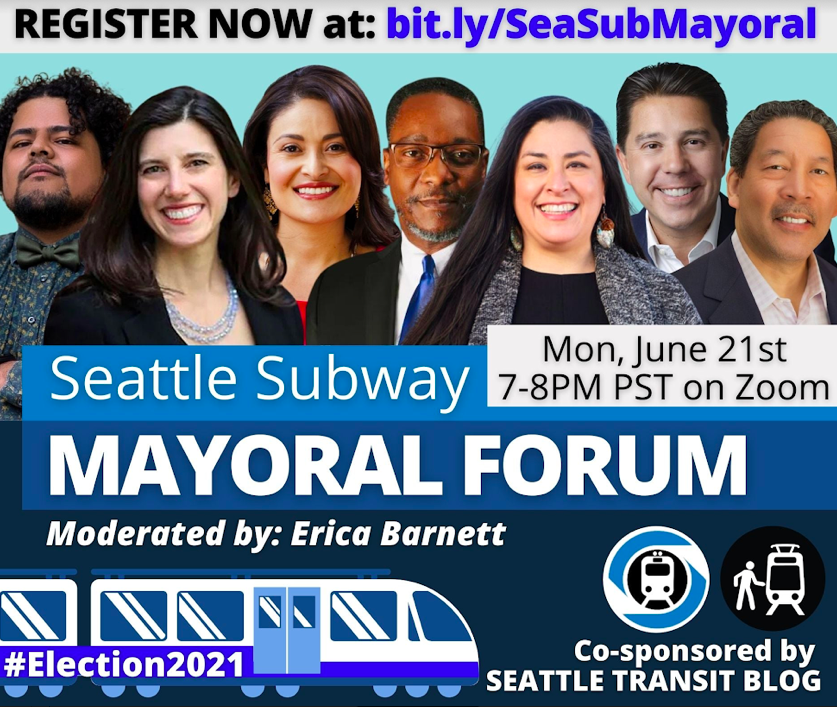
Seattle Subway and co-sponsor Seattle Transit Blog, both members of the MASS Coalition alongside The Urbanist, held a mayoral forum focused on the topic of mass transit in the Seattle area. It was the rare 2021 political discussion in which the word Covid never made an appearance, although references to economic challenges and other repercussions resulting from the pandemic haunted the background of several candidate responses.
Moderator Erica C. Barnett of Publicola kept the discussion moving forward through a succession of open ended questions to which the candidates had one minute to respond and two rounds of rapid fire yes/no questions, to which candidates mostly adhered to the yay or nay format with a few exceptions, like when longtime transit booster former State Representative and Executive Director of Transit Choices Coalition Jessyn Farrell refused to choose between funding bus service hours or fare reductions. Perhaps being a mom of three, she’s learned the hard way not to choose between one’s babies.
Maybe the biggest surprise of the evening was the fact that there was so much unanimity on questions that have been relatively thorny in public debate. On all of the yes/no questions, responses of “no” were in short supply, with candidates vying to demonstrate their pro-transit cred, often referencing professional and volunteer work going back, in some cases, decades.
Support for preserving Sound Transit 3 (ST3) plans in the face of potential budget shortfalls was strong among all participants, although discussion of potential funding mechanisms was in short supply, with the exception of a call for a moratorium on funding for new highways advocated by former Chief Seattle Club Executive Director Colleen Echohawk and a call for soliciting private donations from local companies from Rainier Valley nonprofit leader and entrepreneur Lance Randall. But with finances largely removed from the discussion, support for ST3 was high, even from Casey Sixkiller, a current deputy mayor in Durkan’s administration and arguably the most traditionally conservative of the candidates, touting his decades of support for high-capacity transit and his experience advocating for funding Seattle transit in the “other” Washington.
Since transit-friendly vibes dominated the hour long discussion, some of the unclear positions that emerged seemed to show more about candidates’ gaps in personal knowledge of the topic matter rather than where they might stand as the city’s chief executive. For instance, Echohawk’s seemingly off-topic remark about the need to increase bus service to Link light rail stations after being asked to name the greatest obstacle to connecting Seattle’s urban villages with a robust rapid transit network felt more forgivable after she owned up to not being a transportation policy wonk later on in the forum. Randall was strong on referencing topics related to the need to support communities historically underserved by transit in South Seattle, but rarely mentioned particulars other than the need to prioritize basic needs like user safety and maintenance of roads and bridges.