On Wednesday, King County Metro in conjunction with Sound Transit and City of Seattle released their plan for March 23rd service change. This one is significant because all remaining bus routes in the Downtown Seattle Transit Tunnel will move to surface streets as it transfers to light rail-only operations. To facilitate this transition, Third Avenue will become an all-door boarding corridor, buses will move to new transit pathways, and other speed and reliability improvements will be rolled out. Metro also unveiled some route-specific improvements.
Sound Transit needs buses to move out of the tunnel as the agency readies it for future light rail extensions to the Northgate (opening in 2021), Eastside (opening in 2023), and Lynnwood (opening in 2024). Interim work will begin on a tie-in to East Link next year and sequential extension openings will drive up demand for light rail operations in the tunnel, making the bus changes to surface streets imperative now.
Third Avenue Improvements
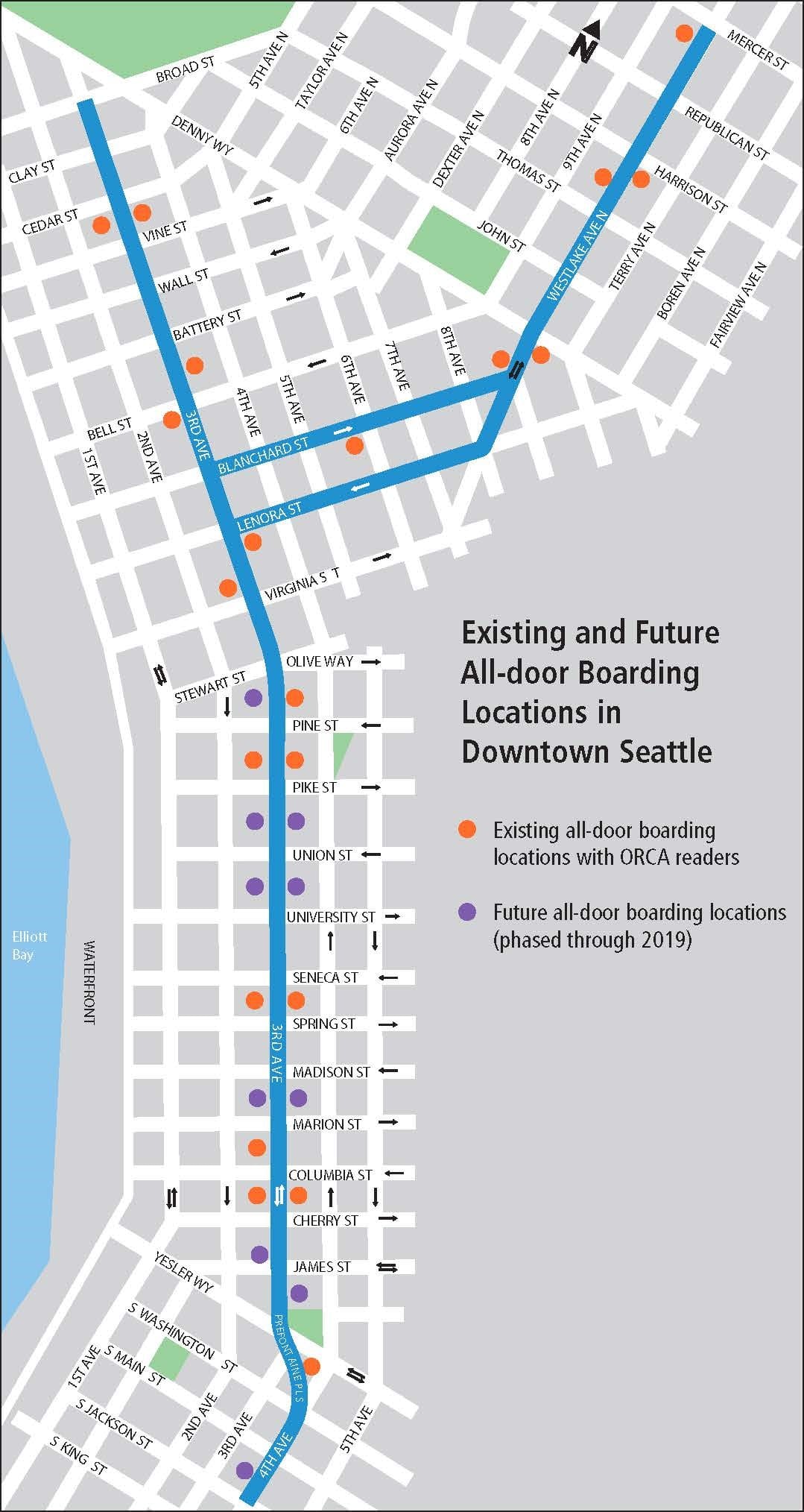
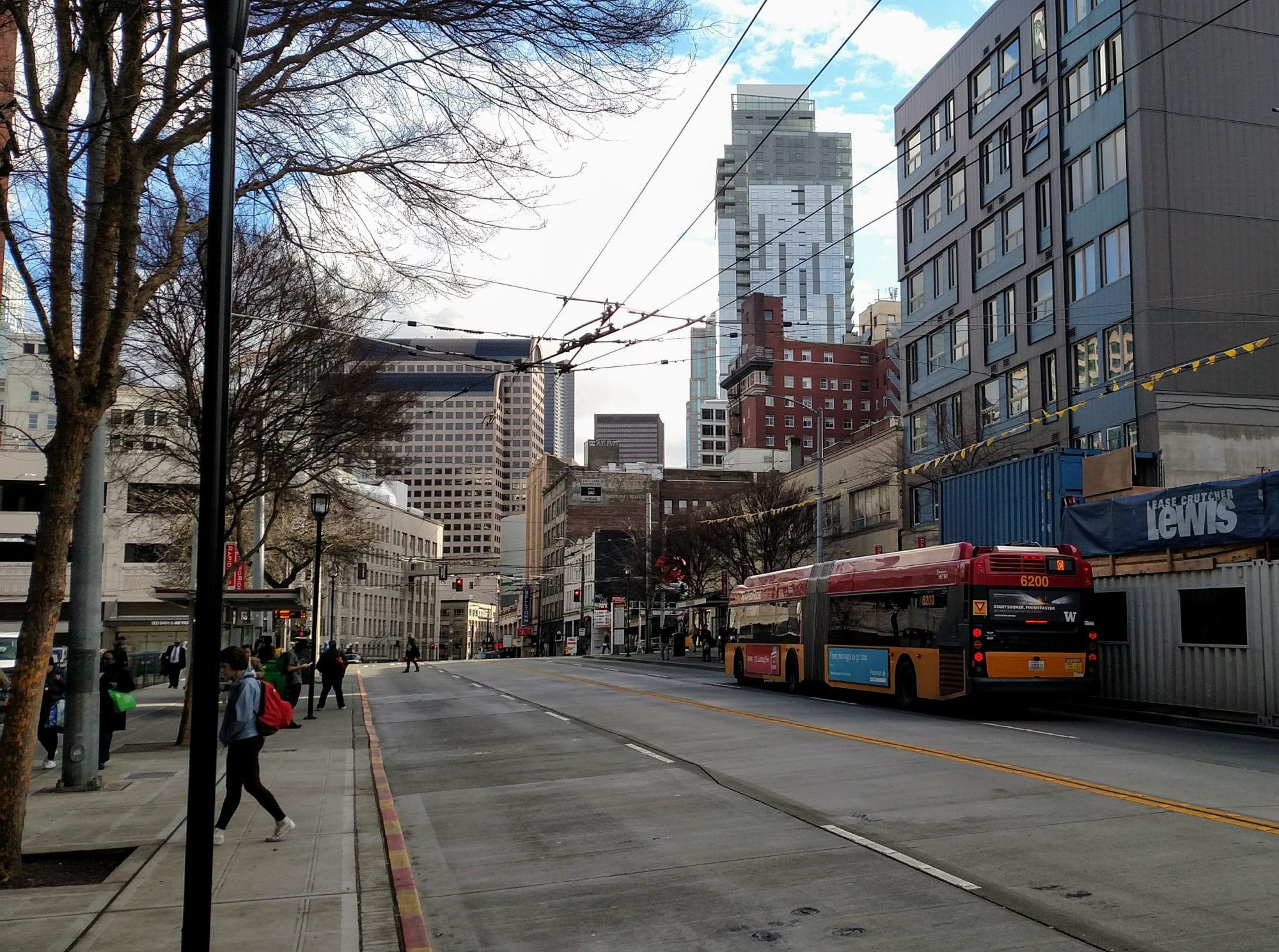
Metro will transform how buses operate on Third Avenue by allowing all-door boarding. This will allow buses to depart much quicker at busy stops and increase overall corridor capacity as additional trips are added to the street.
ORCA card reader kiosks have been installed at 21 of 30 bus stops along the corridor. Riders will be able to pay by tapping their cards before entering at any door. Riders can also pay their fare by tapping onboard or paying cash as they normally would.
For the nine stops without the ORCA card reader kiosks, Metro will have ambassadors withs handheld card reader devices during weekday afternoon peak hours from 3:30pm to 6:30pm. At other times, riders will need to pay fare as they normally would. Metro plans to have ORCA card reader kiosks installed at these progressively throughout the year with completion by December.
Fare enforcement officers will be sweeping all buses operating from Third Avenue like they do for RapidRide lines that already use the all-door boarding procedure.