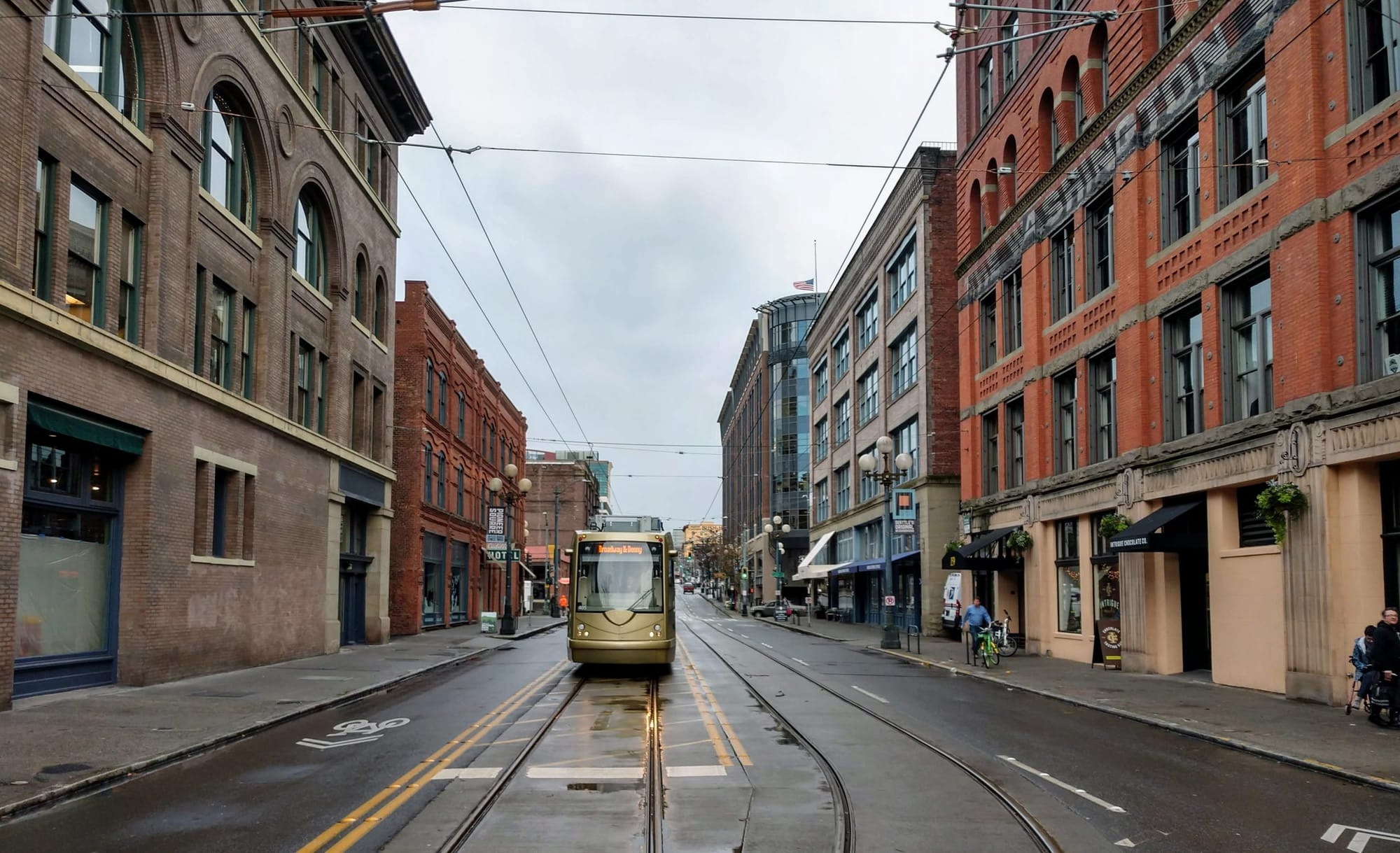
Yesterday Mayor Jenny Durkan released the long-awaited engineering review of the Center City Connector streetcar project and announced she was supporting the project. The Mayor pledged she’d work with the Seattle City Council to find funding to close the budget shortfall, estimated at $65 million for the Seattle Department of Transportation (SDOT) portion.
“[W]e will make historic investments in building a city of the future, like our new waterfront park, a new convention center, and a reborn Seattle Center Arena,” Mayor Durkan said in a statement. “As we reconnect downtown with our new Waterfront for All, we have the opportunity to create a downtown with fewer cars and where residents, workers, and visitors can walk, bike, and take transit. A unified streetcar route provides a unique opportunity to build on our investments for the next generation.”
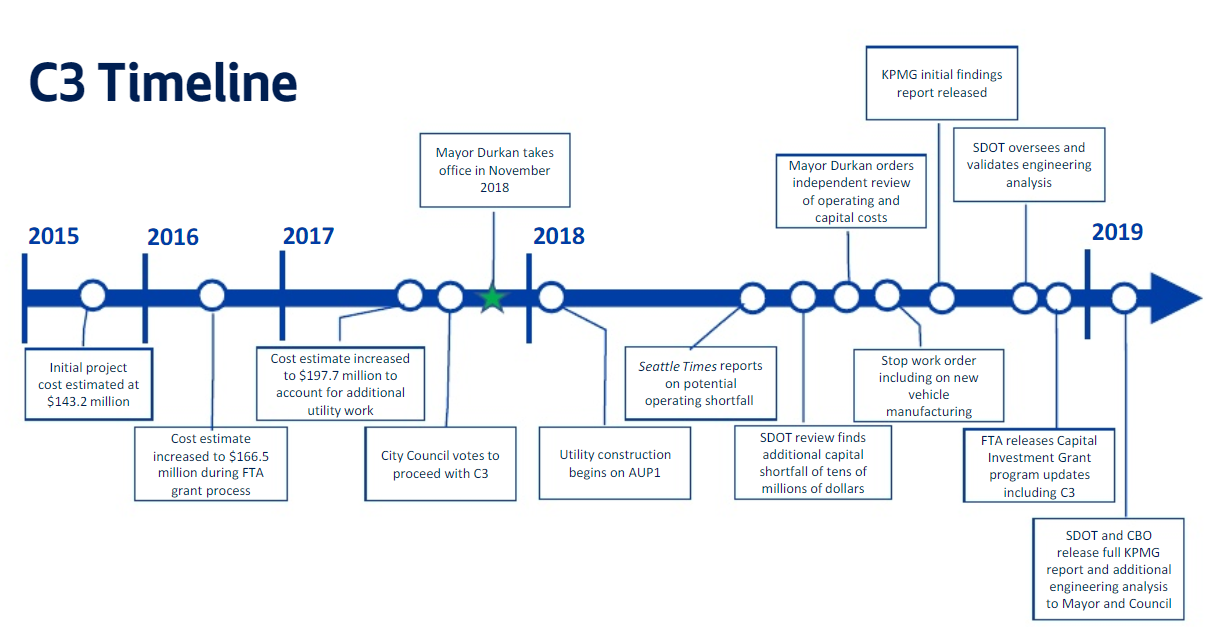
While finding $65 million additional dollars and securing the $75 million in grants from a reticent Federal Transit Administration (FTA) remain major hurdles for the project, the Mayor’s endorsement represents the clearing of another hurdle–10 months of review in the making.
However, the finish line has been pushed farther out to 2025–five years later than the original 2020 target and much later than the 2021 target that still had seemed possible when Durkan announced she was halting the shovel-ready project to do an independent review. That review, conducted by KPMG, confirmed robust ridership projections, but spurred an engineering review, contracted to Parsons Brinckerhoff, and released yesterday (executive summary of vehicle/project interface and capital and operating cost update). The review showed even higher first-year ridership of 7.1 million, which works out to about 23,000 average weekday boardings.
Overrun Double Standard: Viaduct vs Streetcar
The Center City Connector budget is now being billed at $285 million, although $78 million of that is underground water and utility work that would need to happen eventually anyway. For perspective, that means the entire streetcar budget is still less than just the cost overrun of the SR-99 viaduct replacement project, tallied at $223 million as the megaproject has ballooned past $4 billion in all. Will leaders be as steadfast through streetcar project snags as they were during the saga of the SR-99 tunnel?
Murray’s Many Mistakes
Mayor Durkan criticized her predecessor for poor management of the project saying the Murray administration had relied on guesstimates and insinuating the project had been rushed. She portrayed those mistakes as setting the project on a collision course with the FTA.
“We wouldn’t have had the delay if they’d done proper planning and had used proper controls on this project, period,” Mayor Durkan said in an interview with David Gutman. “I don’t want to call it back of the envelope, but it was a heck of a lot closer to a guesstimate than responsible budgeting.”
Trump’s FTA Gumming Up the Works
Reading between the lines, the Trump’s FTA has also been throwing wrenches in the project. The Trump administration has been requiring the projects prove they have all other funding secured before dispersing federal grants. This sets a very challenging bar for cash-strapped transit agencies, while favoring highway-building state transportation departments, which tend to have much greater resources at their disposals.
Streetcar Coalition Cheers Decision
The Seattle Streetcar Coalition hailed Mayor Durkan’s decision to advance the project, which kept promises made to First Hill and the International District.
“We are very happy that the promises made during construction in the CID are being honored,” said Maiko Winkler-Chin, executive director of the Seattle Chinatown International Preservation and Development Authority (SCIDpda). “Our community was told our pain and suffering during the construction phase would be worth it because we’d have a connected system to benefit our residents and businesses. With the First Avenue line, we will have a connected, functioning system and this community will actually see the promised benefits.”
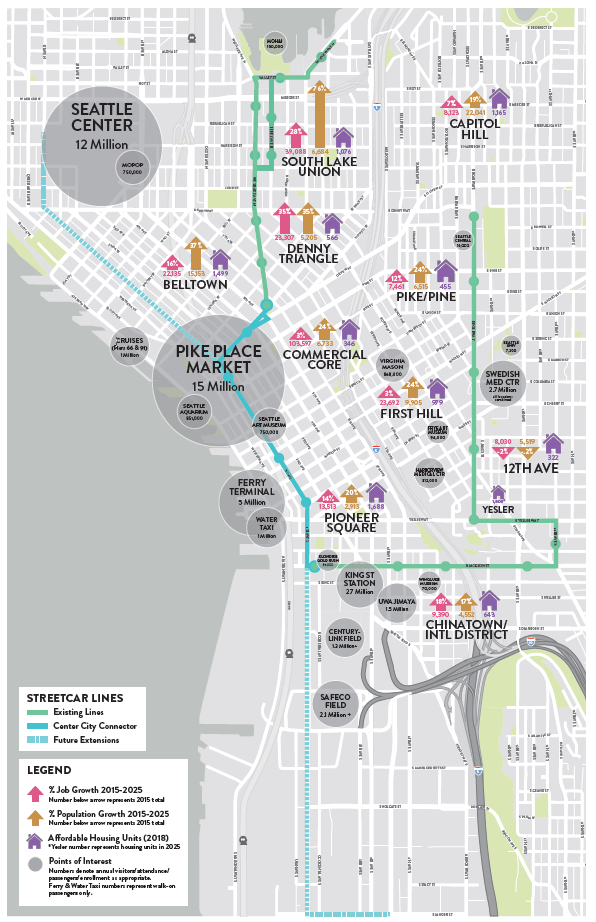
The coalition pointed out the connected streetcar line will provide service to more than “8,000 new units of affordable housing going in by 2025” along the route. The route would serve a diverse cross-section of Seattle.
“This is a big step towards building a city of the future! This vital link will connect our growing communities and keep downtown Seattle vibrant and moving,” said Keiko Budech, communications manager for Transportation Choices Coalition, in a statement. “The streetcar will provide frequent and reliable service that will boost ridership and get more people where they need to go. The next step is to work with City Council to find funding solutions and quickly move this project forward to meet our region’s growing transportation needs.”