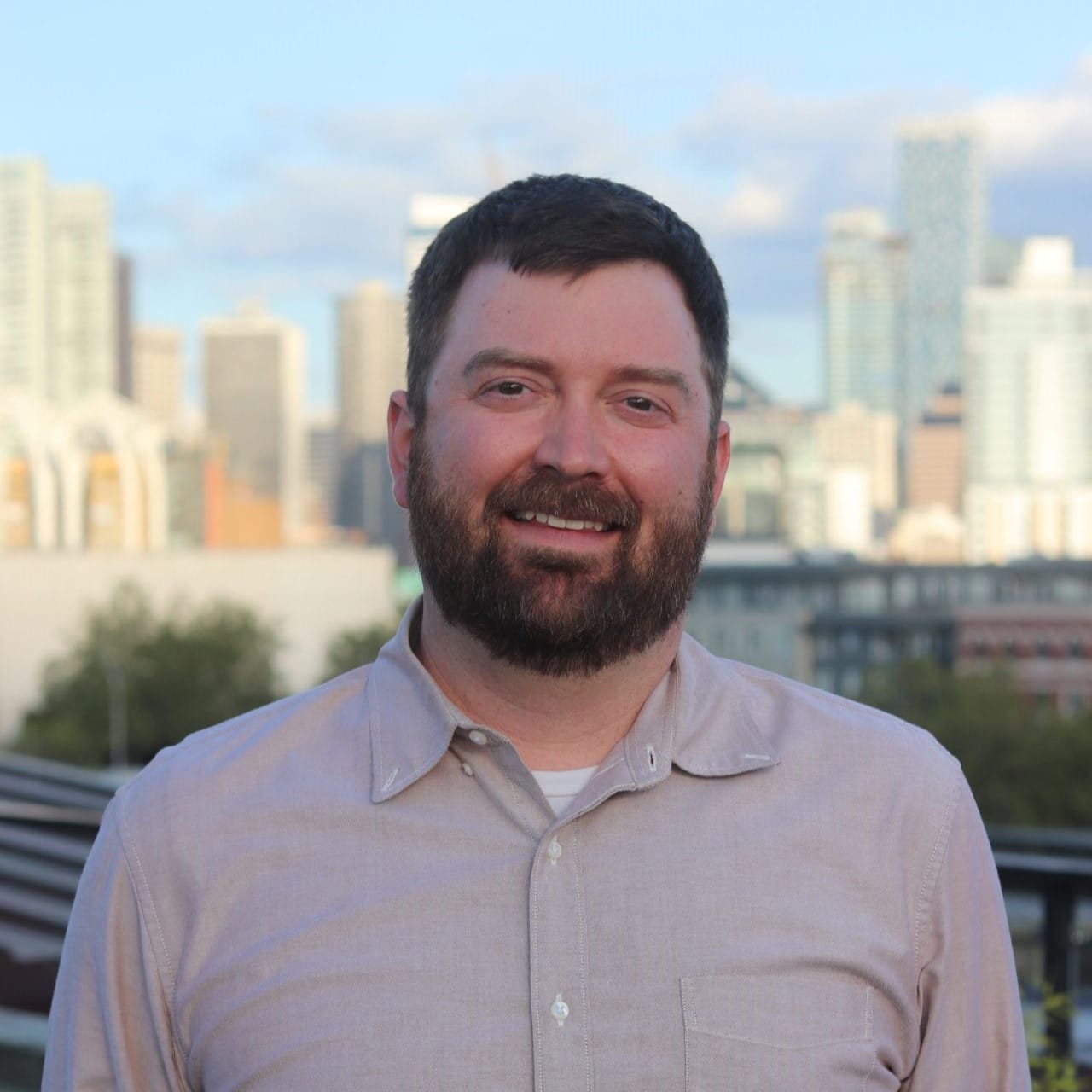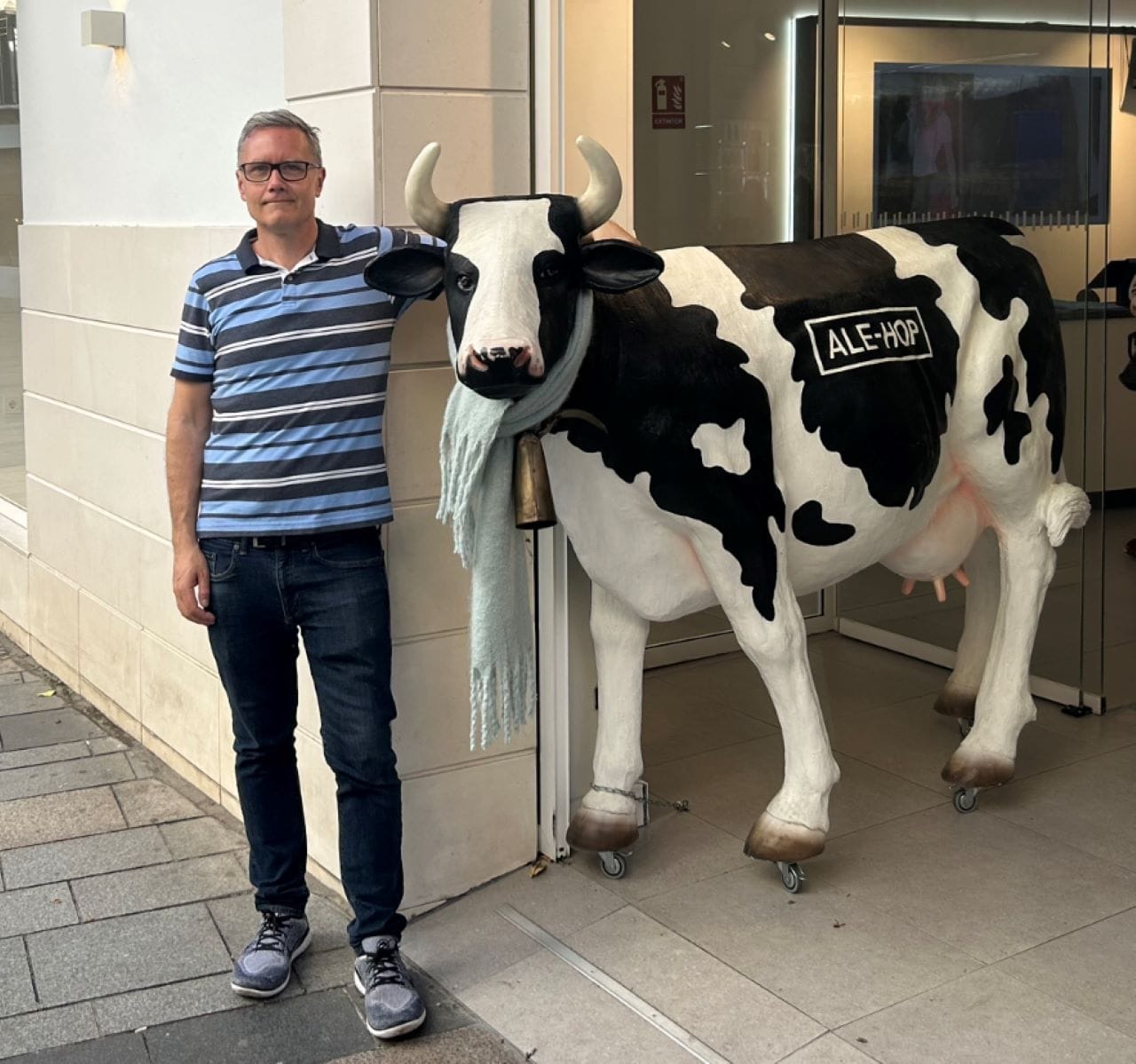
From urban planner to YouTube star, Delahanty keeps walking his way toward a more urbanist future.
The genesis of CityNerd is a Covid-era story of rebirth and job shuffling amidst a stressful and hectic time. Ray Delahanty had worked for two decades as an urban planner, but, by the second year of the pandemic, he was ready for something new. Starting with no real video experience, at first he imagined a brief sabbatical.
“Yeah, well, it wasn’t a sabbatical in the sense of, ‘hey, I’m gonna take three or six months off’ or whatever. It was a sabbatical in the sense of, ‘I quit’ and maybe I’ll come back if I want, or maybe I’ll get a different job or something,” Delahanty told The Urbanist. “It was a stressful time, you know? Covid had happened. There was a lot of stuff going on personally for me, and I just needed the time to like, clear my head and work on other things I wanted to work on.”
Delahanty did not realize making videos would turn into a long-term gig. But fast forward two-and-a-half years and 118 videos and the CityNerd YouTube channel has (at time of post) 199,000 subscribers, and he’s scratching out a living at it.
“If I had to guess the beginning of it, I would have thought, yeah, I’ll go back to work. Probably not at the same place where I was working. It was a fine place and I got along with everybody I worked with there. But I would probably go back and work either for the public sector or advocacy maybe or possibly consulting again — it would have to be a really good fit. So yeah, I kind of assumed, I’ll probably go back to work after six months or a year, but the YouTube channel caught on pretty quickly, and you know, and it still doesn’t generate income/benefits that replace what I was making before, but it’s good enough overall. I’m much happier doing what I’m doing now.”
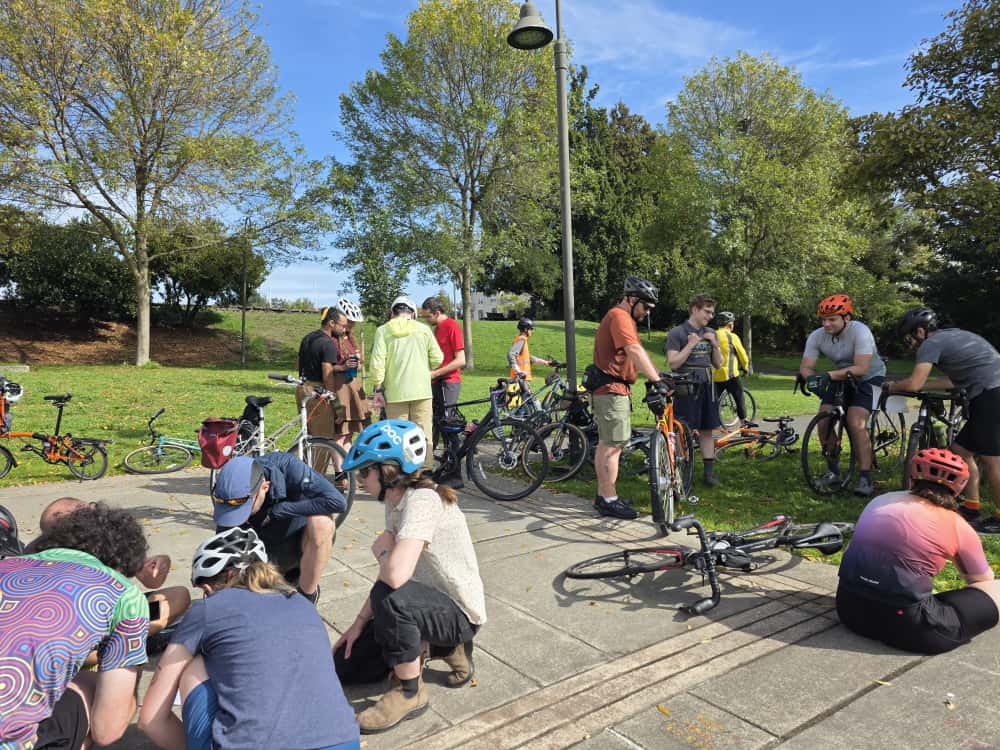
Delahanty is visiting Seattle on Saturday, September 16, and the The Urbanist’s bike ride and meetup that we put together with Delahanty has sold out its first 250 tickets in a matter of three days. (We’re still offering free tickets to bike ride with us and to the park-hanging out portion of the day’s event for those who want to join, but the venue for the post-ride social hour is at capacity.) The event is a homecoming for Delahanty, who now lives in Albuquerque, New Mexico.
“I grew up in Seattle, and I moved to Portland, Oregon around 2000 over 20 years ago now,” Delahanty said. “And one of the first things I noticed about Portland is that Seattle didn’t have light rail yet. Portland had the light rail. Portland had what was even then probably a pretty good bike network. The downtown streetcar opened not that long after I got there.”
Moving to Portland ignited his interest in urbanism into a full passion. Launching a video channel was a return to the roots that drew him to urban planning in the first place, celebrating what’s great about cities, and advocating for more of it — not to mention trying to save some money on rent.
“And so, I realized that Portland had all these things going on that made it livable in a way that Seattle wasn’t quite as much at that time, and Portland was more affordable for them,” Delahanty said. “And that was the main reason I moved in the first place. And it still is, although they’re both quite a bit more expensive than what they used to be.”
Getting started as an urban planner
Noticing where Portland had lapped Seattle at that time ended up deepening Delahanty’s interest in urban planning to the point of it being a career.
“I became aware that Portland State had a pretty good graduate urban planning program,” Delahanty said. “I knew I would enjoy the curriculum, and I looked at what I know about planning and what does a planner do? And it’s like, ‘Yeah, that seems like the kind of stuff that I would be interested in because I’ve always been very into cities and transportation, the way people get around, and you know, what goes into making a place livable and healthy, and all those kinds of things. And so that’s kind of what got me into urban planning. So I applied to grad school. And I got in, so I went back to grad school at Portland State, and so that’s kind of my path to urban planning.”
Delahanty’s first job after grad school ended up being with the Oregon Department of Transportation (ODOT). The Oregon DOT had him doing traffic engineering, which ended up being a theme in his early career. His next job was with Multnomah County (which includes Portland but has almost no jurisdiction within the city itself) had him doing traffic engineering, too, even though he was often working on suburban bike and pedestrian projects.
“I was kind of like the bike/ped planner,” Delahanty said. “And so, it was interesting, but I didn’t stay there for too long because I really wanted to do city stuff and and there’s not that much city stuff to do when you’re working for Multnomah County.”
Traffic engineering: the good and the bad
Then, he pivoted over to the private sector at a consulting firm that specialized in traffic engineering and modeling. He found the work interesting even if he did not always agree with the projects he was working on.
“I actually enjoyed a lot of that work, even though I was kind of morally opposed to some of the outcomes we were achieving,” Delahanty said. “But technically, it was a lot of fun to do. I got to do a lot of travel demand modeling, which is super interesting and fun. And a little bit of GIS, which is good. And then I moved on to a different consulting firm that does more big infrastructure projects.”
Car traffic engineers get to touch a lot of projects, even if the aim of the particular infrastructure was purportedly to improve mobility and safety for people walking, rolling, and biking. Whether a pedestrian project or a highway expansion, a level of service (for cars) traffic analysis was likely in the offing, whether by federal requirement or because of the obligations DOTs placed on themselves.
“And even though I’m a planner, I ended up doing a lot of traffic engineering, like literal level of service, type analyses for intersections and highways, and but a lot of other stuff too. I got to do a lot of urban-type stuff,” Delahanty said. “So I got to work on bike/ped planning and transit planning too, because, on all of those projects, traffic is always in there as some sort of subconsultant — just to make sure you’re not doing anything really dumb or unsafe with traffic configurations.”
Of course, Delahanty also saw the limitations of the traffic modeling he and his firm were producing, and realized that basing decisions on future travel demand modeling was often a backwards way to do planning.
“The models are kind of good at some things and kind of not good at other things,” Delahanty said. “They’ve got a whole bunch of assumptions built into them, and generally, the most trouble is the mathematics that underlie them, but the models are often based on whatever the most recent regional household travel survey used.”
Those travel demand surveys used to be literal paper surveys, essentially travel diaries, he noted. An agency would take a random sampling of households, or representative sampling of households, in a region. The respondents “would keep track of where you went, how you got there, what time you went… how many people with you, and what kind of destination.” And then all those sampled responses feed into a travel demand model.
“These days they’re app-based and maybe even have location services, and that’s the same idea. You get a snapshot of how people around the region travel today, and you extrapolate to the wider population, but then you go into the future, and you essentially make the same assumptions about how people are going to make decisions on how to get around,” Delahanty said. “And so if there’s any mode shift that you see in the future, it’s usually because you made different assumptions about land use or the services that are going to be available, not really different assumptions about the way people are going to behave, or the way people are going to respond to certain changes in the provision of like infrastructure or housing. And I always think that’s problematic.”
Chuck Marohn came to a similar realization as a traffic engineer, and quit his job and launched the Strongtowns organization and movement hoping to correct for that underlying car-brain myopia guiding much of American transportation planning and urban planning in general. Delahanty saw that future traffic modeling that always expected demand for car travel to increase inexorably could lead to ridiculous, undesirable outcomes.
“First of all, you can’t assume that people are going to behave or respond to things the same way in 20 or 30 years as they do today,” he said. “And then second, of all, it’s kind of a backwards way to do planning, right? You’re predicting what you think people are going to do based on what they do today instead of starting at the other end and saying, ‘Hey, we have these targets for mode share and climate-related goals. How do we get to those?’ Because you would not do that by simply extrapolating today’s behavior out to the future. I’ve read Chuck Marohn criticism of that, and I agree with it. But yeah, it’s got not only a bunch of weird assumptions baked into it, but it’s really a little bit of a backwards way to do planning.”
The Urbanist explored creating a more holistic, forward-thinking traffic model for those interested in diving deeper on this topic.
In search of walkable neighborhoods
Now with CityNerd, Delahanty is free to do forward-thinking visioning and city planning that doesn’t have to be tied to a conservative car-centric traffic model. A frequent theme in his videos is walkability and finding neighborhoods that aren’t so dominated by cars.
I asked Delahanty if he ever gets sick of seeing urban design and planning decisions everywhere, in every new block he steps into, but he said it actually enriches his experience as an urban traveler.
“Oh, no, I think it’s the opposite. I just get a huge kick out of it. I can walk forever,” Delahanty said. “I can log 40,000 steps a day, just exploring cities I’ve never been to. So, I went to Miami this year. I had never been to Miami before. And I went in July [laughs] when it’s horrendously hot and humid, and maybe this is not medically advisable, but I still logged 30,000 or 40,000 steps a day. And it was just a blast. Even though a lot of South Florida is probably not only hostile in terms of traffic, but in terms of politics, too, but still just a lot of fun. And then I went to Charlotte, North Carolina, and did kind of a similar thing…”