Puget Sound has embarked on ambitious transit expansions. But the success of those largely hinge on people living near stations and stops, no matter how much transit agencies lavish and spoil on parking-and-ride facilities. A centerpiece of these expansion efforts is Link, a light rail network set to grow to 116 miles by 2044. Yet, local governments across the region are sabotaging the success of the existing and planned system through overly restrictive zoning around stations.
In this series, we’ll walk through how local governments are failing to meet both the moment of housing need and working against the success of transit expansions in their own communities.
Link 2 Line zoning is woefully inadequate
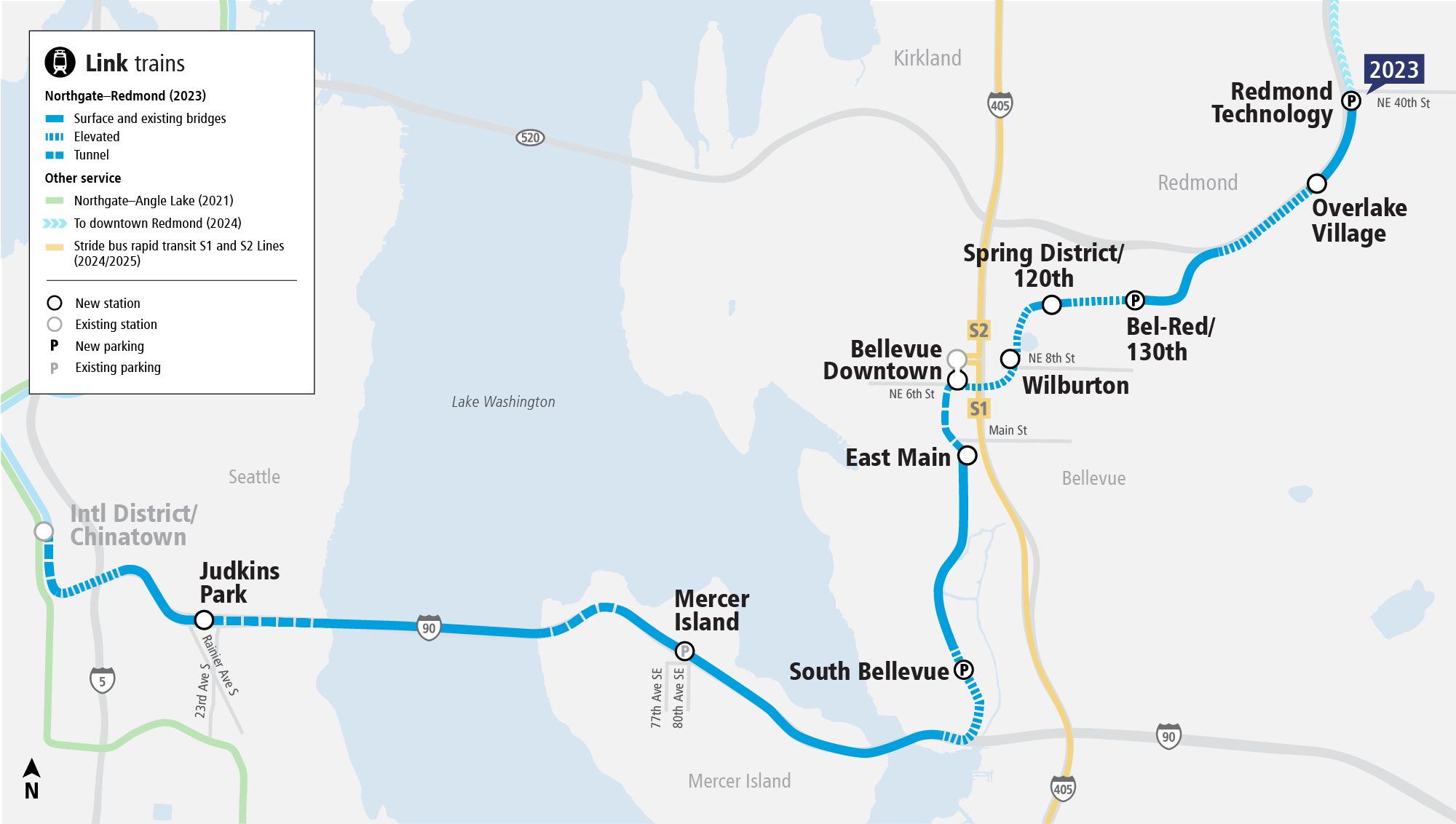
By 2023, the Link 2 Line, known also as East Link, will extend to Redmond Technology Station, home of Microsoft. Trains will run every eight minutes during peak hours from there to Northgate via Downtown Bellevue, Mercer Island, and Downtown Seattle. Sound Transit estimates that the line will serve 43,000 to 52,000 daily riders by 2026. Along the extension, the agency is providing 2,100 parking stalls at three stations. Most riders, however, won’t be driving to and from the stations. Instead, they’ll be walking, rolling, biking, and taking transit from nearby areas. Yet, Bellevue and Mercer Island have refused to take adequate steps around many stations to ensure their success and Redmond has missed a clear opportunity near their terminal station in the 2023 expansion. So, let’s walk through the transit-oriented development (TOD) missed opportunities.