Author’s Note: Some information in this article has been updated based upon new information from King County Metro. Several pieces of information are still subject to change since some route-level information remains incomplete on the online open house.
In 2023, light rail will reach the Eastside with Sound Transit’s newest extension: East Link (to be known as the 2 Line). This is precipitating further bus restructures among King County Metro and Sound Transit bus networks. Service planners are targeting better bus-to-light rail connections while maintaining good local service and achieving equity goals. The bus restructure process is in its second public phase with formal draft proposals, which would affect bus routes throughout the Eastside and could impact routes originating as far away as Seattle, Shoreline, and Renton.
The proposed bus restructure is best thought of as five subareas, which the transit agencies have neatly developed information around. Those include:
- Seattle Subarea (Seattle);
- South Subarea (Renton and Newcastle);
- Central Subarea (Bellevue, Redmond, and Issaquah);
- East Subarea (I-90, Mercer Island, Sammamish, Snoqualmie, and North Bend); and
- North Subarea (Kirkland, Bothell, and Woodinville).
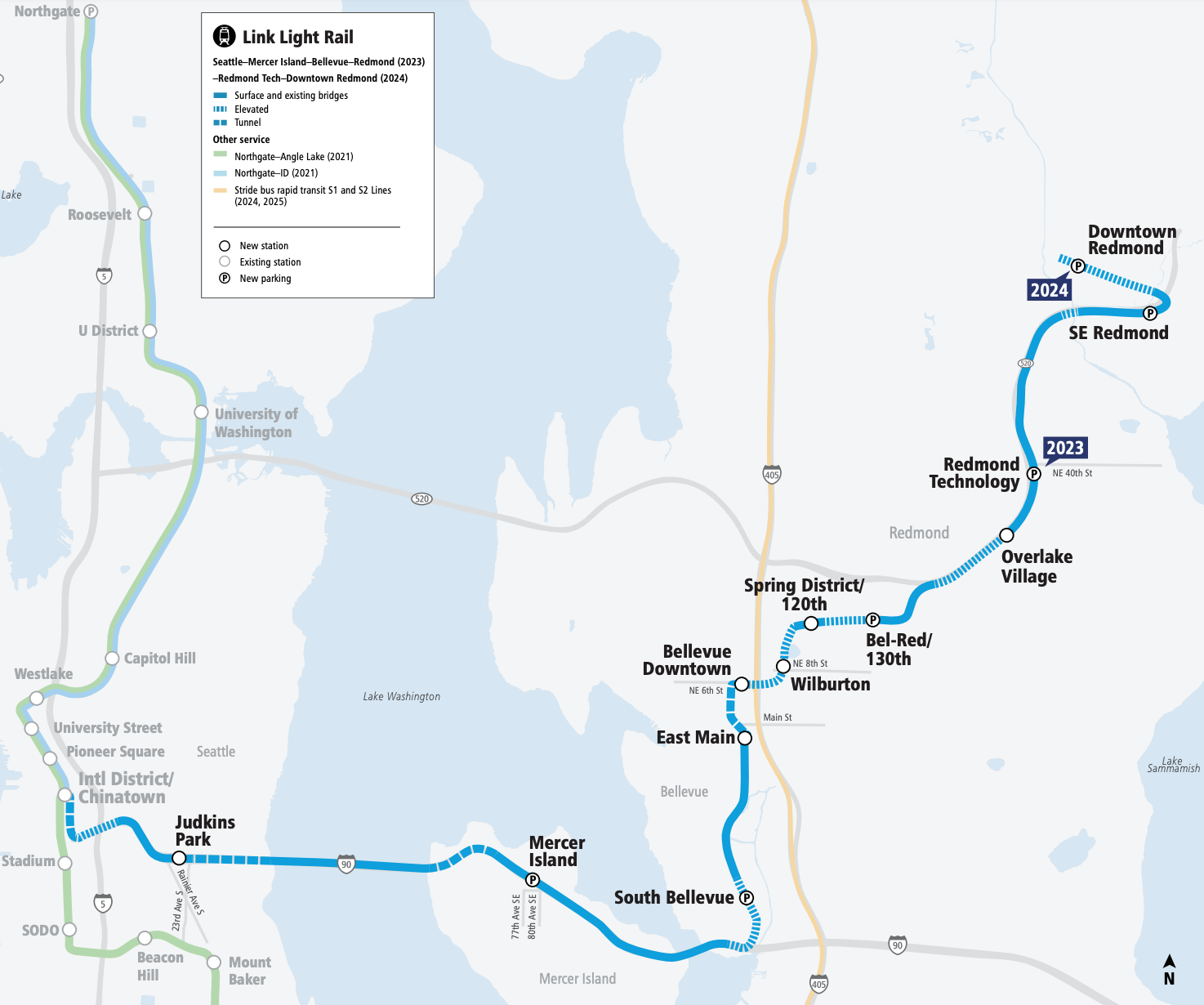
More than 40 bus routes could be affected by the restructure proposals and cover 19 different cities. The 2 Line extension will deliver ten new stations in four cities by 2023 and two additional stations in Redmond in 2024, providing service from Northgate all the way to Downtown Redmond via Capitol Hill and Downtown Seattle. Light rail travel times are estimated to be 18 minutes from Downtown Redmond to Downtown Bellevue, 24 minutes from Downtown Bellevue to Westlake Station in Downtown Seattle, and 50 minutes from South Bellevue to Seattle-Tacoma International Airport.
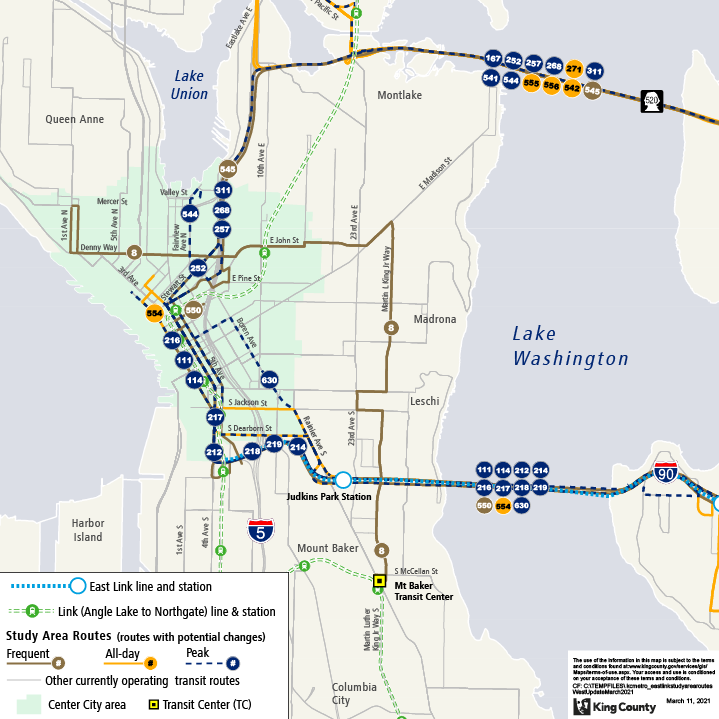
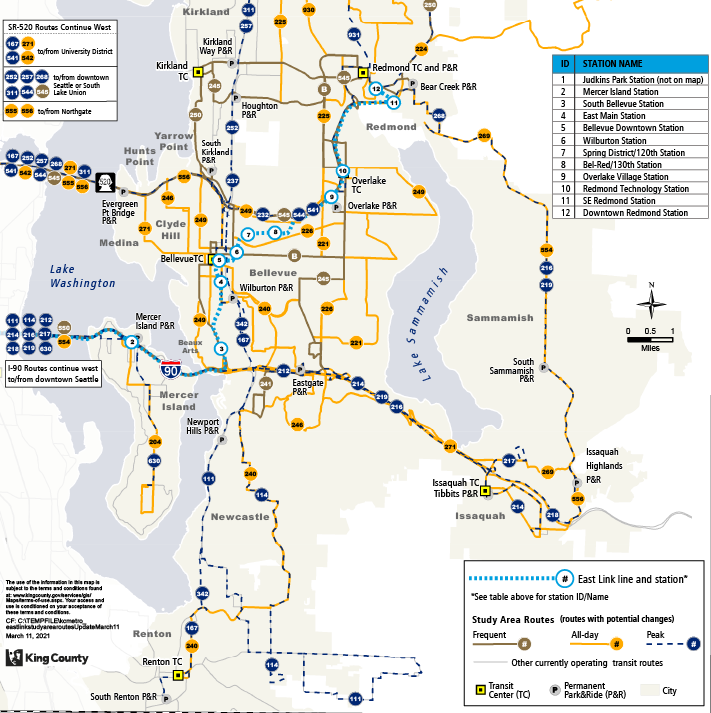
In developing the proposals, Metro initially sought general feedback earlier this year from the public and directly engaged with a 27-member Mobility Board. Key themes that came out of that process were a desire for more local connections, reasonable transfers, keeping fast travel times, additional weekend and off-peak service, and a focus on primary locations like Downtown Bellevue and Redmond, Microsoft’s campus, colleges, and the Spring District.
Seattle Subarea proposals
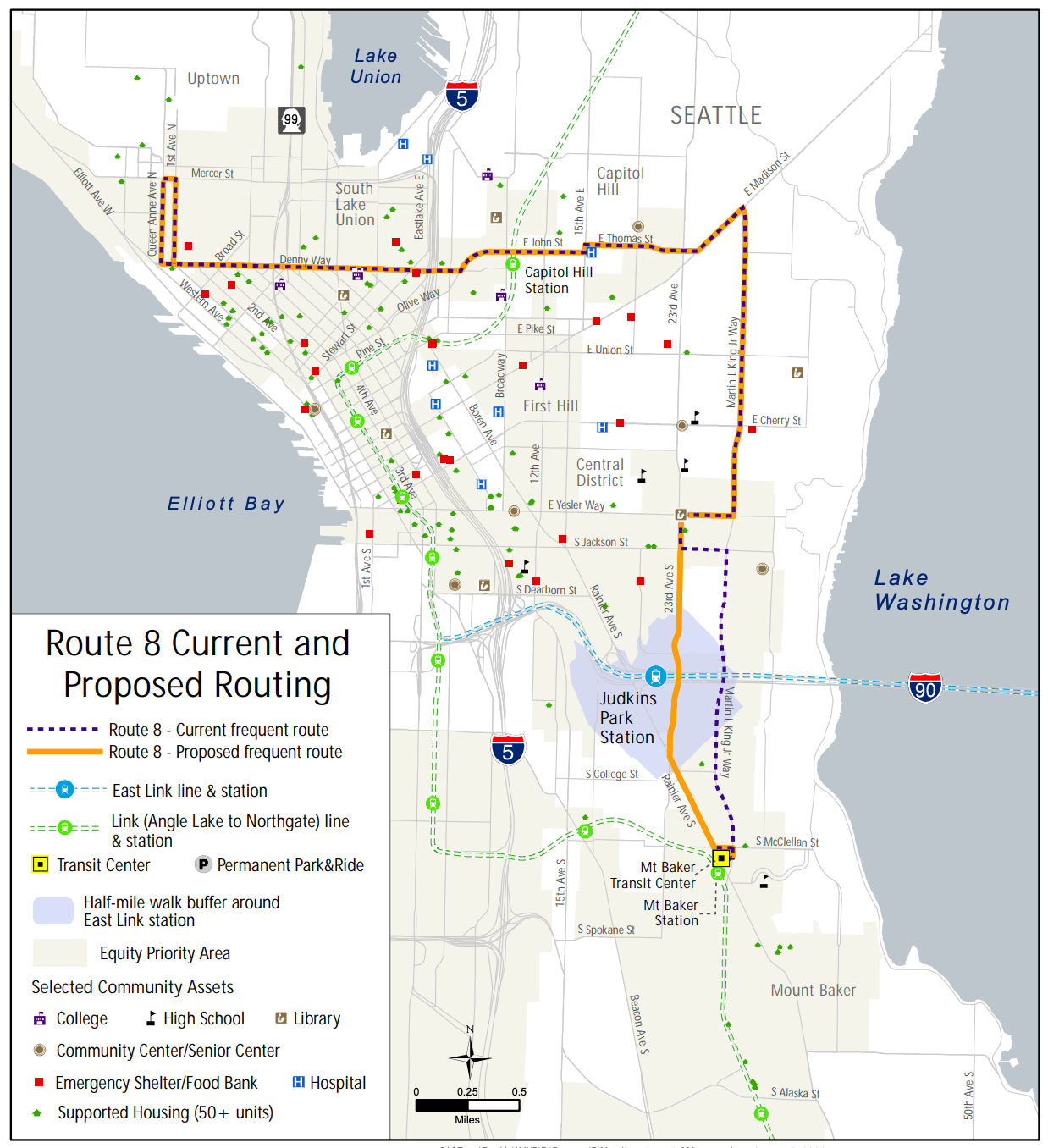
The Seattle Subarea only encompasses one principal change and that’s to the southern portion of Route 8. Metro wants to better serve Judkins Park Station by providing another direct connection to the station. Under the existing network, Routes 7, 9, 48, and 106 directly pass by Judkins Park Station, but only Route 48 offers a regular connection for people living in Capitol Hill, Central District, and other Central Seattle areas. Route 8, for its part, operates along Martin Luther King Jr. Way, which is at least four blocks away from Judkins Park Station.
To provide a better connection, Metro is proposing that Route 8 be revised to fully serve 23rd Avenue S south of S Jackson Street. This would allow the route to pick up Judkins Park Station on its way to Mt. Baker Station and Mt. Baker Transit Center. The route would also run on Rainier Avenue S between the two light rail stations. However, this would mean that some stretches ofMartin Luther King Jr. Way would lose frequent bus service north and south of I-90. Route 4 partially compensates for this, but it doesn’t fully solve the problem.
Metro could choose to revise Route 8 off ofMartin Luther King Jr. Way further south than currently proposed and still send buses to 23rd Avenue S to pick upJudkins Park Station and then weave back toMartin Luther King Jr. Way, but that would mean using less developed streets, possible removal of street calming features, and slowing buses down with turns. That could be slightly ameliorated by removing the E Yesler Way jog though.
South Subarea proposals
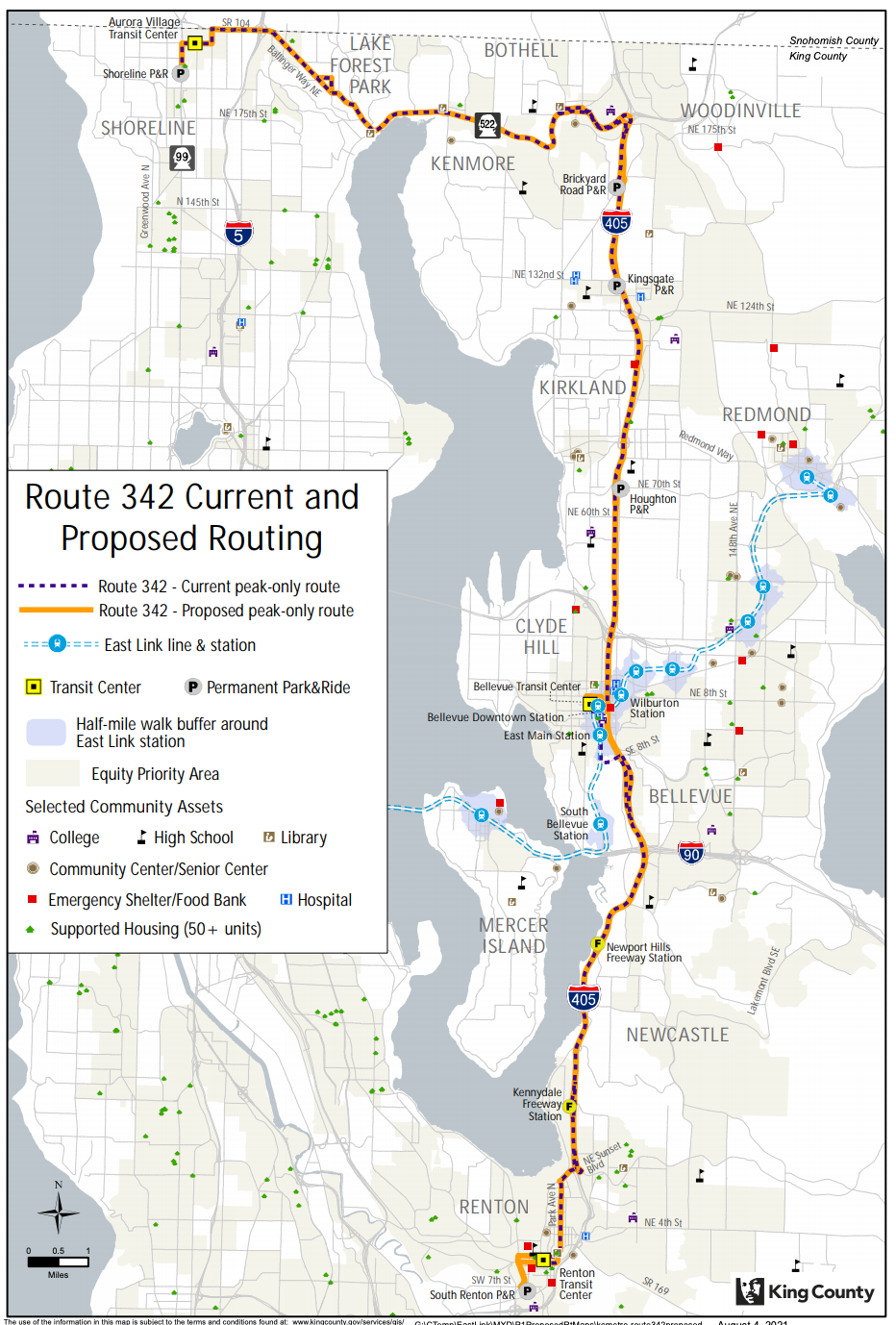
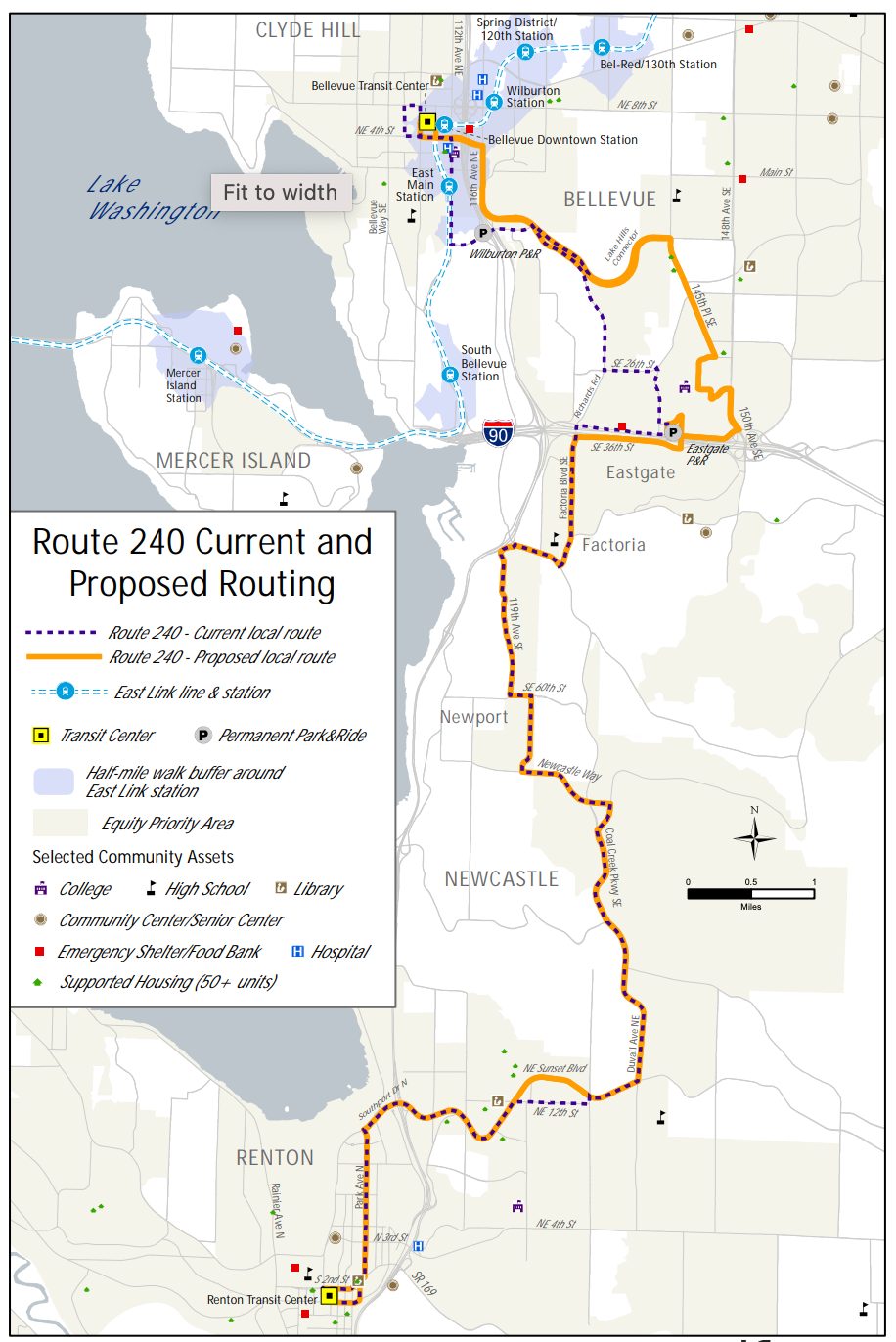
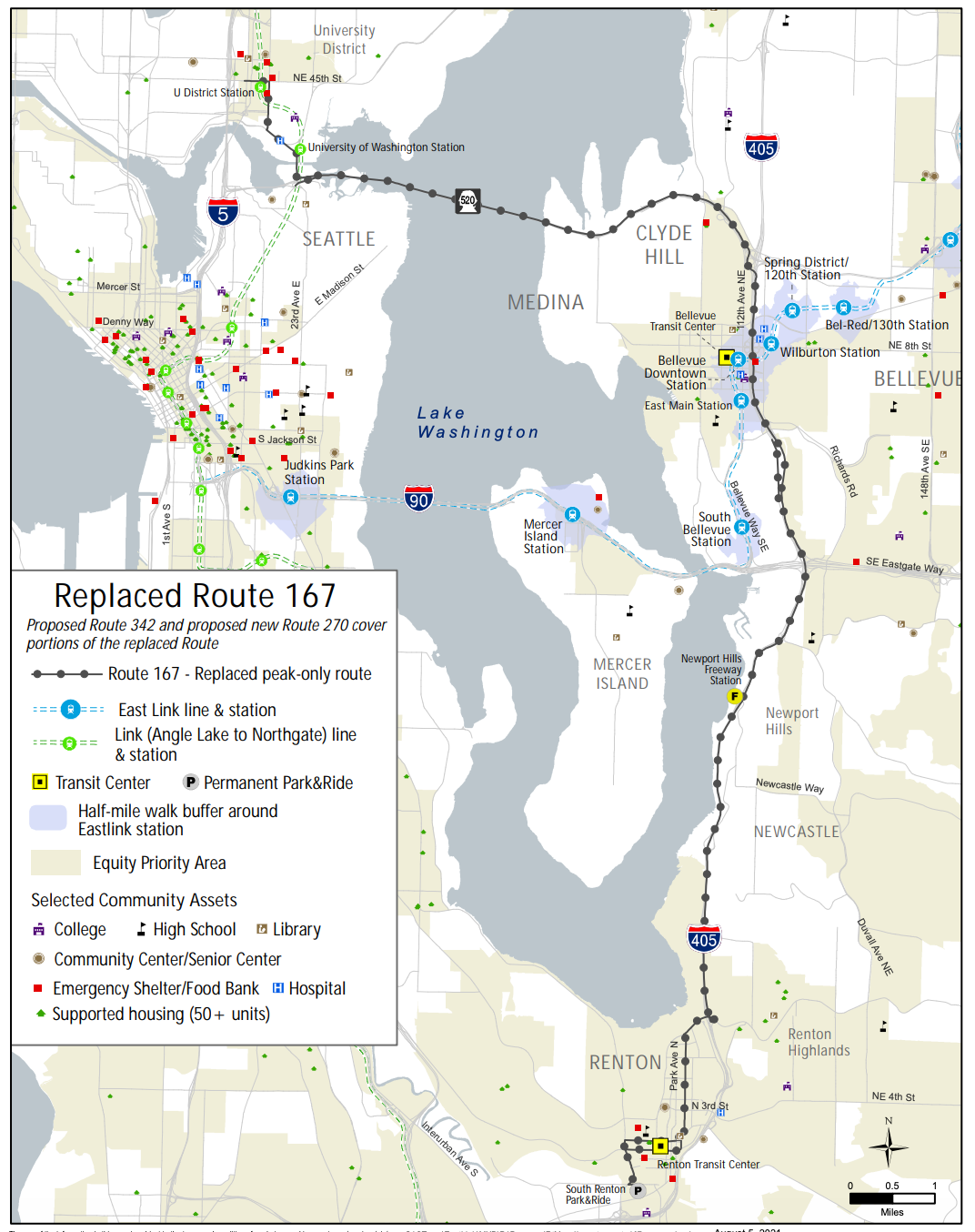
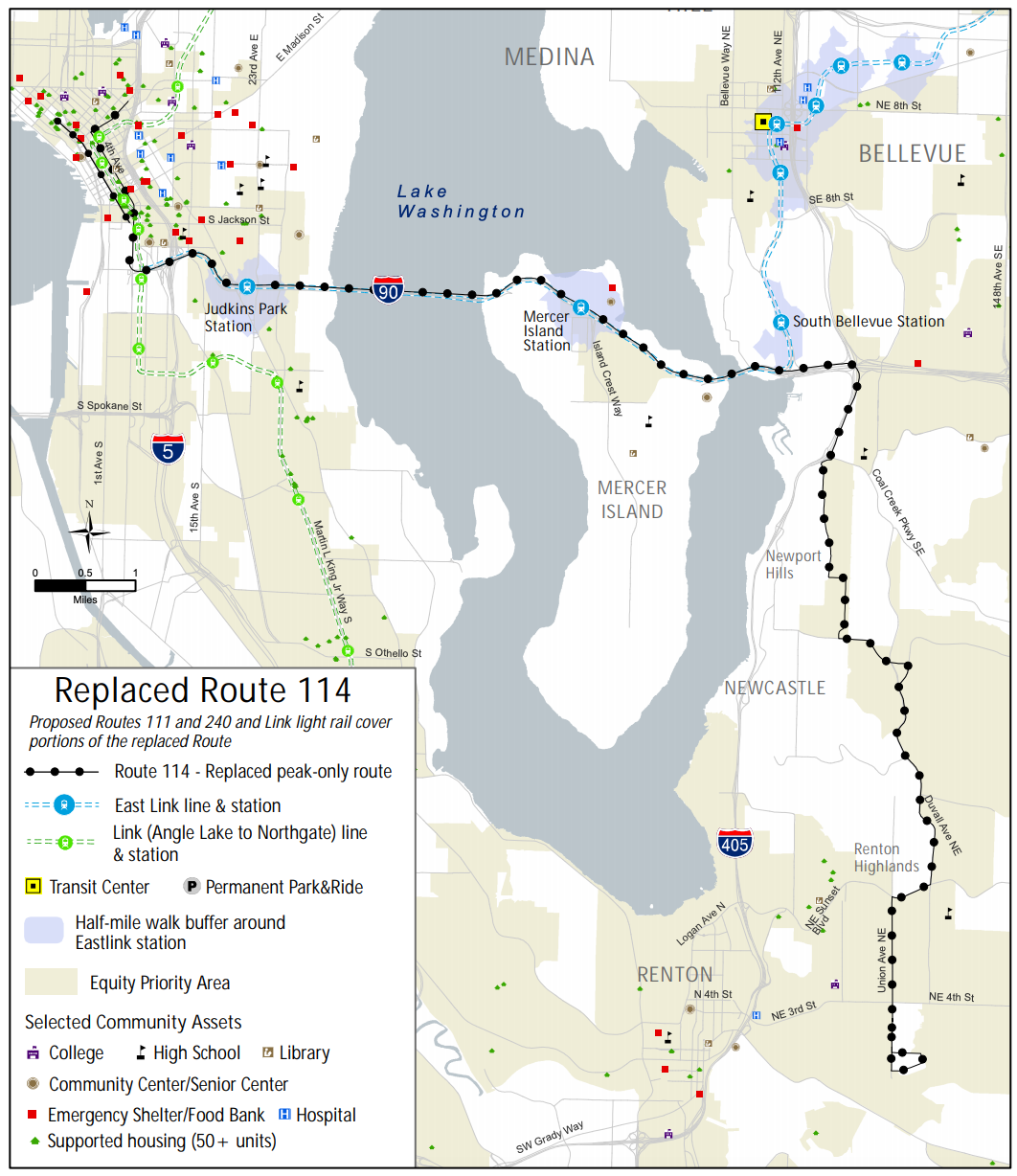
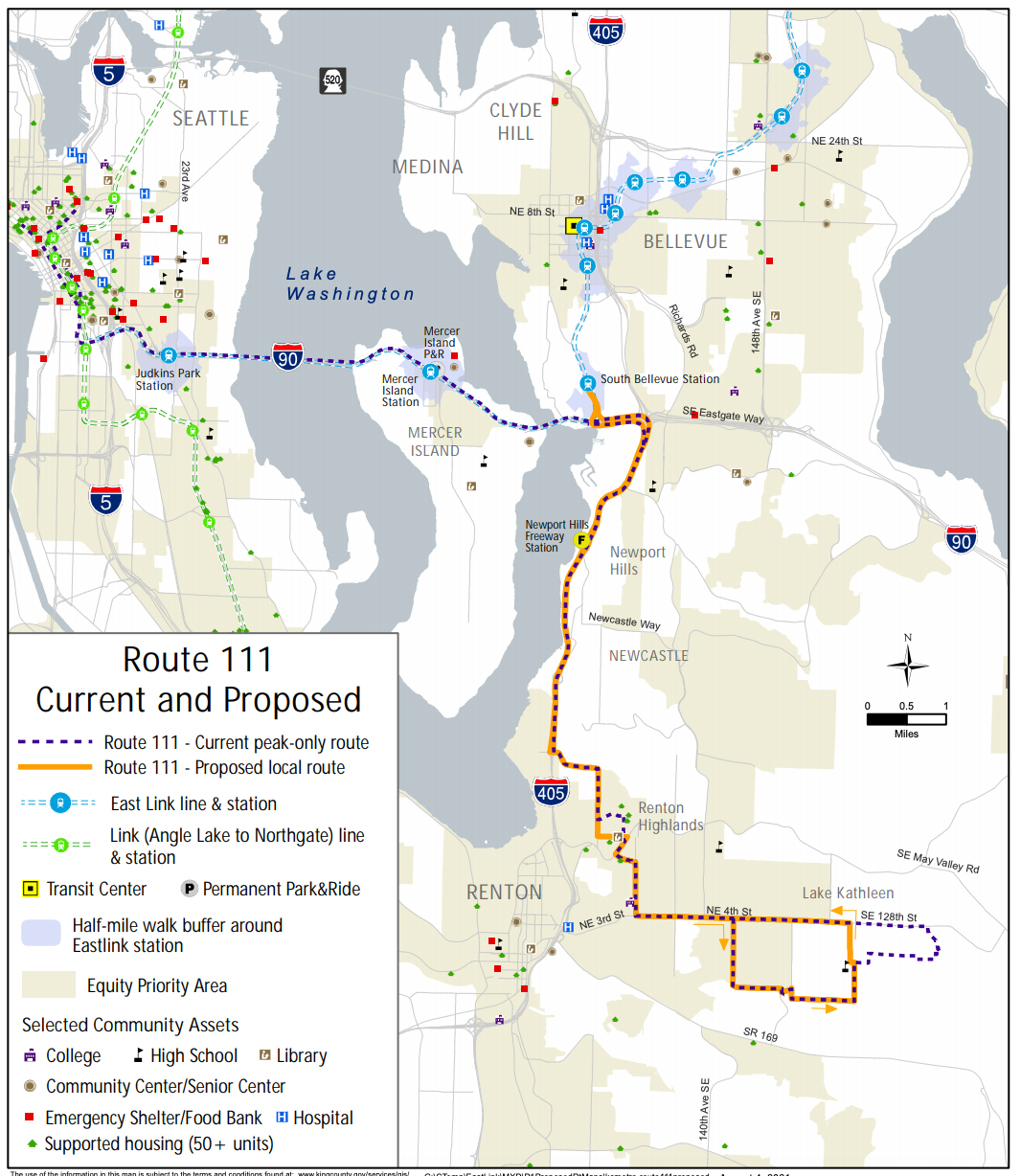
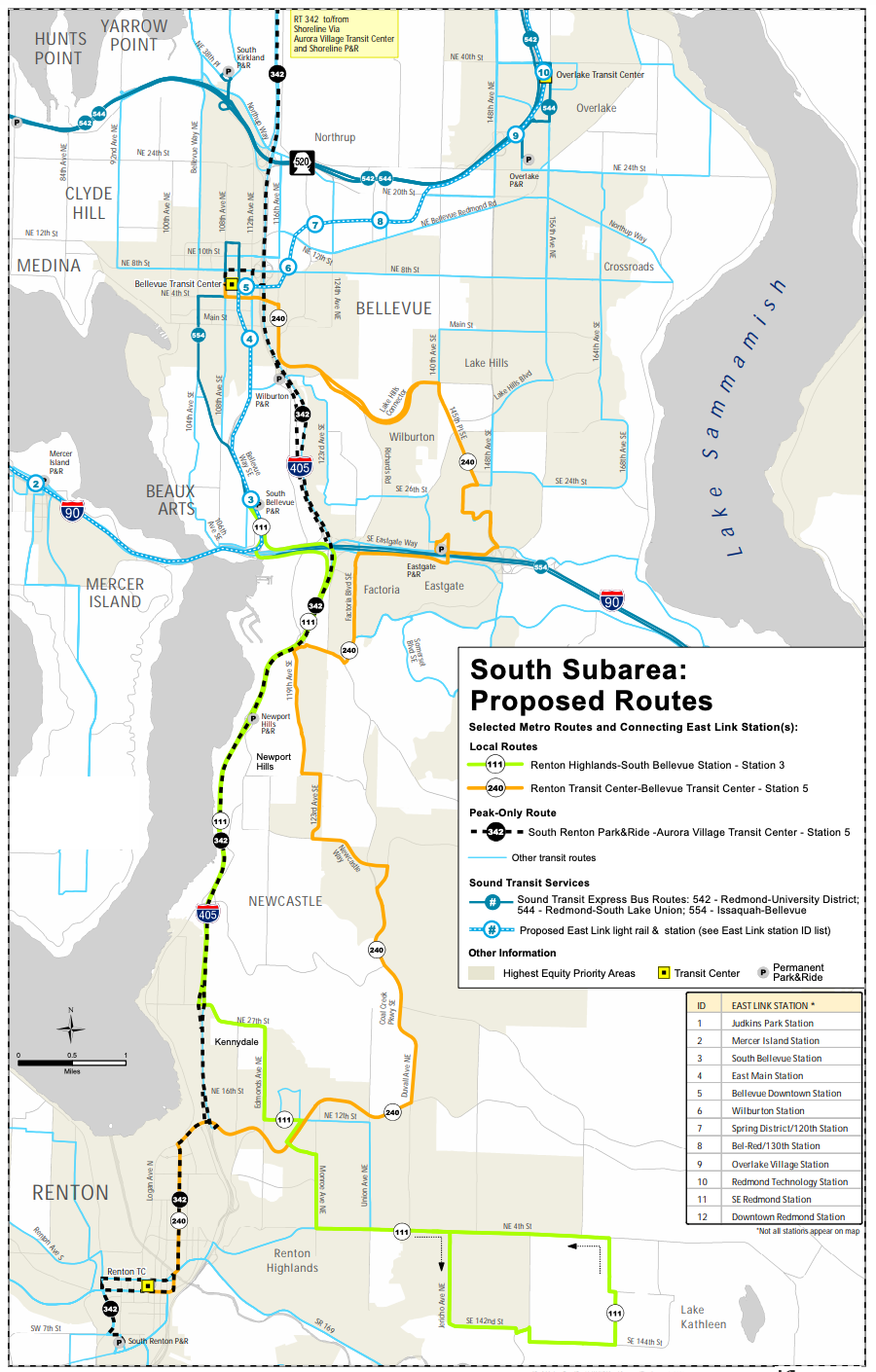
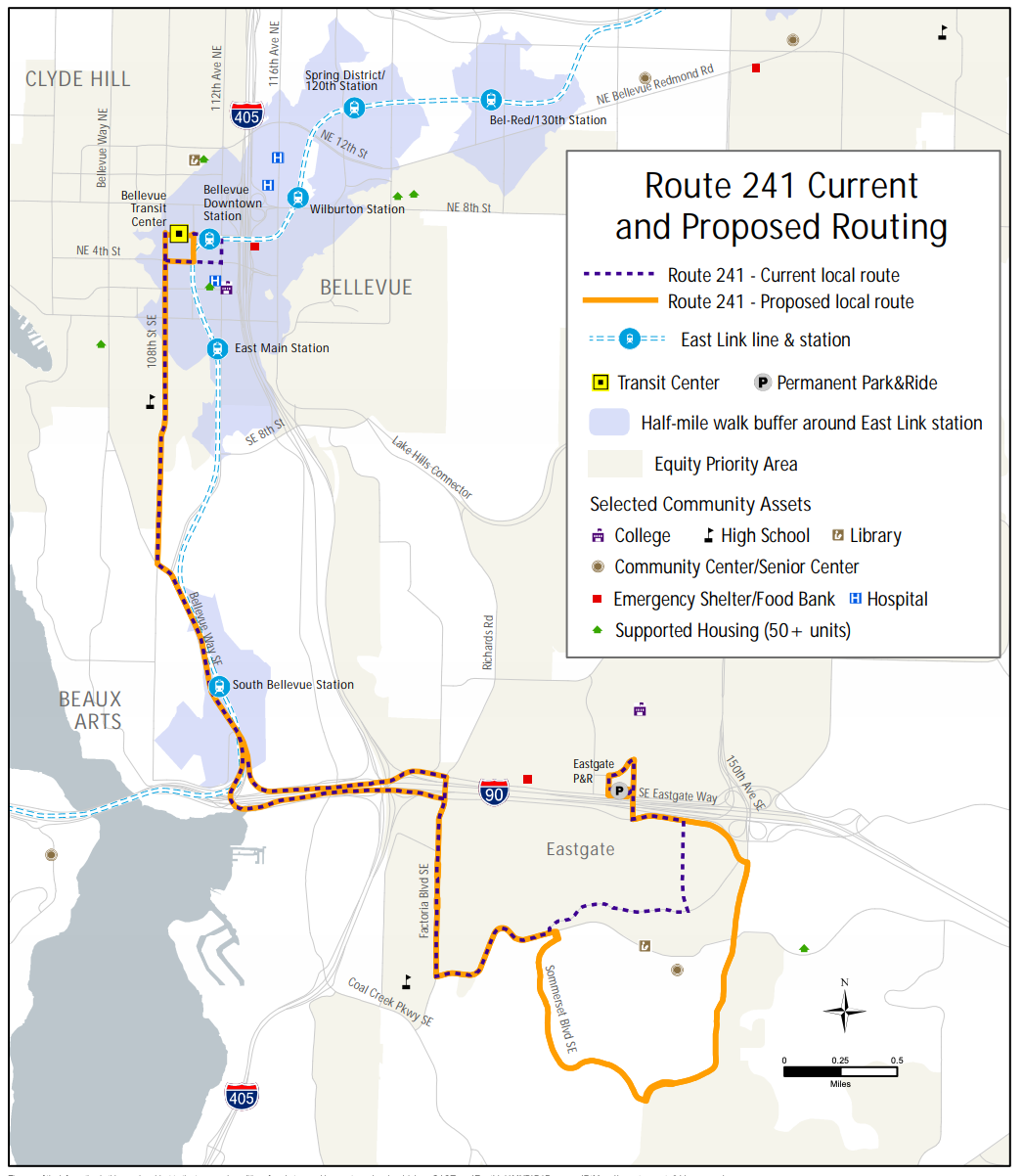
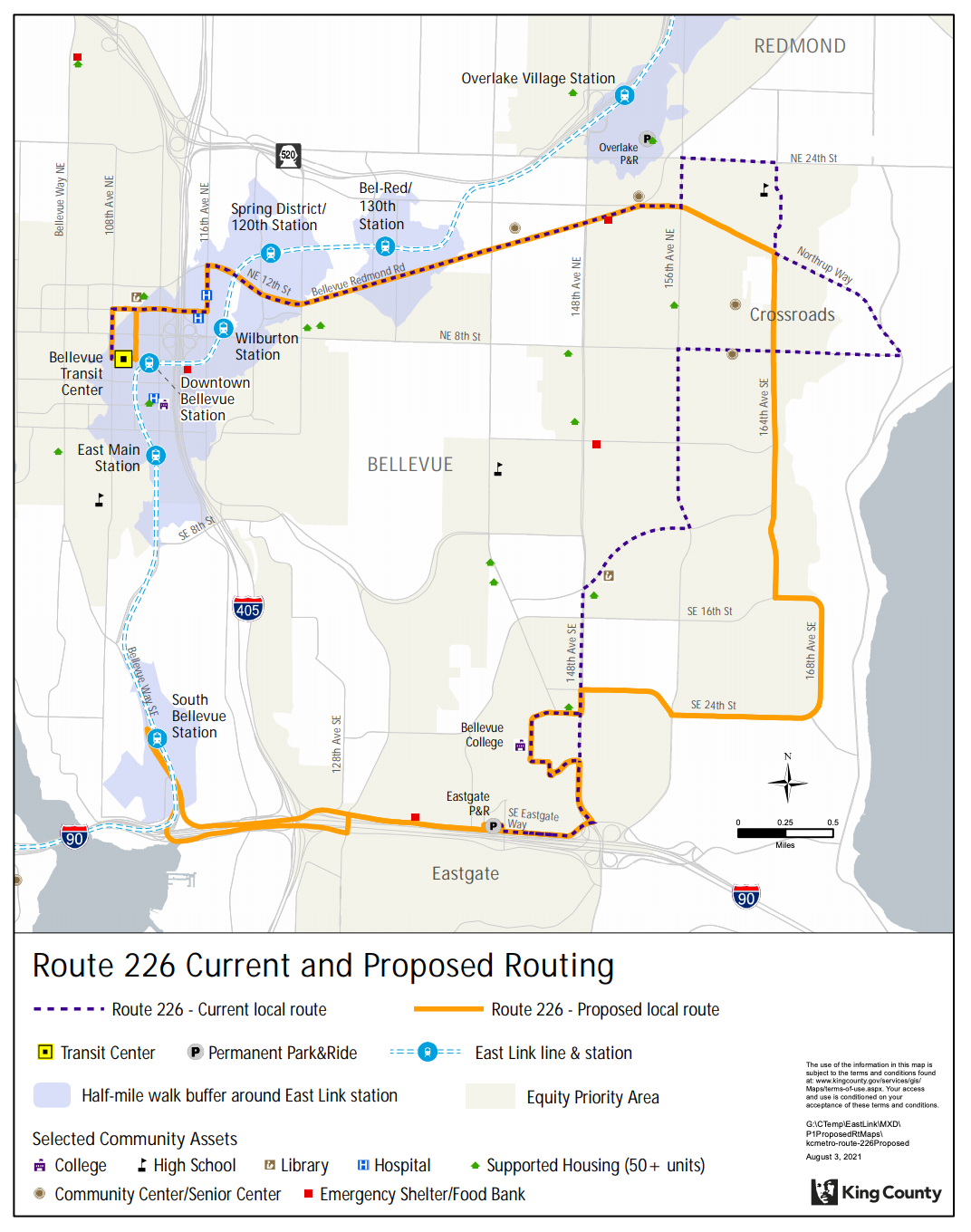
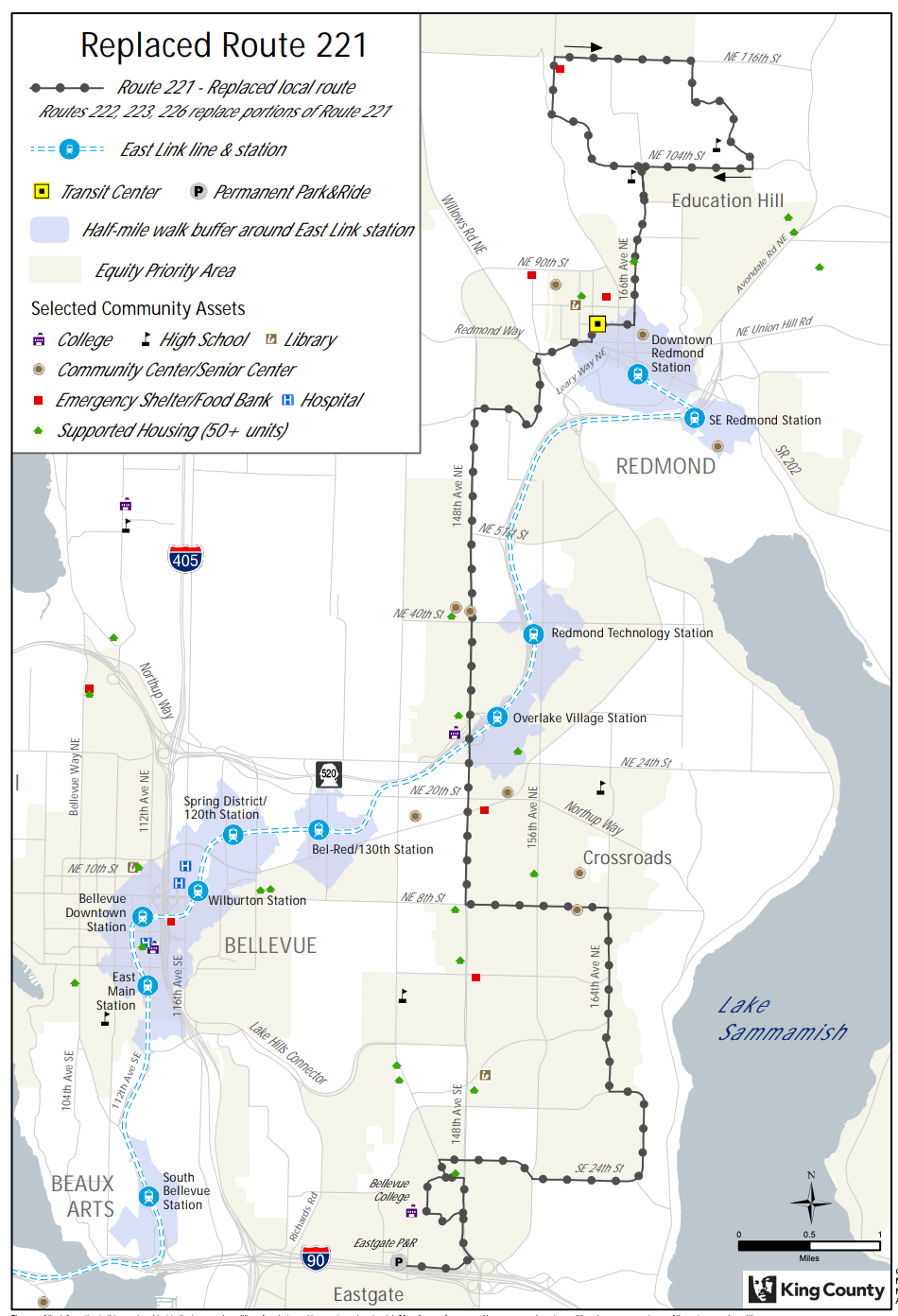
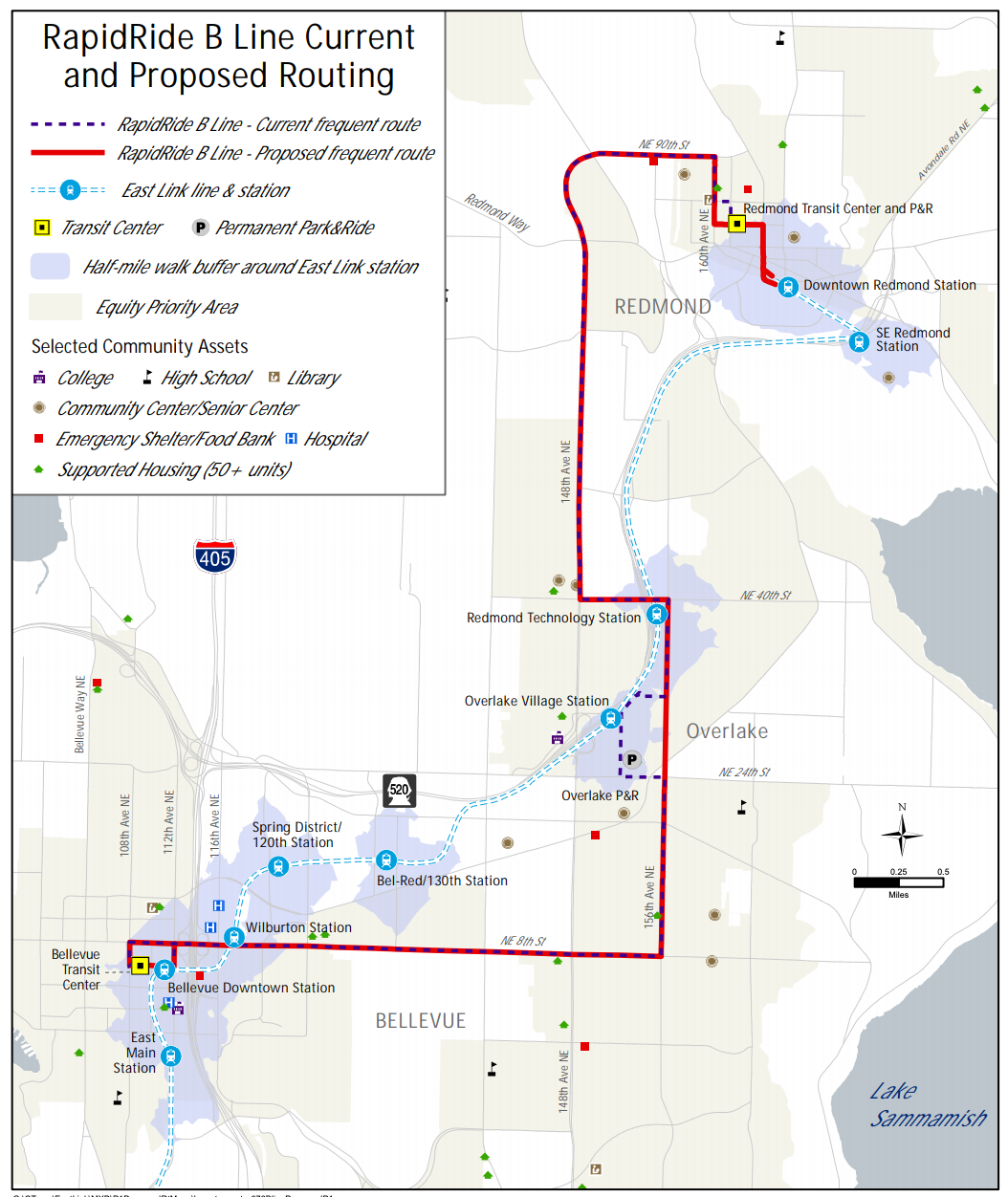
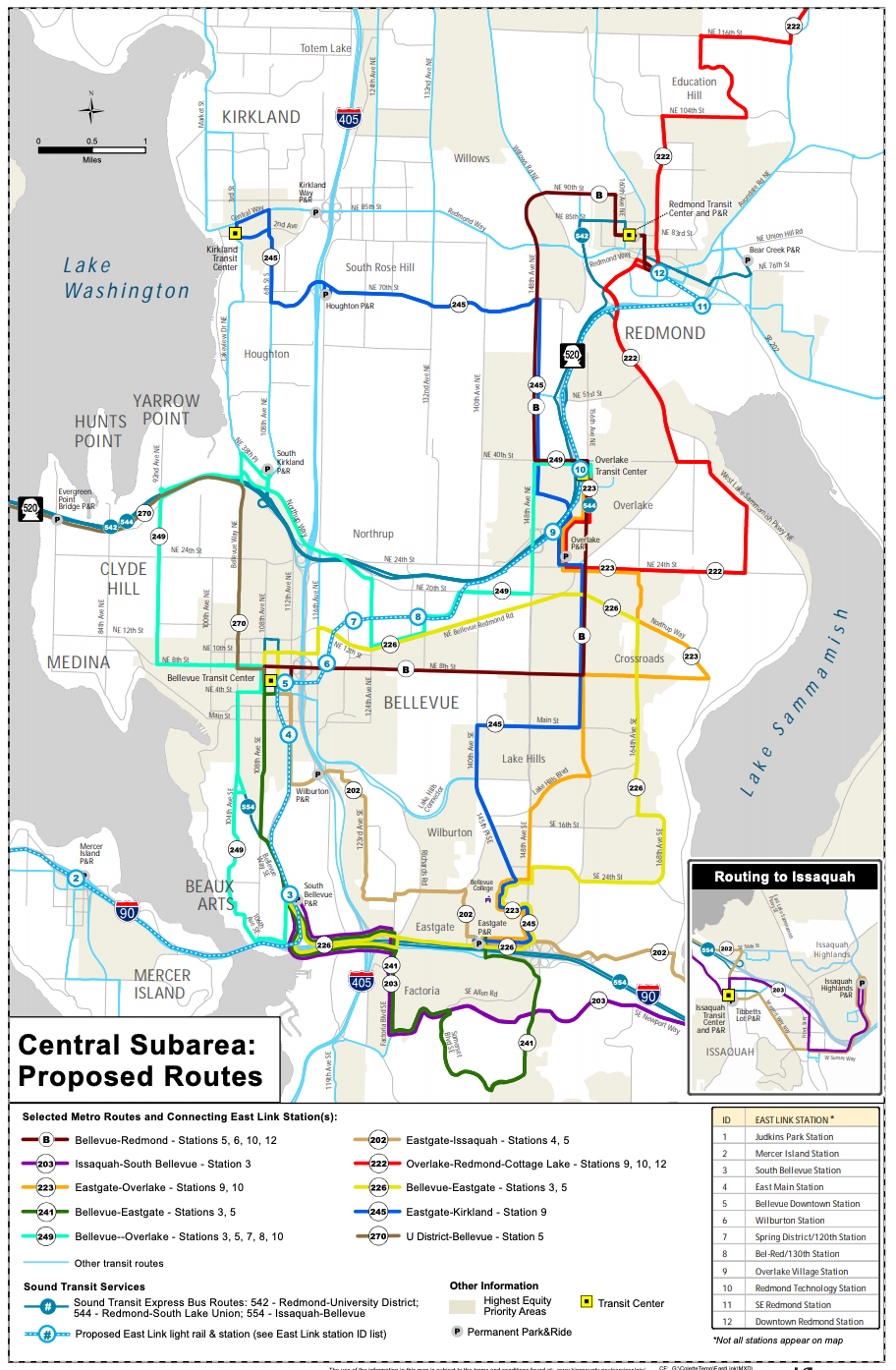
The big ideas for the South Subarea proposal are a strong connection to the future South Bellevue Station and bidirectional Route 342 from Renton to Shoreline. The proposal involves changes to five routes, including the elimination of peak-only Routes 114 and 167. The latter two routes would essentially be consolidated to a shortened Route 111 with improved span of service. As for Routes 240 and 342, these routes would see alignment revisions mostly in Bellevue with some minor changes in Renton.Central Subarea proposalsThe big ideas for the Central Subarea are: connections to the many light rail stations Bellevue and Redmond are getting; wider Central, South, and East Bellevue coverage; and better connections to and service in Issaquah. This proposal involves creation of several new bus routes and consolidation of many others. Strong poles for service would be Bellevue College, Eastgate Park-and-Ride, Crossroads, and the future South Bellevue, Downtown Bellevue, Overlake Village, and Redmond Technology Stations.East Subarea proposals
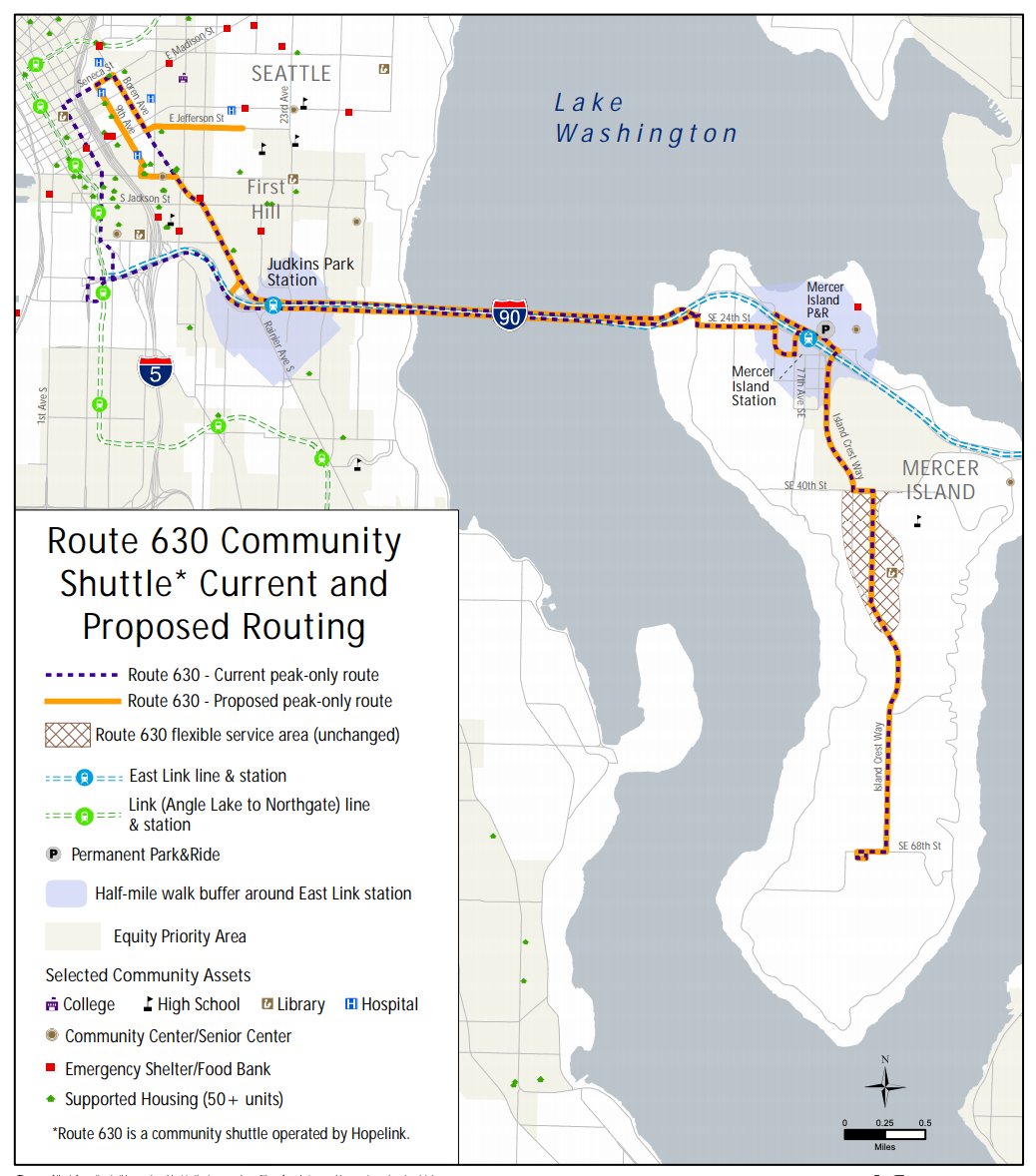
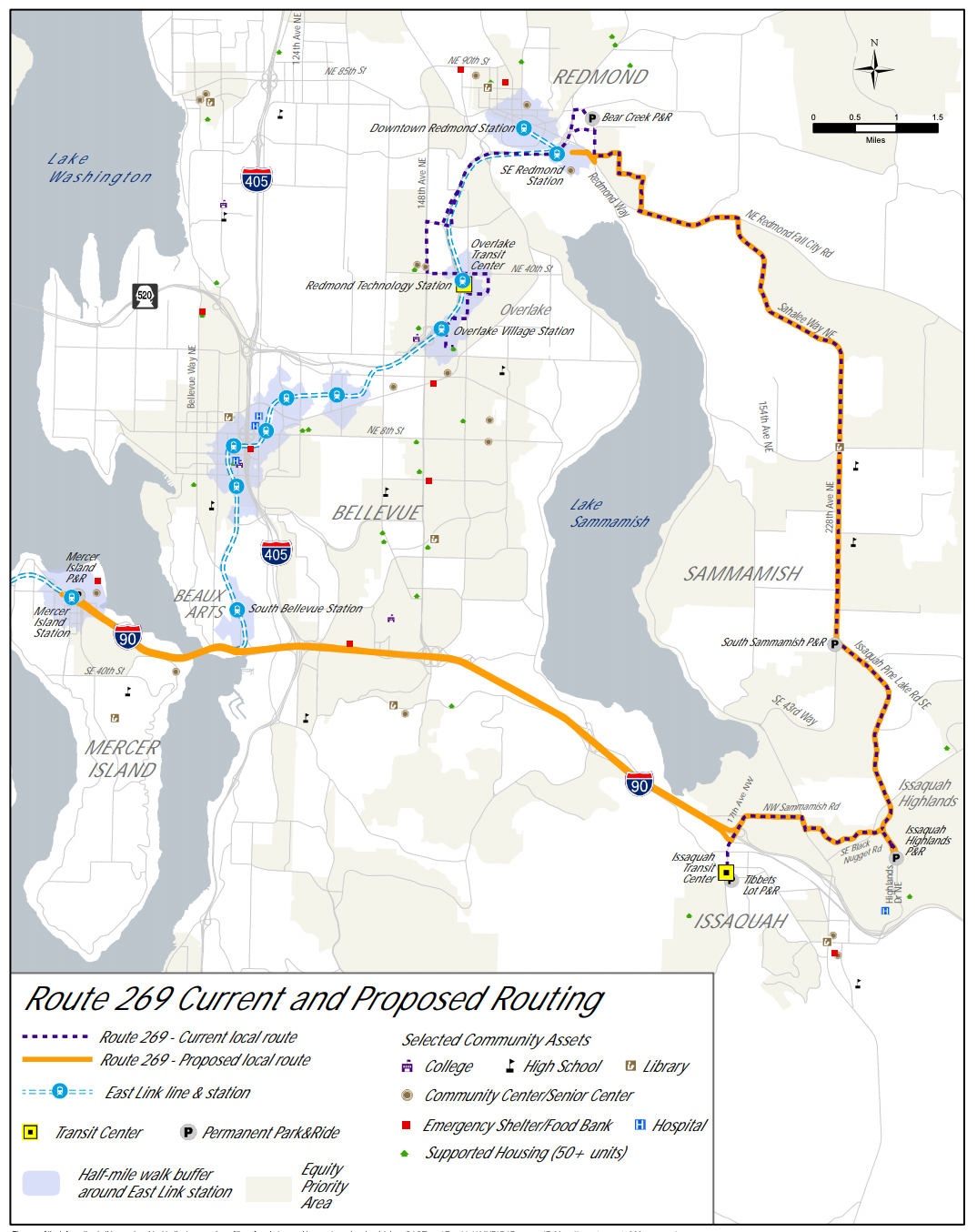
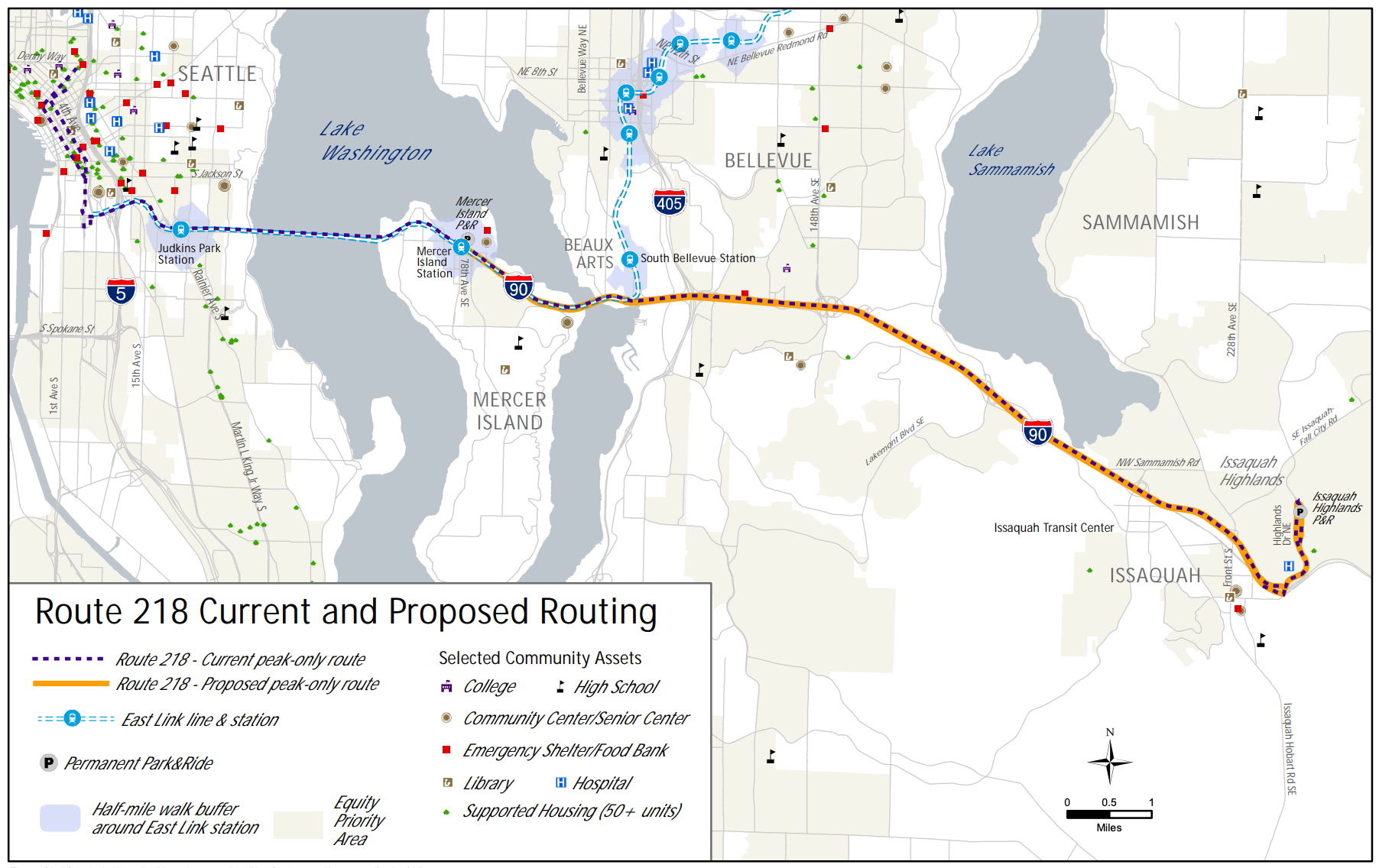
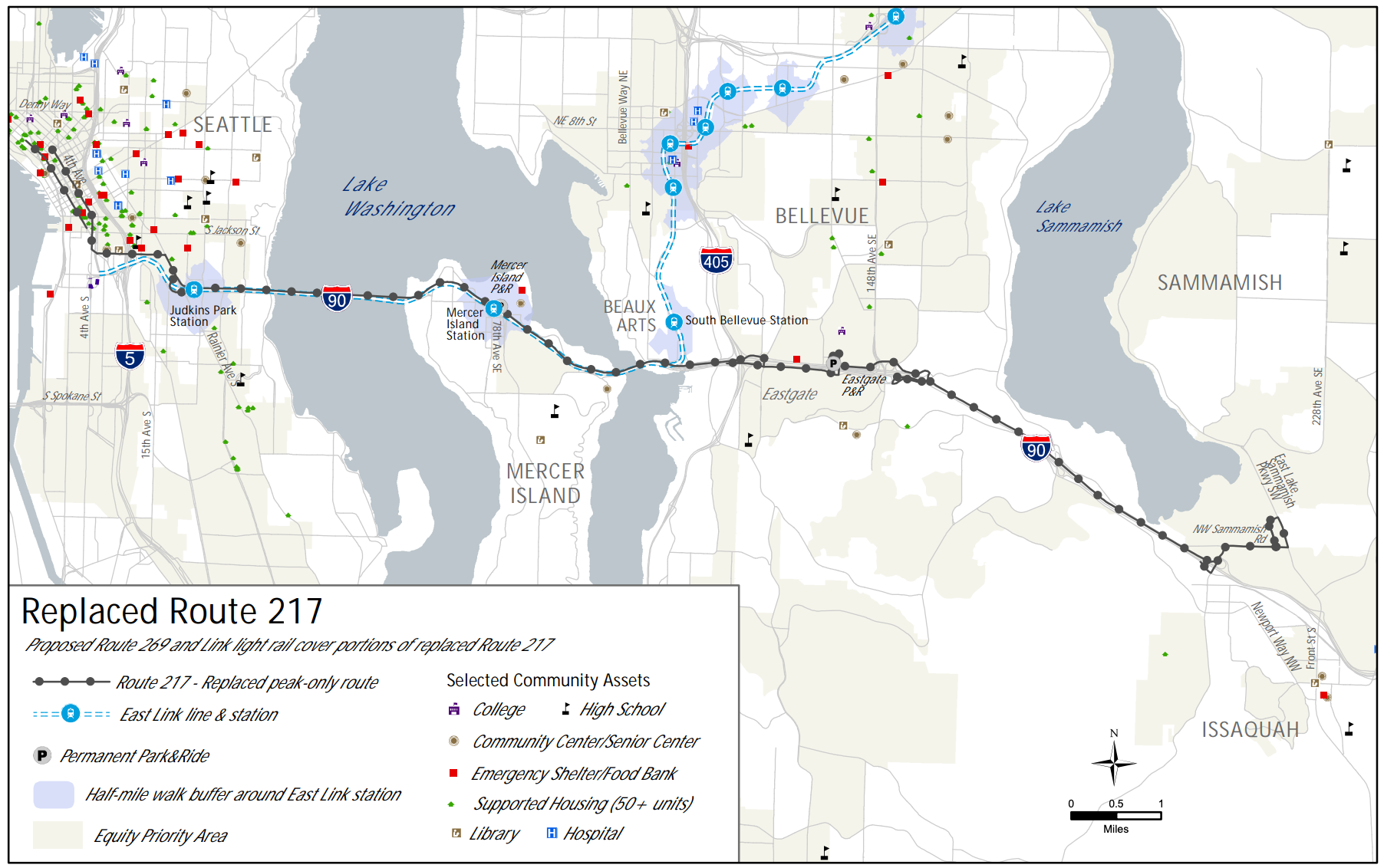
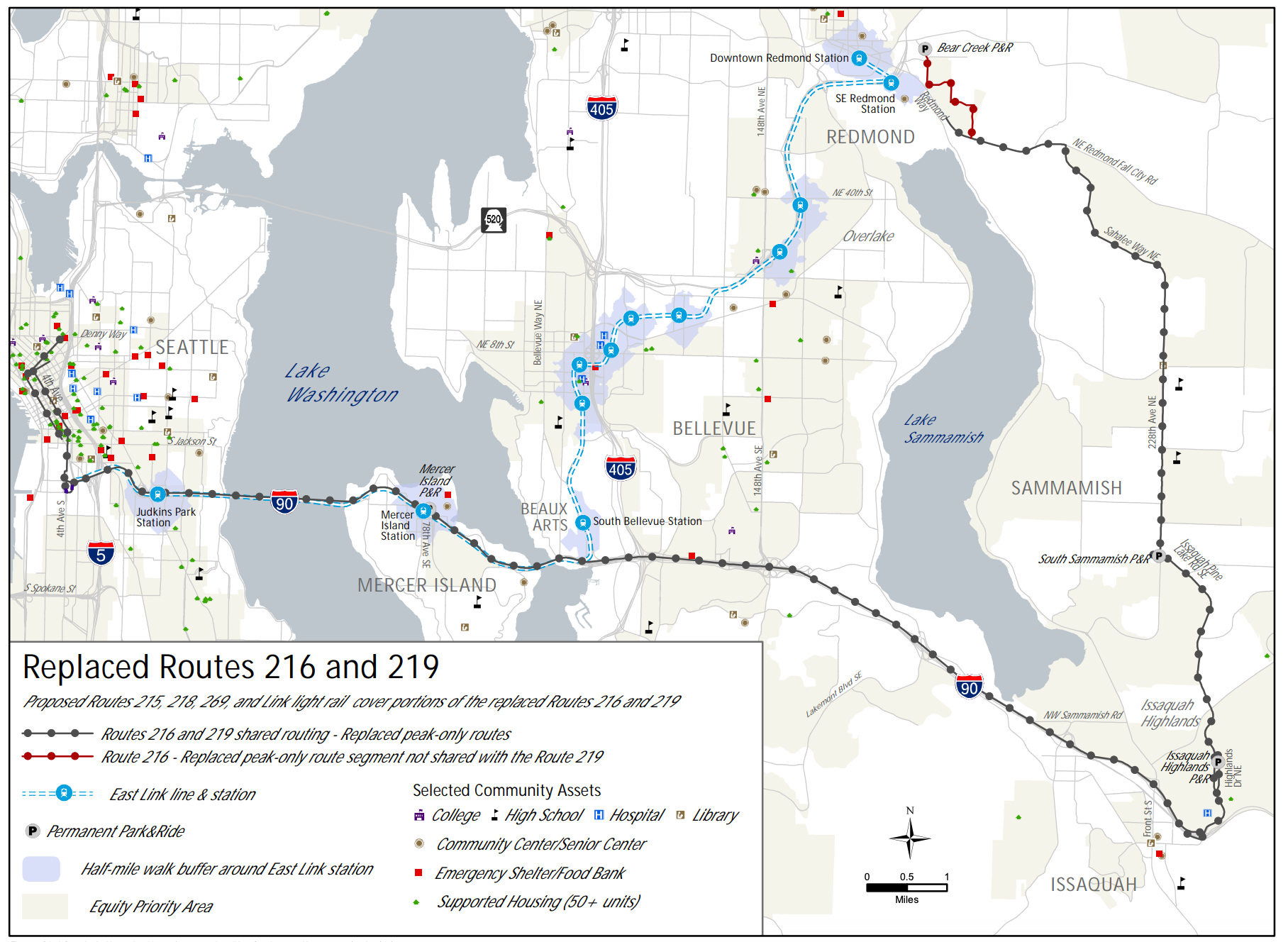
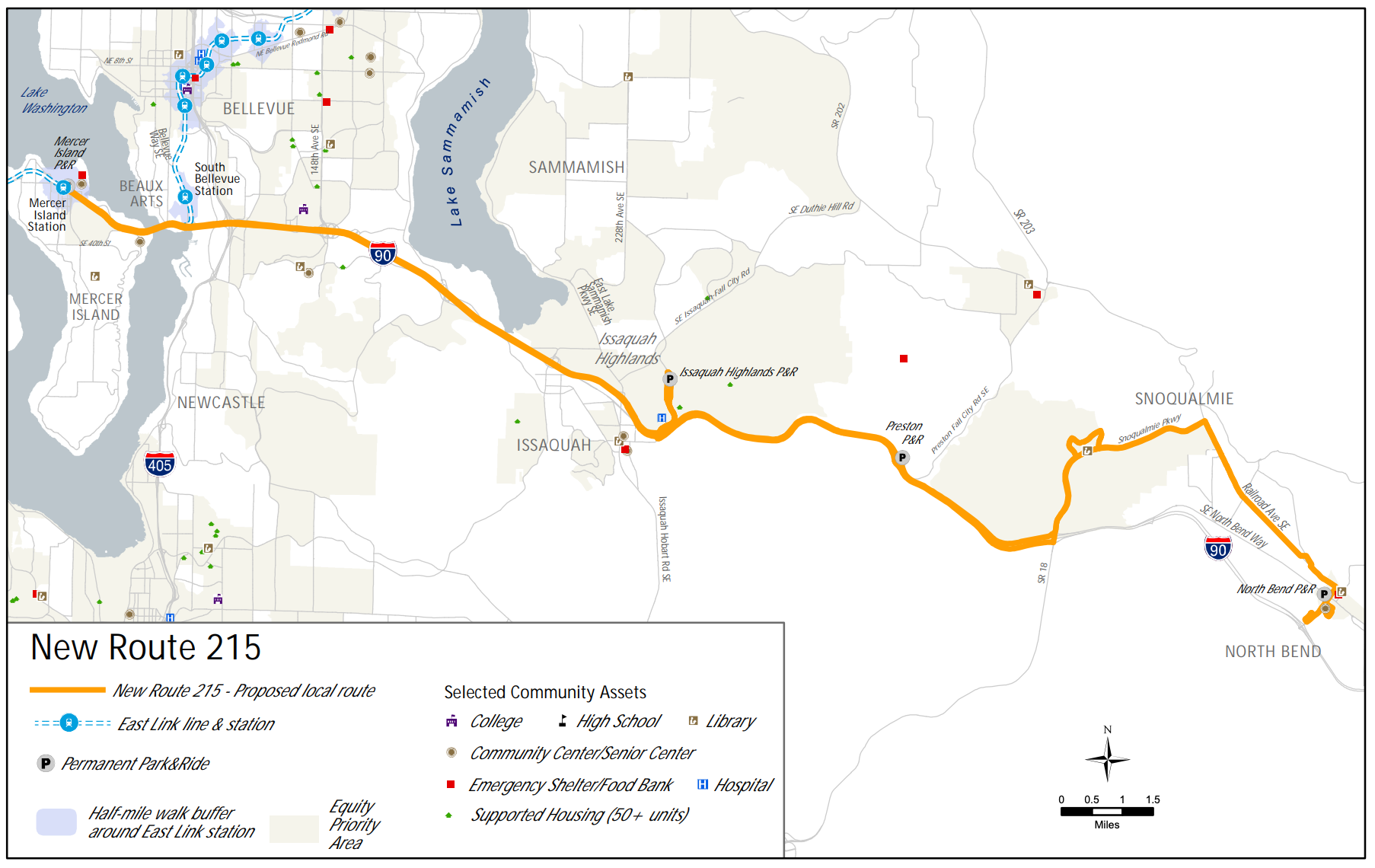
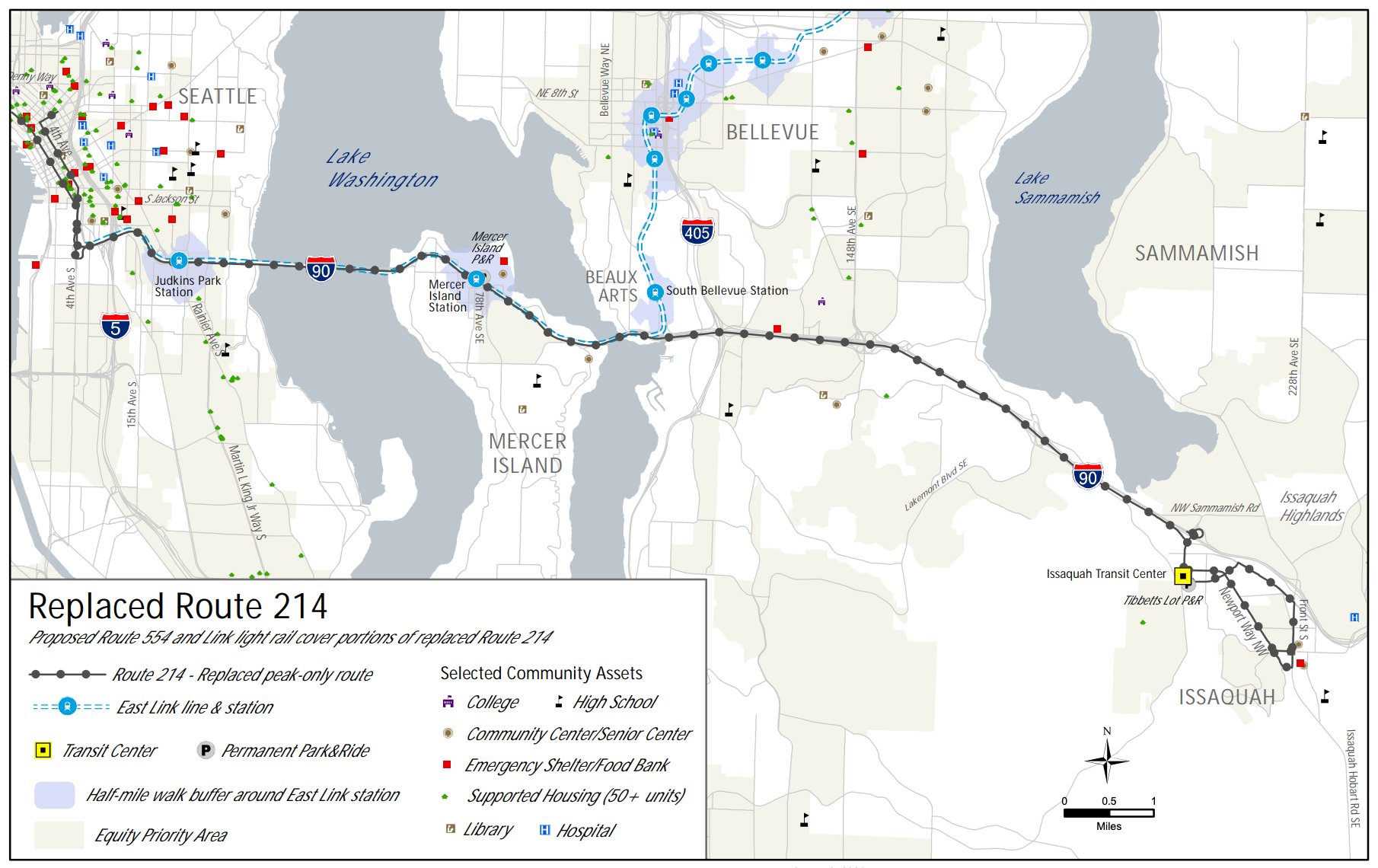
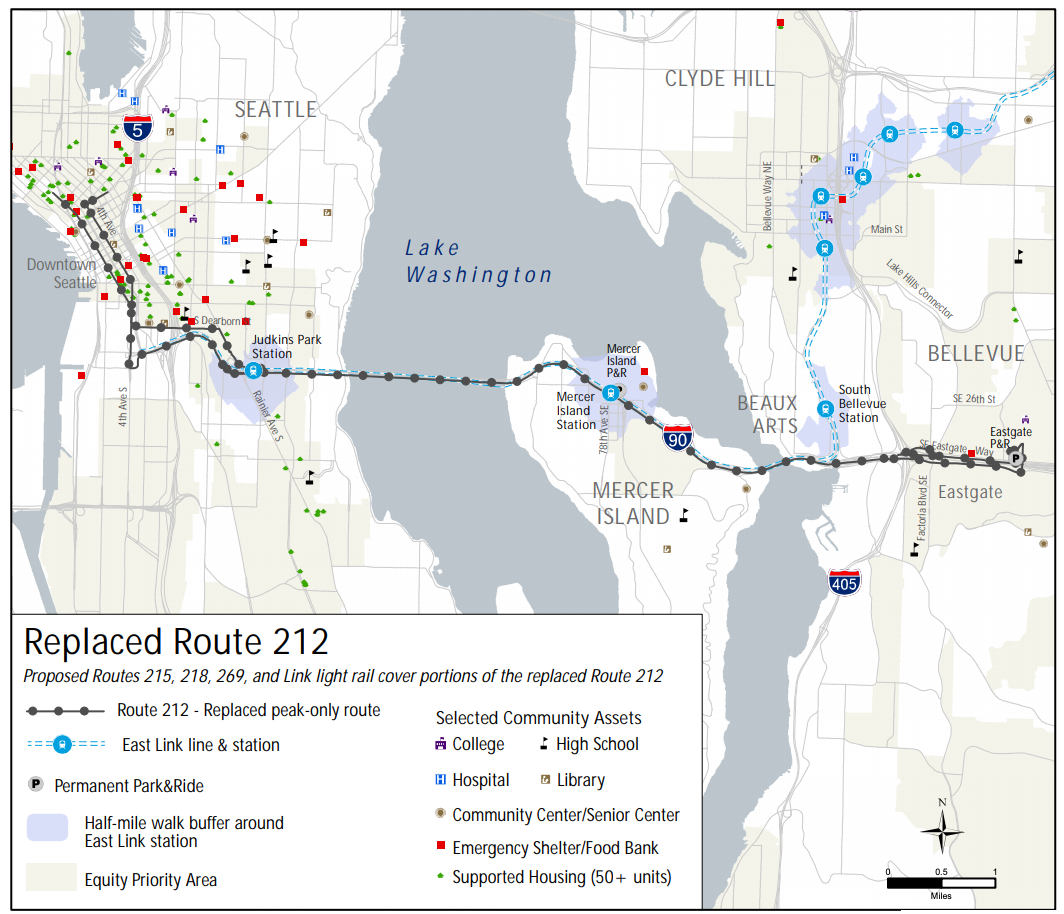
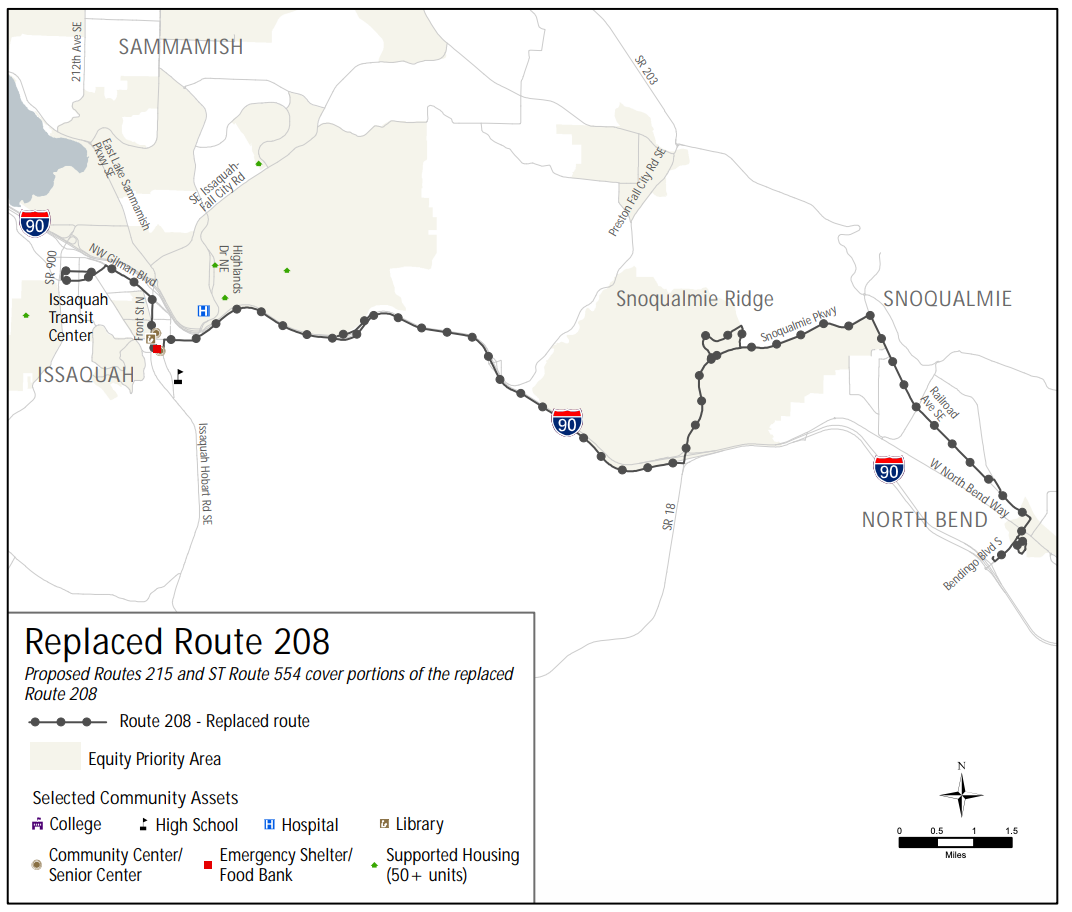
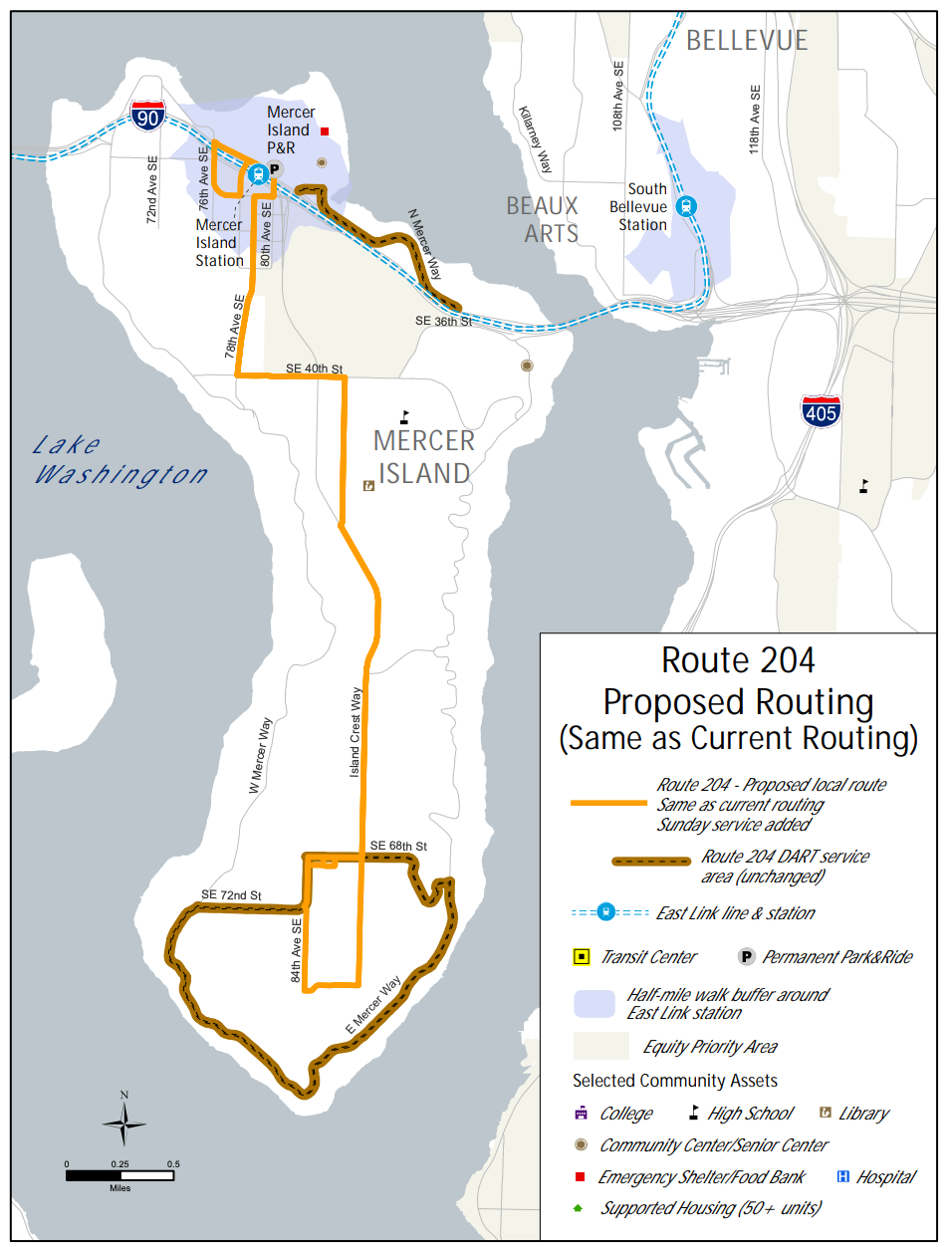
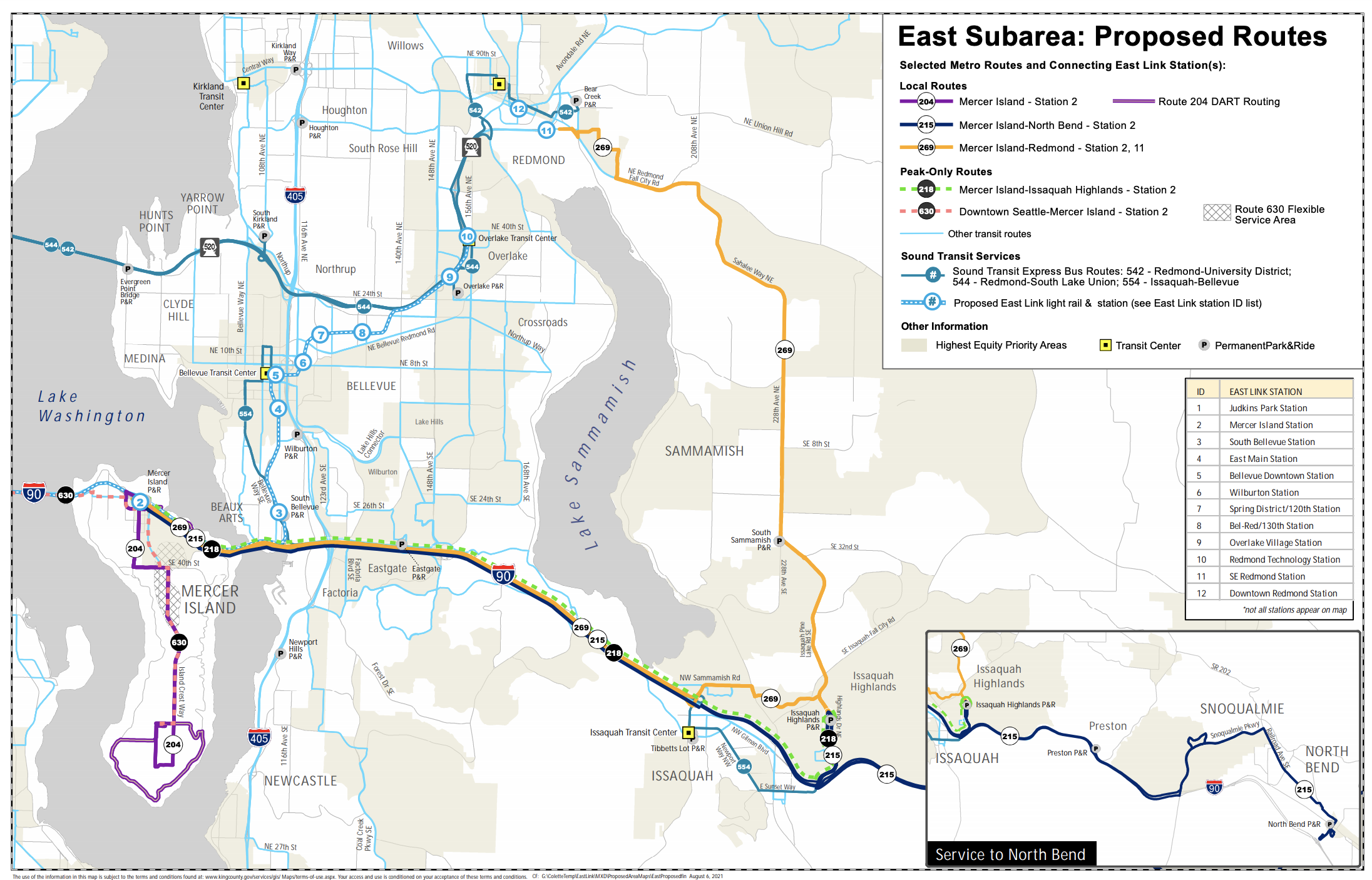
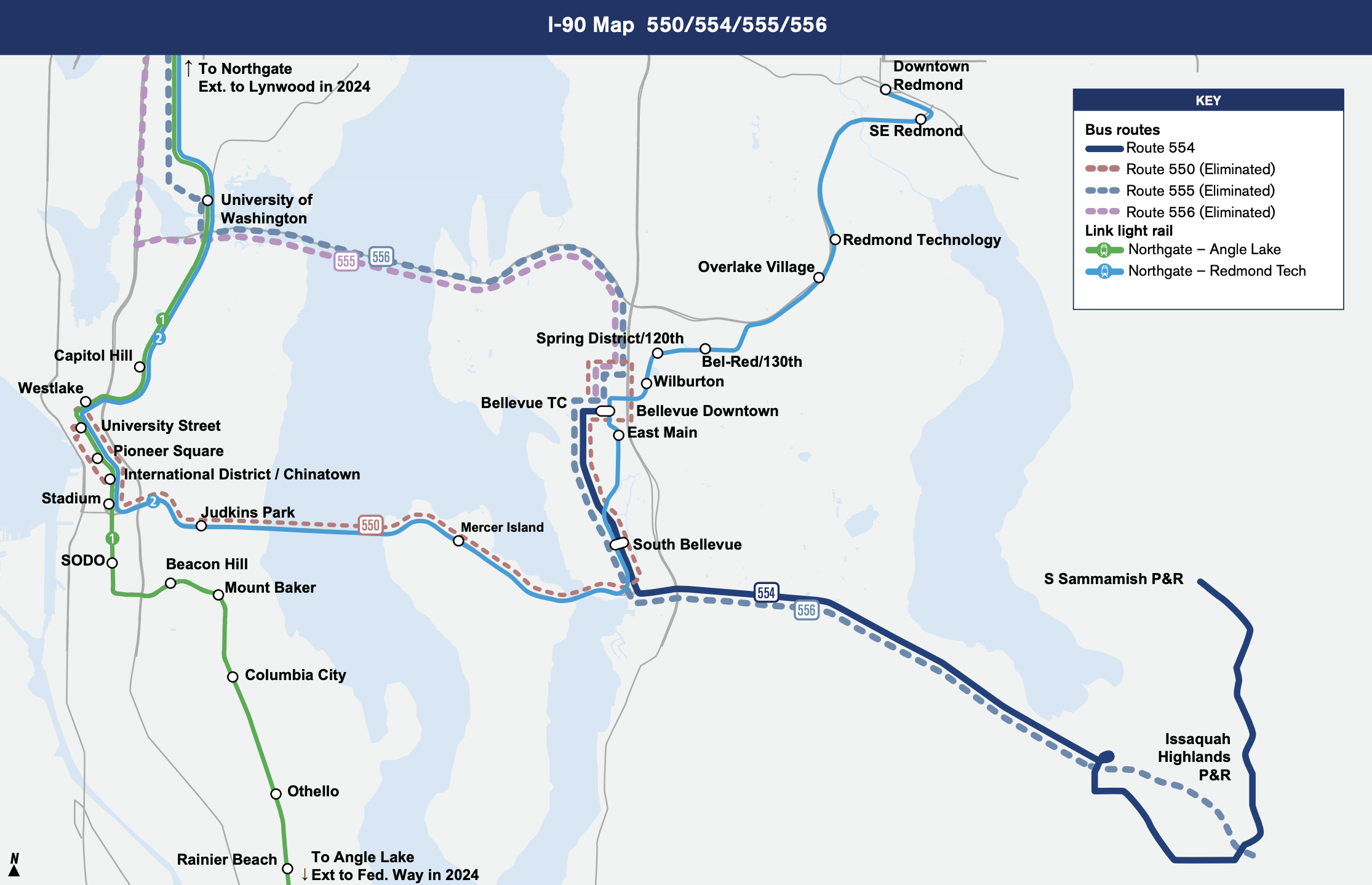
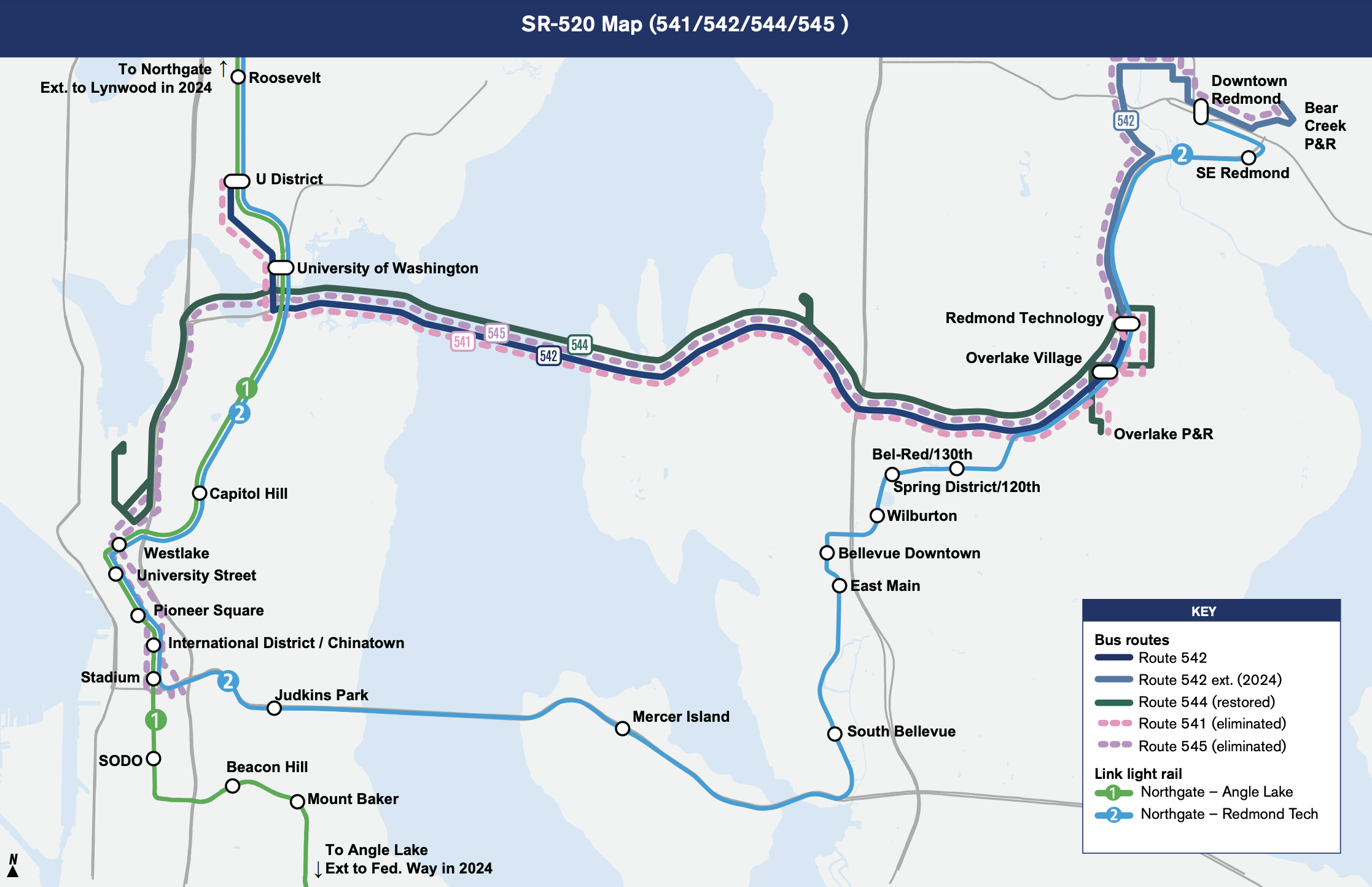
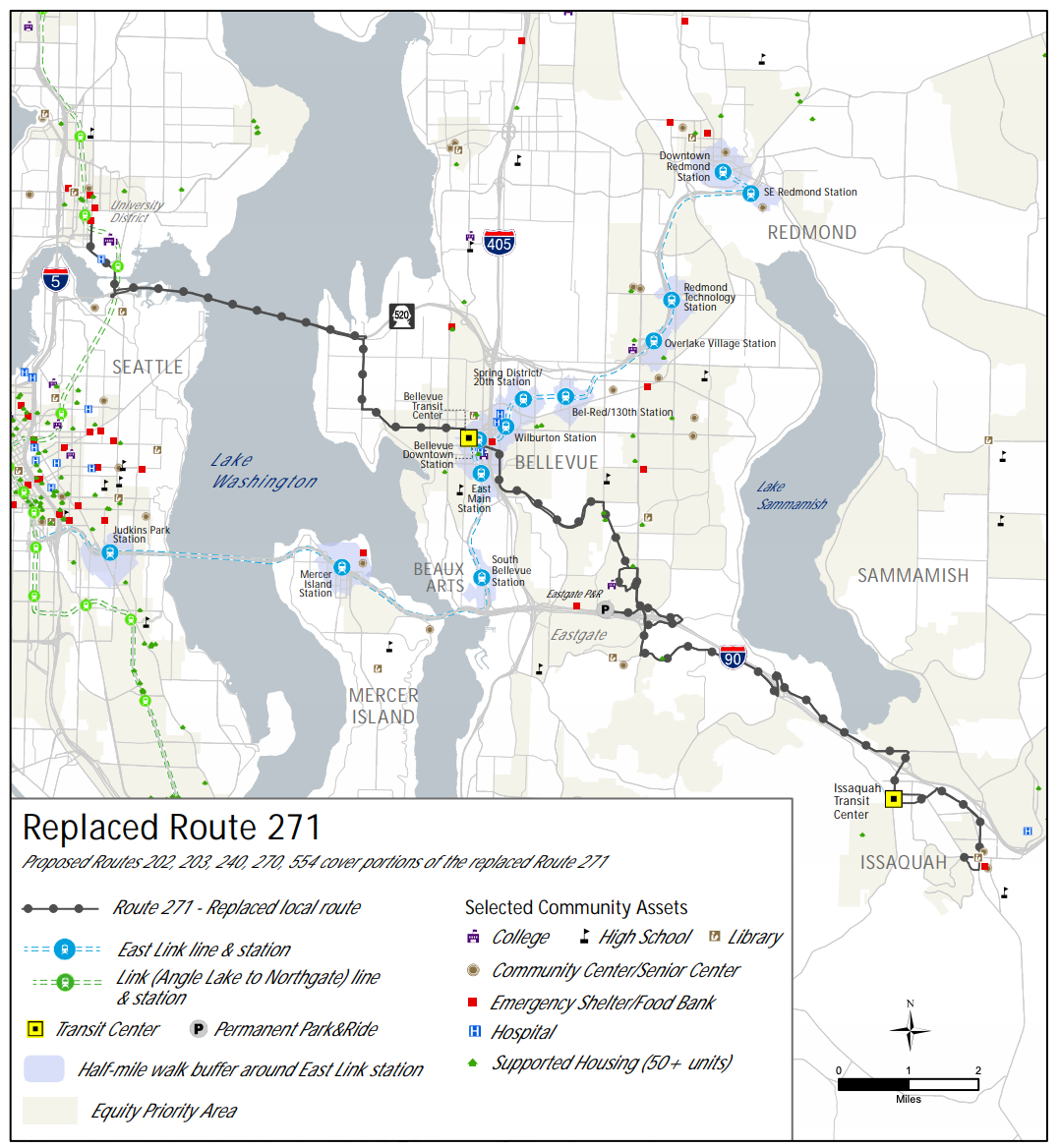
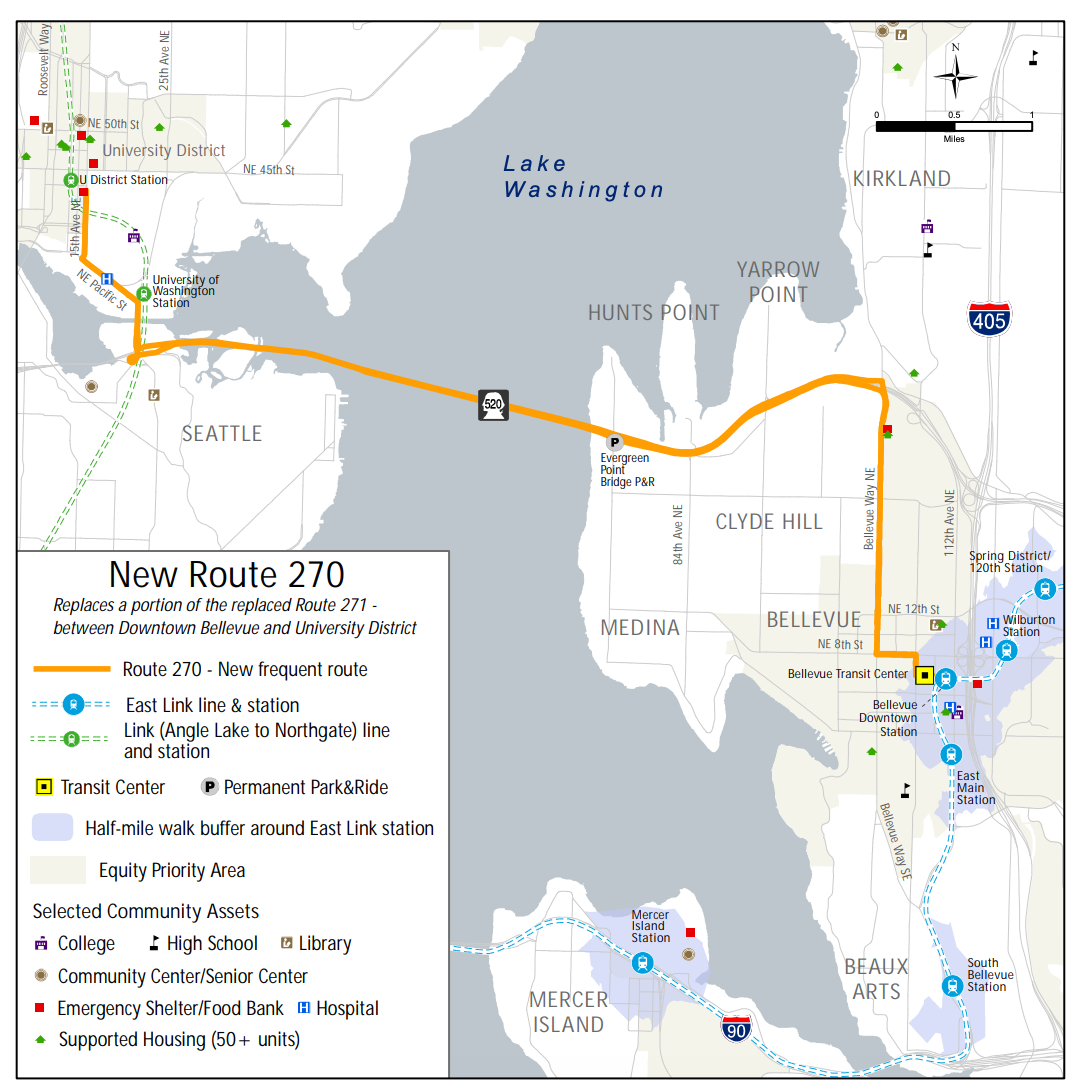
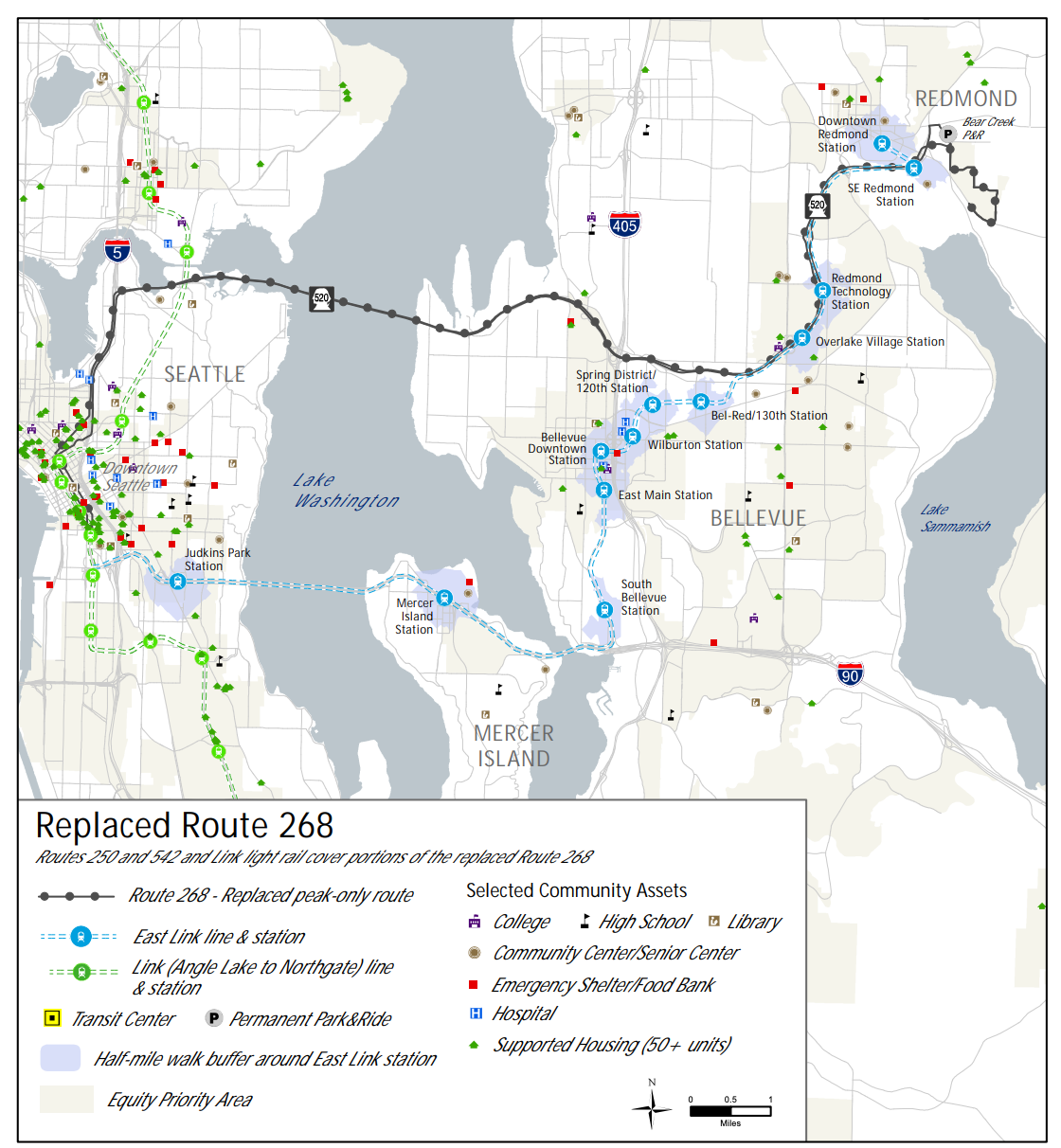
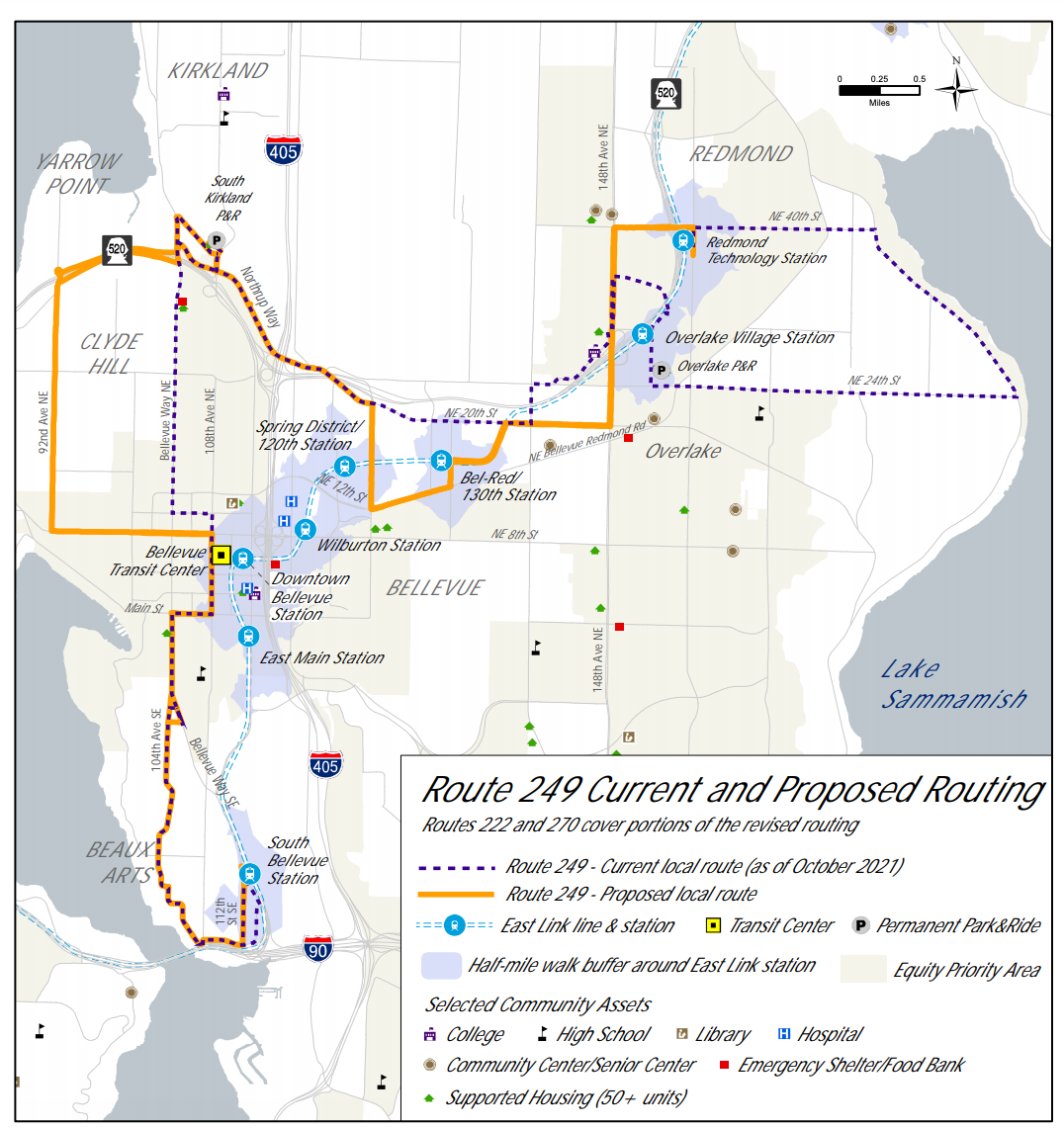
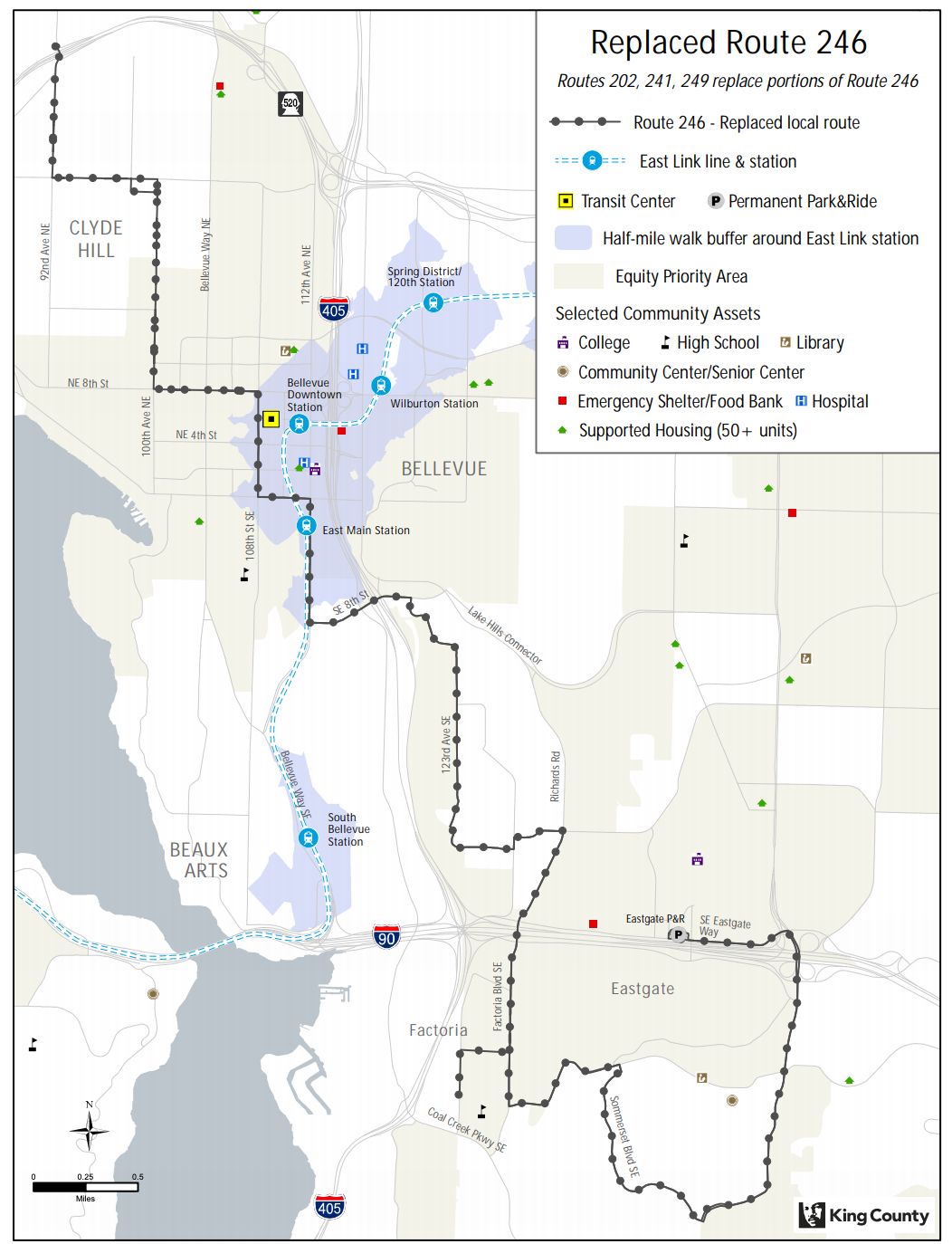
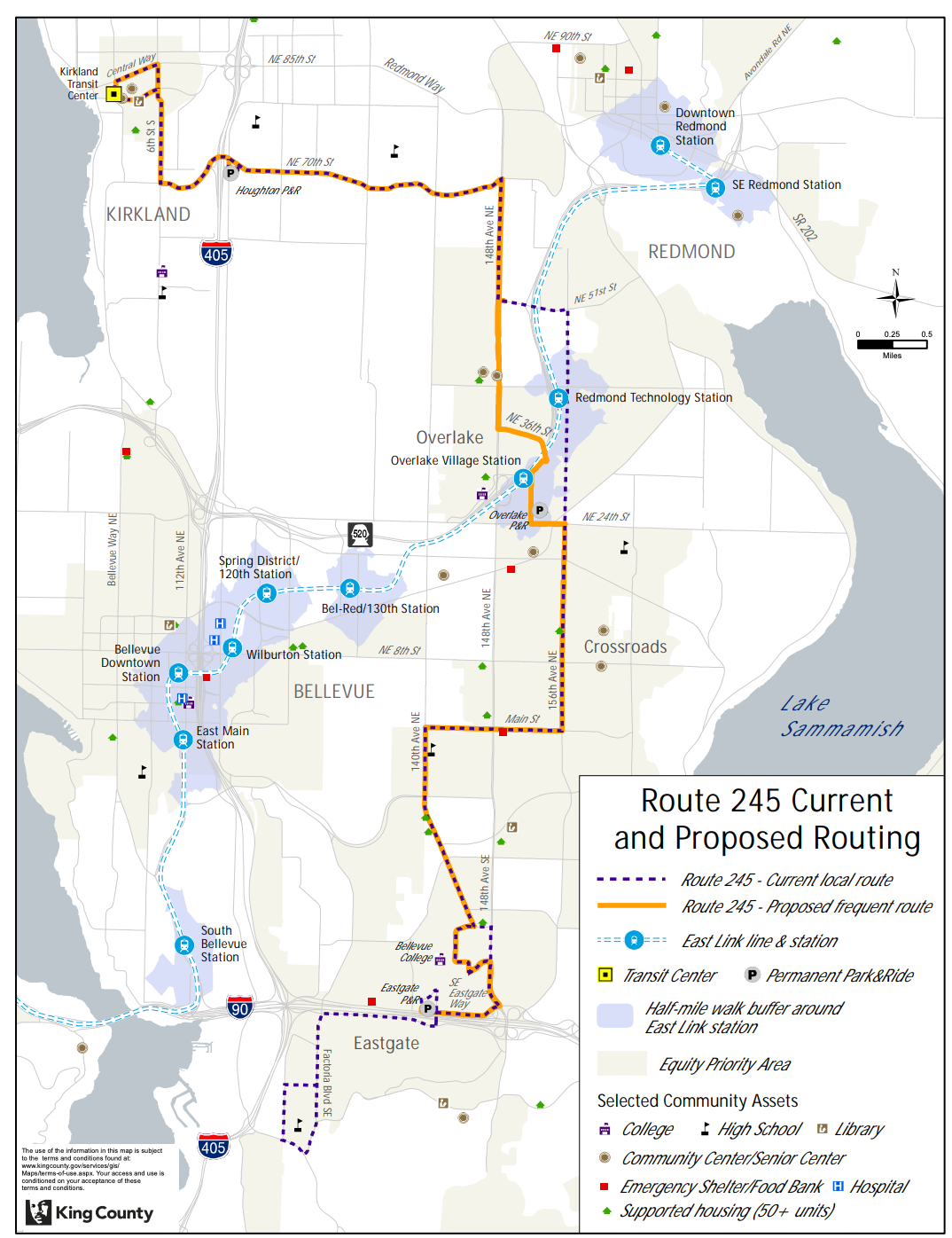
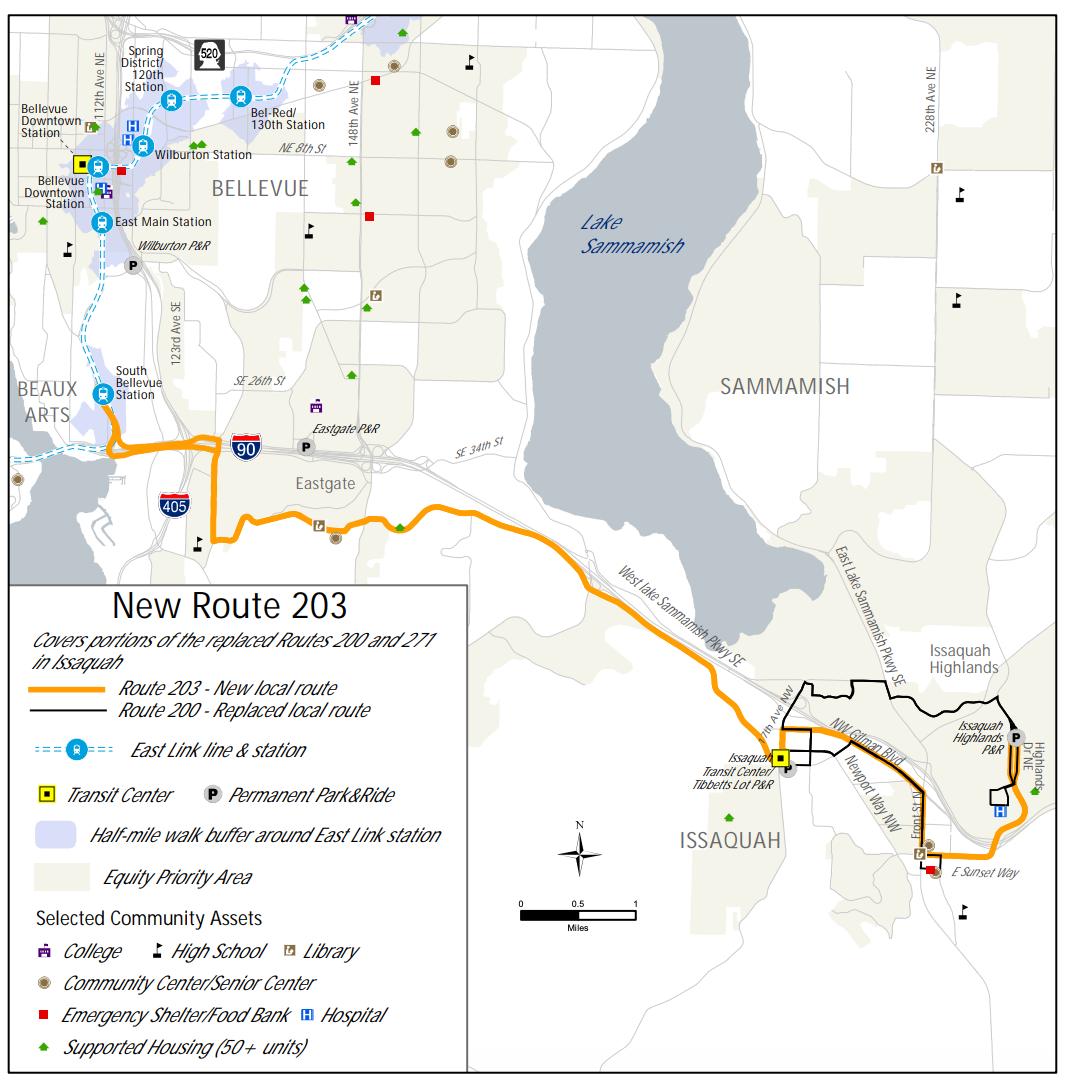
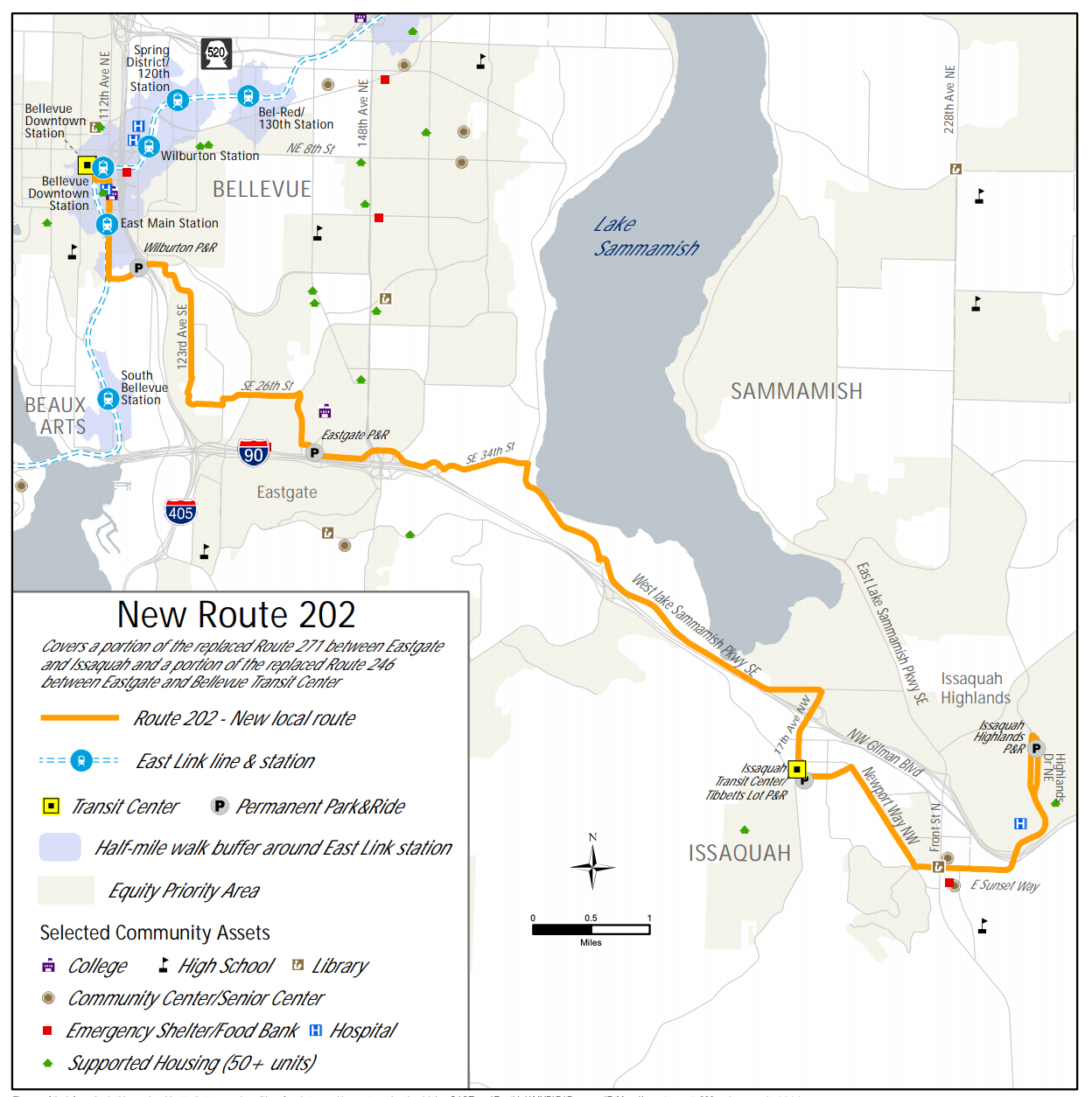
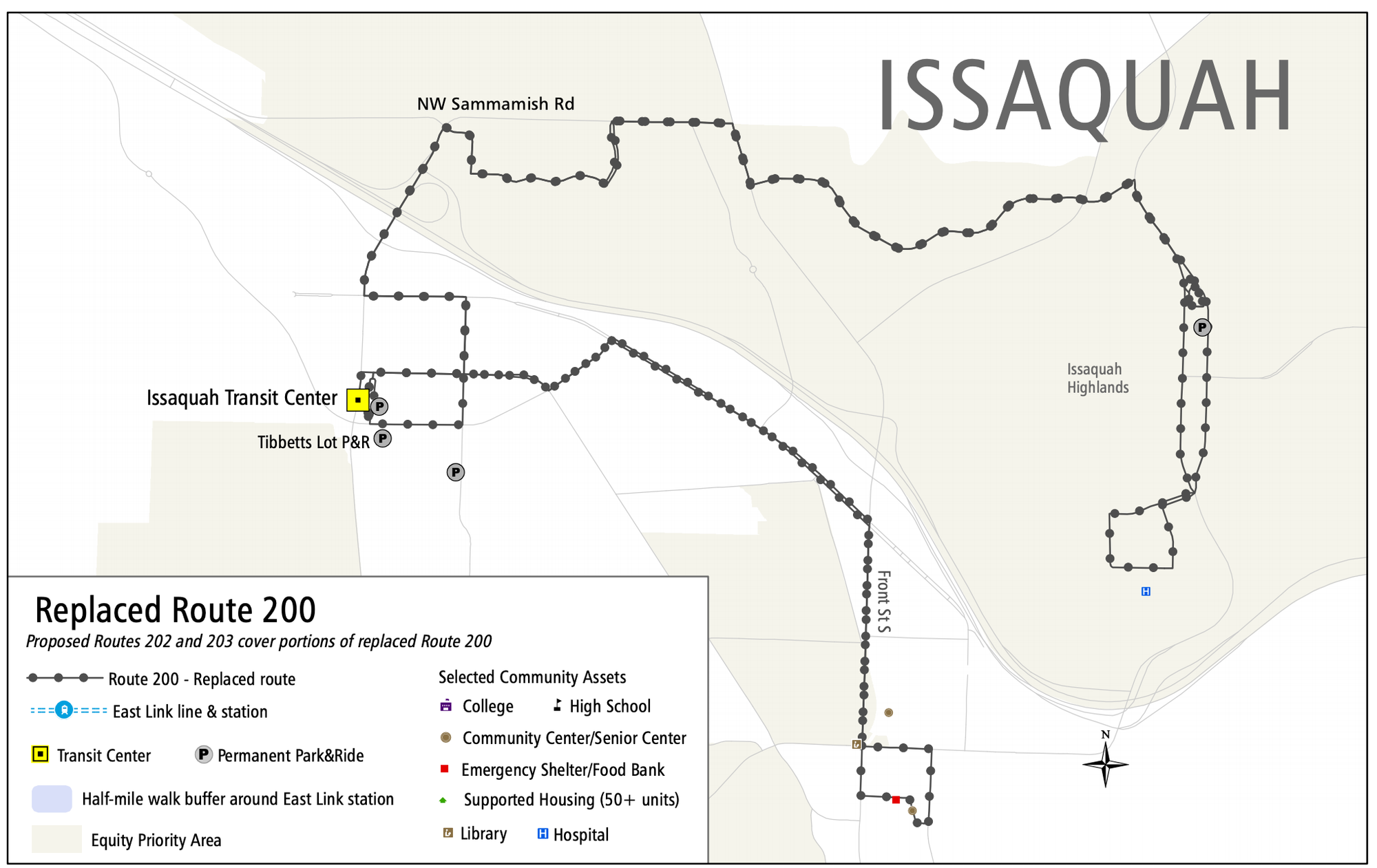
The big ideas for the East Subarea changes are a focus on Routes 218 and 269 as well as new Route 215. Many weekday peak hour routes would be consolidated so that they rely on Routes 215, 218, and 269 to reach the future Mercer Island Station and continue onward to Seattle. Combined, these routes would provide service as frequent as every five minutes to the station during peak hours. Overlaid on top of this is Route 554 that would run frequently between Downtown Bellevue and Sammamish via I-90 and Issaquah, which would provide service to the future South Bellevue Station and Downtown Bellevue transit center and station.
| Routes | Changes |
| 204 | This route would benefit from new Sunday service that matches Saturday service. |
| 208 | This route would be eliminated. |
| 212 | This route would be eliminated. |
| 214 | This route would be eliminated. |
| 215 | This would be a new route running from North Bend to the future Mercer Island Station, though only every third trip would be extended to North Bend with most terminating/commencing at Issaquah Highlands Park-and-Ride. The route would only deviate from I-90 to reach the Issaquah Highlands Park-and-Ride and the segment running through North Bend and Snoqualmie. Additionally, the route would essentially replace Route 208 and run every day of the week with a wide span of service. Frequencies to and from Issaquah Highlands Park-and-Ride would ever 30 minutes frequencies, except during weekday peak hours where it would be every 15 minutes. Frequencies to and from North Bend would be every 90 minutes, except during weekday peak hours where it would be every 45 minutes. |
| 216 | This route would be eliminated. |
| 217 | This route would be eliminated. |
| 218 | This route would be cutback to the future Mercer Island Station. Frequency would be heavily boosted to every 15 minutes during weekday peak hours with a wider span of service, but it will only run in the peak direction. |
| 219 | This route would be eliminated. |
| 269 | This route would be extended via I-90 to the future Mercer Island Station to provide a fast connection for riders in Issaquah and Sammamish to light rail. The Redmond tail, however, would be cutback to the future Southeast Redmond Station. Additionally, it appears that new Saturday service would operate from 8:35am to 6:45pm with 30-minute frequencies. Metro is still updating certain details on this route, which should include clearer information on new Saturday service and new Sunday service. |
| 630 | This route would be revised to serve First Hill near the hospitals instead of Downtown Seattle so as to avoid a three-seat ride. |
North Subarea proposals
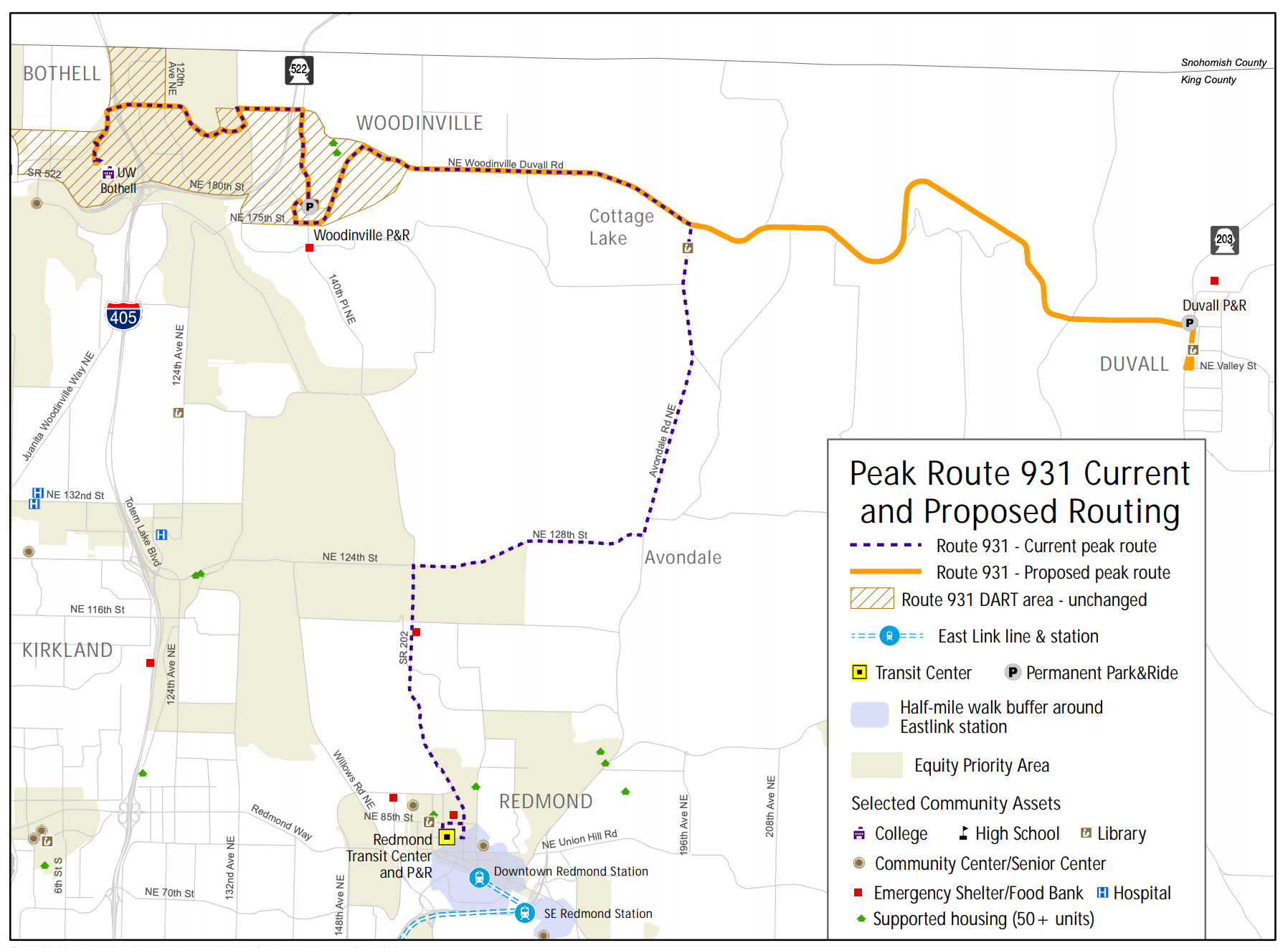
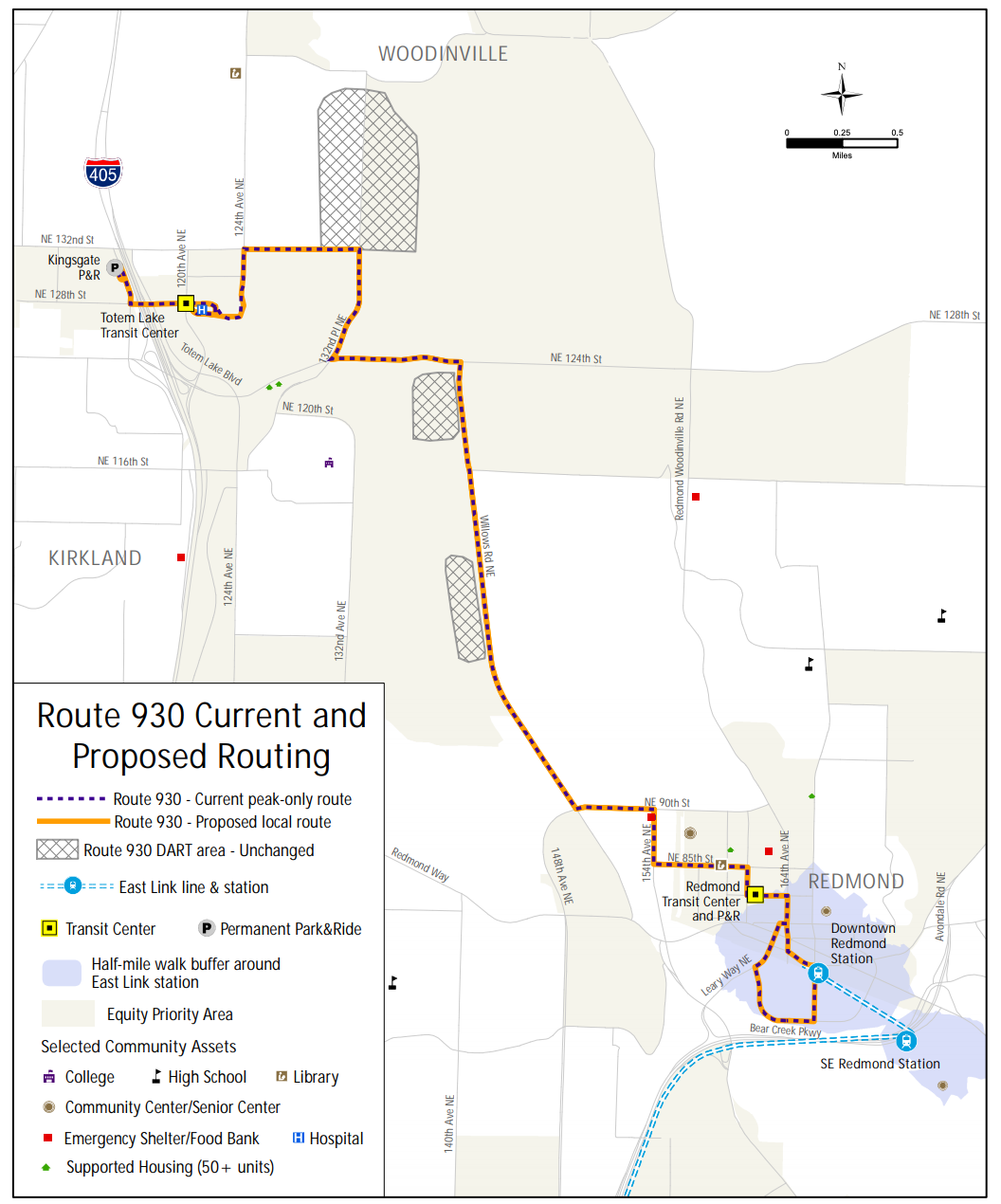
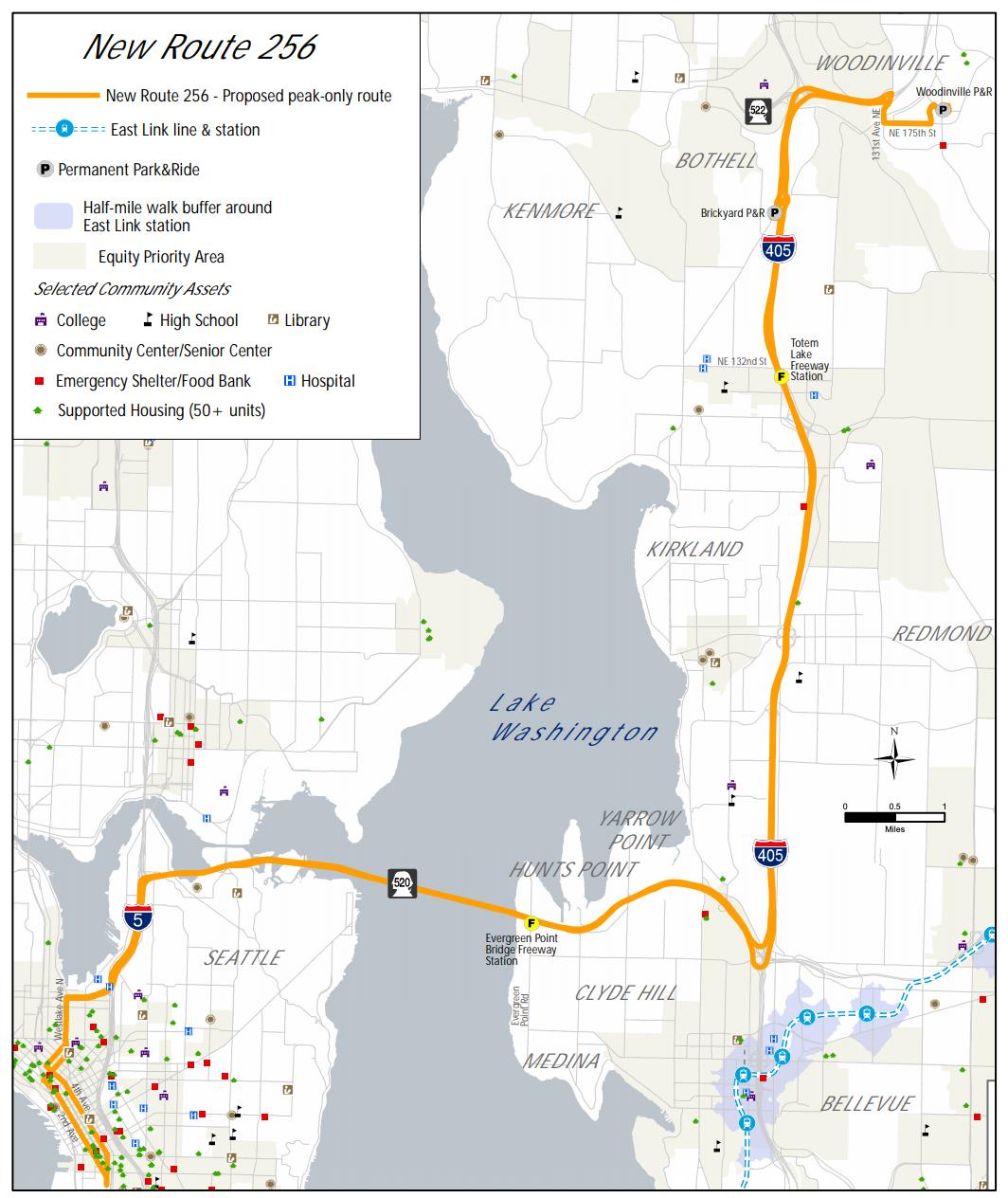
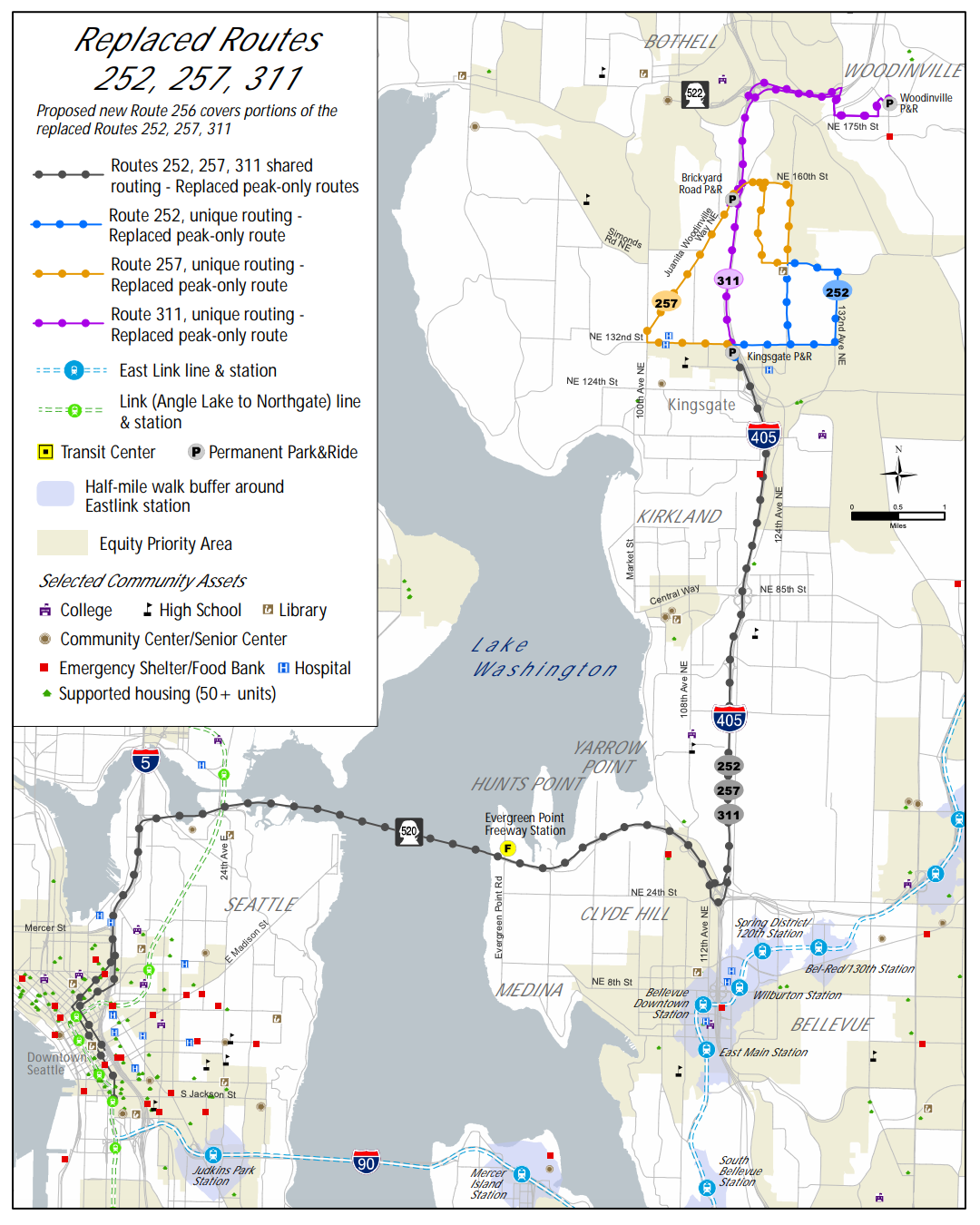
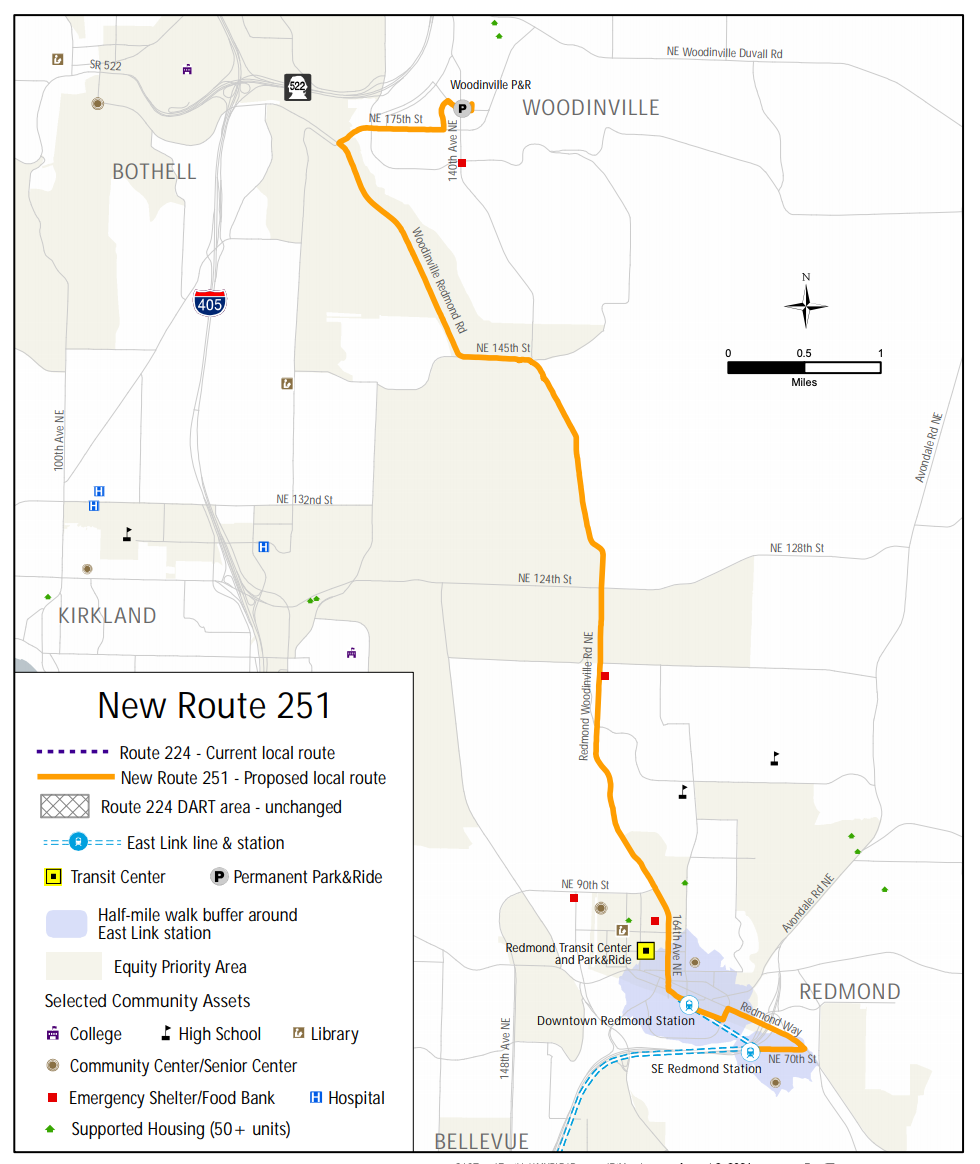
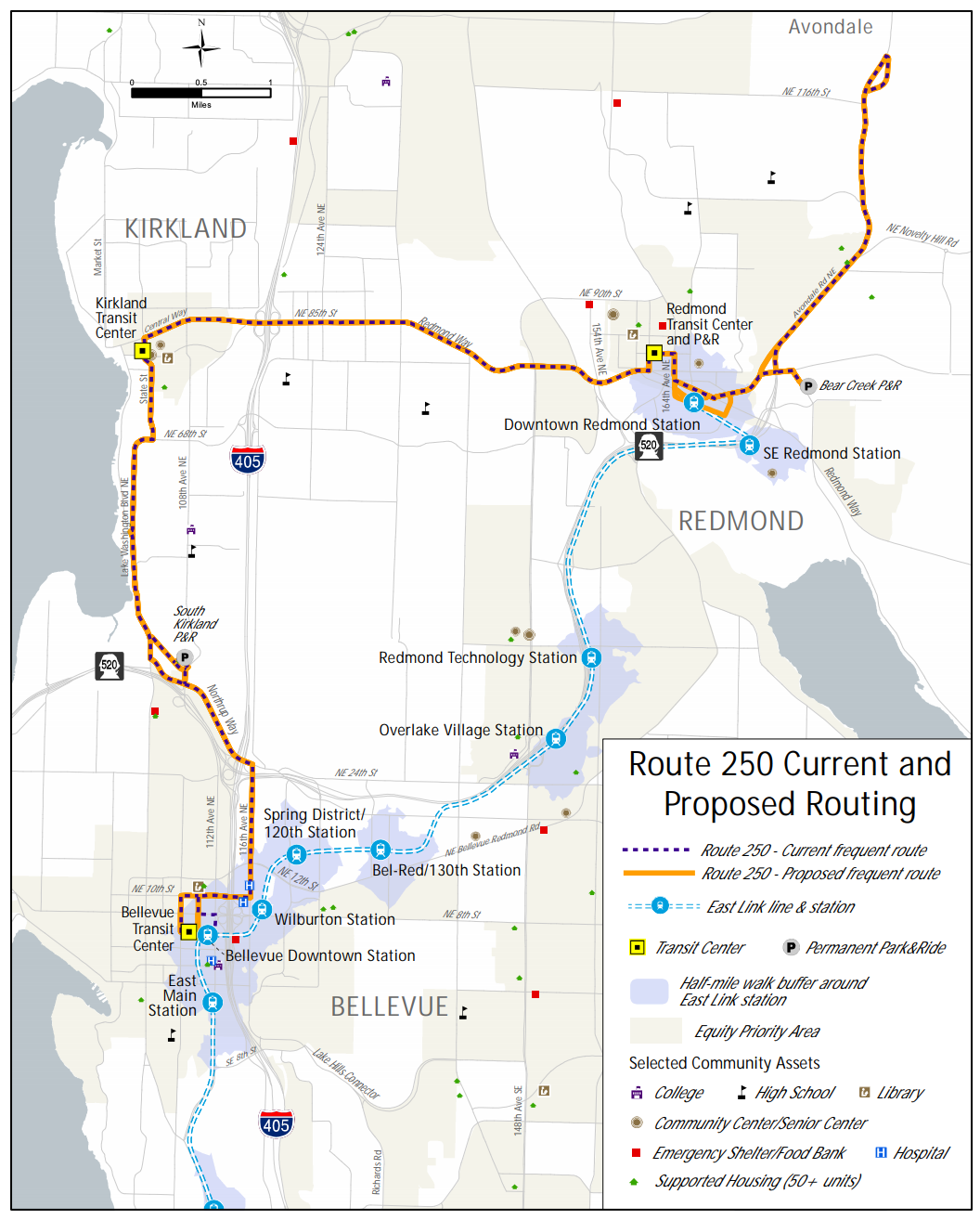
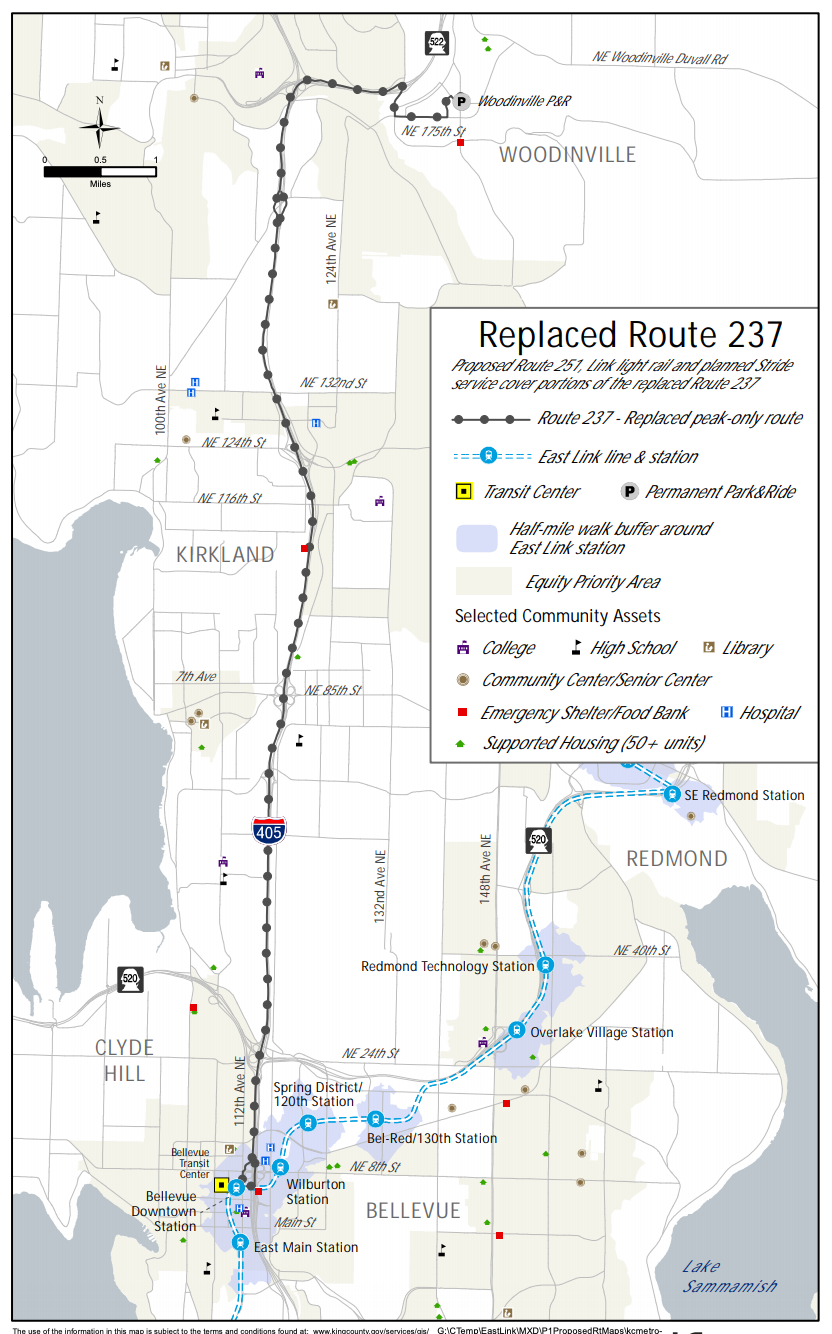
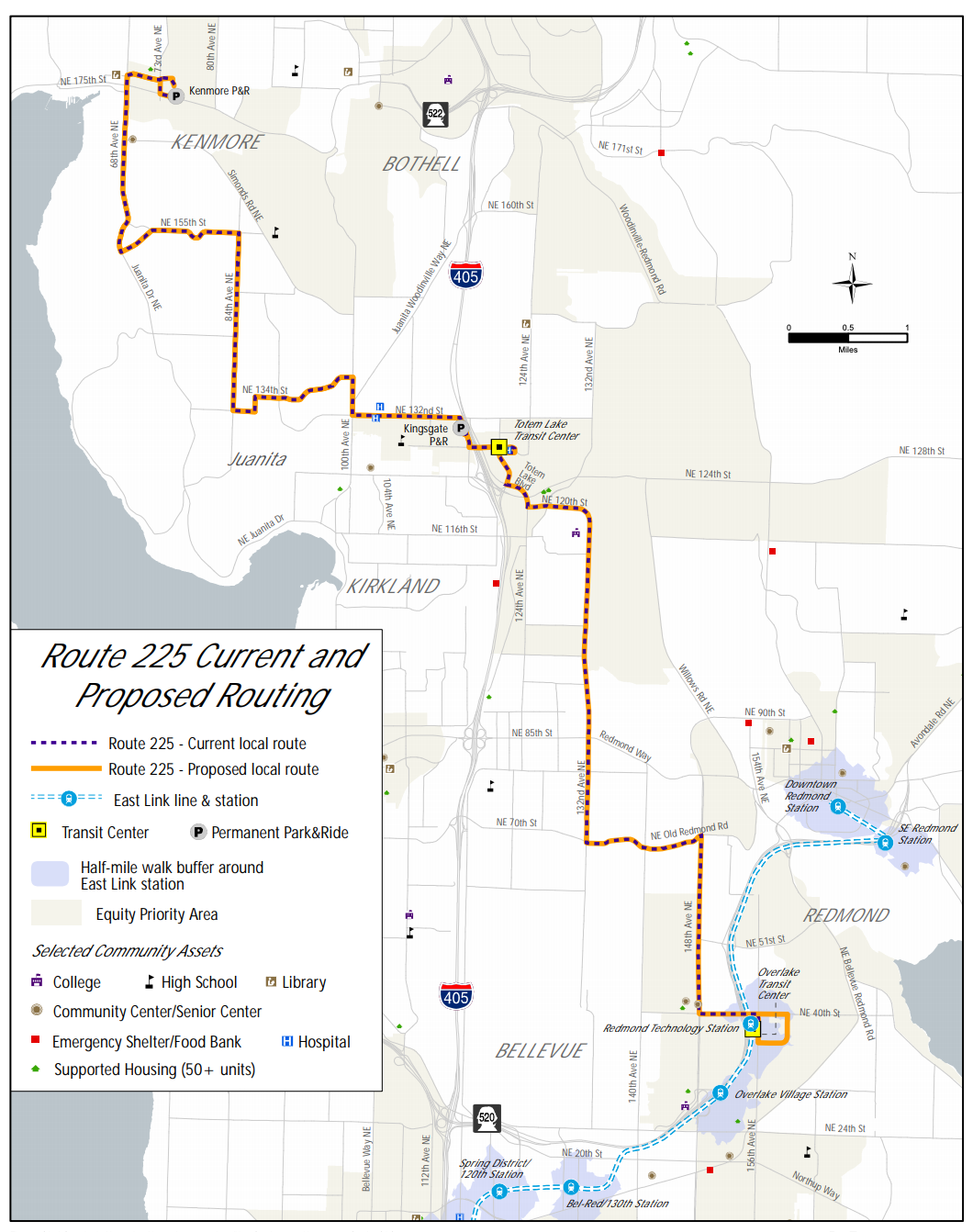
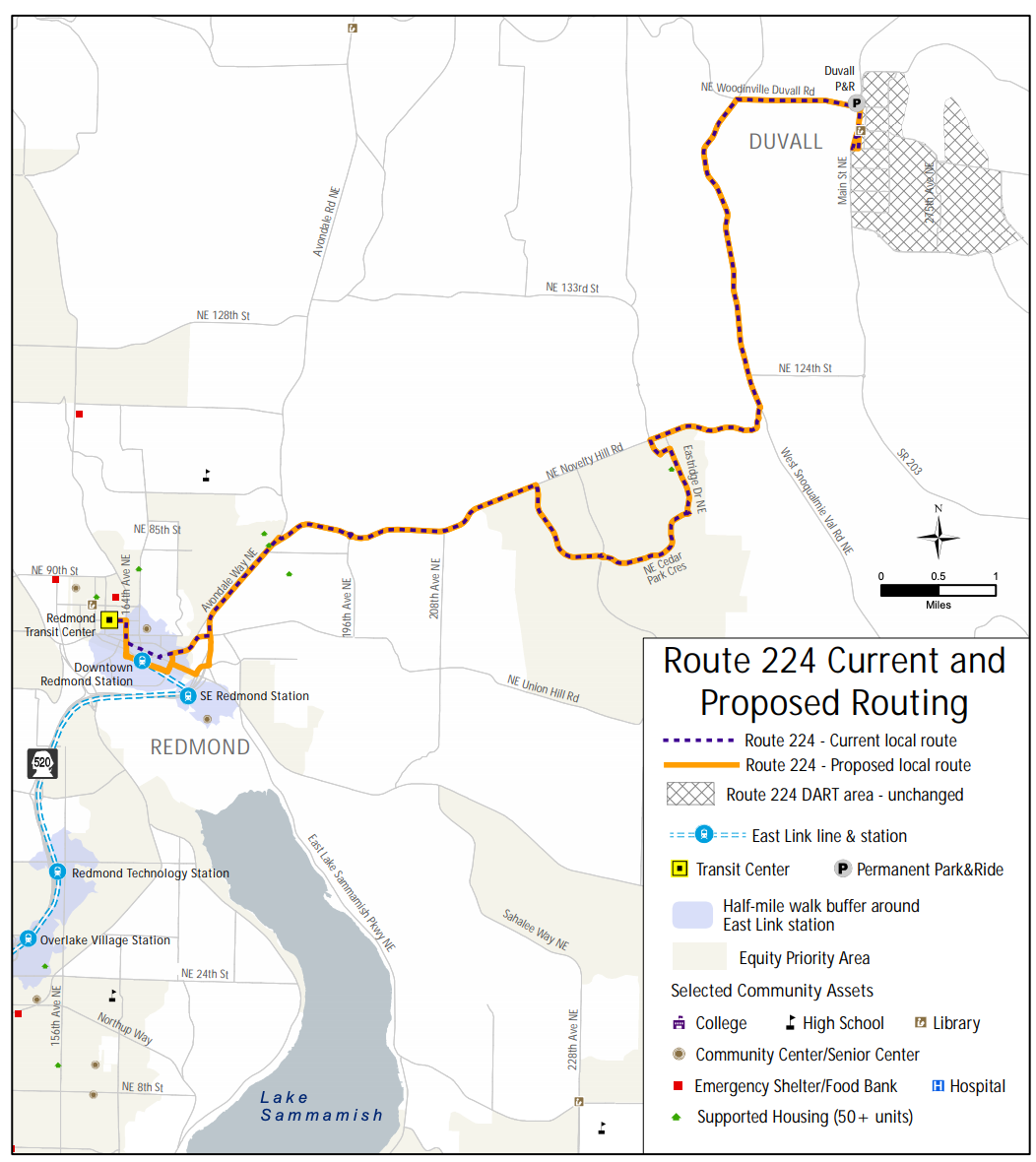
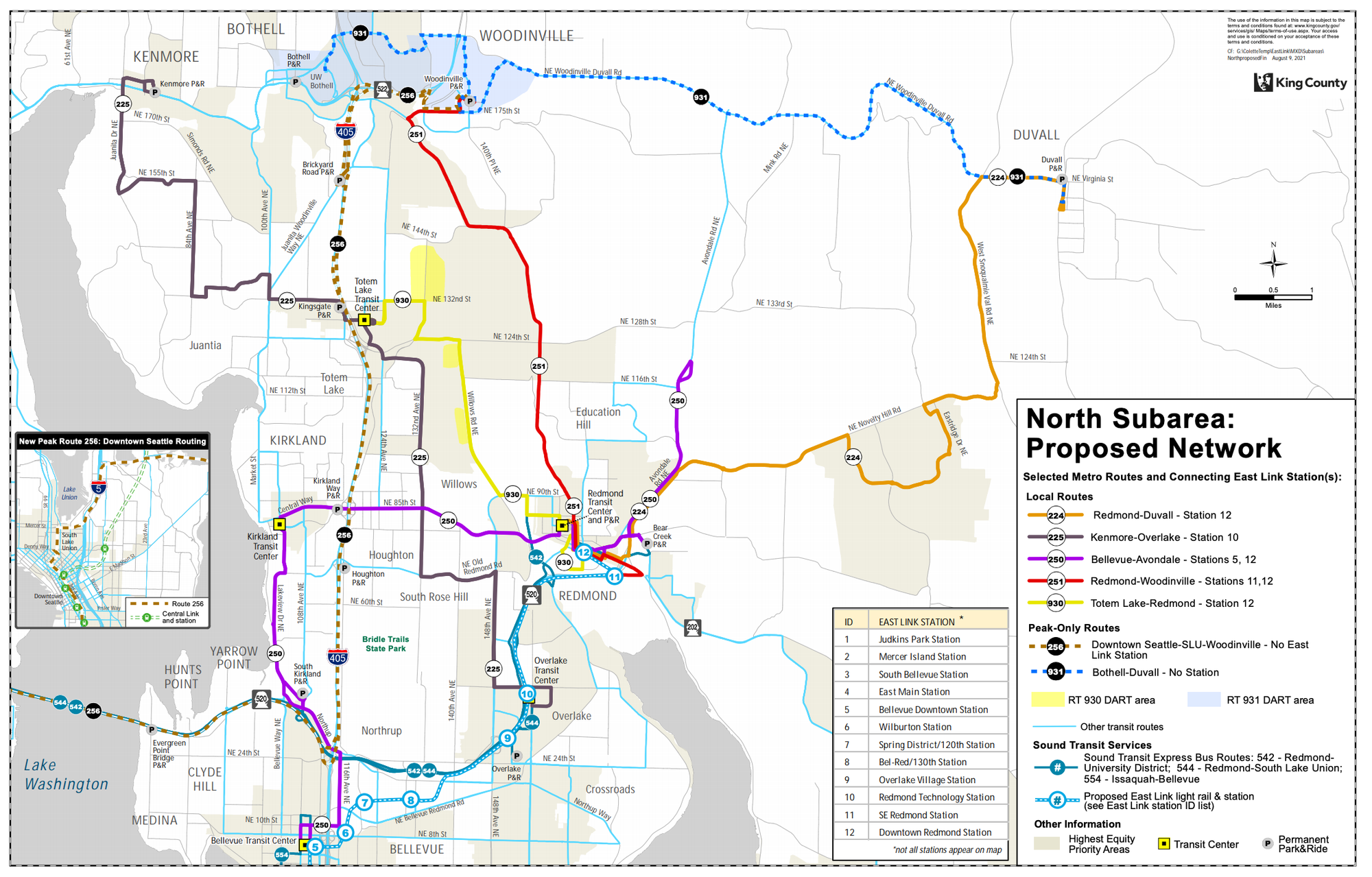
The big ideas for the North Subarea are a new local Woodinville-to-Redmond and peak-hour Woodinville-to-Downtown Seattle route. Currently, Redmond and Woodinville have no direct connection, but new service would tie them together and allow riders from Woodinville to access to light rail. Additionally, a new peak-hour route would consolidate three existing varieties from Kirkland and Woodinville to Seattle.Engagement opportunities and next steps
Through October 18th, Metro and Sound Transit will be hosting an online open house. The public can further review the proposals through the online open house and offer feedback on specific routes. Two virtual community forums will also be held on Saturday, September 18th at 10:00am and Wednesday, September 29th at 6:00pm. Once the second outreach process has wrapped up, the agencies will engage with the Mobility and Partner Review Boards and then further revise the proposals. The agencies will then offer a final recommended restructure proposal this winter. Approval of the changes could come by spring or summer next year.