The County’s cringeworthy move suggests more attention is needed on boosting service and electric trolleys.
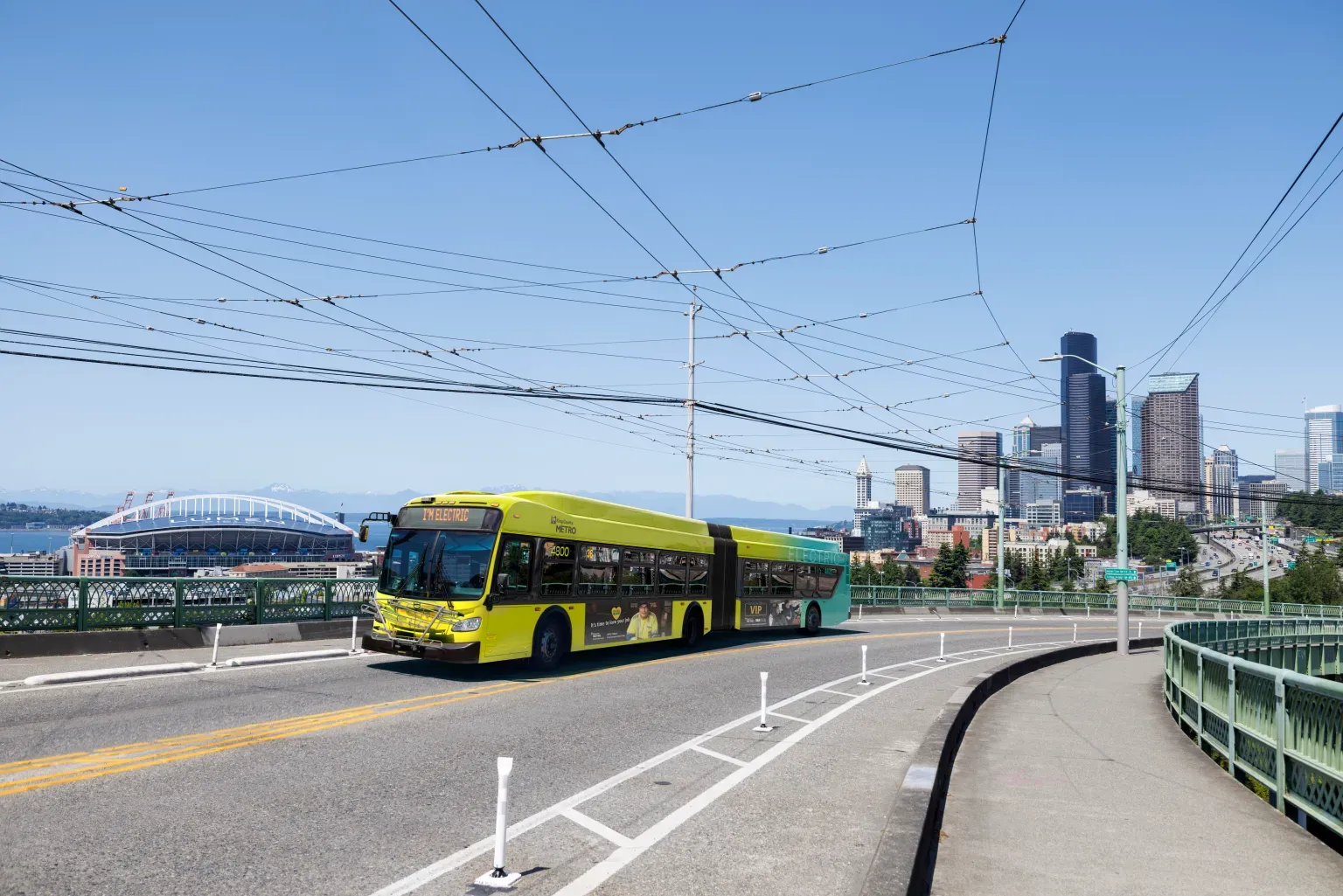
King County Metro will roll out new light yellow paint jobs to differentiate its new battery-electric buses from the rest of its fleet of older hybrid diesel buses and electric trolleys. The yellow branding wraps will begin appearing on new battery-electric buses that enter service starting in 2025.
Intended to celebrate the agency’s 50th anniversary, the announcement ended up earning criticism from transit advocates and came across as clumsily timed and out of touch given the serious problems that the agency faces. Despite the battery-electric bus branding scheme dubbed “New Energy,” the new buses are less reliable and have a shorter range than the previous generation of buses due to the limitations of battery technology. Nonetheless, Metro is betting on them — even though keeping buses in service is at a premium given shrinking service and reliability issues.
Constantine attracts the ire of transit riders again
On Tuesday, King County Executive Dow Constantine shared a photo on social media of a silhouetted bus below electric trolleybus wires ordinarily used by Route 36, a workhorse of the system. The silhouetted bus, however, clearly was not an electric trolleybus — the greenest type of bus in Metro’s portfolio and accounting for about 12% of its fleet — since there was no pantograph to connect the trolley to the overhead wire.
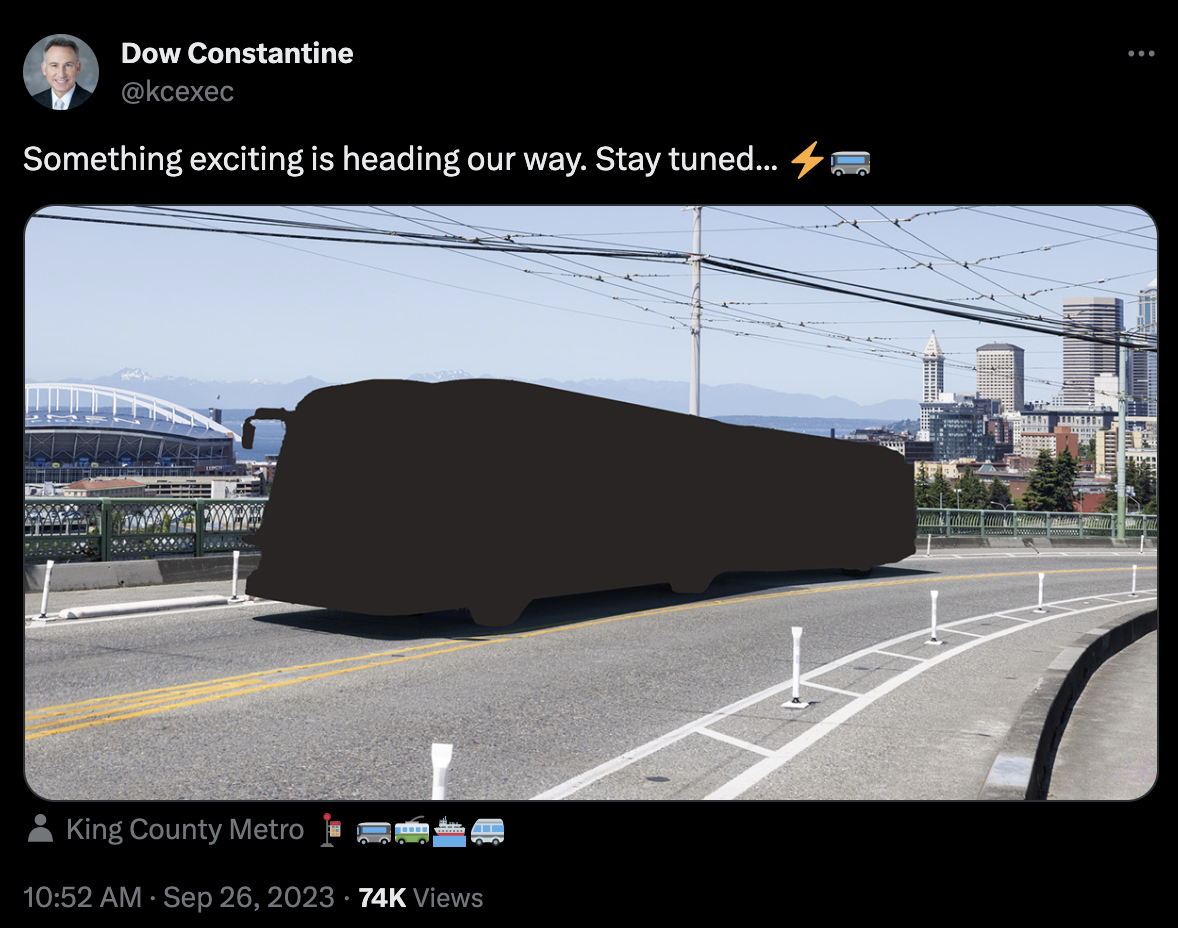
On social media, Constantine was pilloried by transit riders pointing out the odd background choice for the silhouetted bus and the fact that Metro is failing riders on service quality and frequency. Just this month, the agency took a dramatic cut in transit service to match available staffing and equipment levels. That meant cutting back on both all-day high-ridership service as well as peak-hour commuter routes.
Hampered by a bus operator shortage, Metro is still well below pre-pandemic service levels at around 90% of service, factoring in missed trips. Relatedly, ridership is around 60% of pre-pandemic levels.
In 2020, King County Council was considering running a countywide transit measure (similar to Seattle’s transit measure) that could have boosted bus service, but it shelved the measure amid the pandemic. Even after officials declared the pandemic vanquished, Constantine has not pushed for bringing back the county transit measure and councilmembers have let it stay in the dustbin despite interest from the original sponsor Claudia Balducci and leading candidates for open county council seats (see The Urbanist’s endorsements for who those are).
The great reveal on Wednesday similarly did not go over well when the silhouette was removed to show a rendered battery-electric bus in place of a trolleybus. Transit riders appeared even more riled than before. Constantine was undeterred and flooded his social media timeline to highlight new bus branding and promote Metro’s risky and condensed zero-emissions fleet conversion strategy.