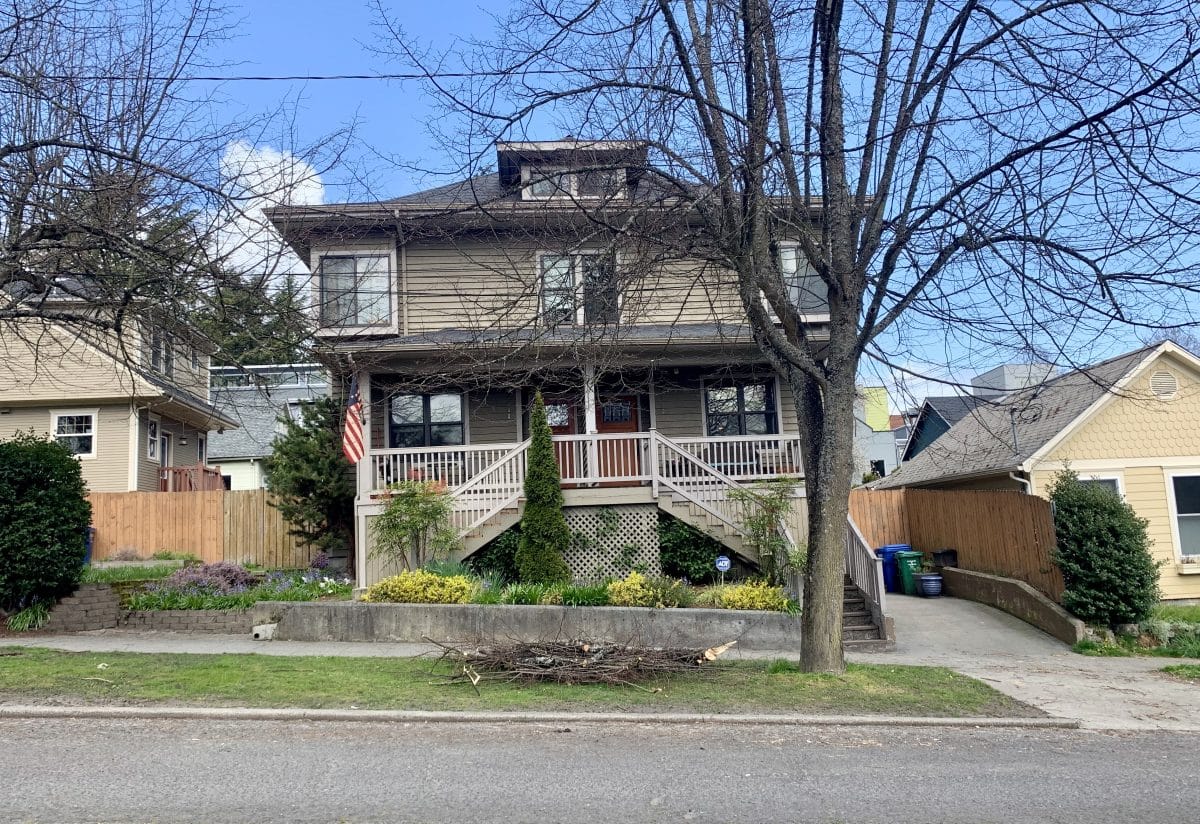
Washington could follow in the example of Oregon and California by chipping away at the predominance of single-family zoning across the state with new proposed legislation, House Bill 1782 and companion Senate Bill 5670.
“It’s time for Washington to lift bans that prevent the construction of modest home choices like duplexes, triplexes, fourplexes, and cottages,” Representative Jessica Bateman (D-22nd District), one of the bill’s sponsors, said in an email. “We are experiencing a housing crisis in every corner of the state with families spending up to half their income on rent.”
That crisis is racialized and linked to the homelessness crisis.
“This disproportionately hurts communities of color, who have been historically harmed by redlining and are more likely to be renters,” Bateman added. “By allowing these modest homes choices, in high opportunity and amenity rich areas we can unlock opportunity for Washington families and ensure everyone has a place to call home.”
In addition to Representative Bateman, the bill was sponsored by Nicole Macri (D-43rd District), Liz Berry (D-36th District), Joe Fitzgibbon (D-34th District), and Cindy Ryu (D-32nd District), and a companion piece has been filed in the State Senate by Senator Mona Das (D-47th District) and Patty Kuderer (D-48th District). The bill was requested by Governor Jay Inslee and included within his proposed homelessness plan.
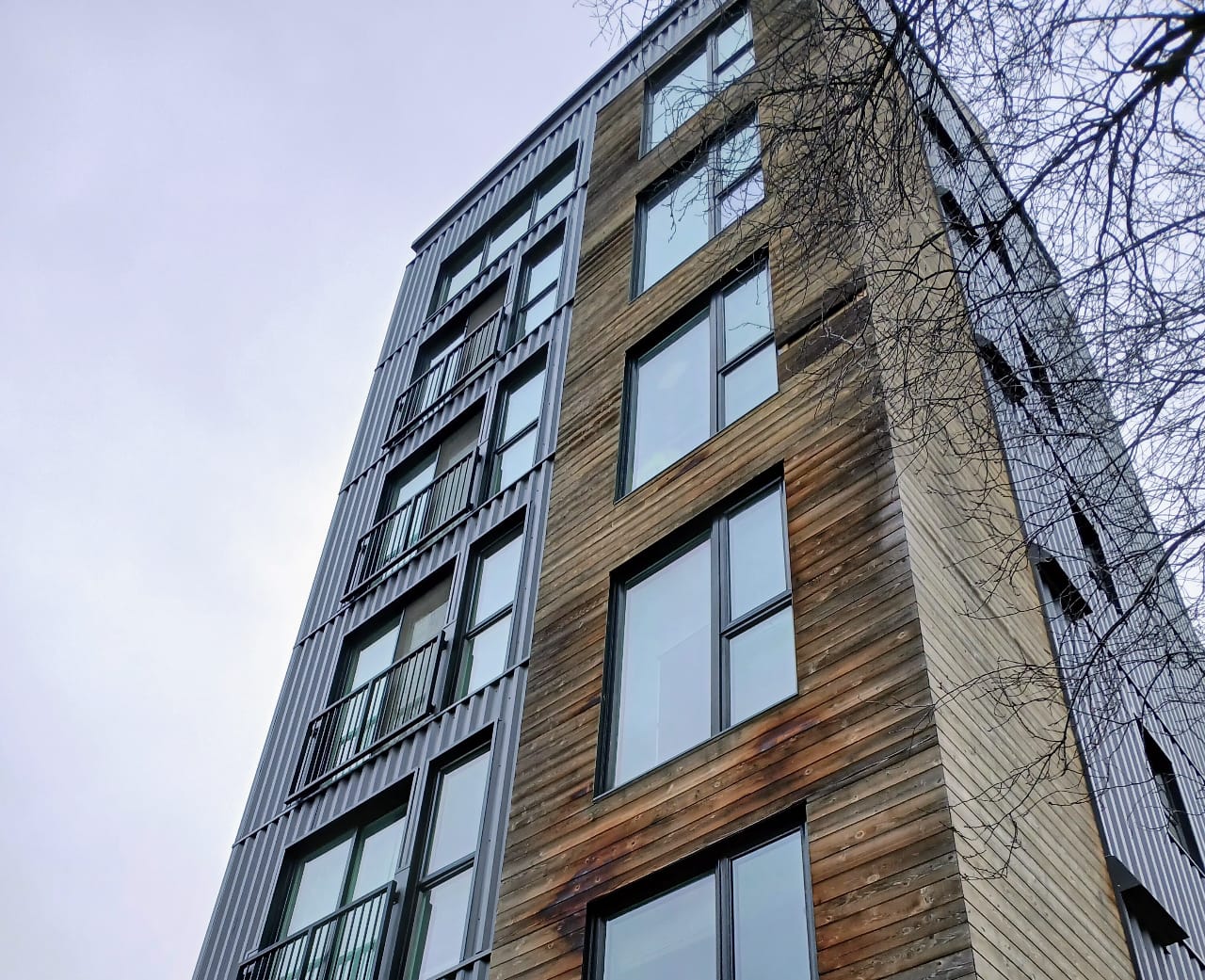
The key to increasing density in this bill is missing middle housing, for example small multifamily developments like duplexes, townhomes, rowhouses, and courtyard apartments.
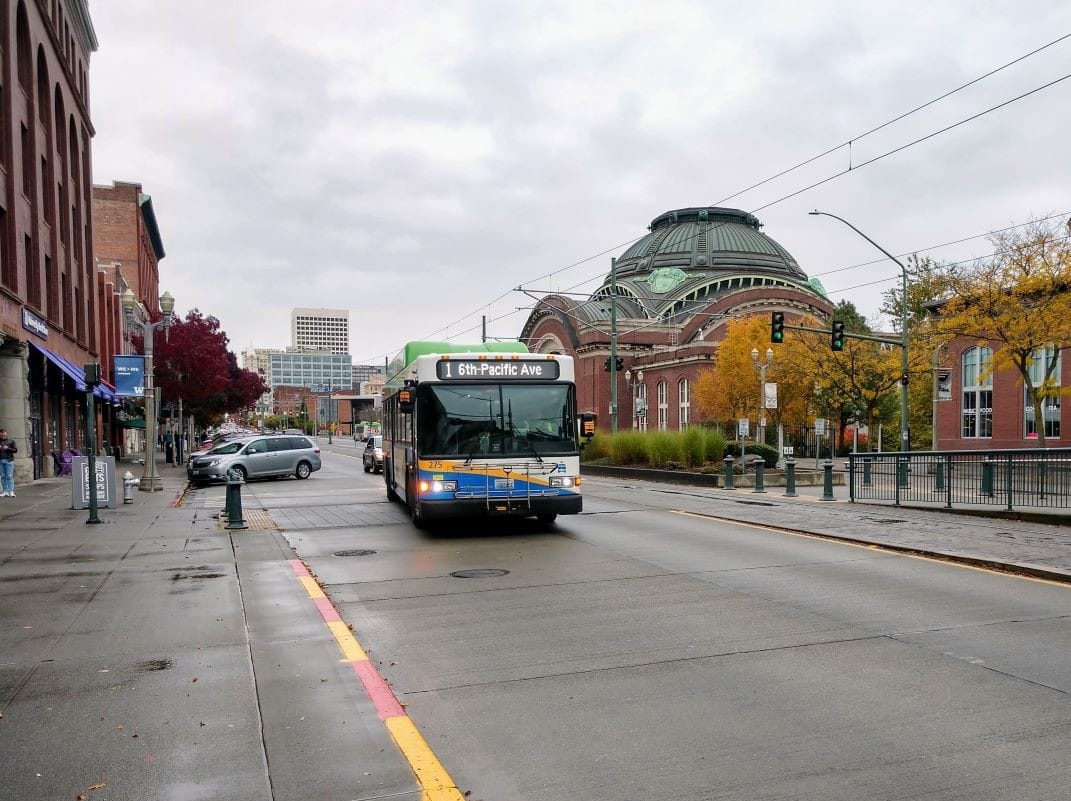
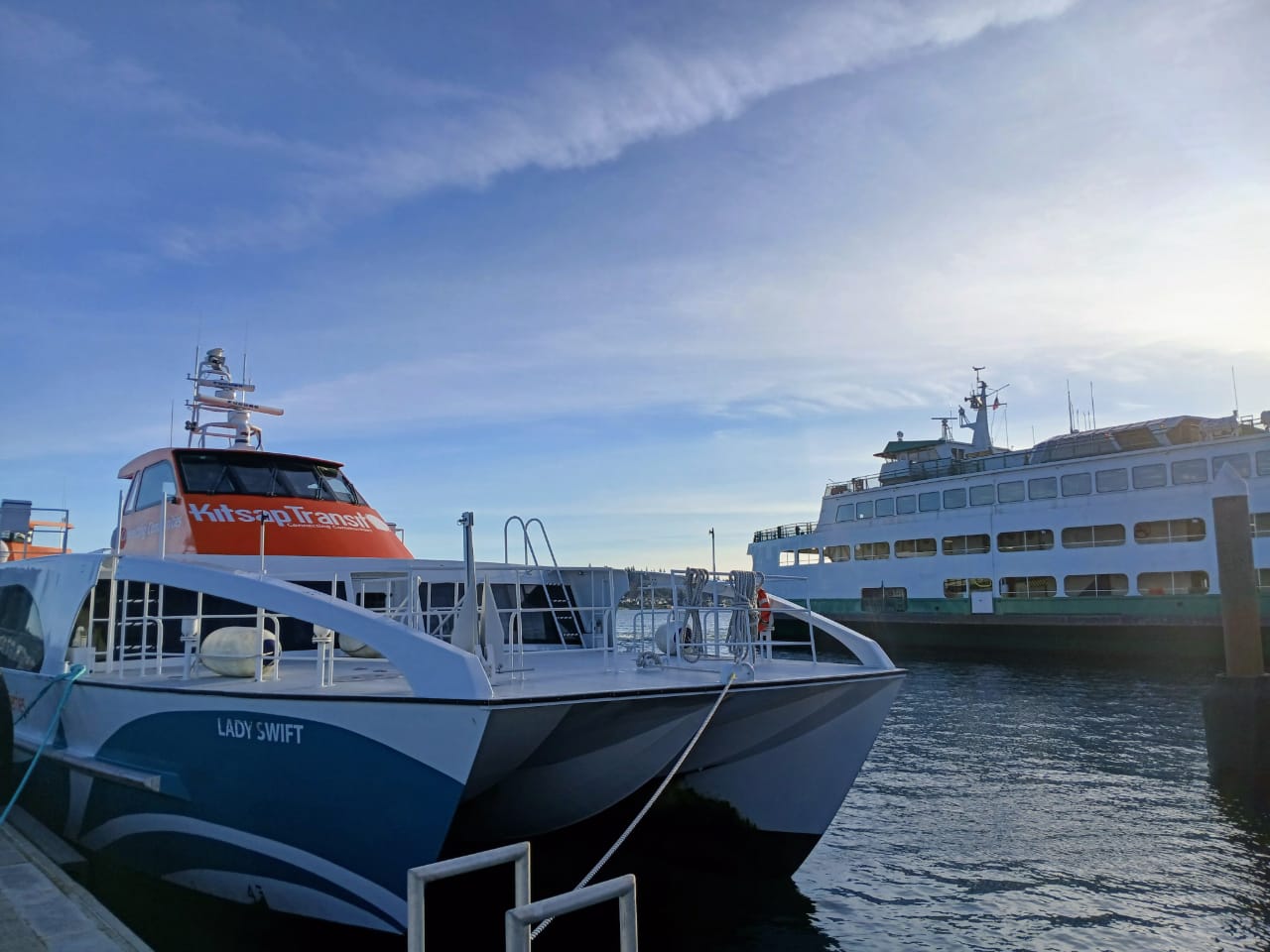
If it were to pass as written, the law would require cities with a population of at least 20,000 and planning under the state’s Growth Management Act (GMA) to allow for duplexes, triplexes, and fourplexes to be constructed on all lots zoned for detached single-family homes. In areas within a half-mile of a major transit stop, which is defined as a stop for high capacity transit (e.g., light rail), commuter rail, fixed rail (e.g., monorail and streetcar), bus rapid transit, state ferry terminals, or any bus stop providing service at least every 15 minutes during certain weekday peak hours, these cities would also need to allow for all missing middle housing types, including sixplexes and townhouses.
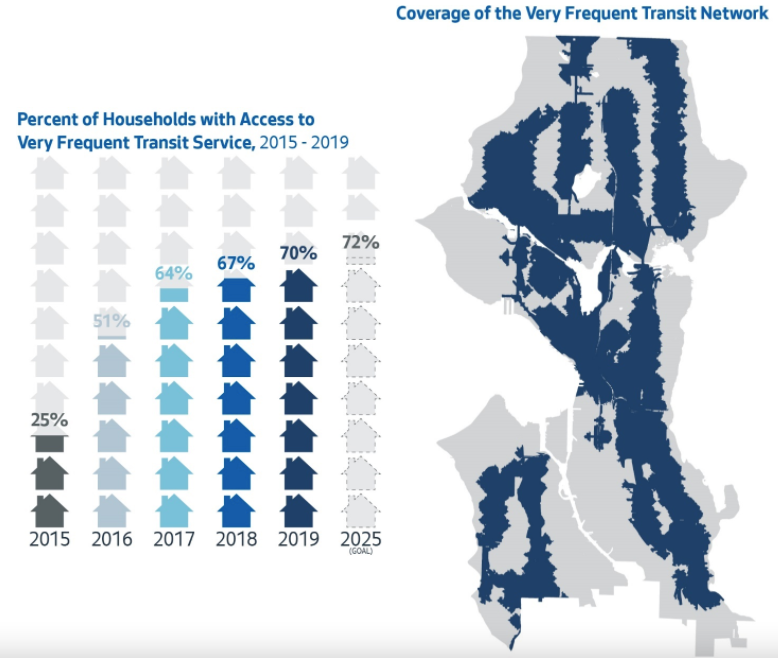
In Seattle, most residential areas have transit service that meets that benchmark, meaning sixplexes and townhouses could be built in much of the city under the proposed law. In 2019, the Seattle Department of Transportation calculated that 70% of Seattle households lived within a 10-minute walk of very frequent transit service, defined more stringently than that state threshold with 10-minute headways during peak hours.
A partial alternative, however, exists for cities that don’t prefer to fully pursue the sweeping zoning change scenario on lots outside of major transit stop overlays. Under the law, cities could opt out of the requirement by adopting an average minimum density equivalent set by the city’s size. Even so, for all cities planning under the GMA with at least 10,000 residents, duplexes would be allowed on all lots zoned for detached single-family homes whether or not they adopt the minimum density equivalent.
Washington is not the first to pursue statewide zoning reform. Last fall, the State of California effectively ended single-family zoning when it signed into law State Bill 9, which permits duplexes (and in some cases triplexes and fourplexes) in all areas zoned for single-family housing. Aimed at facilitating “gradual density,” under the new rules, up to 700,000 new homes could be added across California, a number representing the proverbial drop in the bucket when compared to the state’s current 7.5 million single-family homes.
While the long-term impact of SB 9 on the Golden State remains to be seen, it did move the needle a bit further forward in the fight to end exclusionary zoning than a bill passed in 2019 by the Oregon state legislature that requires cities with more than 10,000 residents to allow duplexes in areas zoned for single-family homes. That bill also increased density allowances in the Portland metro area to include triplexes, fourplexes, and courtyard apartments.