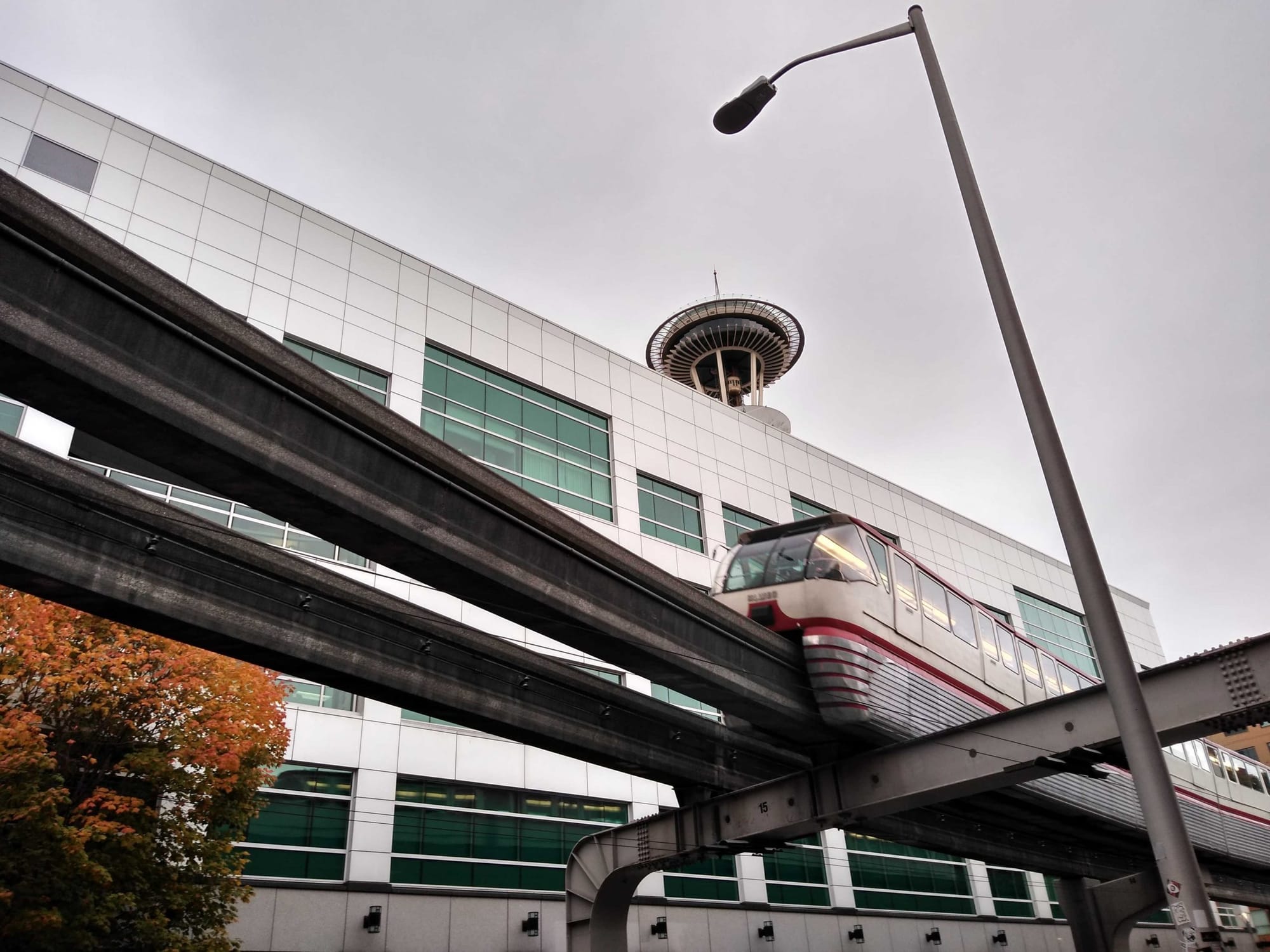
The Seattle Monorail starts accepting ORCA cards today. This change is significant because the system had essentially operated outside of the unified local transit network for more than a decade. ORCA acceptance means that riders can transfer between light rail and local buses without having to have a pay a separate fare or have a monorail-only pass.
To facilitate this change and ensure that operation costs remain covered by fares, the Seattle Monorail will be increasing fares for individual trips. The following are the new fares in effect:
- $3.00 for adults aged 19 through 64 (previously $2.50);
- $1.50 for youth aged 6 through 18 (previously $1.25);
- $1.50 for seniors, ORCA LIFT, and other reduced fare beneficiaries (previously $1.25);
- Free for children aged 5 and under.
Passengers can still purchase paper tickets with cash or credit cards. The Transit GO app is another option to pay fare on-the-go.
The Seattle City Council approved the changes two weeks ago, paving the way for the fare changes and commencement of ORCA integration as part of a revised concession agreement with the Seattle Monorail’s contract operator, Seattle Monorail Services, LLC. The terms of the agreement freeze further fare increases until 2022 when they could be raised an amount equal to inflation over the previous three years, rounded up to the nearest quarter of a dollar. The agreement allows similar inflationary increases every third year thereafter (i.e., 2025, 2028, 2031, and 2034). The agreement will also require the contract operator to invest $3.5 million to $12 million in capital investments to improve stations.

Former Mayor Ed Murray released a study in 2017 evaluating whether or not ORCA integration would be a financially-wise decision and attract sufficient ridership. The study indicated that ridership would grow substantially on the monorail and could be financially solvent if fares were increased. Ridership is projected to grow 7% to 16% during the first three years of ORCA integration. With a baseline ridership of 2,147,800 in 2014, ORCA integration could grow ridership an additional 156,000 to 346,000 rides per year. Weekday ridership is currently about 7,000 per day.
The monorail has long operated virtually on its own outside of the regular transit system, relegating it to more of a tool for tourism than a practical choice for transit riders to and from Uptown and Downtown. With ORCA integration, this changes things for people who live and work in Uptown. The monorail is easily the fastest way to reach Seattle Center and the central Uptown area. Trip times between Westlake and Seattle Center are as short as 1.5 minutes. Buses, meanwhile, take 10 minutes or more over a comparable distance, and even longer during peak traffic times.
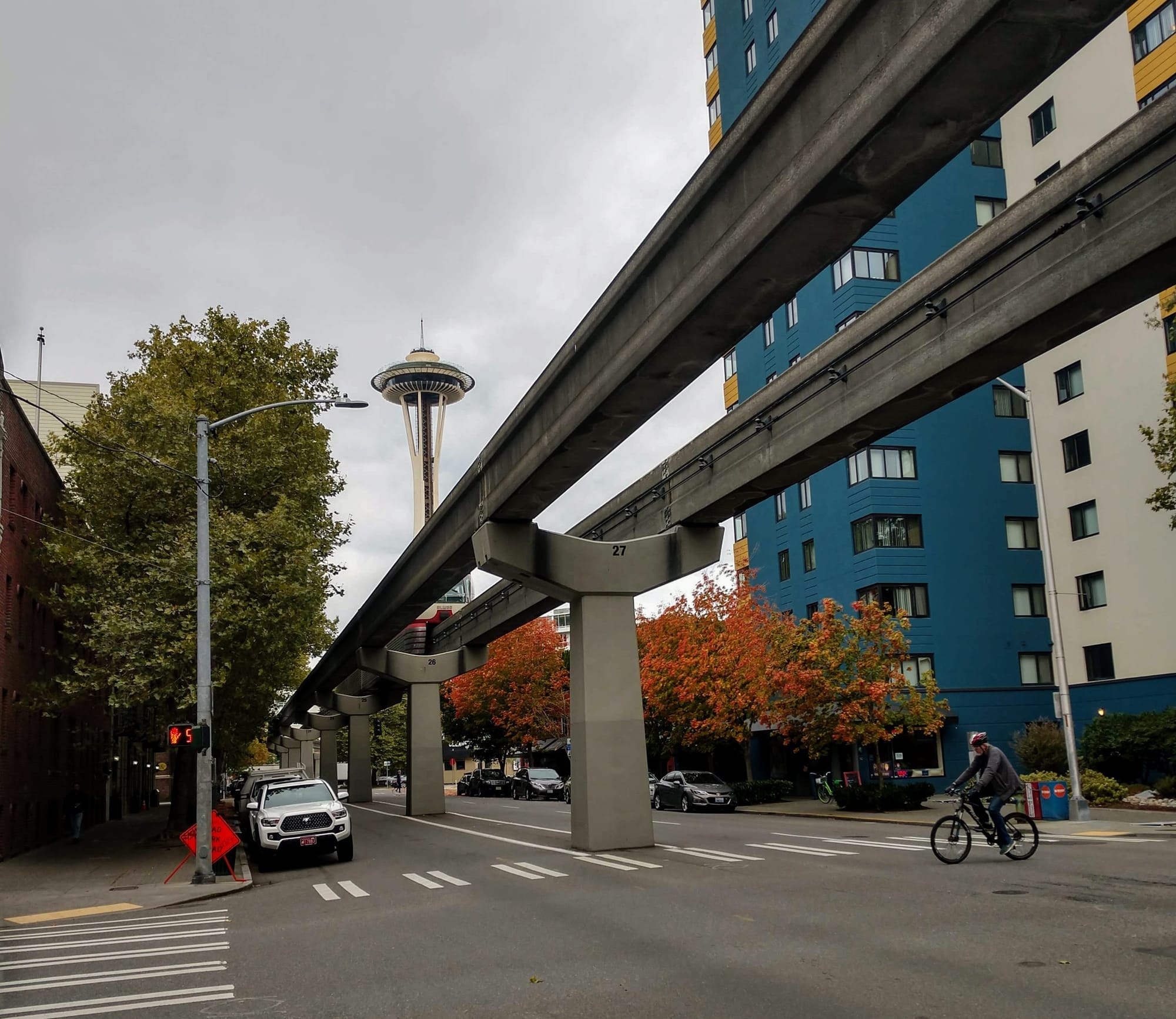
However, there are accessibility drawbacks to the existing monorail facilities. At Westlake, riders have to pass through the interior of Westlake Center to get to and from the monorail platforms. This can take several minutes to navigate. On top of that, frequencies can be a problem even though they are typically every six minutes.
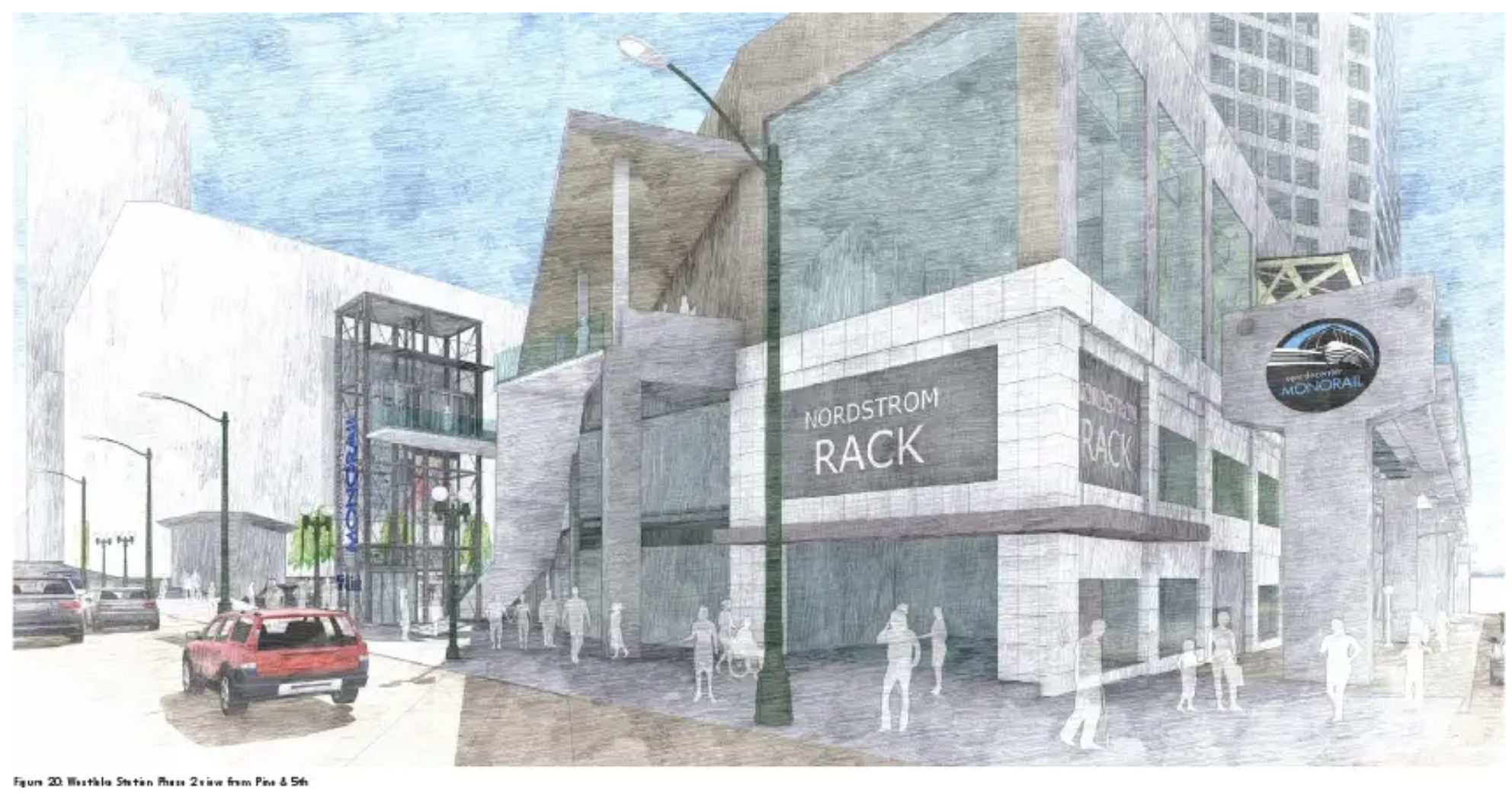
In the years ahead, access could be significantly improved. A report by VIA Architecture suggested a variety of changes to the Westlake and Seattle Center stations to provide more direct and clearer access to platforms. The changes would also facilitate much higher platform capacity with strategic modifications, which is important if the monorail is to be relied upon as an alternative to surface transit for the Seattle Arena currently undergoing major renovation as a hockey and basketball venue.