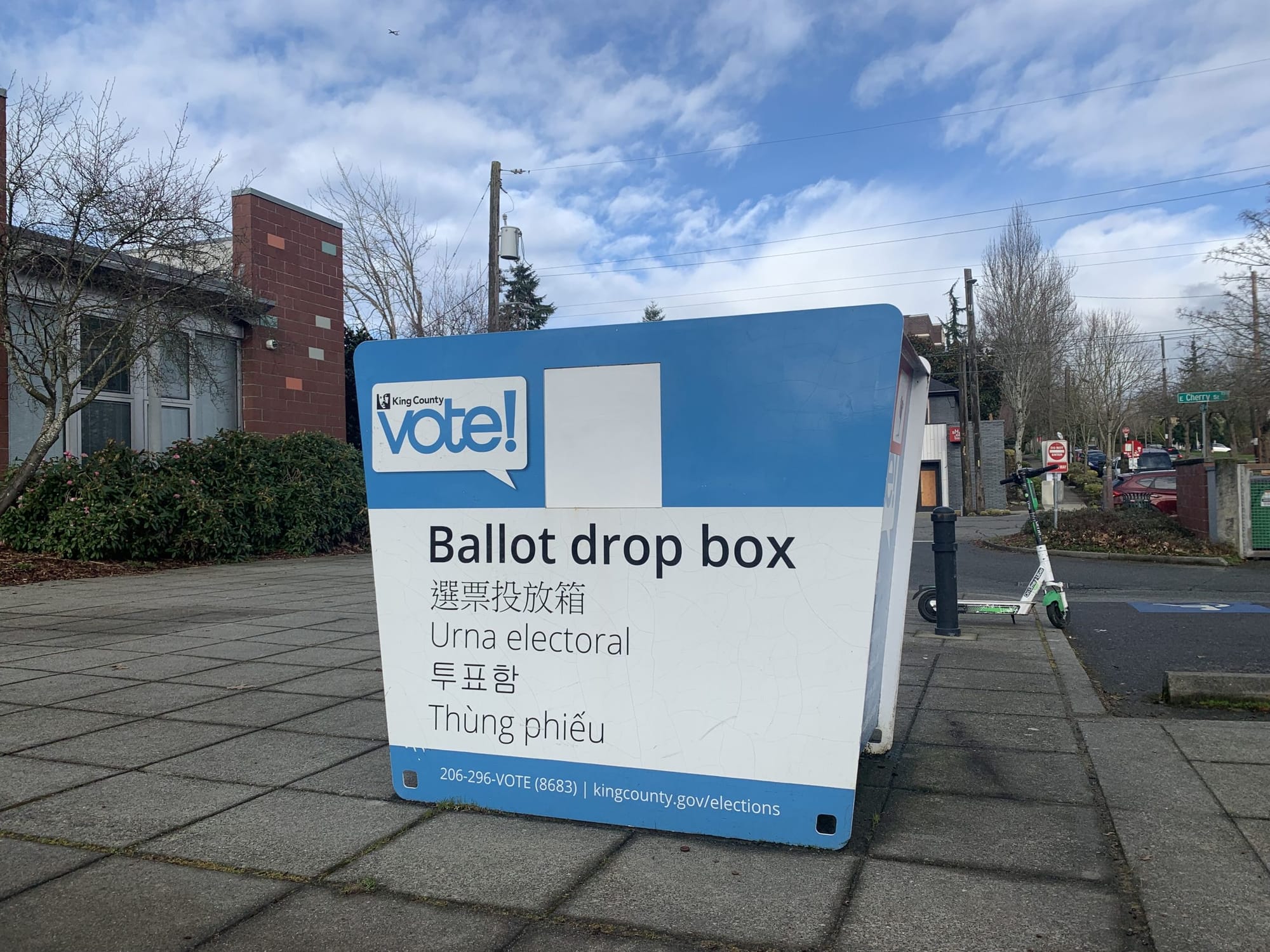
Municipal and county elections are held on odd years in Washington State, but some lawmakers want to change that. Rep. Mia Gregerson (D-SeaTac) introduced House Bill 1727, which would move local races to even years. The bill has eight co-sponsors and has already passed out of local government committee on Wednesday. It was referred to the rules committee on Friday.
“It’s one of the most important, I think, pieces of policy that we can be considering this year,” Gregerson said before the committee vote. “We know over and over every year during the odd year that we have half the number of people turning out to vote. These are extremely important elections. They’re making decisions for everyday people.”
A look at recent election data shows that odd-year elections empower a smaller electorate more heavily weighted toward wealthier areas to decide important local races. Even-year elections, when federal and state offices are on the ballot, simply have higher turnout that is more representative sample of the populace, so having local races decided those years would be more democratic and fair. Since 2010, Washington State has averaged 43% turnout in odd years, compared to 74% in even years. That’s a lot of missing votes in local races.
Elliott Day, who was campaign manager for Mohamed Egal’s successful SeaTac City Council campaign last year, put together some maps and analysis which show that the odd-year hit to turnout is not uniform across the board. Wealthy neighborhoods see a much smaller drop off all across King County, which means their influence goes up.
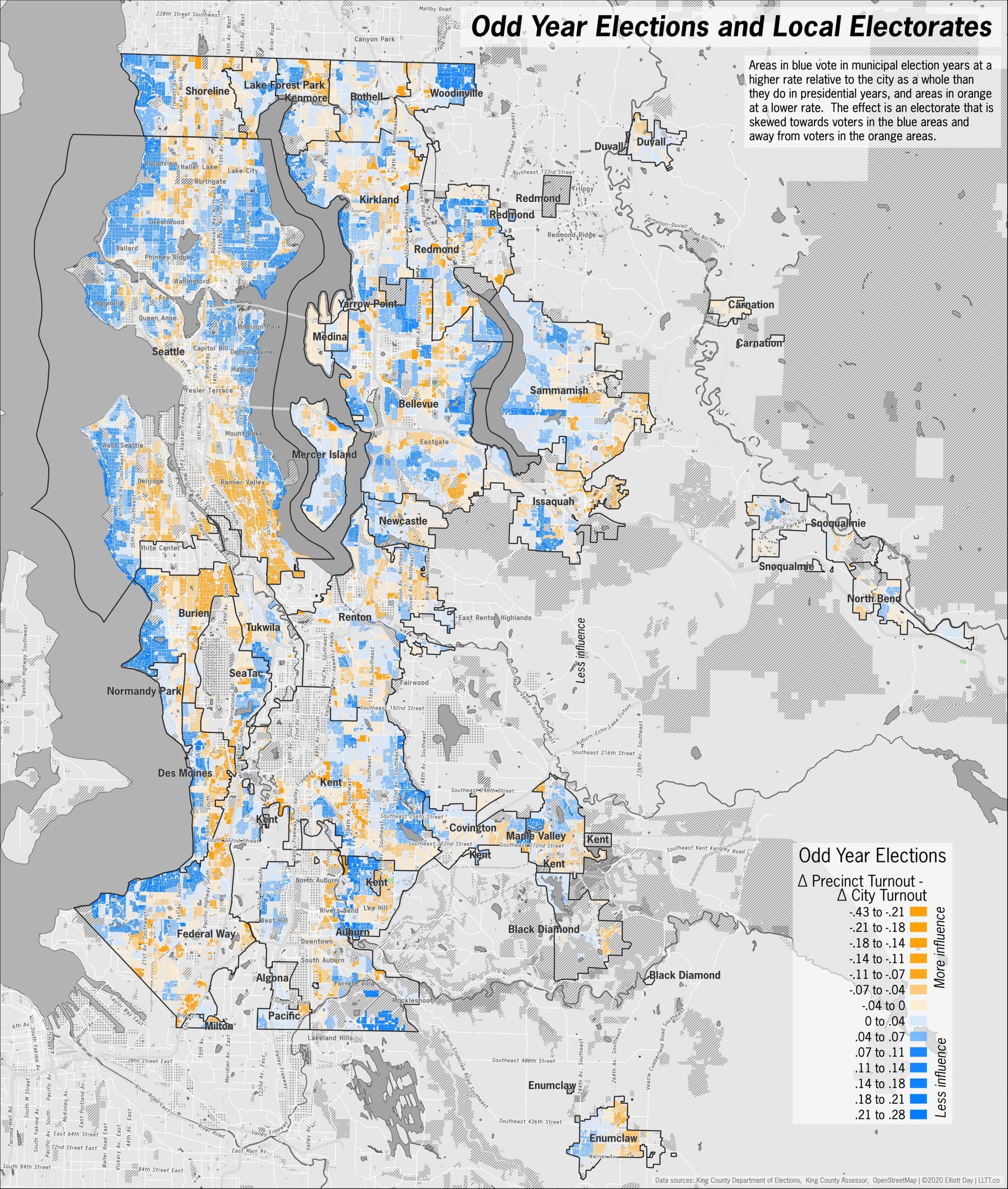
The Urbanist covered the remarkably high turnout in wealthy single-family areas in Seattle’s recent election, and the comparatively low turnout in working class areas. Day’s map confirms this pattern and shows where it stands in contrast to the 2020 presidential year when electoral turnout was high across board.
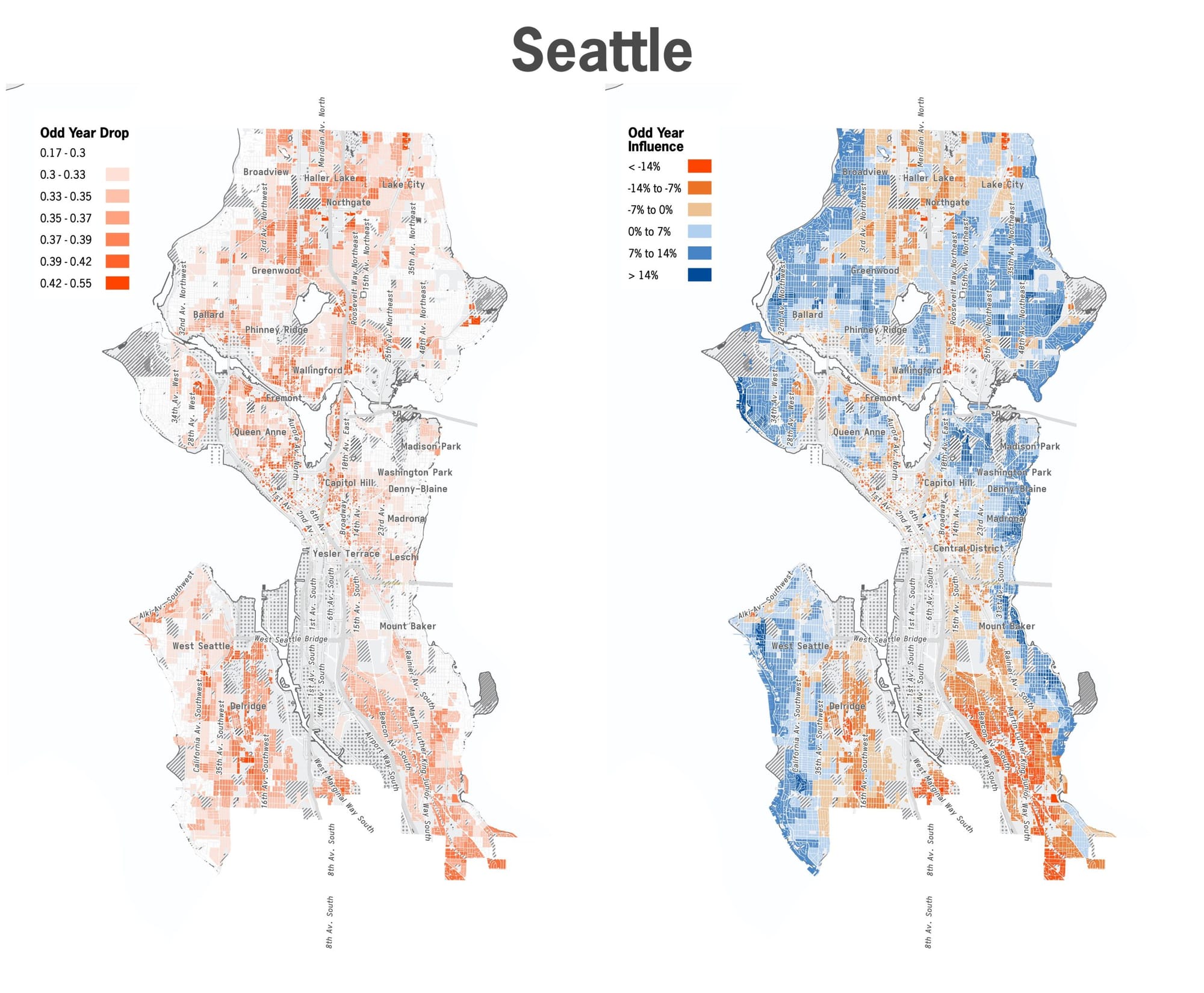
The pattern is consistent all over the county, as shown in the maps below which illustrate the shift in the electorates of Shoreline, Renton, Mercer Island, and Bellevue. Turnout cratering in lower-income and tenant-heavy areas and holding steady in the wealthiest corners of the county likely makes it easier for certain kinds of candidates to win and for certain issues to gain salience and attention.
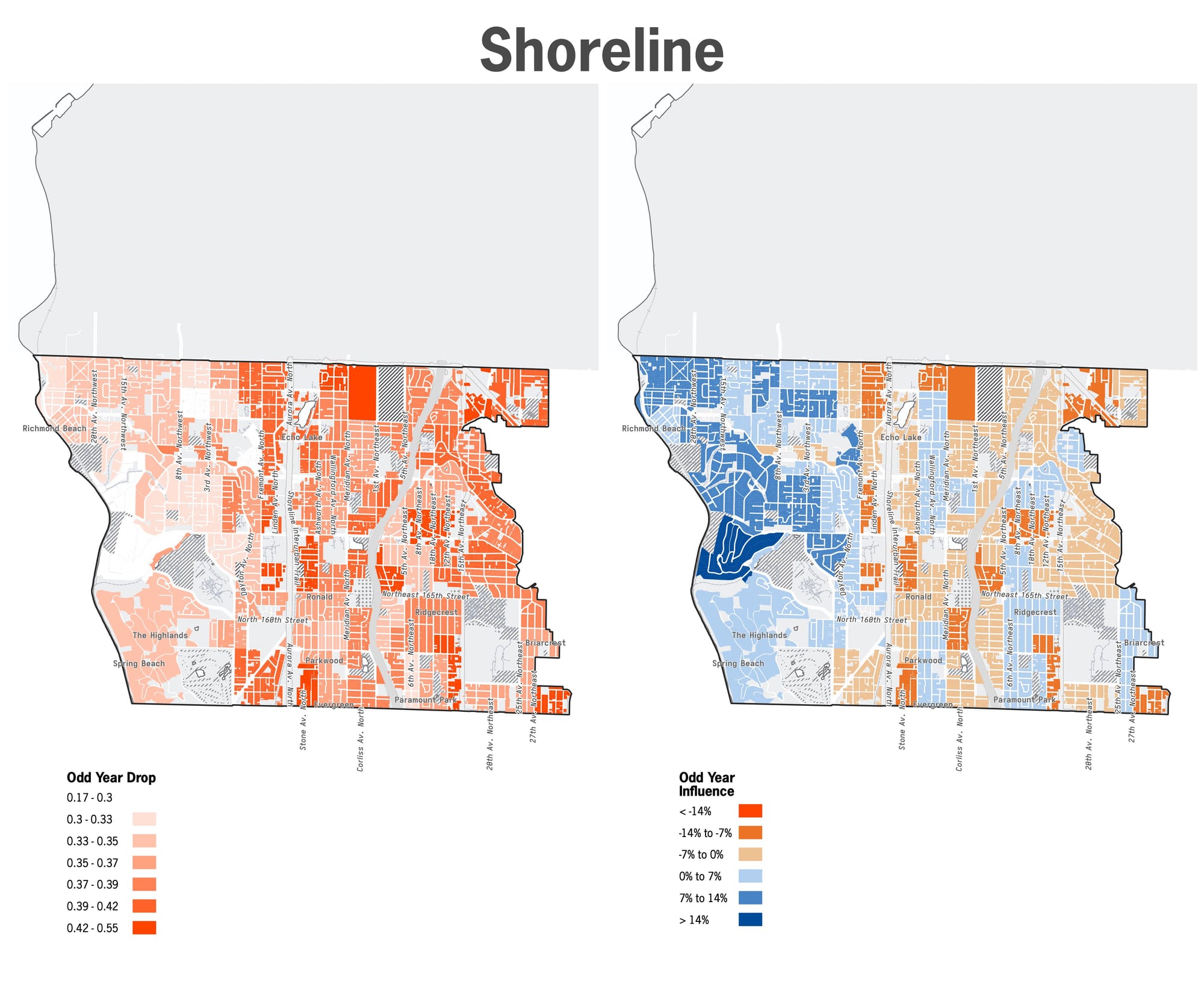
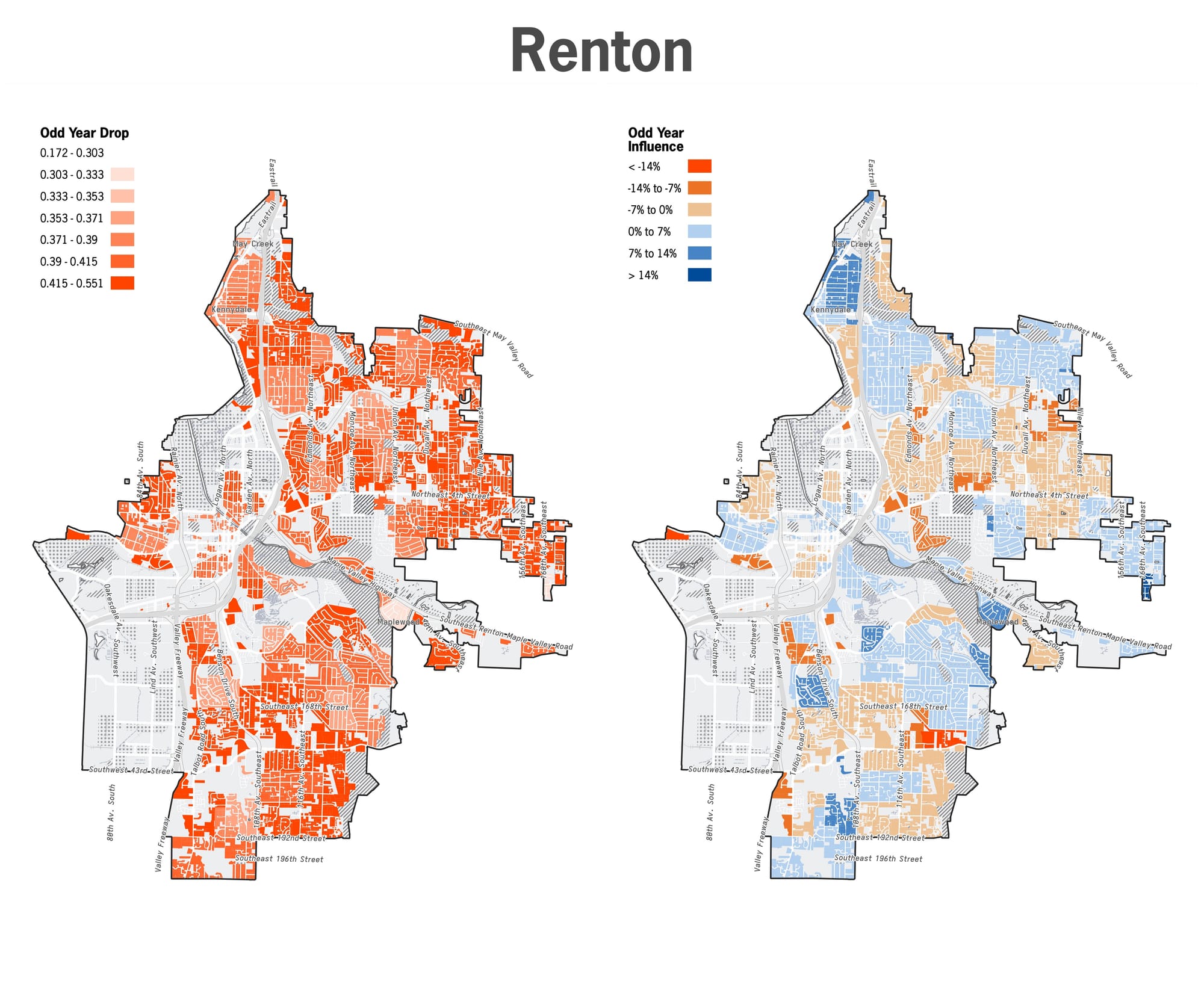
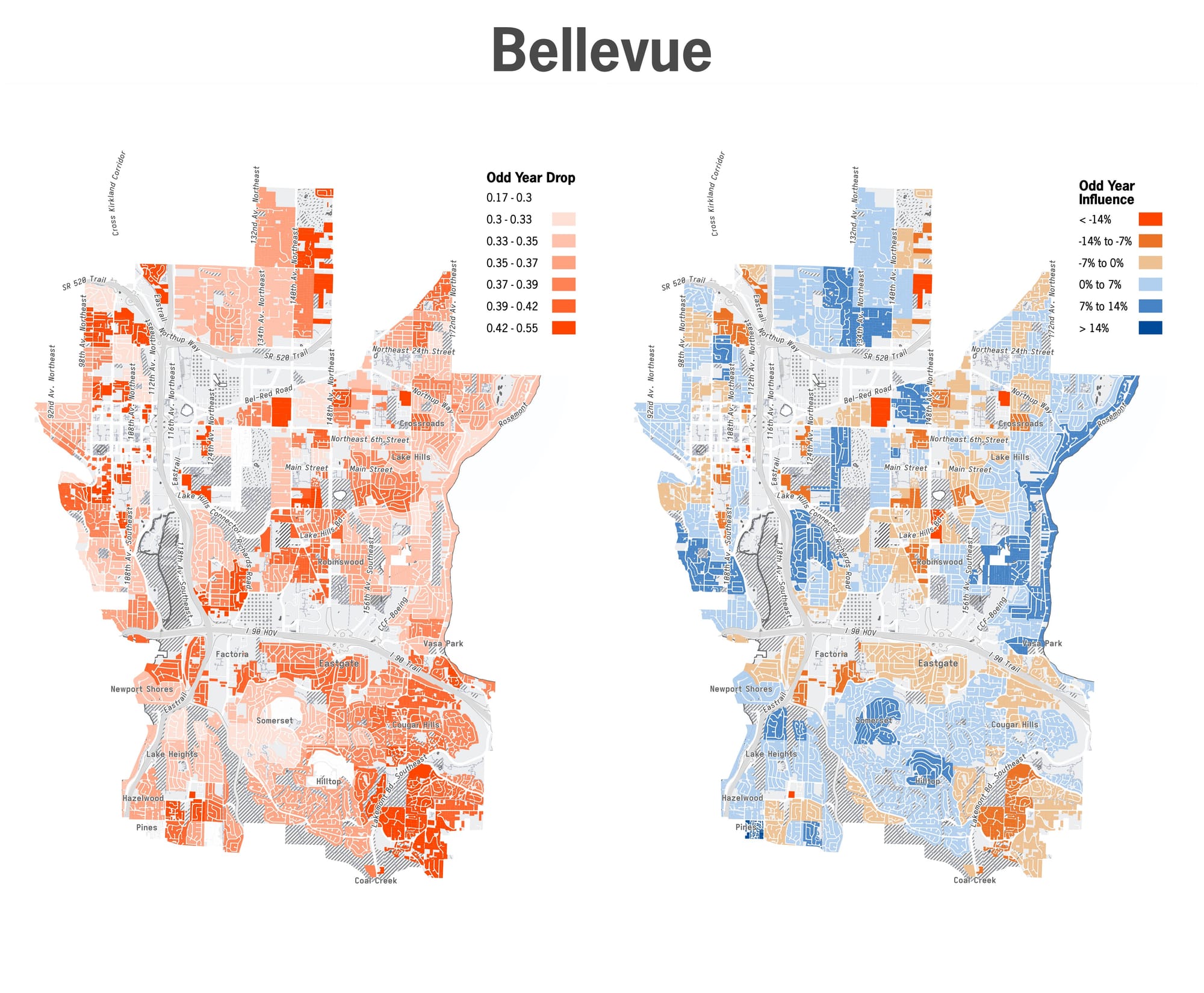
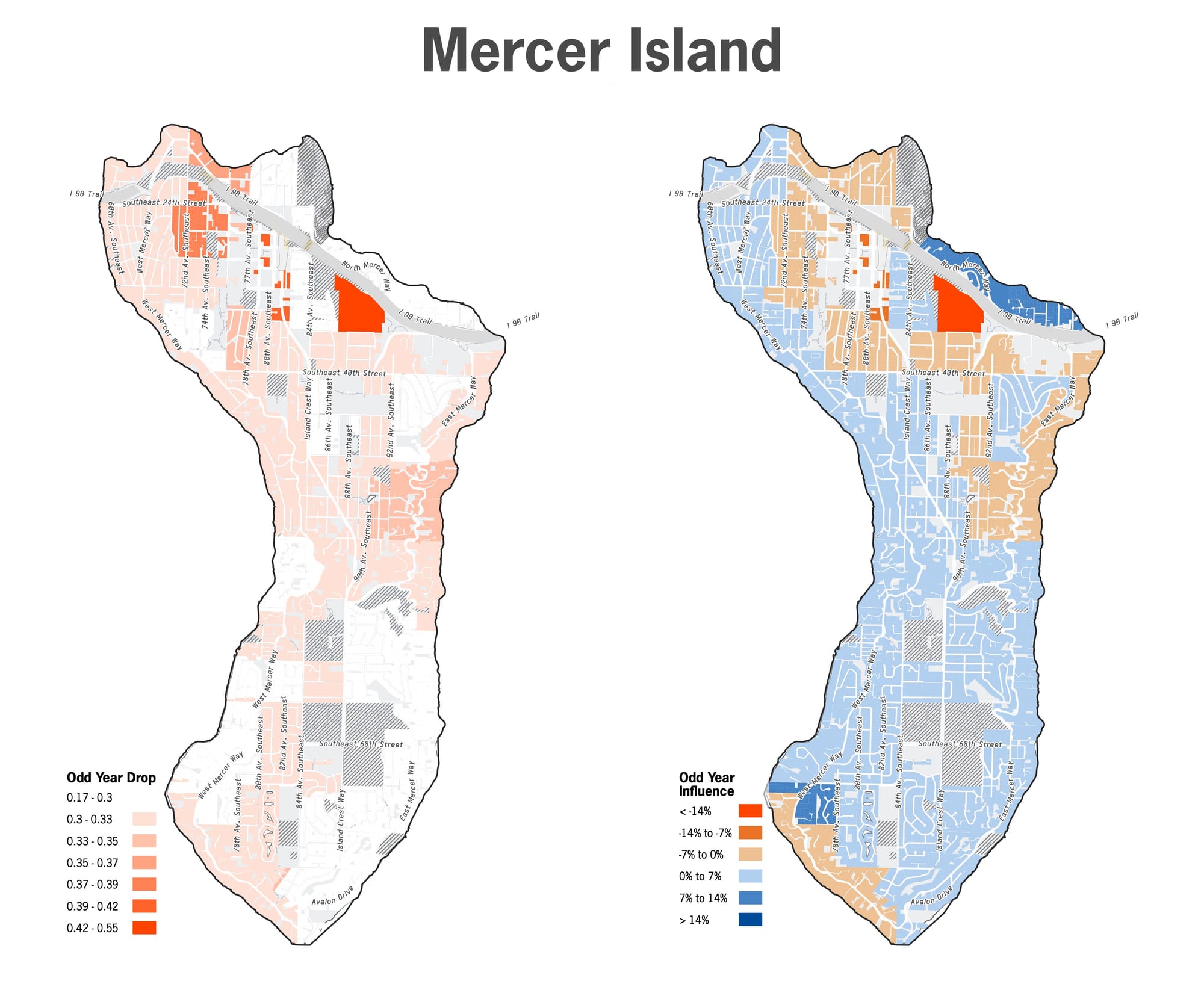
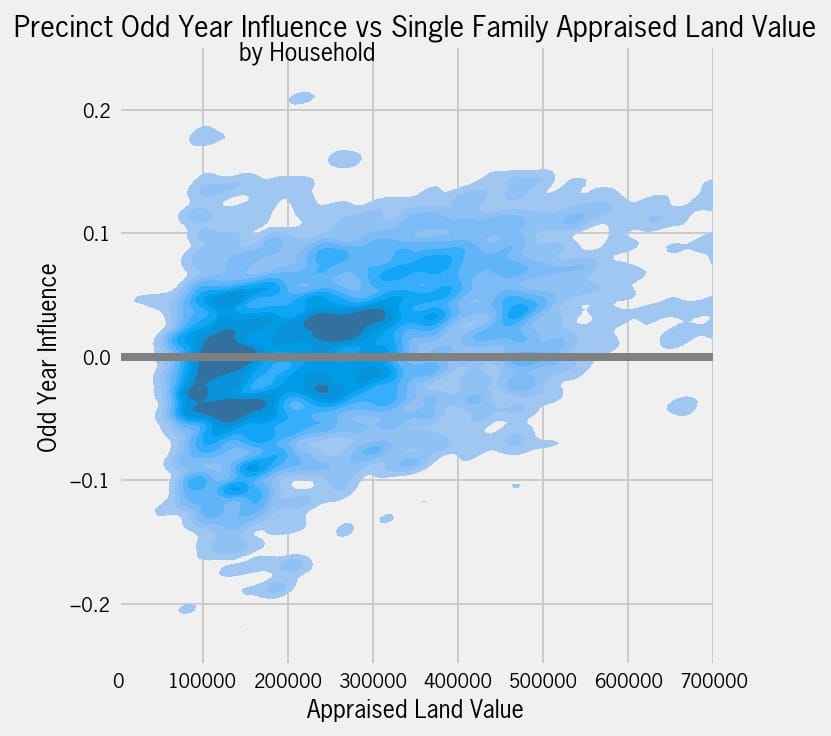
Day’s analysis quantified the impact on the tenant vote countywide and also found a strong correlation between appraised land value and influence in odd-year elections.
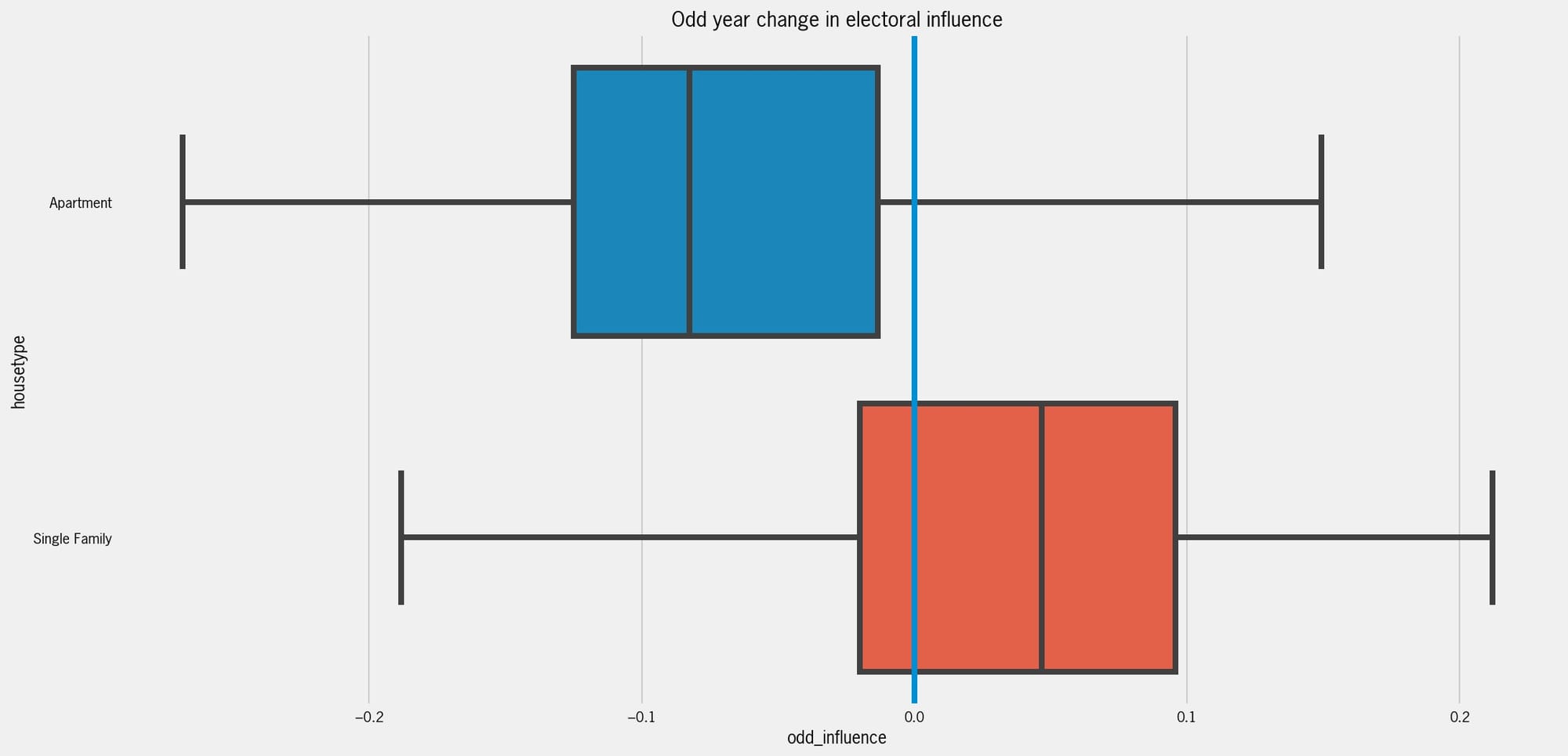
Moving local elections to even years would be an easy fix to encourage higher participation and address this structural flaw in our electoral system.
Critics, including some of Gregerson’s Republican colleagues on local government committee, argue voters who don’t vote in odd years are just “lazy” and should get their act together. Some also argue the current arrangement helps provide work for political professionals and consultants in odd years and prevents a logjam scenario when mayors, councilmembers, county executives, county councilmembers, state legislators, federal legislators, statewide officeholders, and presidential campaigns would all be vying for attention, campaign contributions, and ad space at the same time. The ballot would also get even longer in even years, which could push past voters’ attention spans, critics argue, causing them to skip lower profile races or races simply listed later in the “crowded” ballot.
But these complaints don’t outweigh the benefits of higher voter participation in municipal and county races that are highly influential in people’s lives. More people vote in even year elections and it is a more representative sample.
“It is more cost-efficient; it’s better government,” Gregerson argued in committee deliberations. “When more people vote, we have a better democracy, more transparency, and better decisions.”