Riders east of the Cascades need more Amtrak service.
Is Washington State finally ready to restart the long-overdue conversation on statewide intercity passenger rail service beyond the I-5 corridor? If the Washington legislature is serious about setting tangible goals for Amtrak Cascades this year, now is the time to also restart the conversation on advancing east-west passenger rail service and connecting Spokane, the Tri-Cities, Yakima, Ellensburg, Auburn, and Seattle.
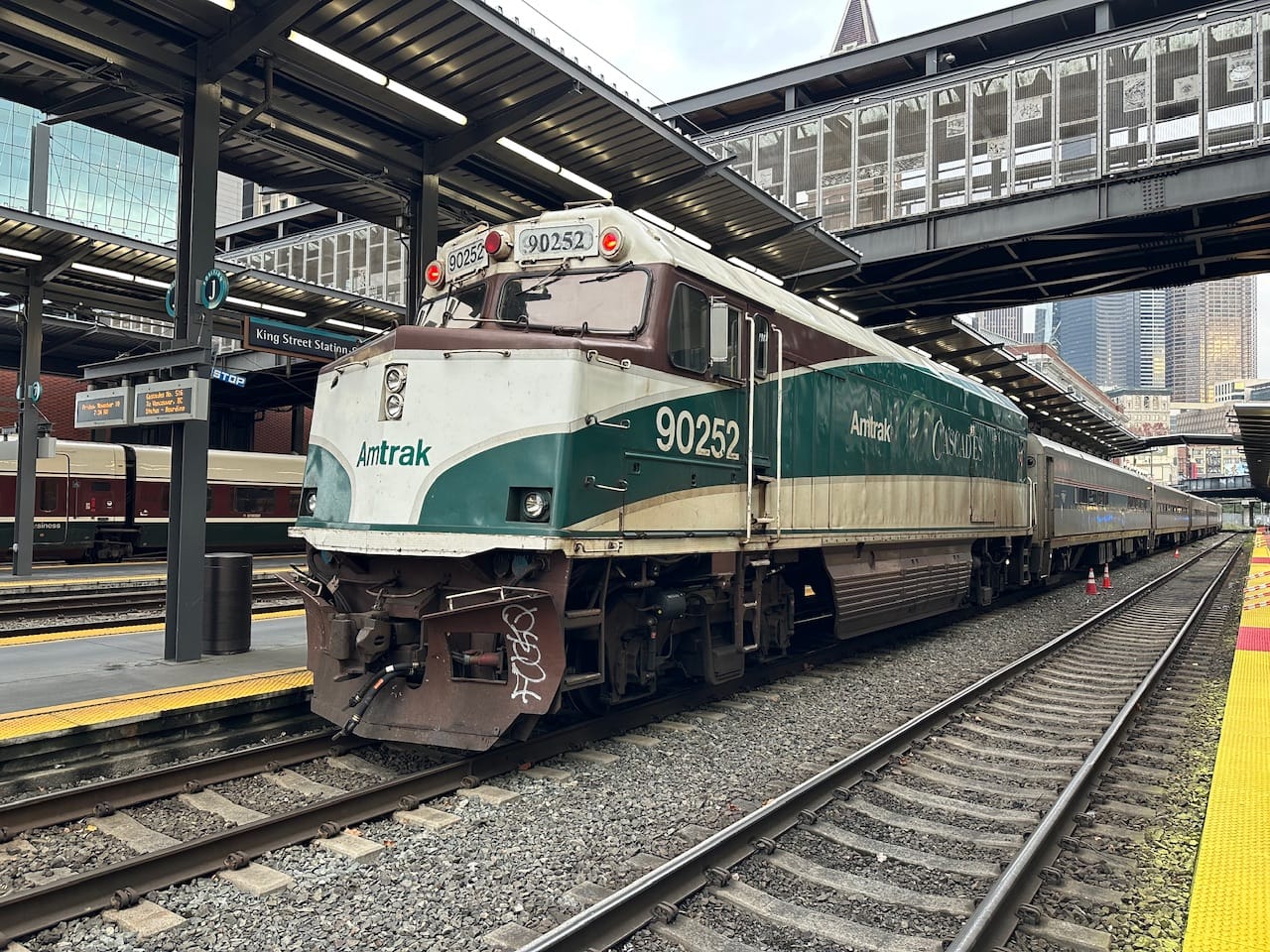
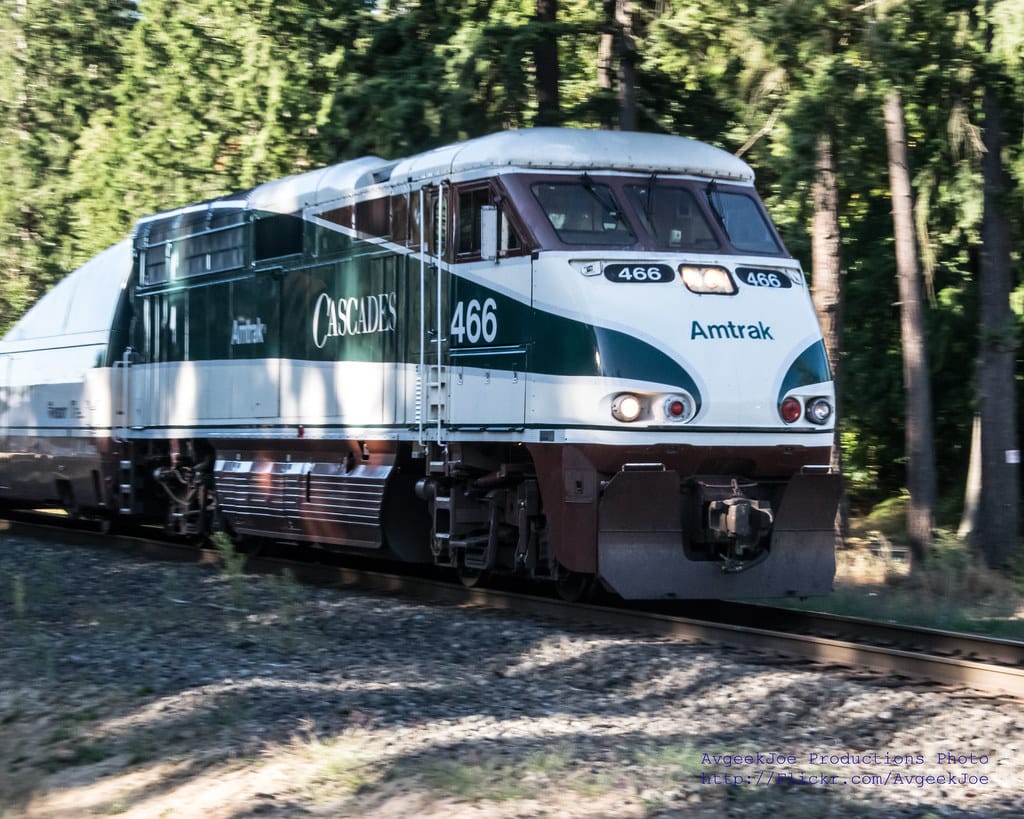
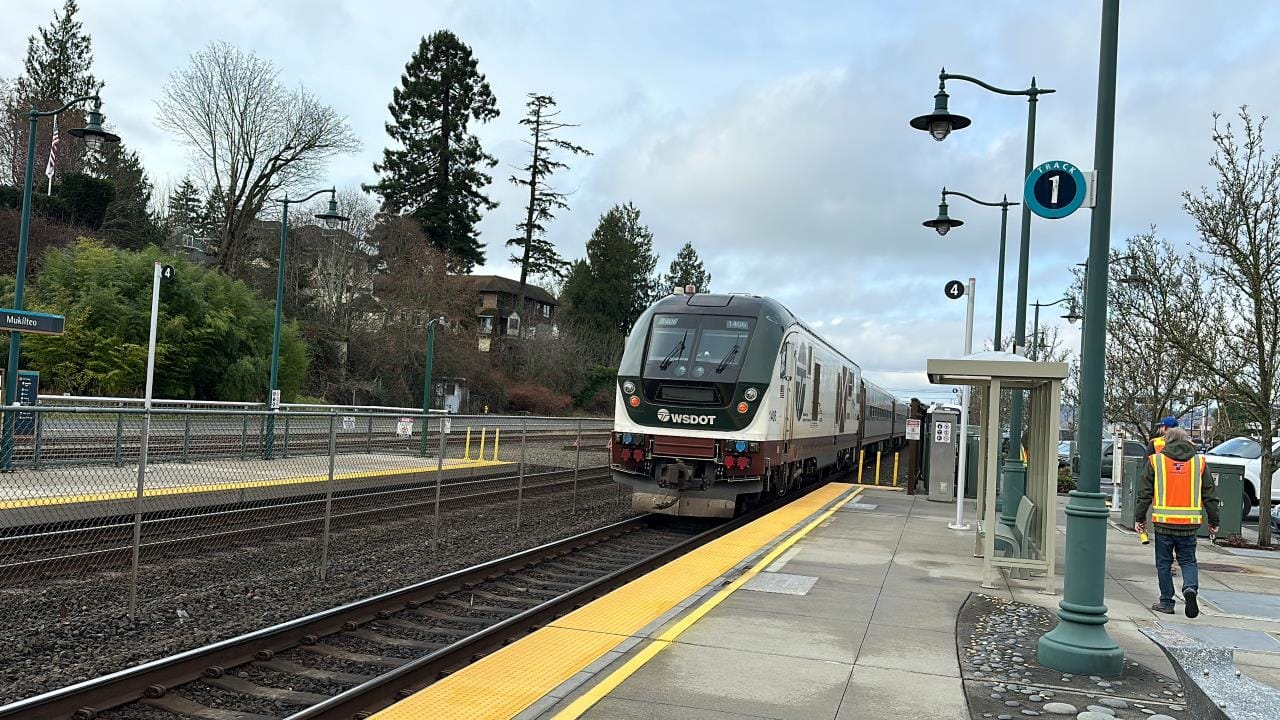
In the midst of an otherwise challenging outlook for near-term investment in public transit and passenger rail, recent legislative activity in Olympia gives hope that Washington State is ready to recommit to transportation equality for its residents outside the Puget Sound. House Bill 1837 aims to establish service goals for Amtrak Cascades passenger rail service, including timelines for the achievement of faster travel times and more frequent departures by 2035.
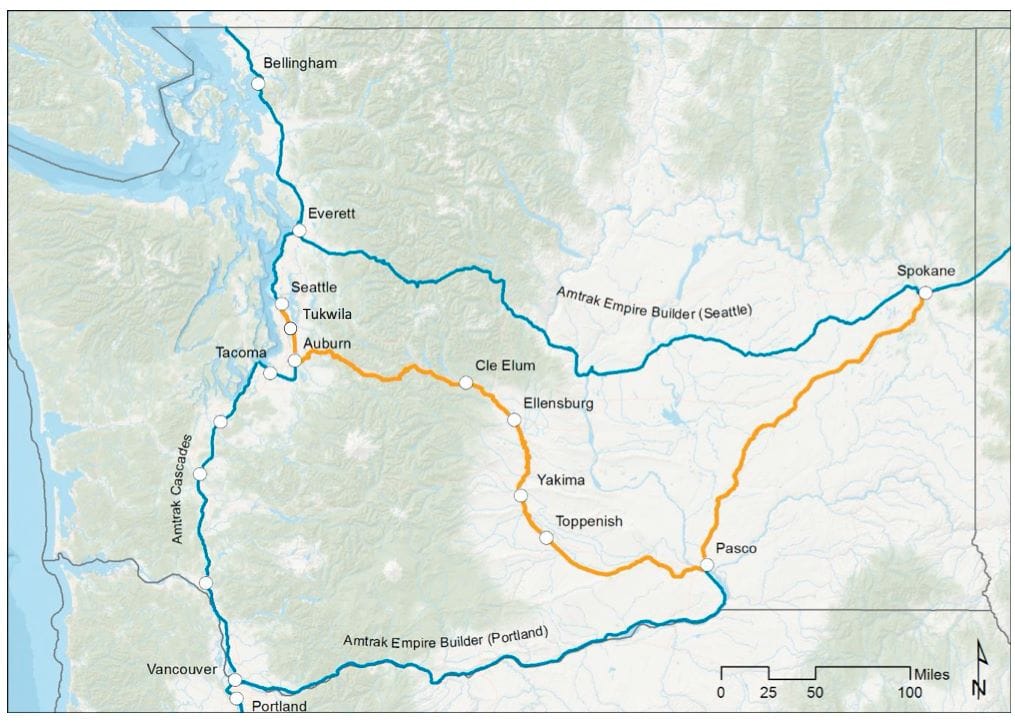
The timeliness and importance of recommitting to east-west passenger rail service is highlighted by the potential restoration of long-distance passenger rail service through southern Montana and the success of the newly-inaugurated Amtrak Borealis service.
Optimism is growing that the efforts of the Big Sky Passenger Rail Authority in Montana and the results of the Federal Railroad Administration’s Long Distance Service Study will promote the restoration of passenger rail service to southern Montana along the route of the former North Coast Hiawatha between Chicago, Spokane, the Tri-Cities, Yakima, Ellensburg, and Seattle. With the potential for future federal funding to cover 80% of needed infrastructure upgrades along this route via Biden’s Bipartisan Infrastructure Law, Washington State would only need to provide 20% of the capital funding that would otherwise be necessary if it was planning state-supported east-west rail by itself.
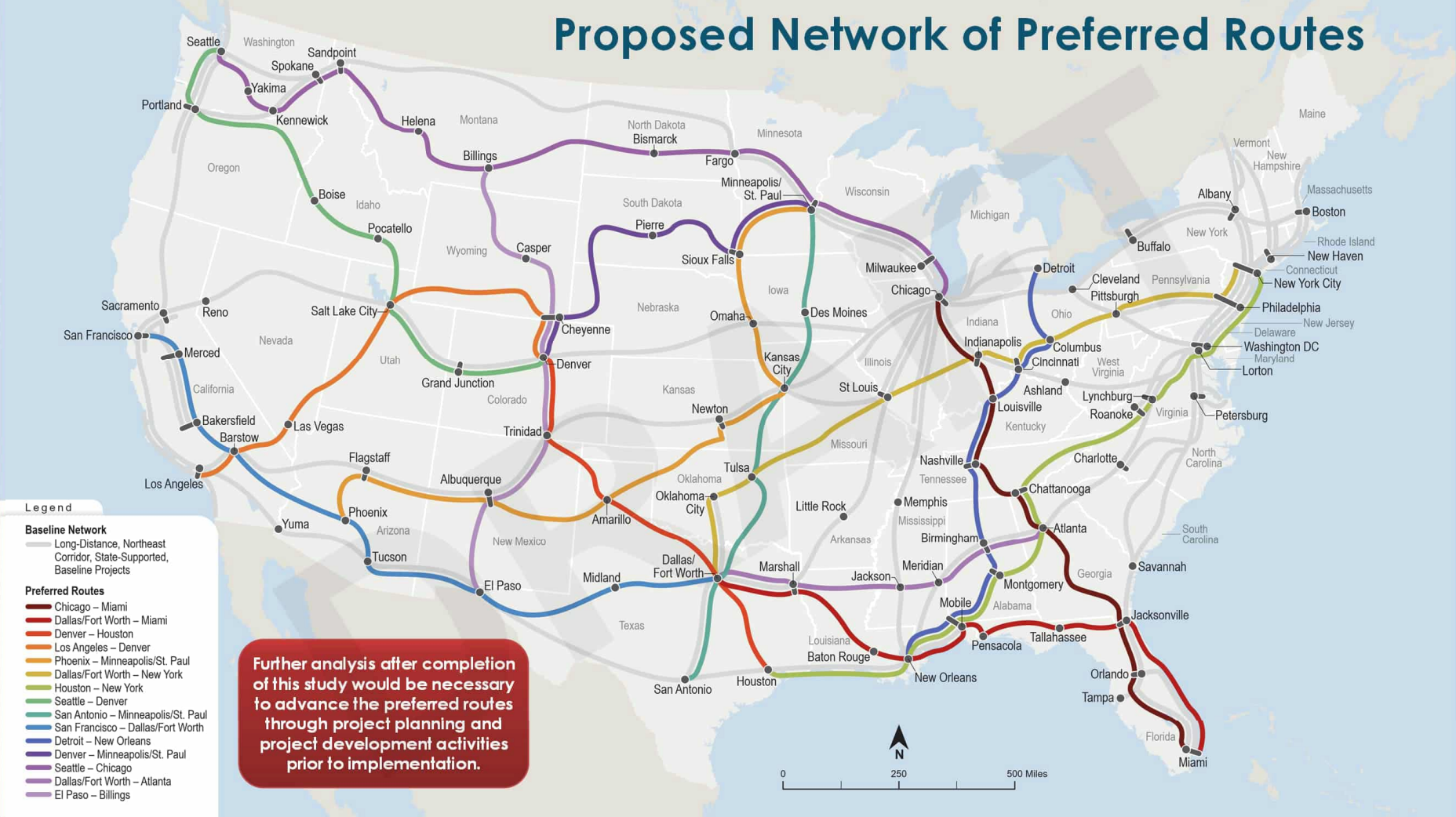
This is crucial in our current transportation funding environment. Federal transit funding is likely to be scarce during the Trump Administration, but Washington State must keep advancing its corridors to be ready to secure grants and project approvals once a more pro-transit president is in office.
Passenger rail improvements, though long identified, have been on the back burner and repeatedly delayed, sometimes due to statewide initiatives like Tim Eyman’s car tab repeals and also due to lack of prioritizing rail investment in state budgets. We cannot continue to dawdle if we’re serious about meeting Washingtonians’ mobility needs and leading on climate.
The widely-celebrated success of Amtrak’s new Borealis service between Chicago and the Twin Cities shows the opportunity that exists for the proposed east-west corridor here in Washington. The state-supported Borealis came about after years of planning between Amtrak, host railroads, and the Minnesota, Wisconsin, and Illinois Departments of Transportation. Its annual ridership, on track to reach between 230,000 and 240,000, is similar in scale to the numbers suggested for the full Seattle-Spokane corridor in the most recent study of east-west service.
The Borealis corridor has similar dynamics to those of east-west, connecting major metropolitan endpoints with small towns and medium-sized cities along the way. Even scheduled travel times are in the same ballpark, with both east-west and Borealis running roughly seven to eight hours between endpoints. With virtually all discussion of the Borealis declaring its ridership as a success, projected east-west ridership should also be celebrated as demonstrating wide-reaching benefits of new, high-quality intercity transportation options for many of Washington’s residents who currently lack them.
If we really want east-west passenger rail to happen as the state has planned since 1993, our legislature needs to get its planning process back on track by including frequent check-ins on east-west planning efforts on its agenda alongside Amtrak Cascades. In short, HB 1837 could be amended to include language requiring the Washington State Department of Transportation to provide updates on the status and next-steps needed to continue planning and implementation of east-west passenger rail service.
Based on the 2020 STEER Study, the next step that would be needed is a benefit-cost analysis that would prepare the route for funding and final approval. From there, HB 1837 should ensure that progress continues to be made on advancing planning and funding activities for both Amtrak Cascades and east-west service. From the special Amtrak service for Expo ‘74 in Spokane, to the additional Cascades trips to Bellingham added during the 2013 Skagit River Bridge Collapse, Washington is no stranger to stepping up to support regional and long-distance rail services crisscrossing the state when the need arises.
Rather than proposing temporary improvements, though, HB 1837 demonstrates our legislature’s willingness to build a truly robust passenger rail service along the busy I-5 corridor between Portland, Seattle, and Vancouver, BC. Let’s make sure our legislature doesn’t forget about the I-90, I-82, and US-395 corridors in the process.
Comment on the bill and urge lawmakers to not just support Amtrak Cascades improvements, but also east-west service.