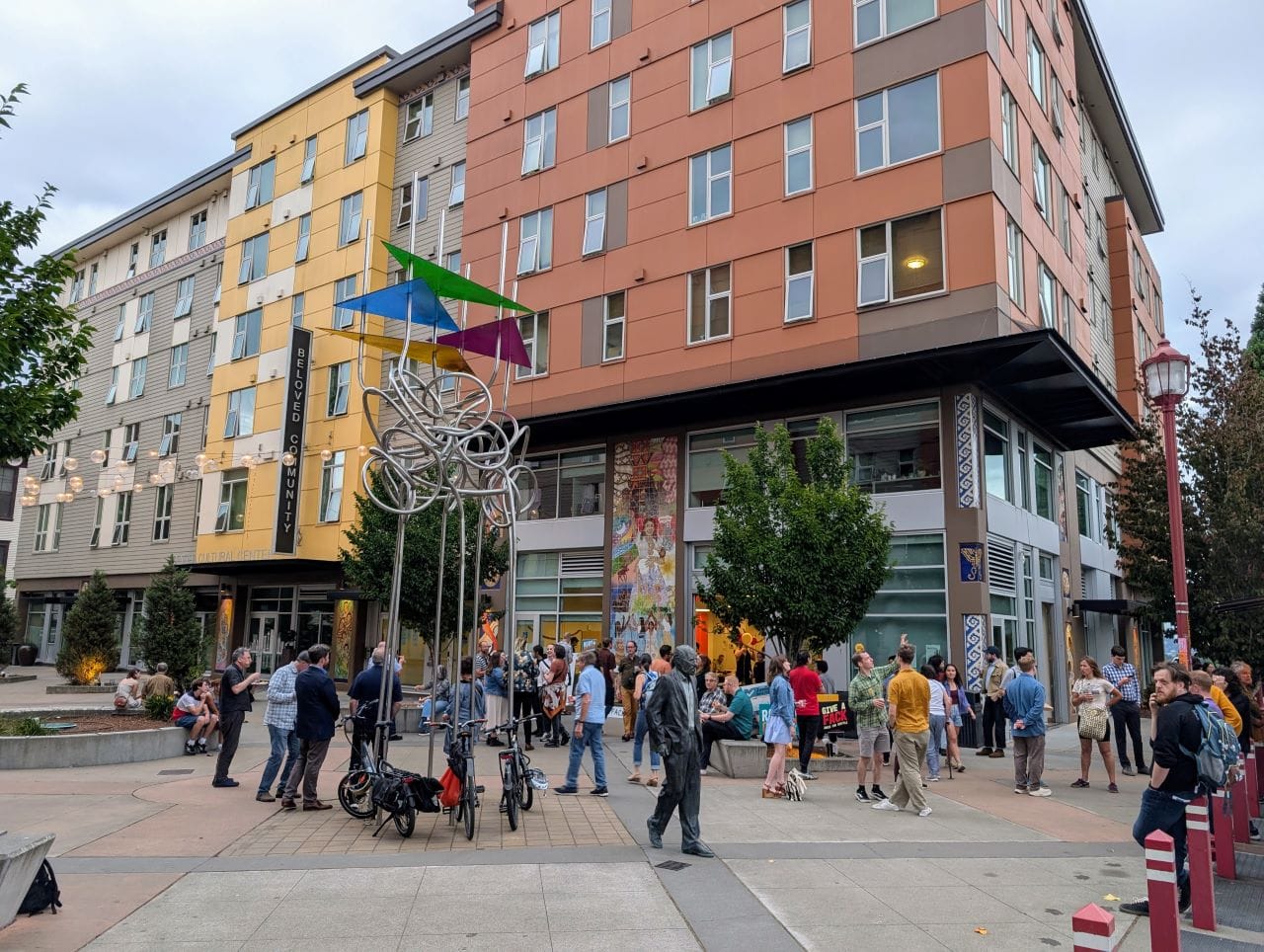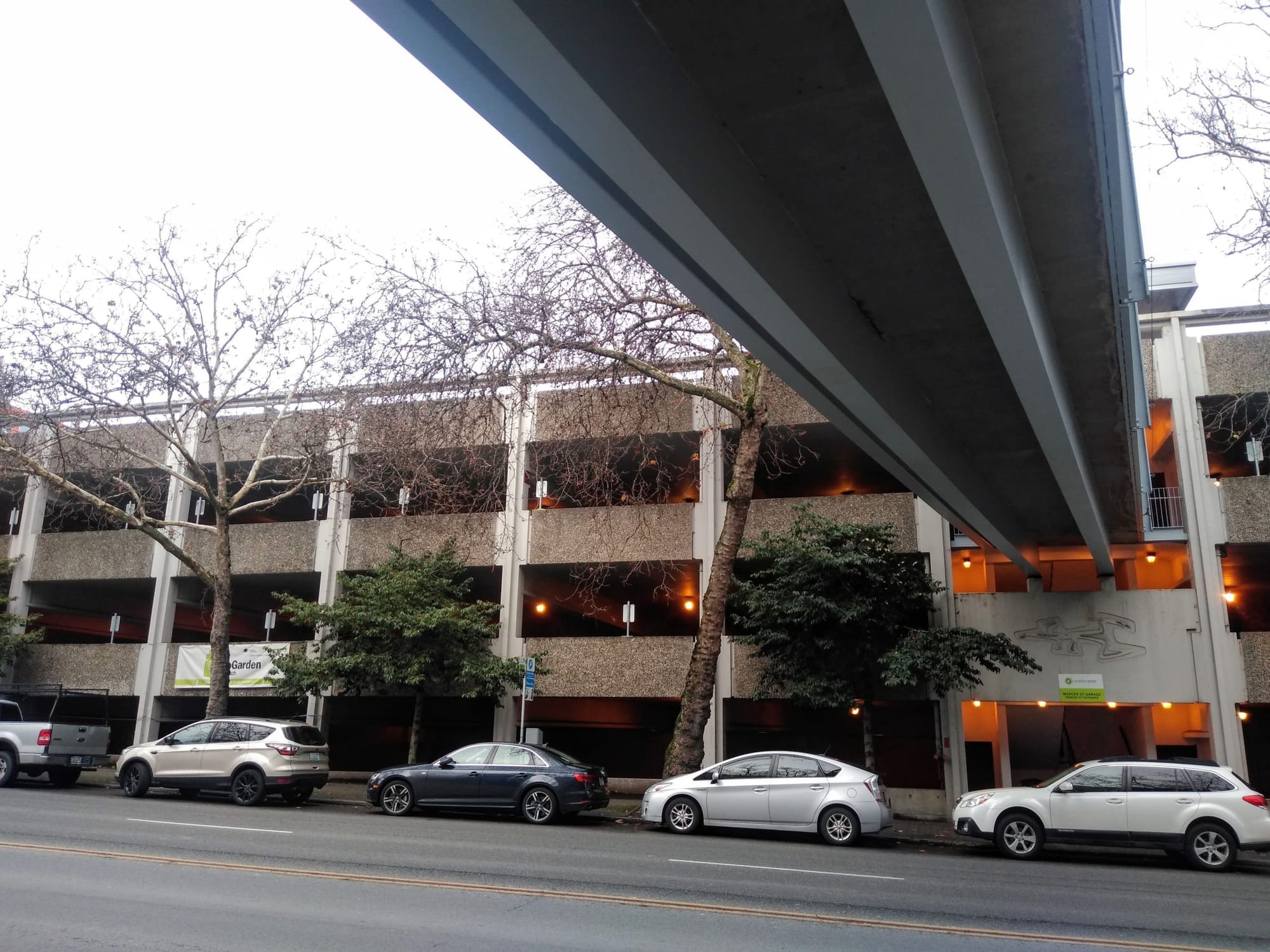
There may not have been a better illustration of the degree to which transportation planning for the new Seattle Center arena is weighted toward accommodating personal cars than the fact that the Mercer Upgarden—the only P-Patch garden in the neighborhood, located on top of Seattle Center’s Mercer garage- was to be kicked out to add in a few more parking spaces that arena users would need.
Queen Anne & Magnolia News was the first to report last October that the Upgarden was to be removed from the rooftop level of the City-owned parking structure by the time the new arena’s doors opened to the public. It’s been in place since 2011 and has provided space for 86 garden plots above the din and fumes of Mercer Street below.
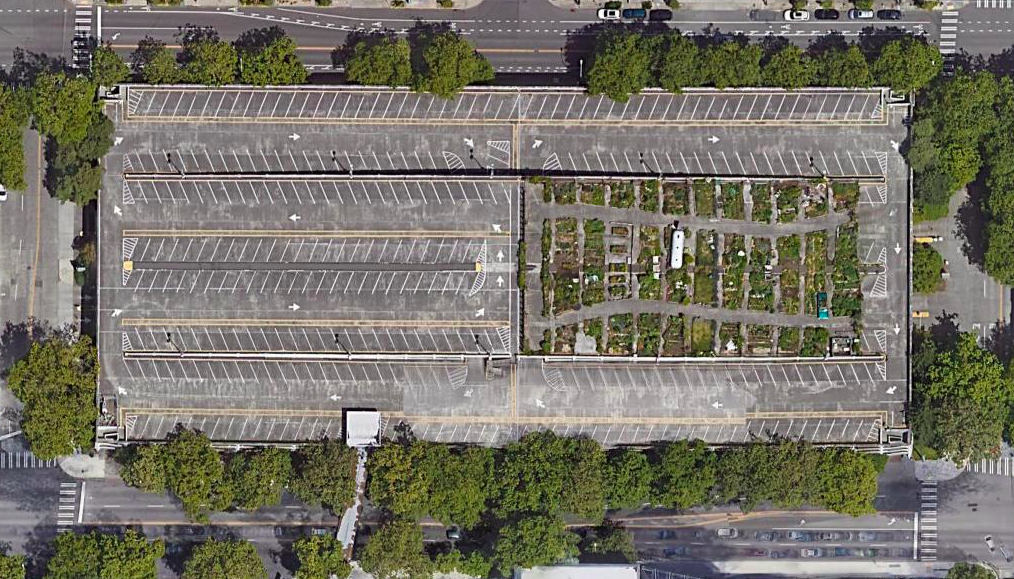
But at the end of 2019, newly elected Councilmember Andrew Lewis announced at his ceremonial swearing-in, held on the roof of the garage, that the City had reached a deal with Oak View Group, the developer of the new arena, that would keep the Upgarden in place. With the announcement, Mayor Jenny Durkan stated that under the arrangement that the garden would stay in place “until light rail is designed and planned for Seattle Center.” This harks back to the agreement the City had already made with Oak View Group regarding the entire Mercer garage, an aspect of the deal to see Key Arena renovated that mostly went unnoticed at the time of its signing in 2018.
The lease agreement that the City of Seattle has entered into with Oak View Group specifically stipulates that the “landlord covenants and agrees that it shall not voluntarily demolish or demolish and rebuild the Mercer Street parking garage at any time prior to the earlier of” the following three scenarios.
- The date of January 1, 2035
- “the date that extension of light rail to a station within an approximately 1/2 mile walkshed of the Arena has been completed and is operational to the public”, or
- If the parties involved all agree to a new agreement.
In other words, if the Mercer garage goes offline before light rail opens (if that’s anytime before the first day of 2035), then the City would be in violation of its lease agreement. That same agreement also states that if any replacement for the Mercer garage contains less than 800 parking spaces, then the terms of the lease should also be renegotiated.