On Monday, the Seattle City Council approved a new Parks Development Plan and a list of proposals to be further evaluated as part of the 2018 annual docket to the Comprehensive Plan. The Parks Development Plan, which guides capital investments in recreation and open space facilities over the next six years, received substantial changes over the previous plan in 2011. Seattle Parks and Recreation (SPR) is changing the paradigm for level of service for parks and open space by departing from the metrics of old. Meanwhile, a long list of proposals to amend the Comprehensive Plan will be vetted by the Office of Planning and Community Development before further consideration by the City Council next spring.
Park Development Plan
The Parks Development Plan (officially called the “2017 Parks and Open Space Plan”) is a city-wide plan that guide investments in recreation and open space facilities through 2022 and forms an element of the city’s Comprehensive Plan. The plan was separated out from the Seattle 2035 process, giving additional time for the plan to be developed.
The plan identifies some 263 different priority improvement, expansion, maintenance, replacement, renovation, and debt service projects for parks over the next six years (estimated at over $350 million) that are pending approval. Another bucket of projects are identified as programmed capital facility improvements over the same period (e.g., expansion of the Seattle Aquarium, synthetic turfing at playfields, and trail renovation). And a handful of discretionary projects totaling more than $127 million remain unfunded, including linear street parks (e.g., Bell Street extension and Ballard Avenue), new sports courts (one each of the city’s four quadrants), and off-leash dog parks (two in each of the city’s four quadrants).
The following is a snippet of key changes from the plan, which Seattle Parks and Recreation highlighted in a report from last month:
| Service Type | 2011 Plan | 2017 Plan | Rationale |
|---|---|---|---|
| Open Space | 3.33 Acres/1,000 Residents | 8 Acres/1,000 Residents | In developing the proposed Citywide Level of Service (LOS), we looked at population growth projections, the price of land, and the availability of property. With an 8 acres/1,000 residents LOS, would need to acquire 40 acres of additional parkland by 2035, or approximately 13.5 acres during each 6-year cycle, assuming that growth projections are on target. If growth projections go up, then the amount of additional parkland needed would increase. |
| Community Centers | A community center should be located within 1- 1.5 miles of every Seattle household and/or 1 full service center to serve a residential population of 15,000-20,000 people. Each urban center of the city is to be served by a center. Satellite facilities, or less then full service facilities, will be considered to provide for community gathering places and to accommodate certain program activities, where conditions warrant. In order to control the number of new city facilities, programs may be provided in facilities owned by others in some cases. | Every household in Seattle should be within 1-2 miles of a Community Center. | The desire is to expand capacity and allow for a broader reach of the population with our existing facilities. The revised guideline allows SPR to be able to implement a programmatic approach to service delivery that creates a draw, and that meets the needs of the community. Taking a strategic, cost effective approach to make better use of our existing facilities, rather than building new facilities. By increasing the service distribution by 0.5 miles, SPR has virtually eliminated service gaps citywide. |
| Greenways | N/A | Continue to coordinate with SDOT on preferred routes and connections to enhance access to parks and open space. | This is a new target goal based upon the Park District Investment Initiative, encouraging links between parks. |
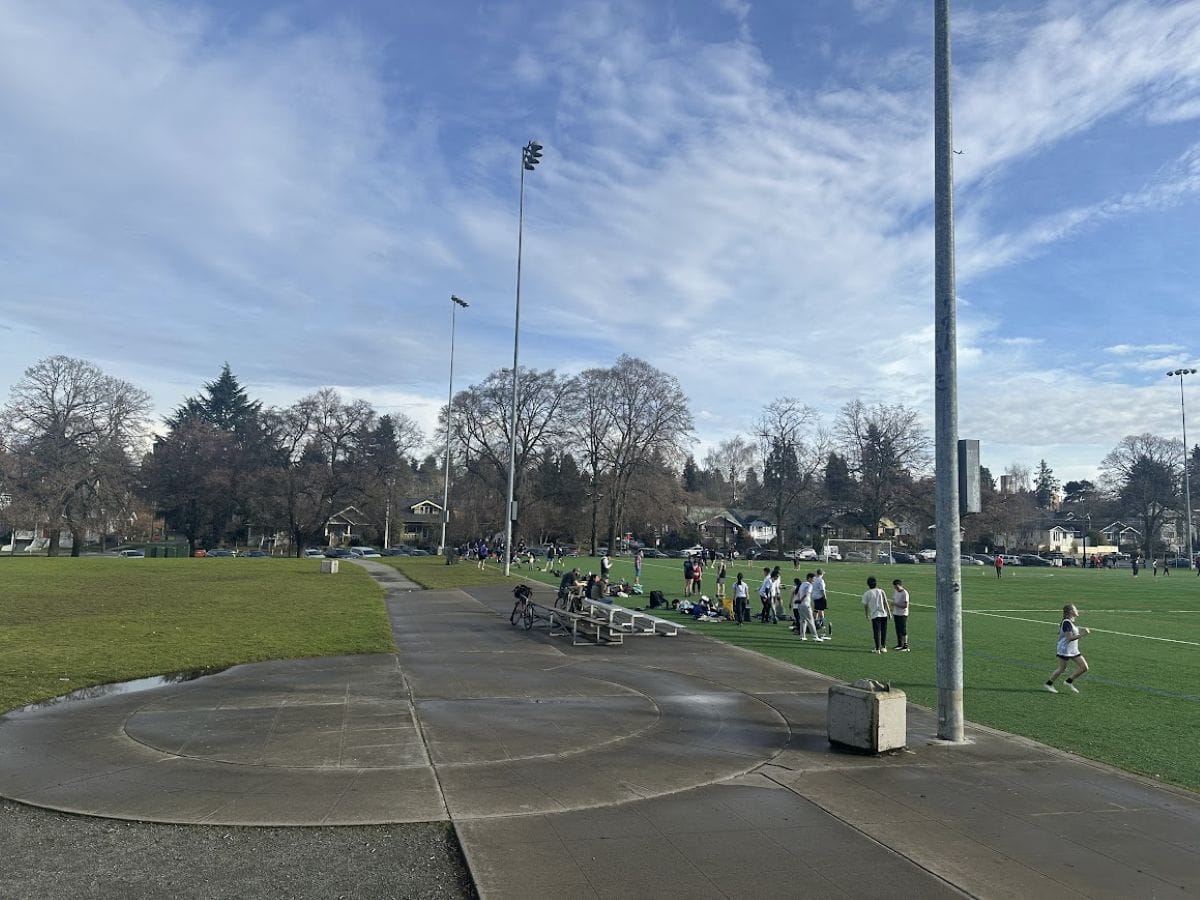
| Sports/Athletic Fields | A soccer field and a turf softball/youth baseball field, is desirable within 1-2 miles of all Seattle households. A sufficient quantity of fields would be provided on a citywide basis to meet scheduling needs. Most (soccer) fields will be natural turf, but a selected number of fields shall be maintained as all-weather surfaces to accommodate intensive levels of play. A turf football field is desirable within areas with youth football programs. A sufficient quantity of fields should be provided on a citywide to meet scheduling needs (and as coordinated with Seattle School District and other program providers). A limited number of turf senior baseball fields are desirable citywide with sufficient quantity to meet scheduling needs. | Every household in Seattle should have access to sports fields within 2 miles. | SPR is focusing on increasing capacity for a variety of uses on existing sports/athletic fields due to the high demand – adult and youth baseball, adult and youth soccer, youth football and lacrosse. |
| Picnic Shelters | At least 1 or 2 scheduled group picnic shelters are desirable in each sector with drop-in picnic tables distributed in appropriate park areas throughout the city. | All reservable picnic shelters should be ADA accessible. | This is a new target goal that focuses on ADA accessibility and allows us to provide for a broad spectrum of users. |
In developing the new level of service standards, SPR conducted a gap analysis to look at how accessible existing recreation facilities are to area residents using a variety of different inputs, such as walkability, equity, and density. This process was highly informative in where new services may be necessary.