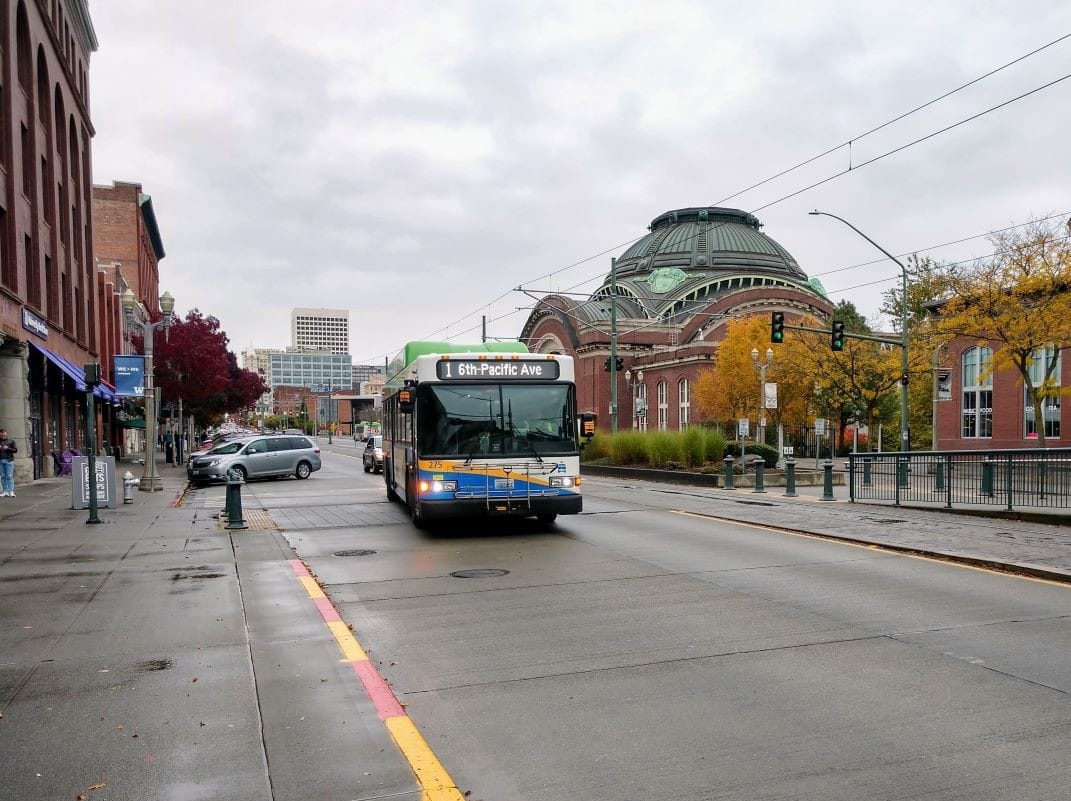
Pierce Transit is advancing its new bus rapid transit (BRT) program, Stream, with a first line planned from Tacoma to Spanaway that the agency hopes will encourage further expansions. In June, the Pierce Transit board of commissioners approved a study that could bring four more Stream lines into service by 2040. But the initial line continues to stagger as the Pacific Avenue/SR-7 design advances. Cutbacks over the past two years have trimmed back exclusive right-of-way mileage. Those changes could reduce operational speeds and reliability on the corridor, but Pierce Transit thinks targeted investments will do the job.
Trimming back service quality of Stream’s first line
Fully separated, exclusive right-of-way is the gold standard of BRT, but at no point has Stream aimed to meet that. Instead, Pierce Transit has proposed exclusive median BRT lanes for segments of the corridor and supplemented the project with business access and transit (BAT) lanes in order to speed buses along congested portions of the corridor. Other unique strategies have also been proposed throughout the corridor along with transit signal priority tools at intersections.
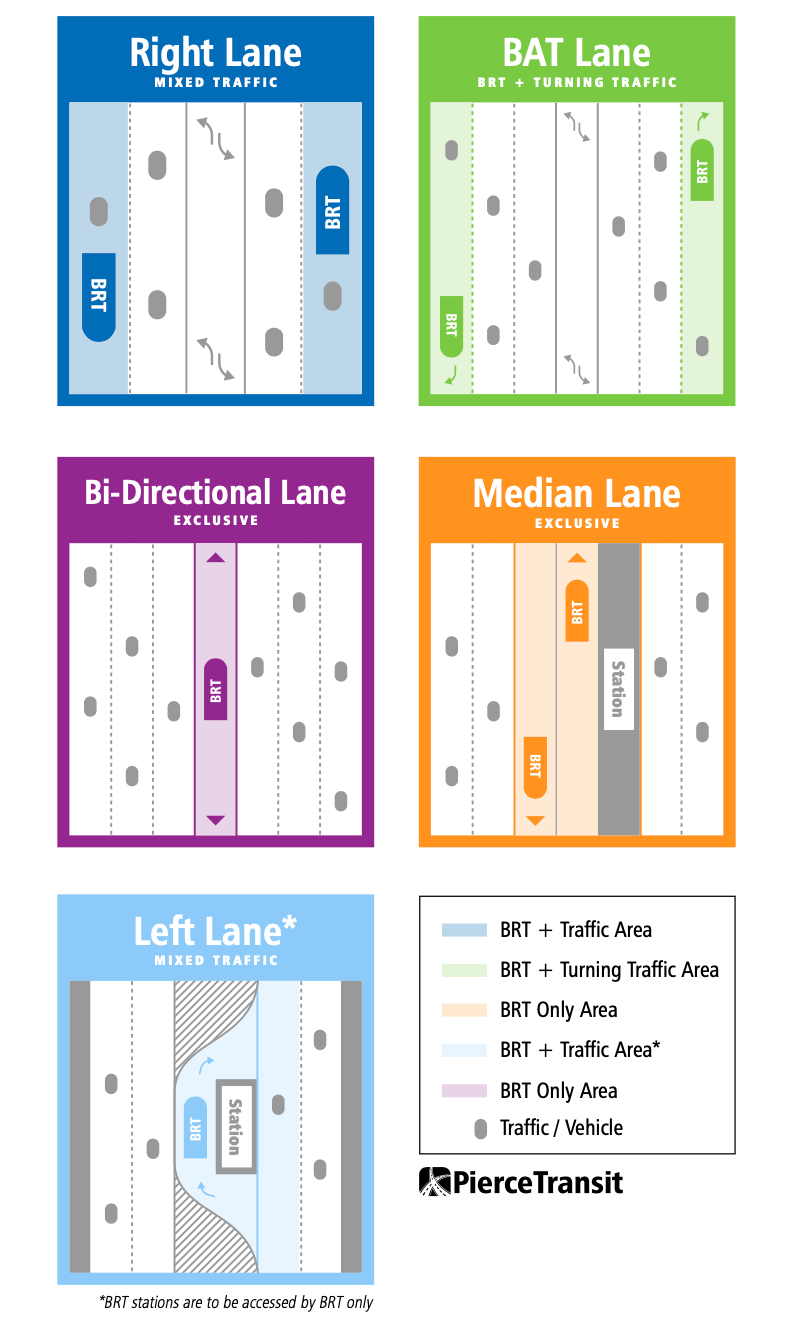
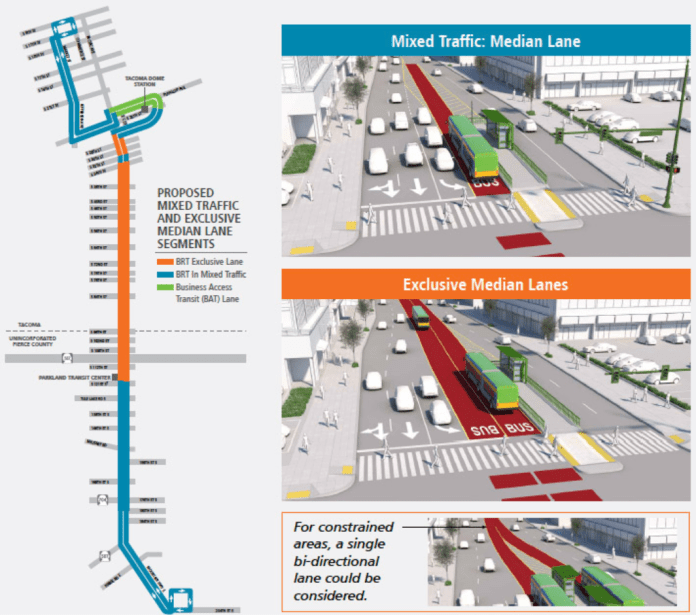
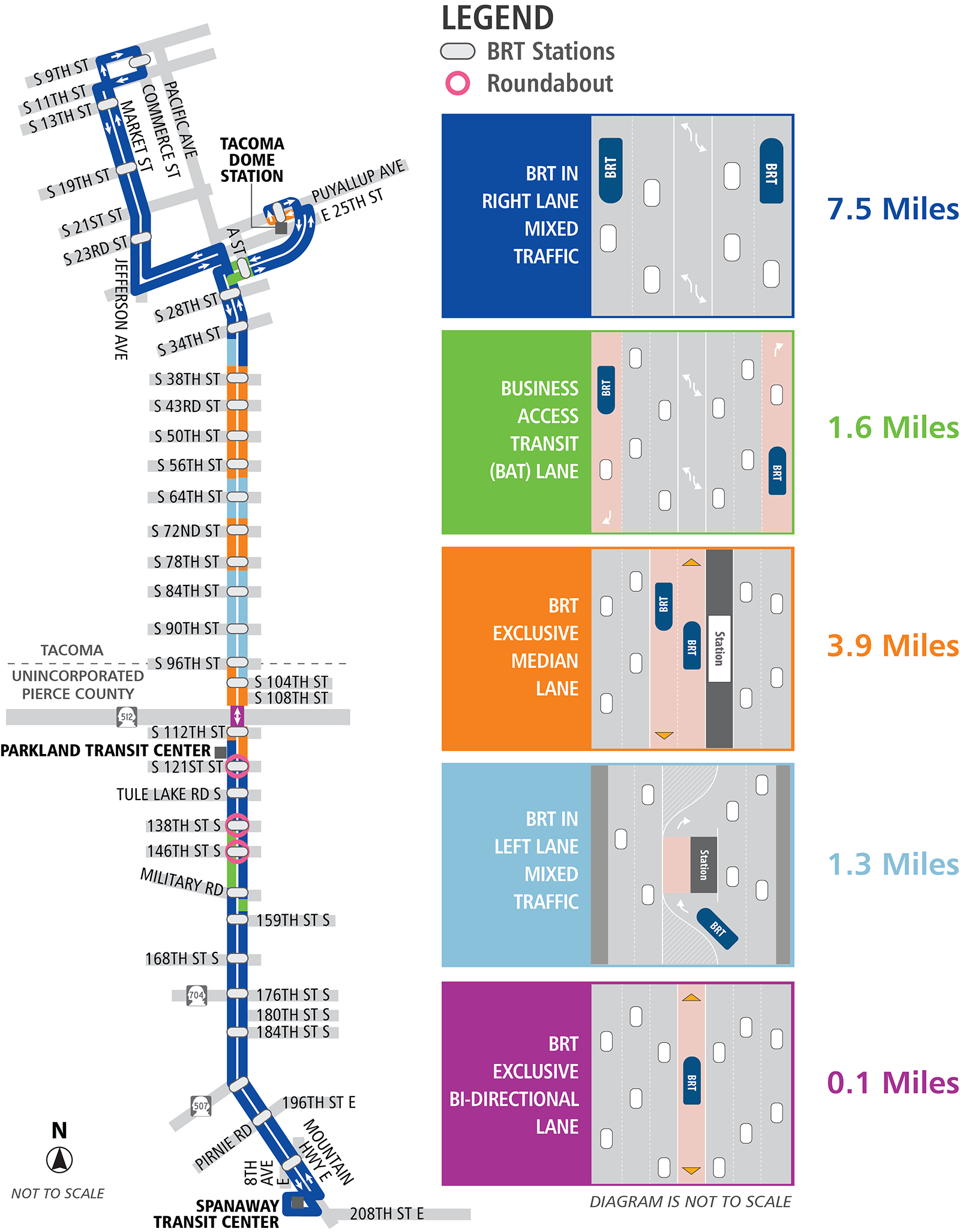
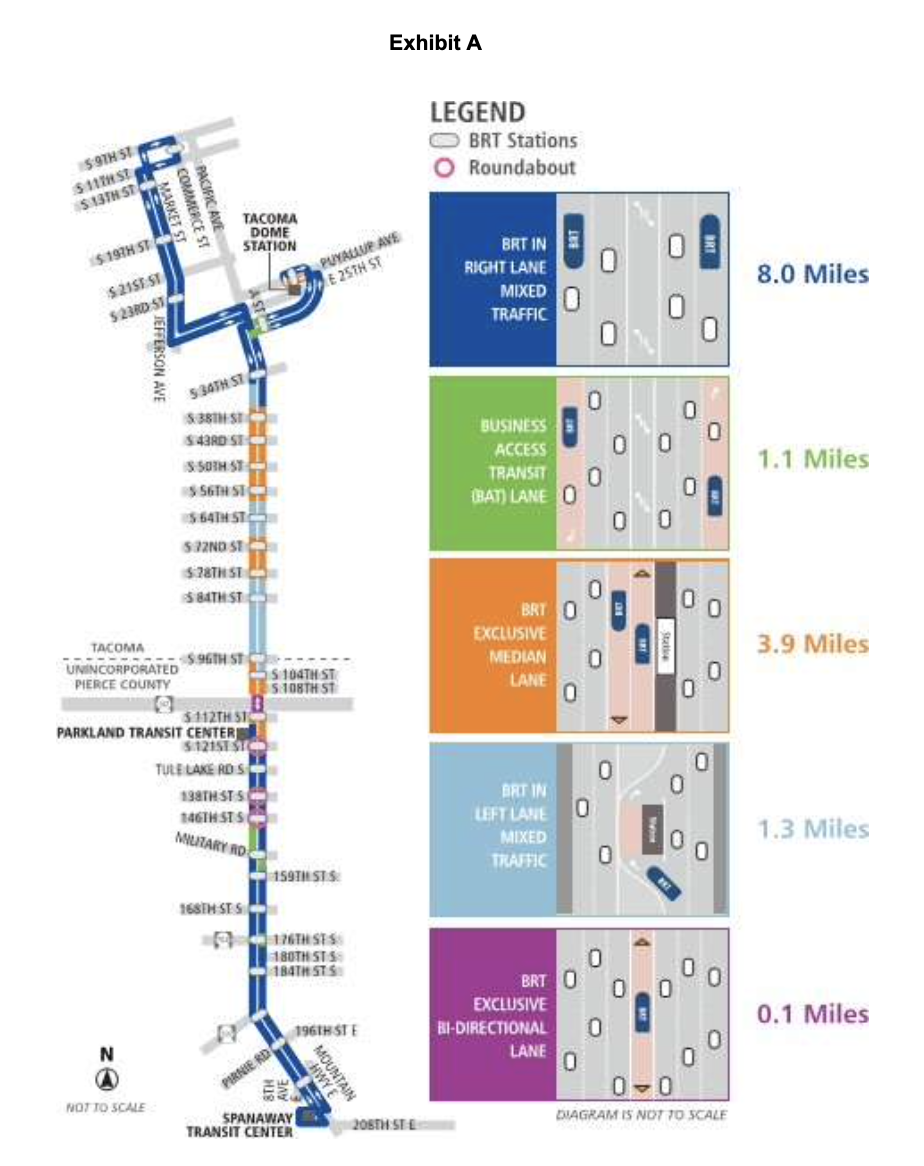
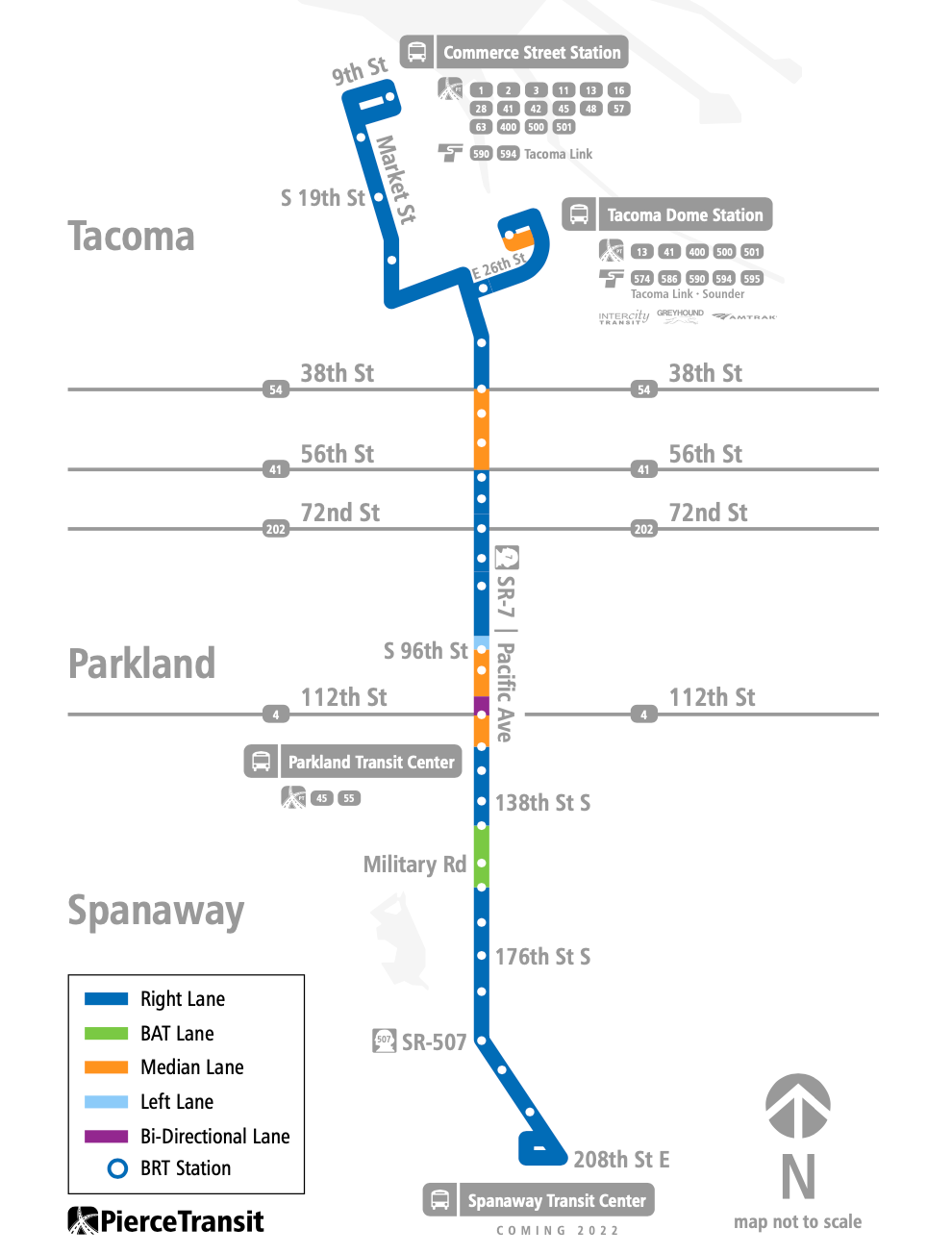
In July, Pierce Transit quietly posted an updated map of the Pacific Avenue/SR-7 BRT corridor showing different types of lane treatments along it. Those treatments are a mixed bag with some downgrades and some upgrades from what previous maps showed, including one in an amended joint memorandum of understanding (MOU) approved in June. Throughout the design process, the quality of BRT lanes — whether exclusive or business access and transit (BAT) — has been repeatedly ratcheted downward to mixed traffic, but the latest version partially restores some exclusive median lanes, the agency says.
Here’s how exclusive and semi-exclusive lane mileage has lurched over time:
- 2019 – over 6 miles of median exclusive lanes and about 1 mile of BAT lanes;
- May 2020 – 3.9 miles of median exclusive lanes, 0.1 bidirectional exclusive lanes, and 1.6 of BAT lanes;
- June 2021 – 3.9 miles of median exclusive lanes, 0.1 bidirectional exclusive lanes, and 1.1 of BAT lanes; and
- July 2021 – 4.5 miles of median exclusive lanes, 0.1 bidirectional exclusive lanes, and 1.0 of BAT lanes.