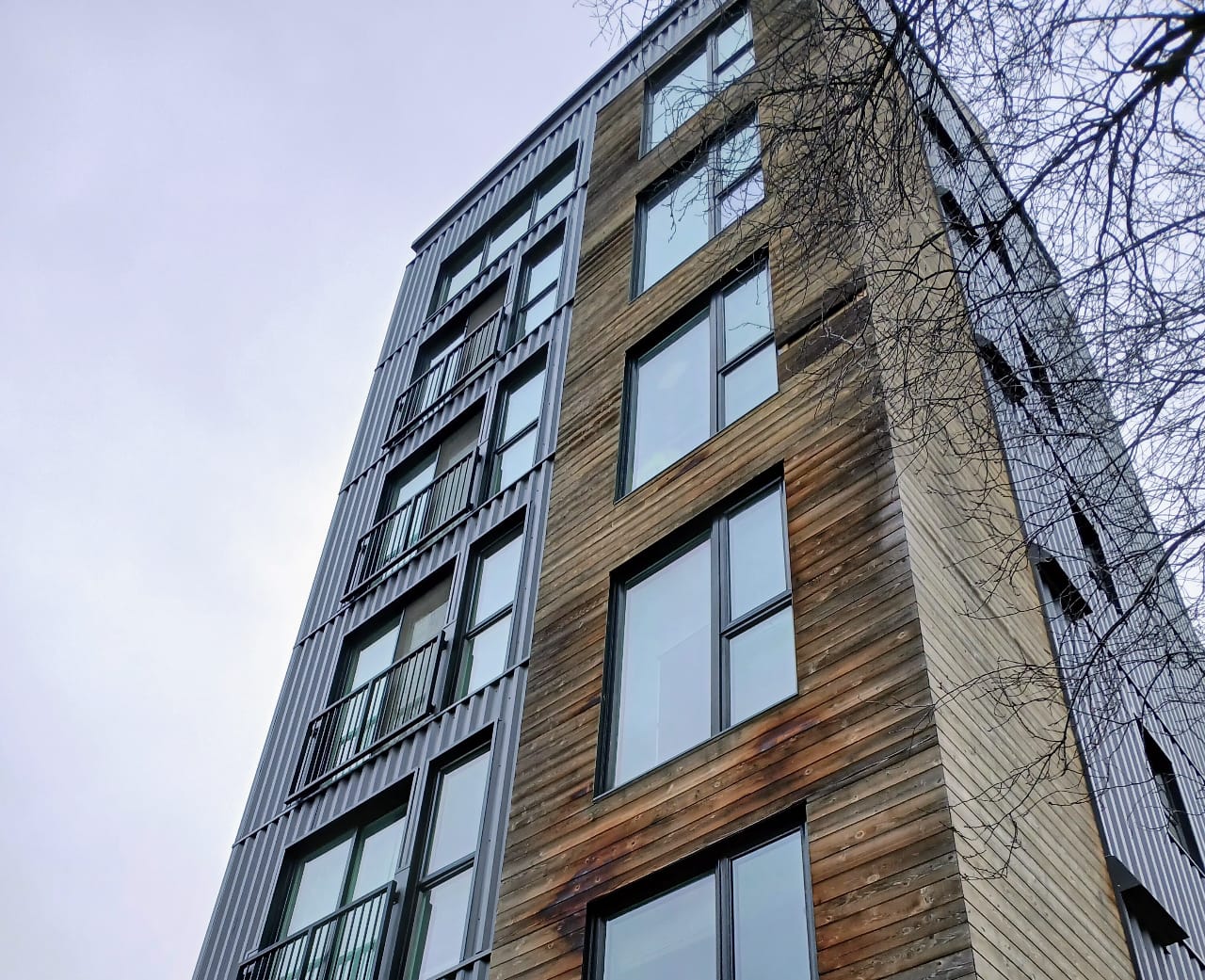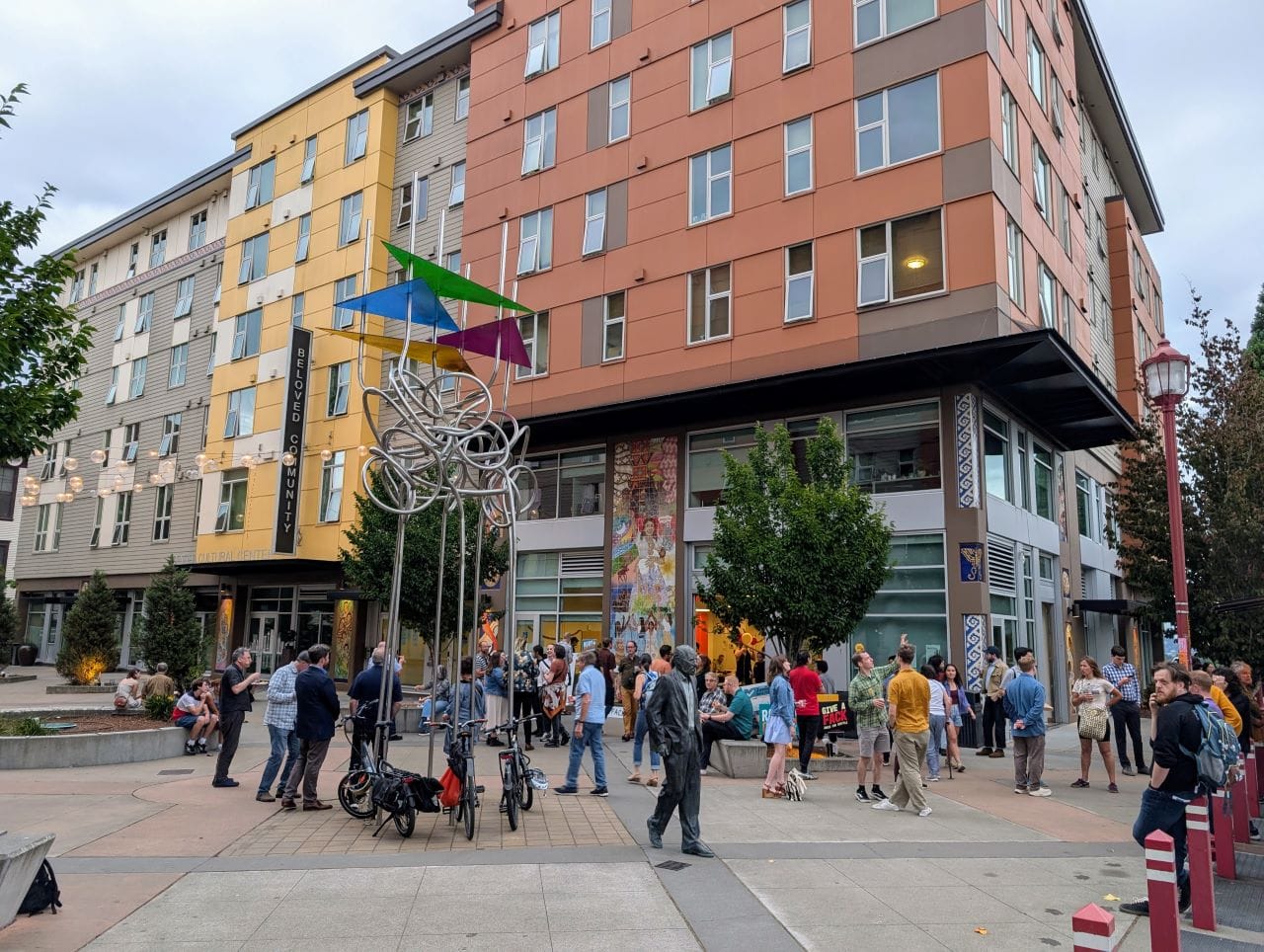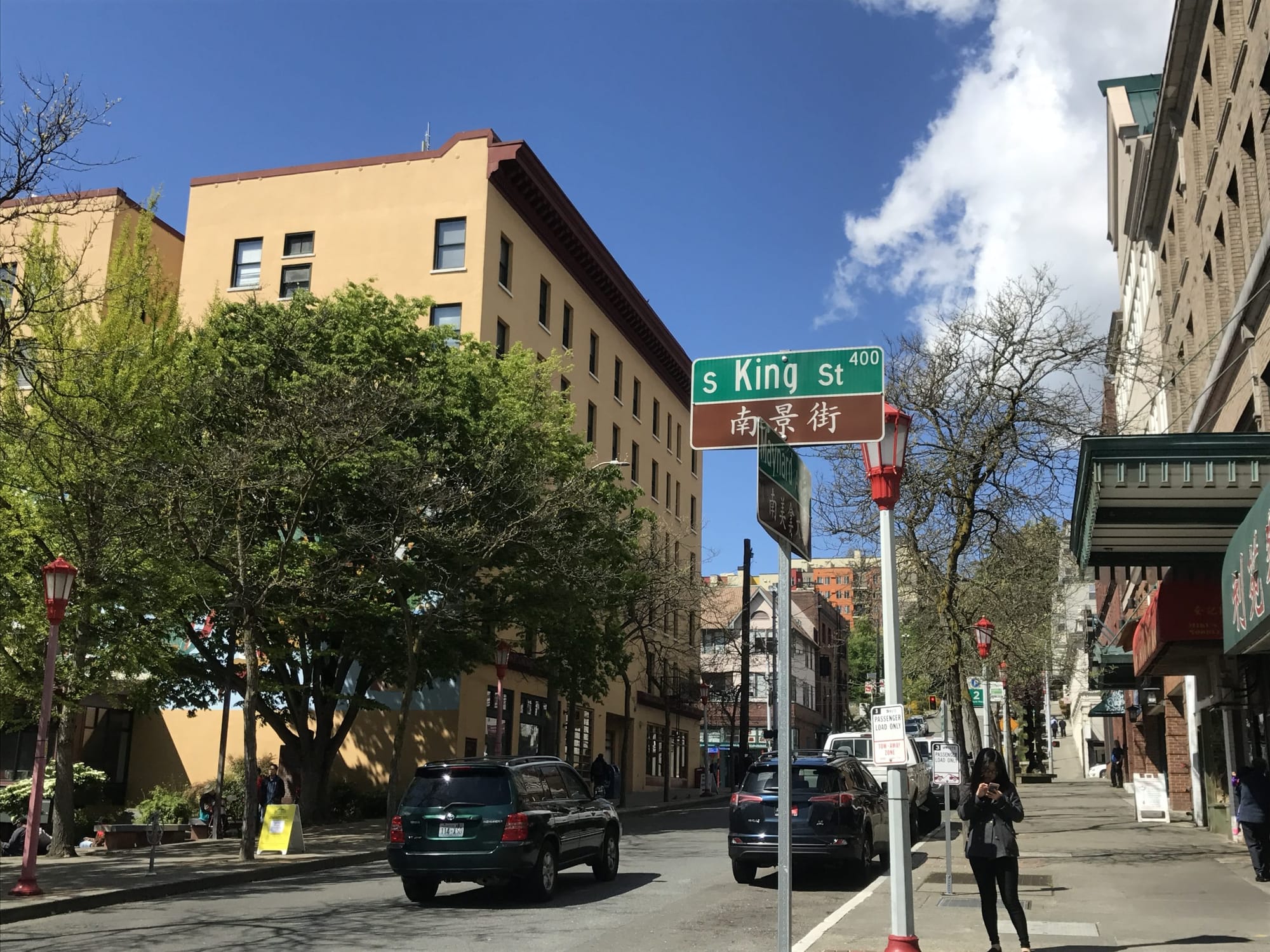
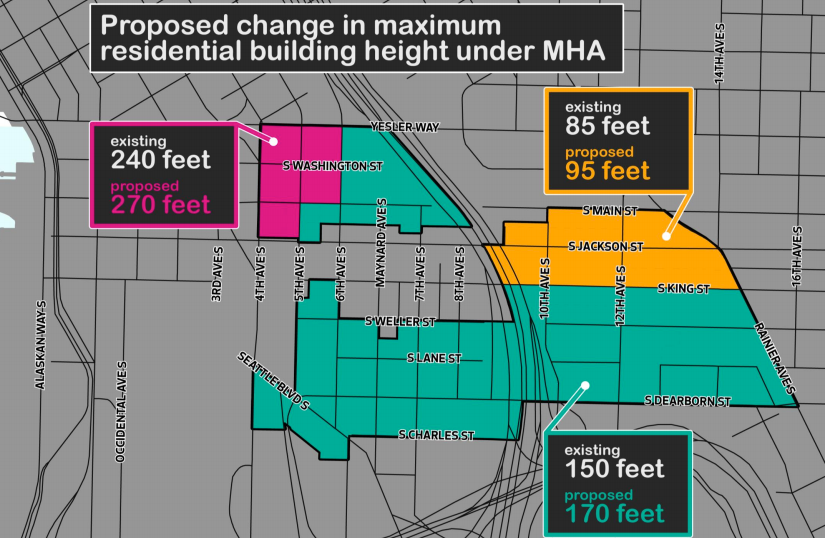
The area of Chinatown-International District is already zoned for tall buildings, but a new neighborhood zoning proposal could push building heights higher and allow wider buildings. The proposal pairs mandatory requirements for affordable housing with the zoning changes. Developers would generally be expected to set aside 5% to 7% of their developments aside for affordable housing or pay a fee to City for affordable housing. Incentive zoning requirements would also be retained, such as contributions to Green Street improvements, preservation of open space and historic landmarks, development of privately-owned public spaces (e.g., public open space, public atriums, human services uses, and public restrooms), and developing affordable housing.
The rezone proposal passed out of committee in June as amended. A full vote on the proposal by the City Council is expected in August. Tonight, however, a public hearing on the proposal will be held to get more feedback from the public on priorities, some of which could be used to further amend the proposal when it goes to the full City Council. During the intervening weeks of the committee vote, Councilmembers have also been meeting with stakeholders and the public to find out what they want to see in the proposal that may not already be there and what already works.
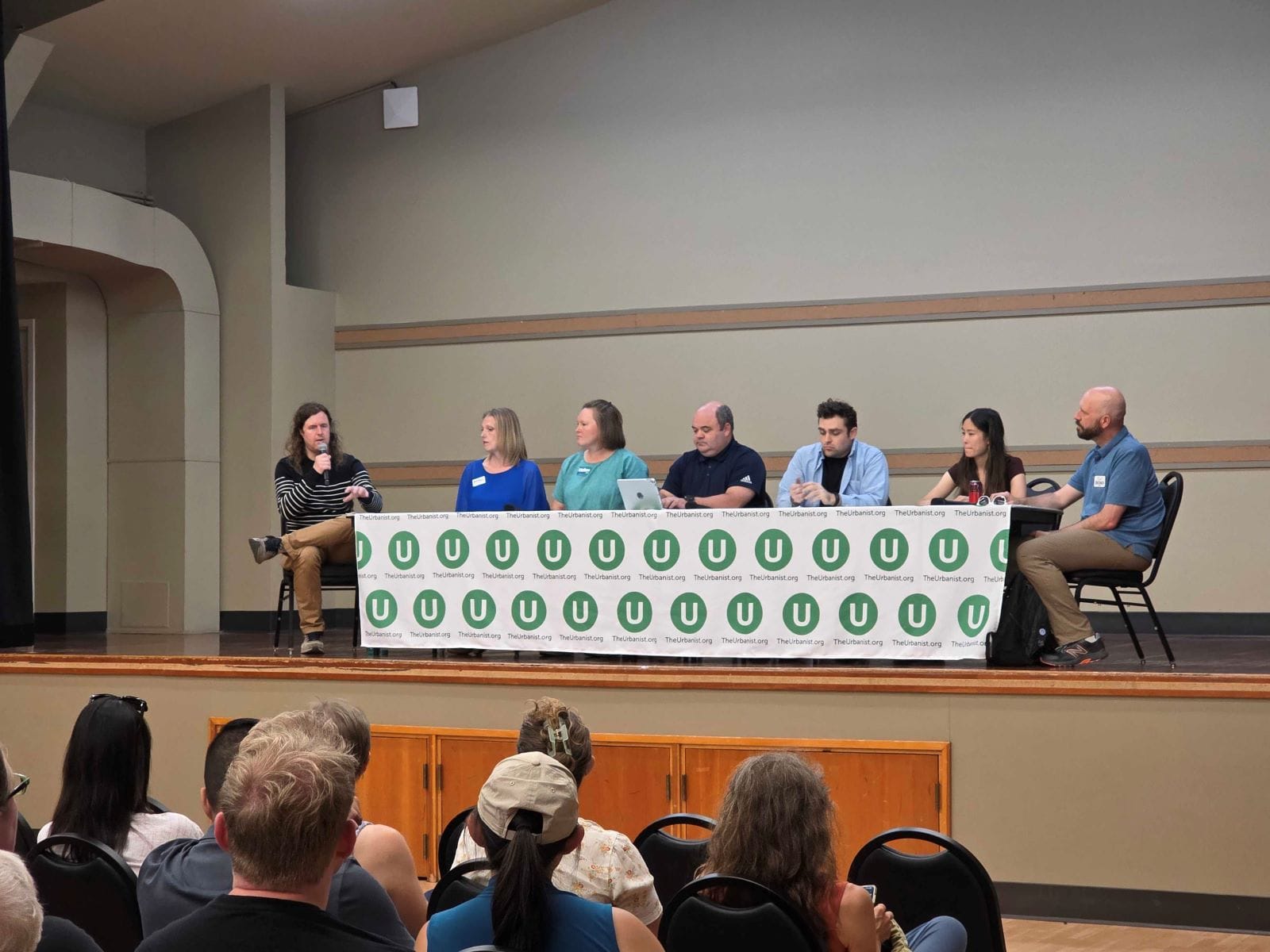
At the public hearing tonight, the meeting will kick off with a presentation on the rezone proposal by City staff. Another presentation by InterIm CDA staff, Tom Im and Leslie Morishita, will follow. InterIm is the local community development authority responsible for funding and building affordable housing and doing specialized community planning. InterIm staff will talk about community-driven strategies that can minimize risk of economic, cultural, and commercial displacement. Other topics in their presentation will include ways to head off gentrification and create stability for long-term residents and businesses in the neighborhood.