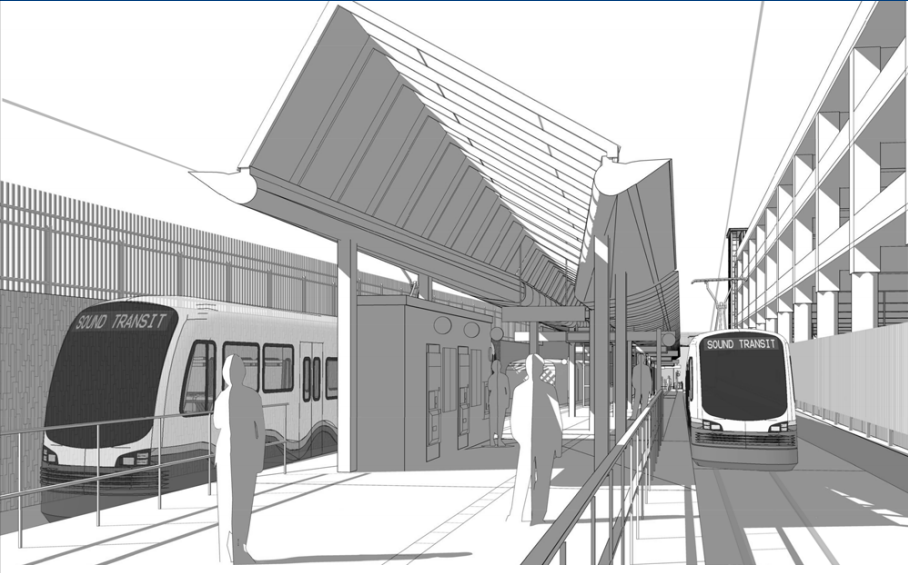
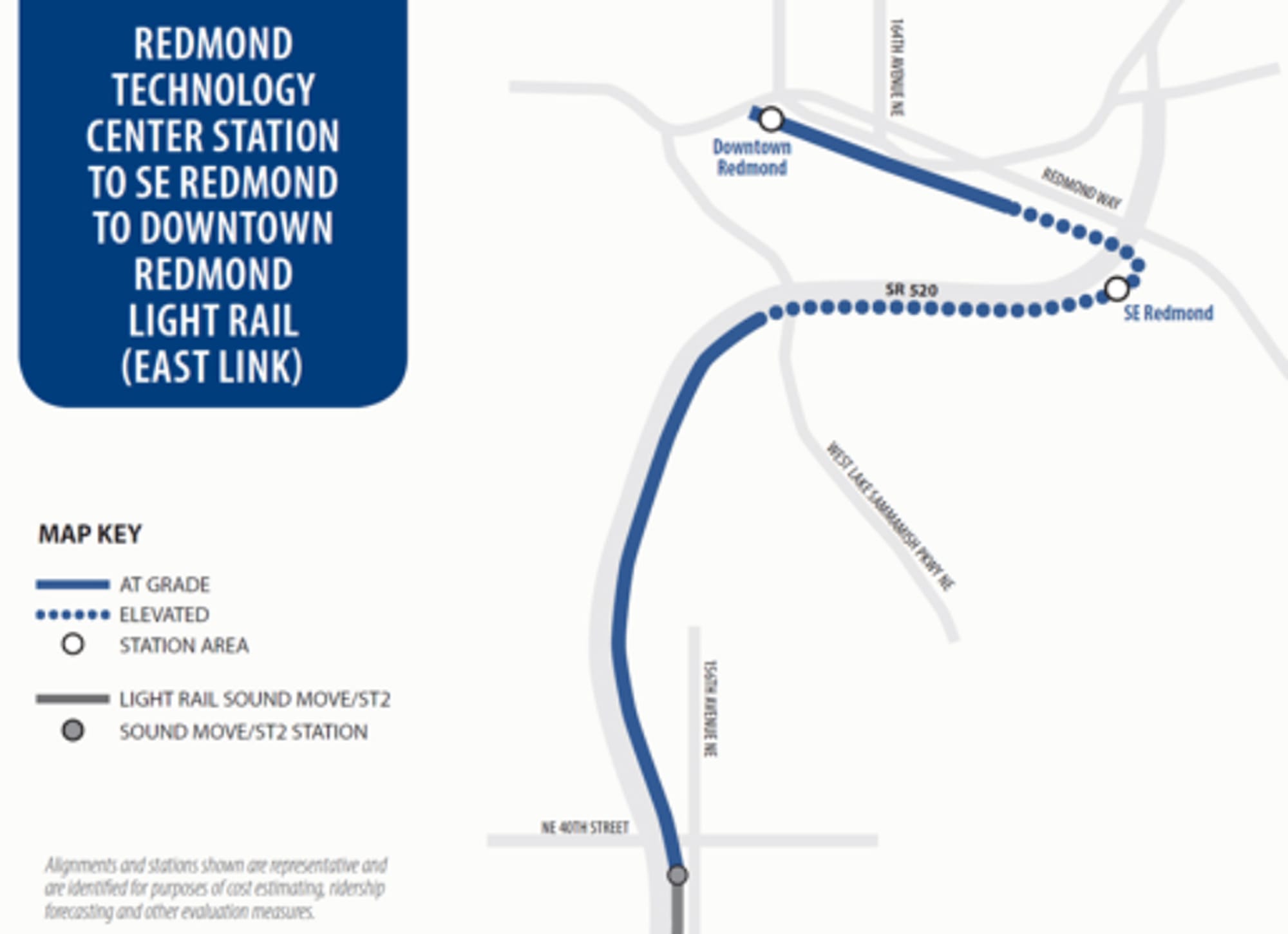
The City of Redmond is conducting a bus and rail integration planning effort for the future light rail extension to Downtown Redmond. Sound Transit, the agency responsible for expanding regional high-capacity transit, is expected to extend its East Link light rail line to Downtown Redmond by 2024. The 3.7-mile, two-stop extension, planned under the Sound Transit 3 expansion program, was identified as at-grade and elevated line. The extension would continue northward from Overlake, the area best known as Microsoft’s main campus in Redmond, following the eastern side of SR-520 toward Redmond Way and then turn westward to Downtown Redmond. The extension is expected to generate between 7,000 and 9,000 daily riders and cost something on the order of $949 million to $1.016 billion.
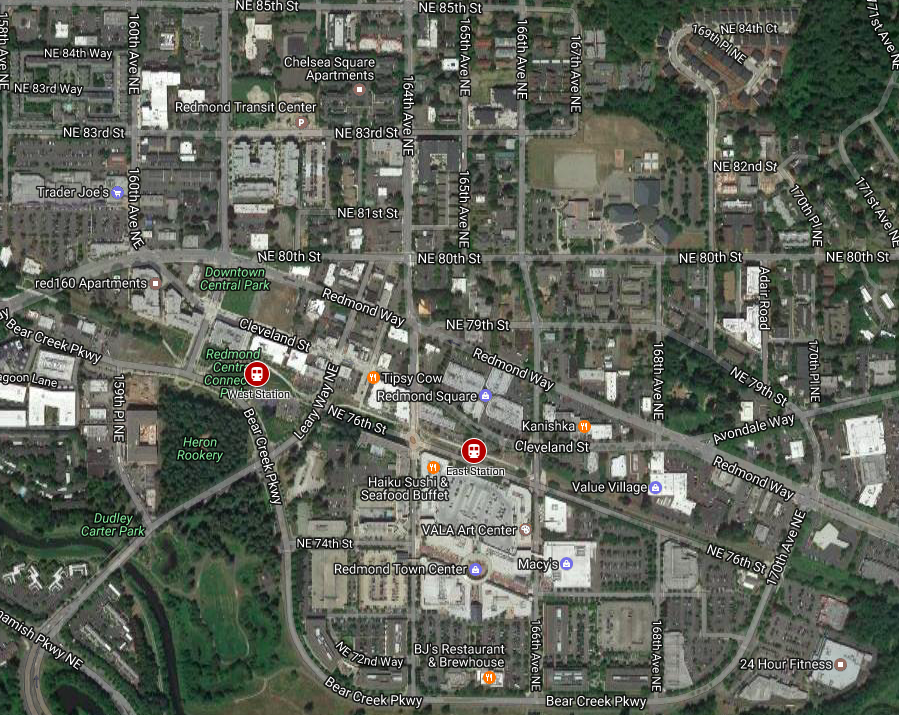
In January, Redmond published four alternative station concepts for its future downtown stop and solicited feedback from the public. That outreach effort included an online survey and a public open house that garnered more than 400 people to share their views on the concepts. Two of the concepts would include options for an elevated station as opposed to the at-grade proposal that Sound Transit put forward in its Sound Transit 3 plan. The other two options would be in line with Sound Transit’s at-grade preference.
The conceptual station locations are only about four blocks apart centered on the blossoming Redmond Central Connector–an open space and trail project–in the city center. The western options would locate the downtown station between Leary Way NE and 161st Ave NE while the eastern options would locate the station between 166th Ave NE and 164th Ave NE.
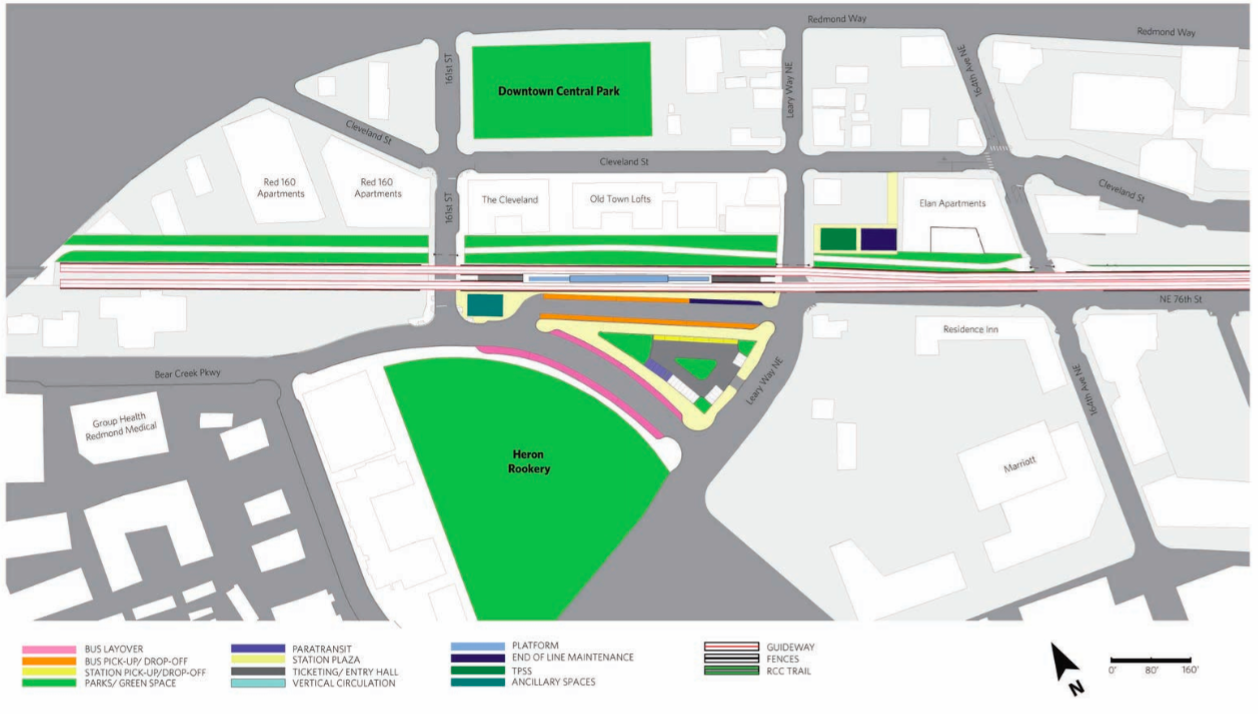
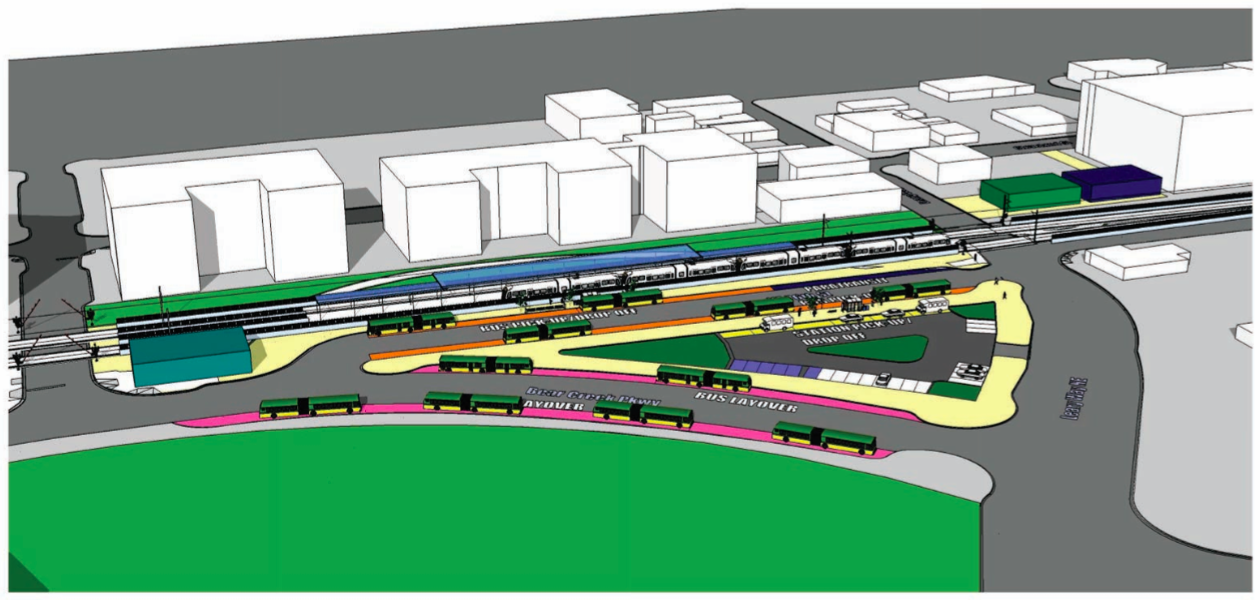
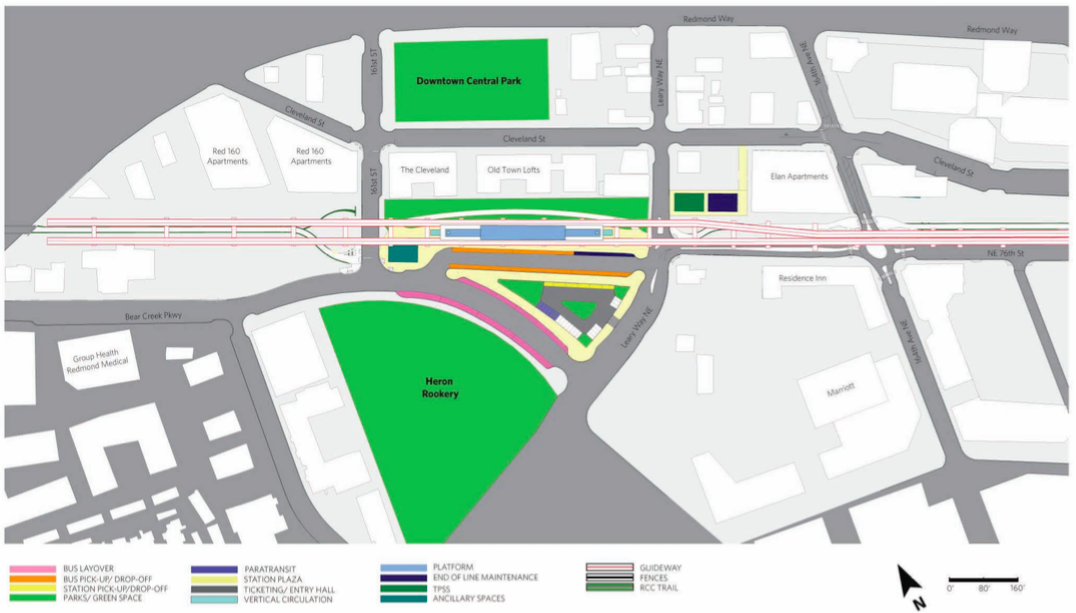
Concept 1: At-Grade West Station
The first concept would be an at-grade station located between Leary Way NE and 161st Ave NE. The tracks and station would be constructed on the south side of the Redmond Central Connector and may require some straightening out of the trail to accommodate the light rail facilities. Adjacent to the station, a new bus pick-up and drop-off area would be constructed to make transfers between rail and bus quick and easy. A portion of the pick-up and drop-off area could be built into an island with some public parking, which currently exists today. Additional features and facilities would include landscaping, fences along the railway, a maintenance facility and power house, plaza space, and layover bays for buses.
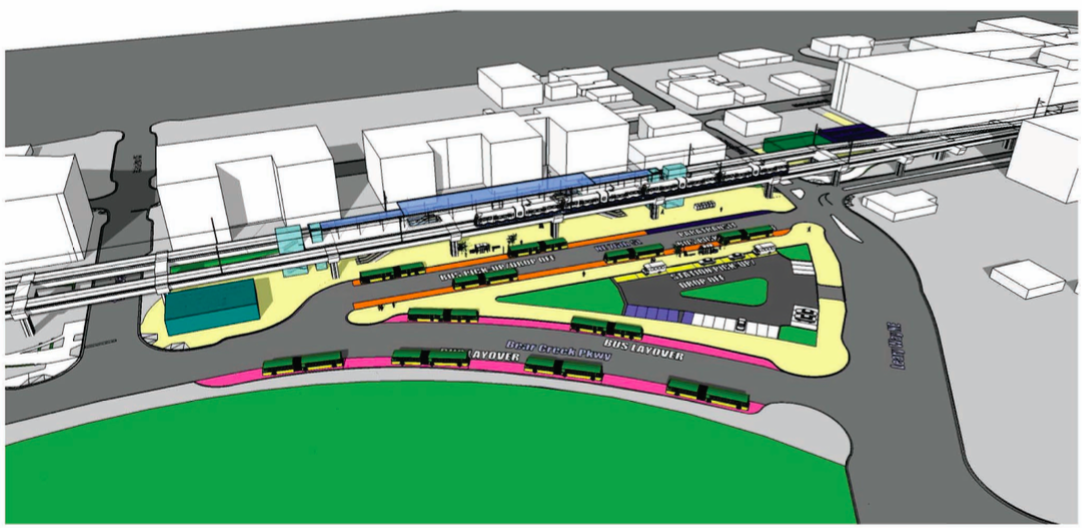
Concept 2: Elevated West Station
Similar to Concept 1, the second concept would locate a station between Leary Way NE and 161st Ave NE with many of the same features. The primary difference is that the station would be elevated with pylons extending the railway over more real estate. However, space below the elevated railway could still be used for open space uses. Some of the Redmond Central Connector trail might need to be moved to better align with the station and preserve green space.
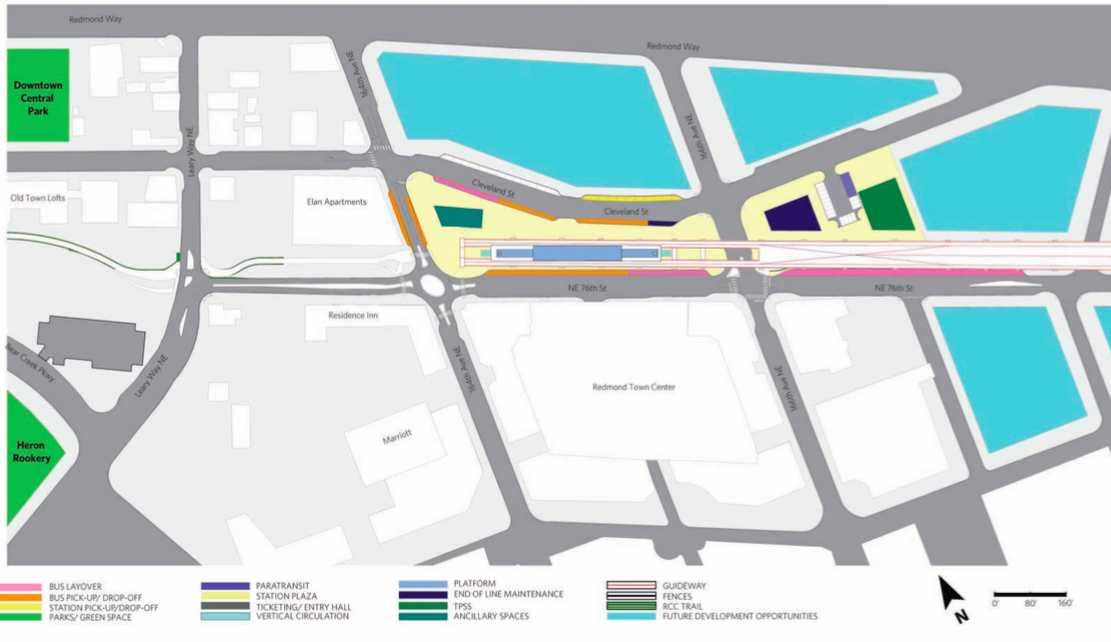
Concept 3: Elevated East Station
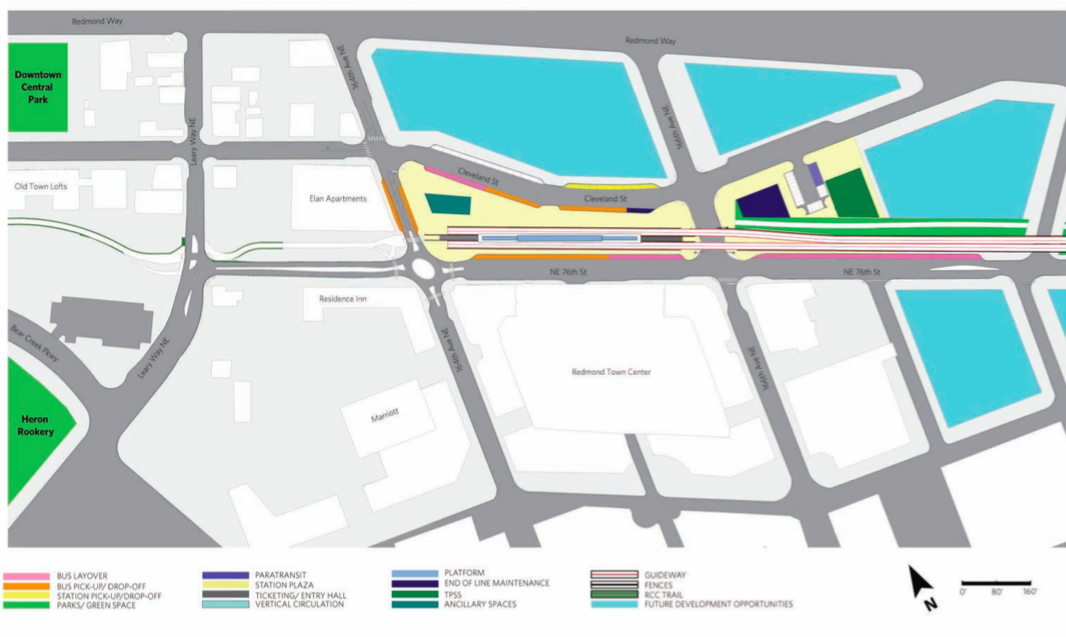
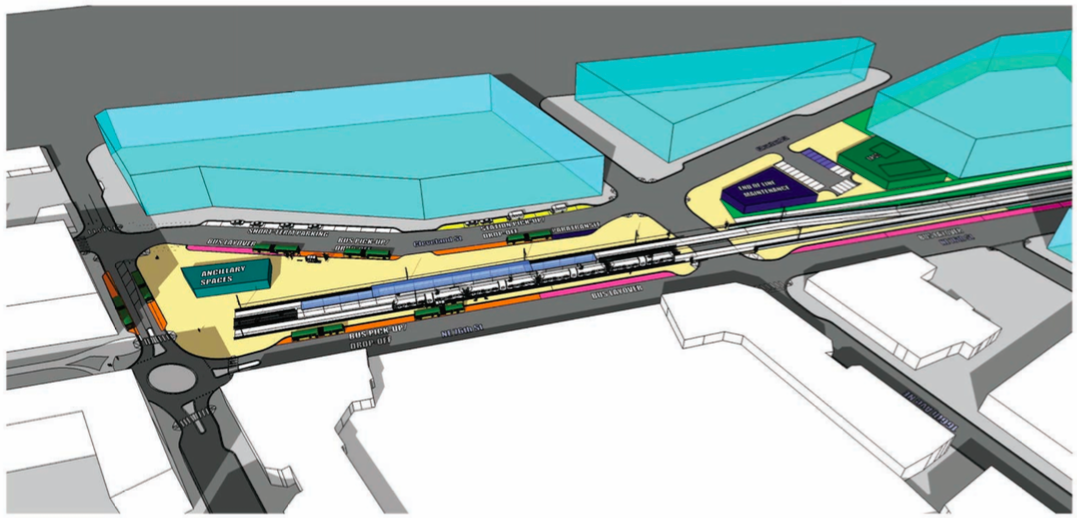
The third concept would be an at-grade station located between 164th Ave NE and 166th Ave NE. The tracks and station would be constructed on the area now serving as the Redmond Central Connector trail. In effect, the trail would be absorbed into the station plaza and then become trail again at either end of the station area. Adjacent to the station, new bus pick-up and drop-off areas would be added on NE 76th St, 164th Ave NE, and Cleveland St to facilitate easy transfers between rail and bus. Additional features and facilities would include landscaping, a maintenance facility and power house, and layover space for buses.
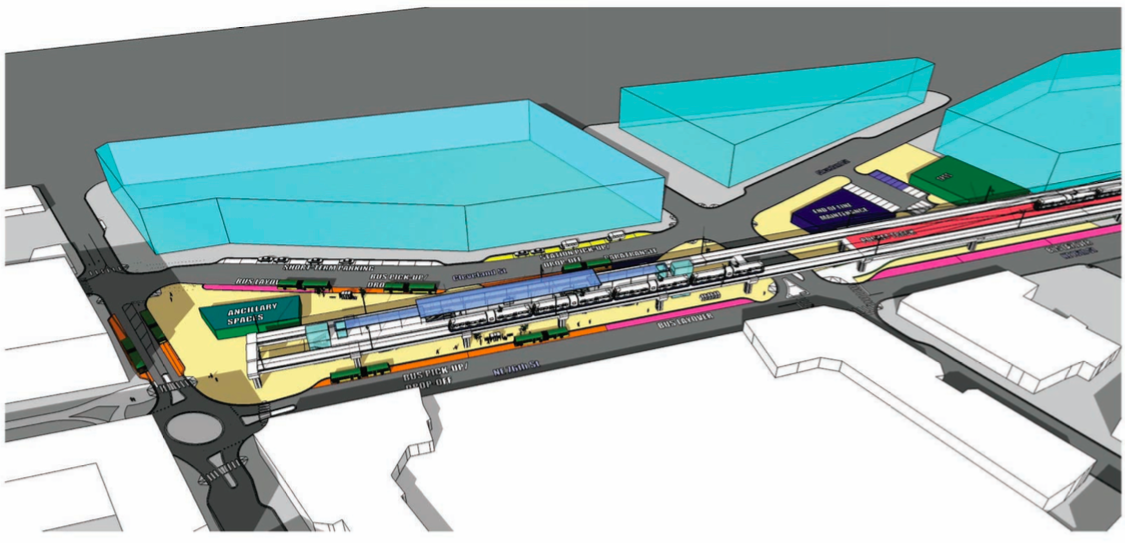
Concept 4: At-Grade East Station
Similar to Concept 3, the fourth concept would locate a station between 164th Ave NE and 166th Ave with many of the same features. The primary difference is that the station would be at-grade, which could create some additional constraints for the Redmond Central Connector trail. East of the station, the railway tracks would need to be quickly tightened up to leave space for the trail and green space as a buffer.
Tradeoffs
Each concept comes with obvious trade offs, which are summarized as follows:
- Concept 1: This option could significantly reduce the amount of open space, modestly increase noise impacts, modestly increase impervious surfaces, minimize visual impacts, provide consolidated and logical bus stop locations, increased impact to the Redmond Central Connector, induce collisions, and more directly serve the densest districts in the city center but incentivize less new transit-oriented development (TOD) potential in a quarter-mile.
- Concept 2: This option could cast shadows and create modest visual impacts, minimize noise impacts, maintains a maximum amount of open space, modestly increase impervious surfaces, provide consolidated and logical bus stop locations, increased impact to the Redmond Central Connector, eliminate collisions, and more directly serve the densest districts in the city center but incentivize less new transit-oriented development potential in a quarter-mile.
- Concept 3: This option could cast shadows and create modest visual impacts, minimize noise impacts, maintains a maximum amount of open space, greatly increase impervious surfaces, provide dispersed and less coherent bus stop locations, reduced impact to the Redmond Central Connector, eliminate collisions, and less directly serve the densest districts in the city center but incentivize more new transit-oriented development potential in a quarter-mile.
- Concept 4: This option could significantly reduce the amount of open space, modest increase noise impacts, greatly increase impervious surfaces, minimize visual impacts, provide dispersed and less coherent bus stop locations, reduced impact to the Redmond Central Connector, induce collisions, and less directly serve the densest districts in the city center but incentivize more new transit-oriented development potential in a quarter-mile.