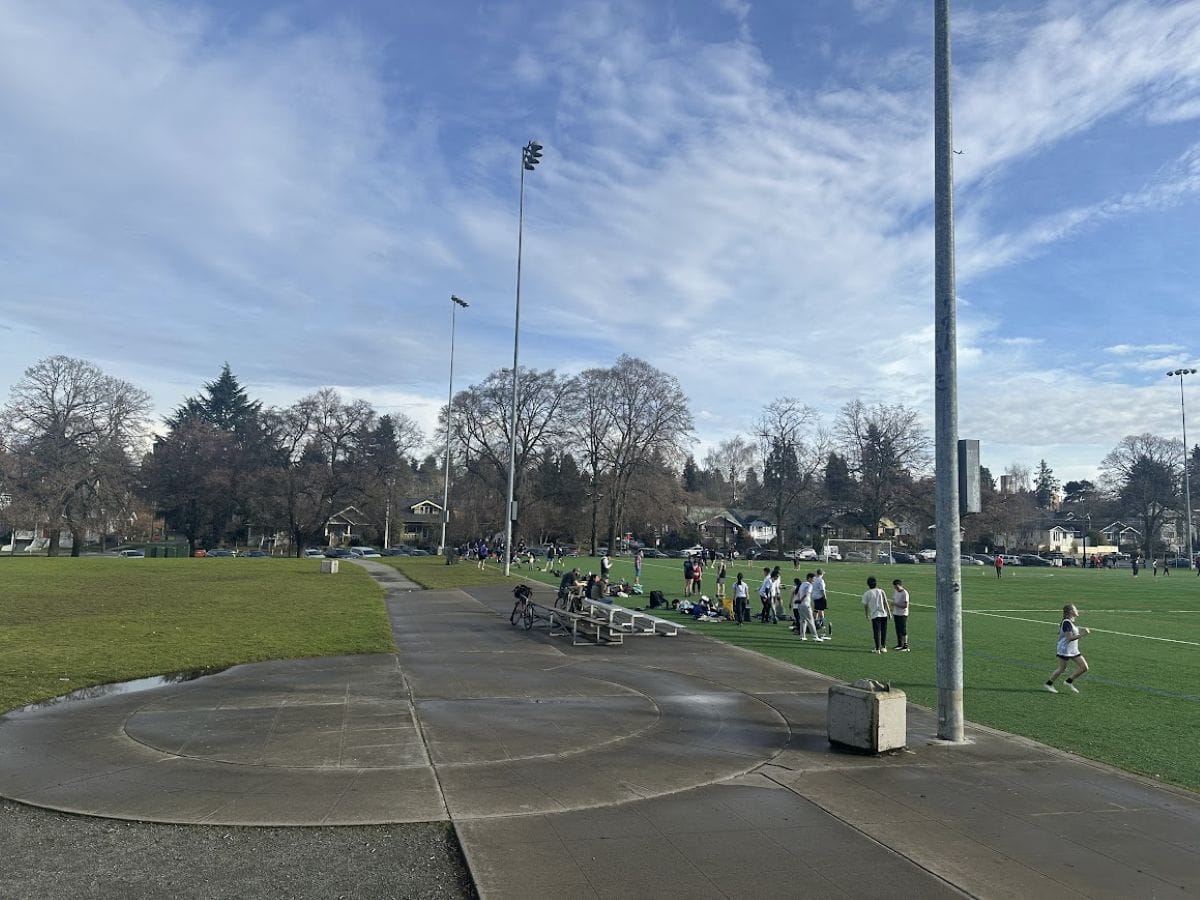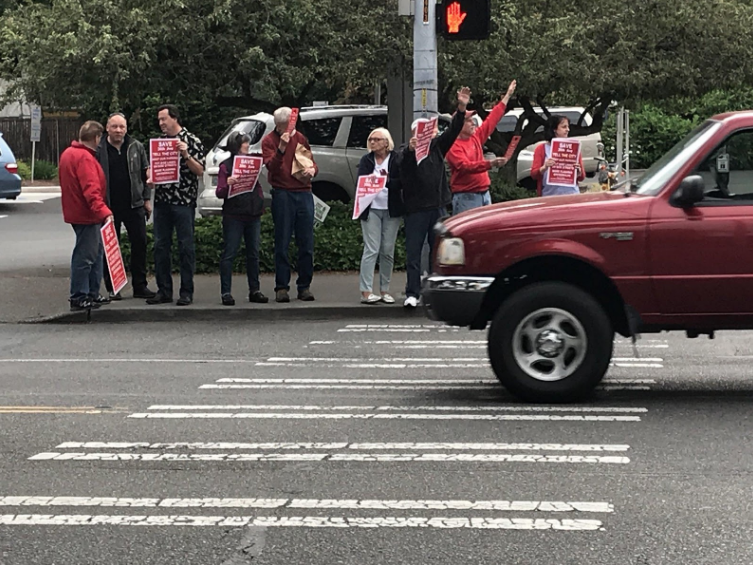
Folks from the group “Save 35th Ave NE” gathered last Monday evening along 35th Avenue NE to protest bike lanes being added to the street. The project, despite being politically contentious, is an example of what Seattle needs to be doing more of–building cost-effective bike lanes as part of repaving projects. With the announcement of the Move Seattle levy “reset,” and the widely publicized cost of the 7th Avenue protected bike lane, cost-effective projects like 35th Avenue NE are our best shot of meeting the levy goals. If anything, this project should be going even further by adding more protected bike lanes and creating better pedestrian crossing improvements. We should be using every single arterial paving project as an opportunity to build out Seattle’s bicycle, pedestrian, and transit network.
Paving projects weren’t very political until recently. Back in 2015, the City had plans to repave Roosevelt Way NE with no roadway changes, which was standard practice. After seeing the initial plans, community groups turned up the pressure on the Seattle Department of Transportation (SDOT) to include bike lanes as part of the paving project. Roosevelt had a terrible safety record for people biking, and Seattle’s Bicycle Master Plan recommended protected bike lanes. Due to that community pressure, SDOT included protected bike lanes in the paving project. The cost of those protected bike lanes were estimated to be $590,000, or around $350,000 per mile.
Since then, SDOT has replicated that successful model of low-cost bike lanes being part of paving projects. However, many paving projects are moving forward with no bike lanes or safety improvements included in them. Some, like the upcoming University Way NE paving project, included bike lanes on University Way in the initial design, but dropped them due to businesses expressing concerns about lost parking. Others, like the 25th Avenue NE paving project, didn’t bother considering bike lanes or sidewalk improvements despite plenty of underutilized space, a poor safety record with the current roadway design, and some very clear connectivity wins. SDOT staff have told me that they won’t consider bike lanes on 25th because it’s not in the Bicycle Master Plan.