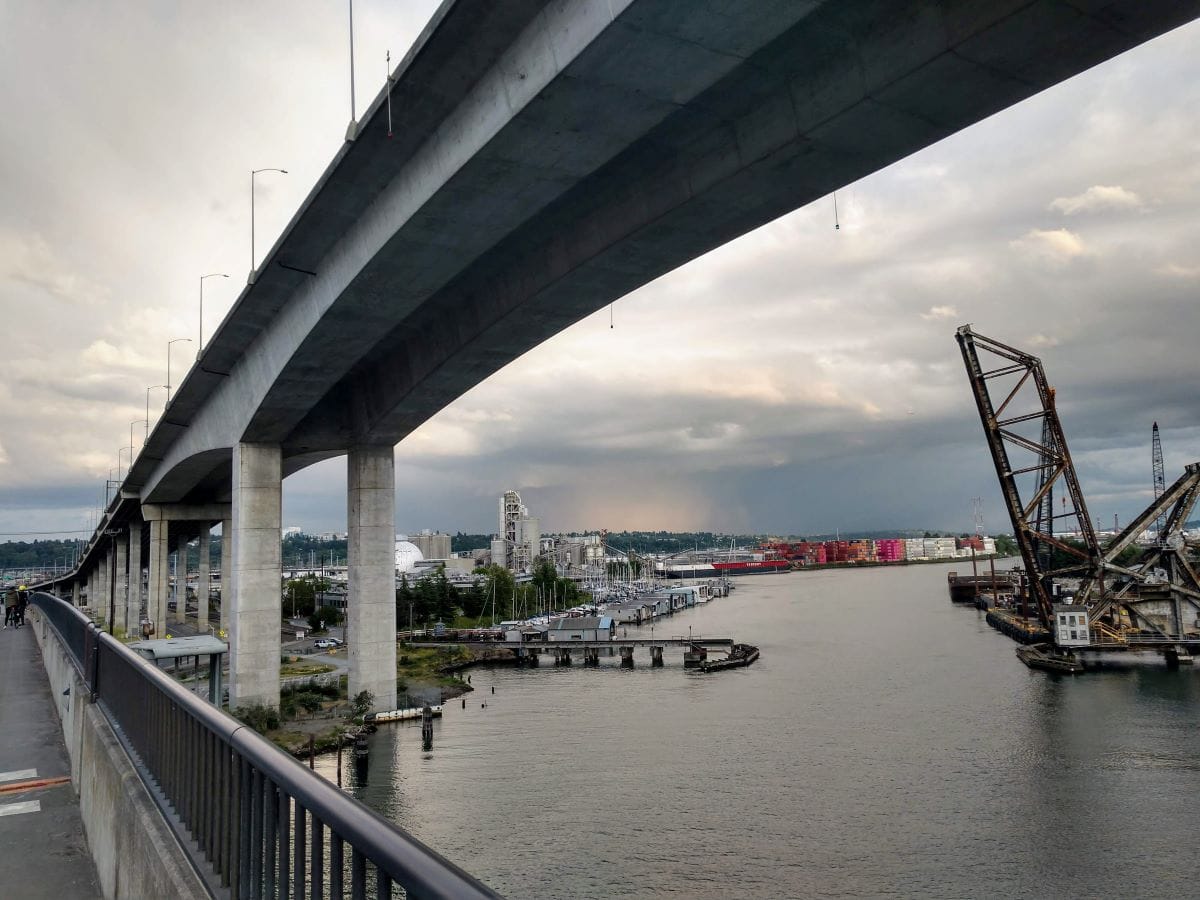
The West Seattle Bridge was just 36-years-young when it cracked, sagged, and threatened to collapse, adding another layer of pollution to the already highly polluted Duwamish River. The city grappled with what to do: repair or replace. Yesterday the Seattle Department of Transportation (SDOT) released its cost-benefit analysis revealing a replacement option scored highest: “Alternative 4 (superstructure replacement) was the overall best performer.”
Normally 36-year-old bridges don’t need replacing, but these are unique circumstances. Although messaging has varied since the bridge closed for emergency shoring in March, SDOT has highlighted how expensive and uncertain repair could be. A repair bridge could last 15 years or a lot less or more. It’s hard to gauge. One the thing the agency does know is that a repaired bridge would need constant tending and expensive maintenance on a yearly basis to keep it from deteriorating once more. In fact SDOT’s consultant WSP put the price tag at approximately $916 million to quantify the lifecycle costs of repairs over 79 years.
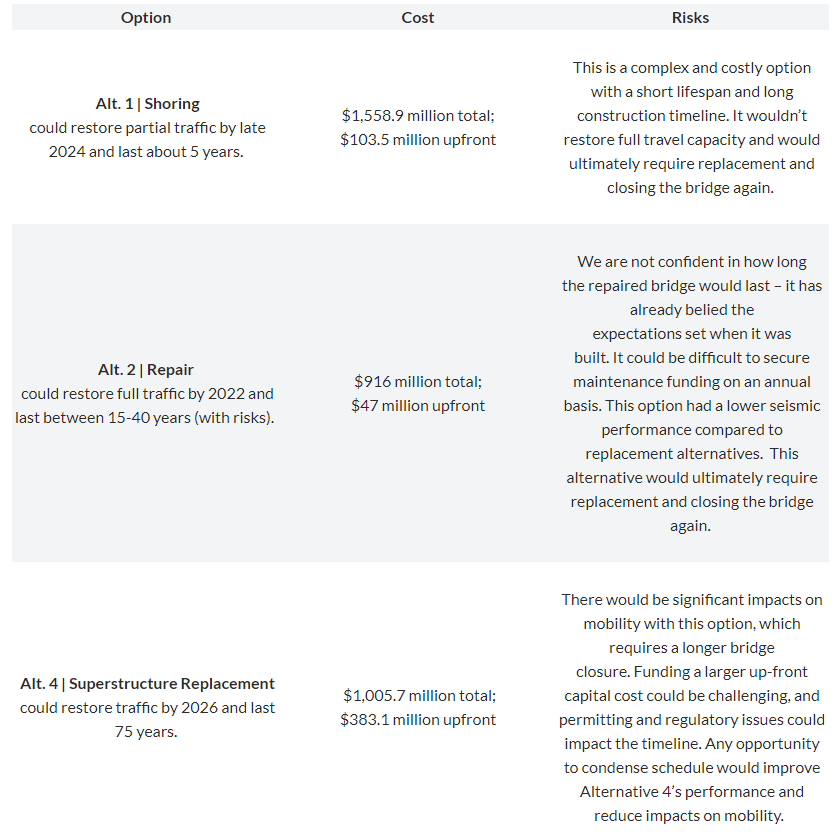
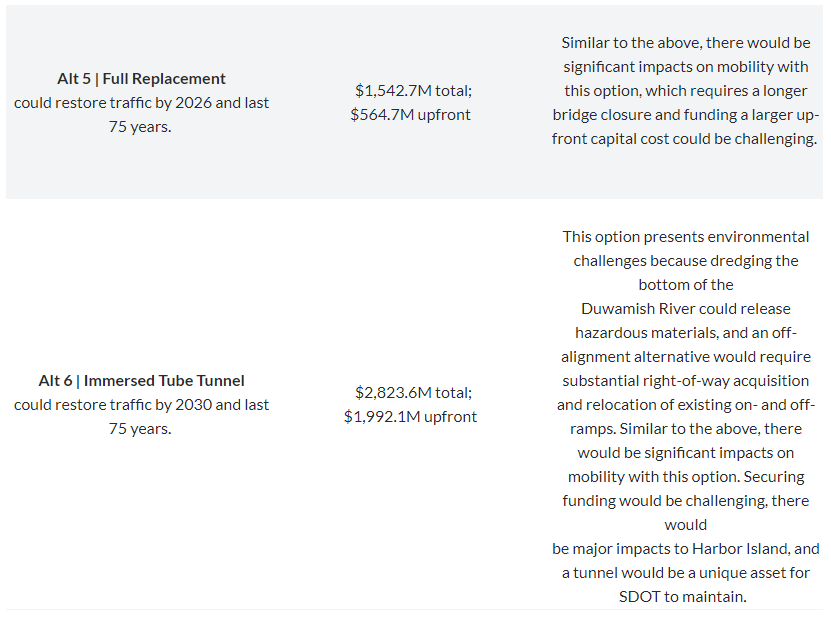
Publications like The Seattle Times and West Seattle Blog highlighted that repair would cost “only” $47 million upfront in their headlines and coverage. But that overlooks how expensive it will be maintain the repaired bridge; the millions in annual maintenance clarify the city’s decision. Better pull off a leaky band-aid and get stitches than slowly be bled dry.
SDOT finances are it too sorry of a shape to throw good money after bad trying to put an ailing bridge on life support. Bridge maintenance costs could end up swallowing up the rest of the SDOT budget–and rarely are there grants for maintenance–which jeopardizes investment in infrastructure for people walking, rolling, biking, and riding transit.
Replacement isn’t cheap either and requires more money upfront, but it offers more certainty. WSP puts superstructure replacement at $1 billion total with $383.1 million upfront. The other replacement options–full replacement and the immersed tube tunnel are even spendier with the immersed tube requiring almost $2 billion upfront. The immersed tube is complicated by environmental factors–the Duwamish River is a superfund site and disturbing the riverbed could release more pollution.