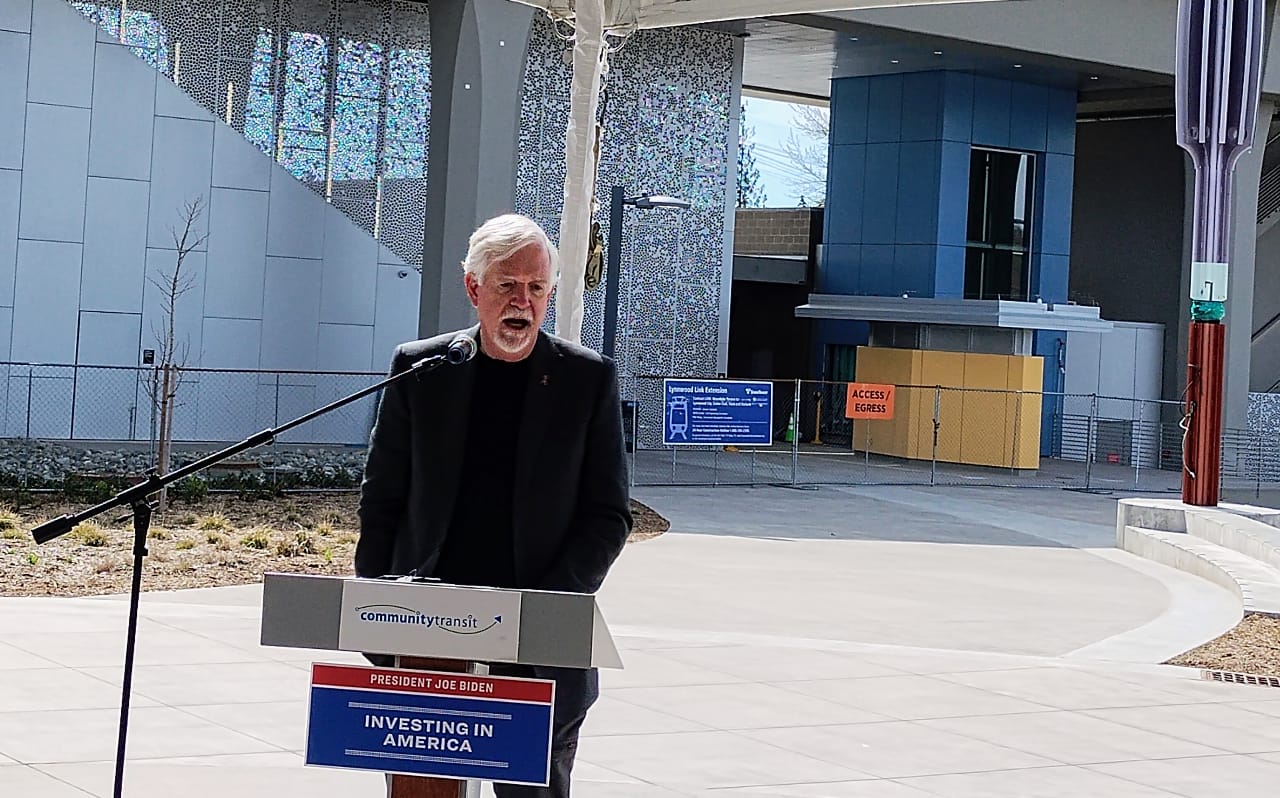
The tenure of Roger Millar, who has served as secretary of the Washington State Department of Transportation (WSDOT) since 2016, is set to come to an end. The change in leadership was announced late last week, with a statement from Governor-elect Bob Ferguson that Millar and eight other agency heads would be replaced as he prepares to take office in January.
Turnover at state department leadership tends to happen with any gubernatorial transition, including between members of the same political party. However, Millar had expressed a willingness to stick around and his departure brings renewed questions about Ferguson’s transportation priorities, after running a campaign that rarely broached the topic — outside of pledging to boost service on Washington State Ferries.
Widely praised within progressive transportation circles, Millar has been a strong advocate for investments in the state transportation system that prioritize sustainability and safety over catering exclusively to traffic throughput — jargon for fitting more cars on roads and boosting speeds. He has been a persistent voice for elevating the issue of land use in any transportation discussion, citing the need for more housing near jobs and services.
Unlike many DOT heads, Millar has been open with state lawmakers about the folly of trying to solve congestion by adding highway lanes in urban areas. Instead, he has touted the people-moving capabilities of public transit, including pitching a Cascadia high speed rail network.
“If you were to direct us to add a lane in each direction to I-5 between the Oregon border and British Columbia. that would be $110 billion-ish to build and would probably take as long as it would take to build a high-speed rail system between the communities,” Millar told state legislators during a 2019 briefing. “And it would add a lane of travel in each direction and would probably be full of traffic by the time we got finished building it. And it would still take you all day to get from Portland to Vancouver, B.C. With the investment in ultra high-speed rail, we’re talking about an hour to Vancouver or maybe an hour and a half down to Portland, and that would be a gamechanger.”
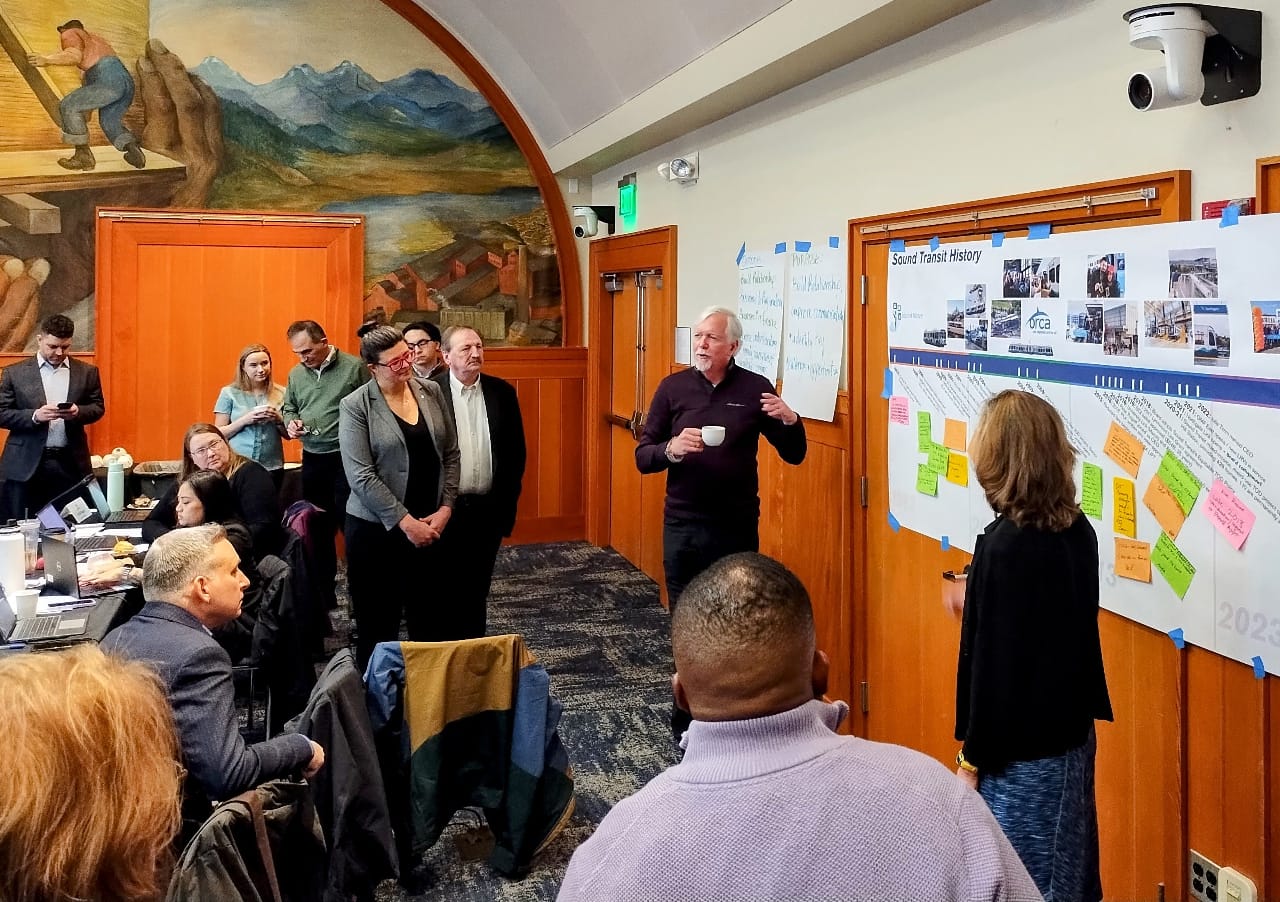
From his seat on the Sound Transit Board of Directors, where the WSDOT secretary has a permanent seat, Millar has advocated for the agency to explore utilizing existing highway lanes for its bus rapid transit (BRT) system and pushed for reforms of the agency’s parking policy and focus on costly parking garages. He also been a voice asking for additional analysis around creating a true regional transit hub in Chinatown-International District (CID) as part of Ballard Link — after the board voted to change its preferred alignment to skip that CID hub station.
Millar’s eight years serving as Jay Inslee’s transportation secretary have been incredibly consequential. After being hired as deputy secretary in 2015, he took the reins at WSDOT a year later following a tumultuous period under the prior secretary, Lynn Peterson. With a controversial tolling program being implemented on I-405 on the Eastside, and the infamous tunnel-boring machine digging a tunnel under Downtown Seattle became stuck for over three years, Peterson’s tenure was marked by controversy, and she was ultimately removed from her post by Senate Republicans in a rare move that many saw as retaliatory and political.
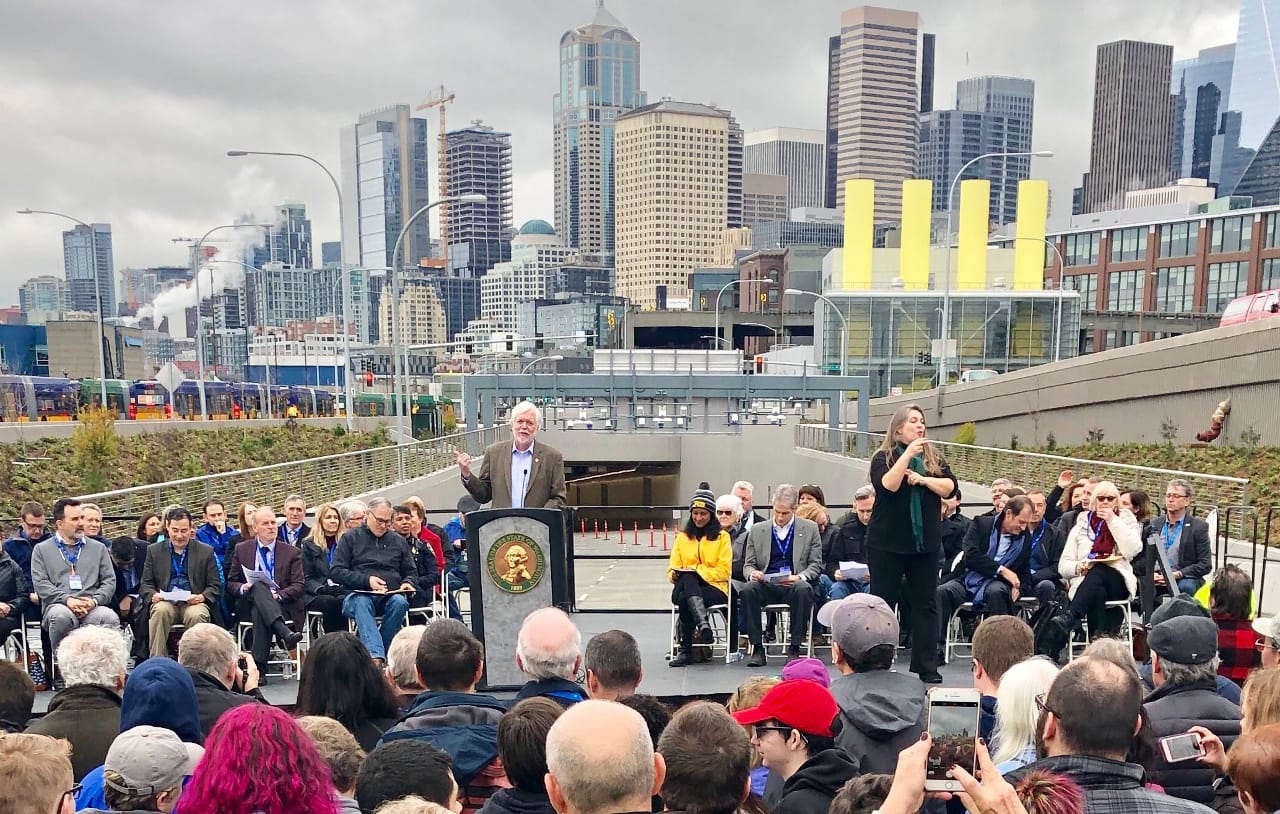
It fell to Millar to wrap up Seattle’s tunnel project and implement much of the highway-laden 2015 Connecting Washington transportation package.
Though it all, Millar has tried to steer the massive ship that is WSDOT away from its well-established roots as primarily a highway-building agency and into a multimodal transportation department.
In a conversation with The Urbanist earlier this year, Millar described some of the behind-the-scenes reforms that have been moving forward under his watch, institutional reforms at an agency that is primarily tasked with implementing the projects that the state legislature tells it to. One major change was the creation of a new Urban Mobility and Access program in 2017. Now under its second head in assistant secretary Julie Meredith, the new office represented a substantial change in how WSDOT coordinated its own projects, as a one-stop shop for the multiple massive highway projects that the department has been juggling in central Puget Sound and elsewhere.
“The megaprojects used to be individual fiefdoms that were created by the legislature and the program managers all reported to the chief engineer, and they did their projects all by themselves,” Millar said. “But when you look at the ones we had: Alaskan Way Viaduct, 520, 405, the [Puget Sound] Gateway, they are now all in the same program under Julie [Meredith]’s leadership, and they are linked to our tolling division, our division that coordinates with Sound Transit, Community Transit and King County Metro, and we have a group called management of mobility that’s looking at: how can we do this better?”
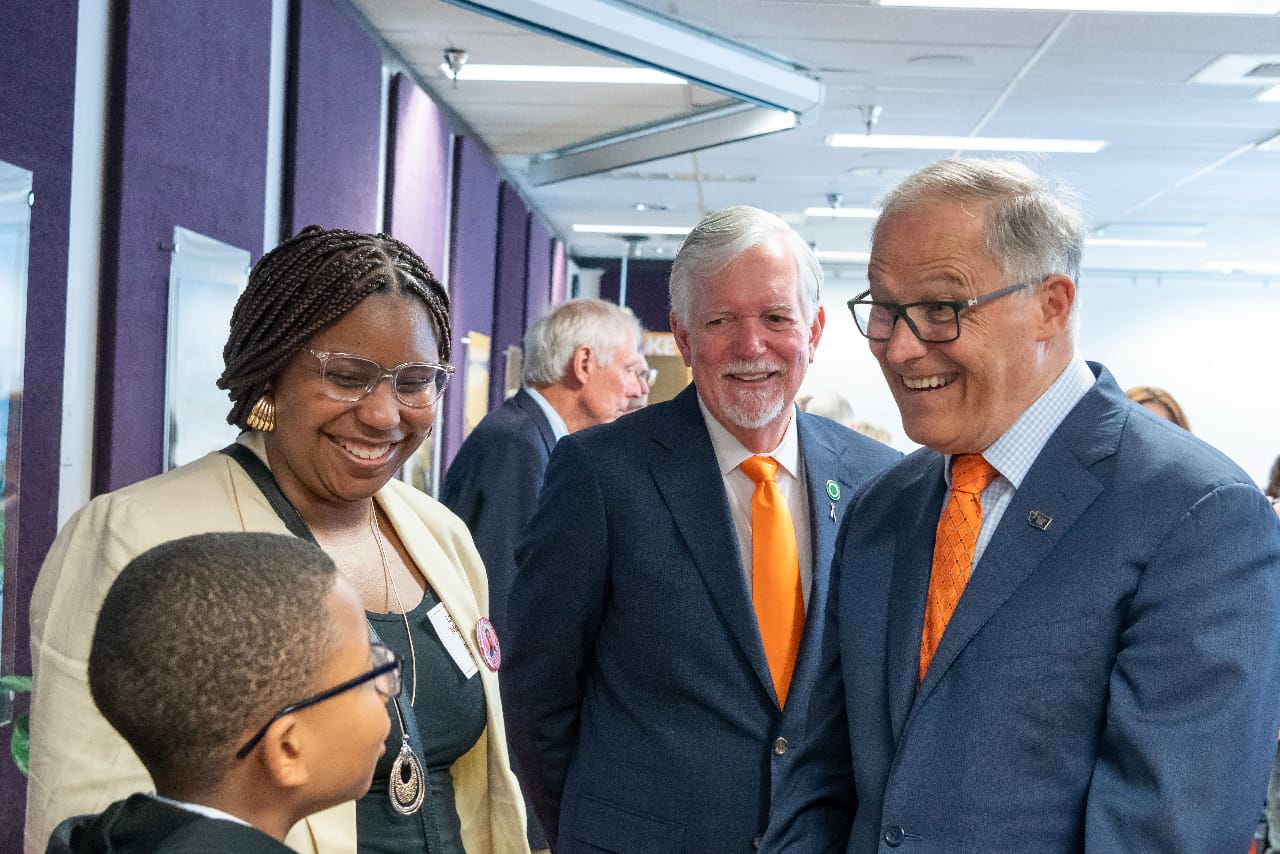
Another major internal change Millar has overseen has been the creation of a department of Multimodal Development and Delivery.
“What we did is, we took the divisions and the modes and we put them together so the people who are doing planning and design and construction and operations and maintenance and safety are in the same room with the people who are doing active transportation and public transportation and aviation and rail freight ports. So it’s not just a highway focus — that mix is resulting in a changing dynamic in the organization,” Millar said. “If you look at what we’re doing with the [Cascadia] high speed rail project: We’re doing the high speed rail project in conjunction with and integrated with our analysis of the future of the I-5 corridor.”
And then there’s the Active Transportation division, the only high level department devoted to pedestrian and bike programs at the state level in the entire country. Stood up in 2017 with former Washington Bikes executive director Barb Chamberlain as its head, the department produced an award-winning Active Transportation Plan, a roadmap for improving walking and biking facilities across the state. In 2022, when the Move Ahead Washington transportation package included a mandate for a Complete Streets assessment on virtually every new highway project entering the pipeline, the department was well-positioned to be able to create standards that are changing the game when it comes to what a multimodal state highway project looks like.