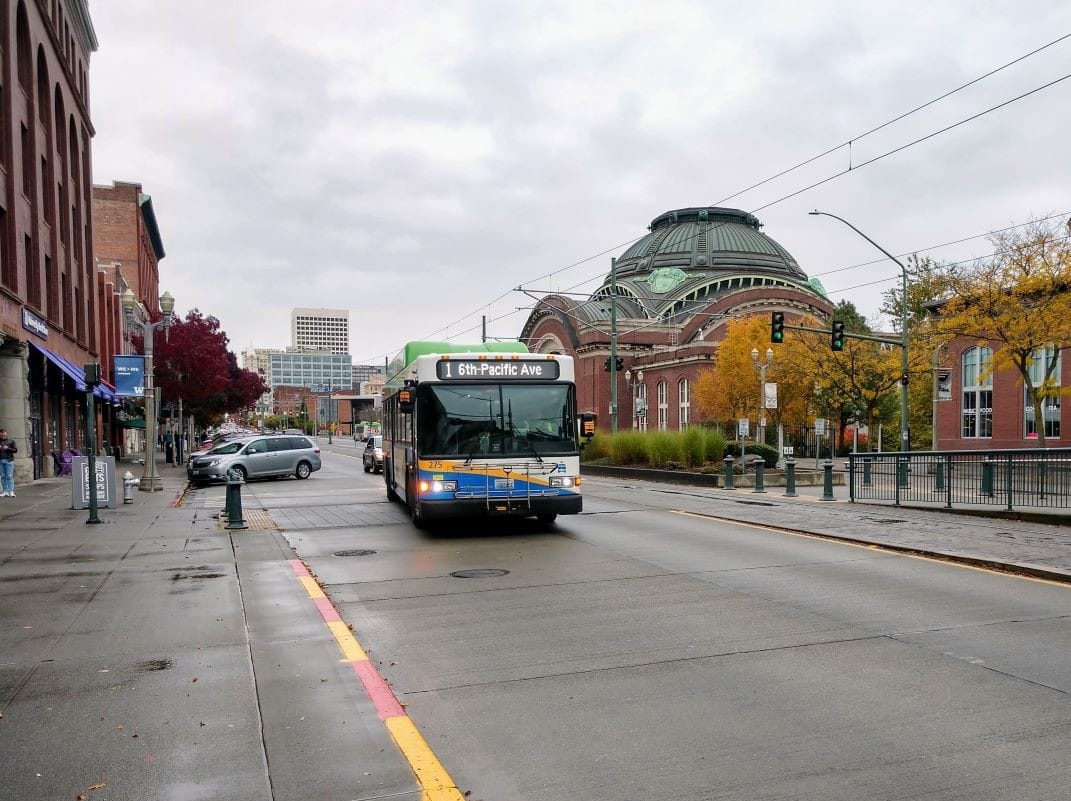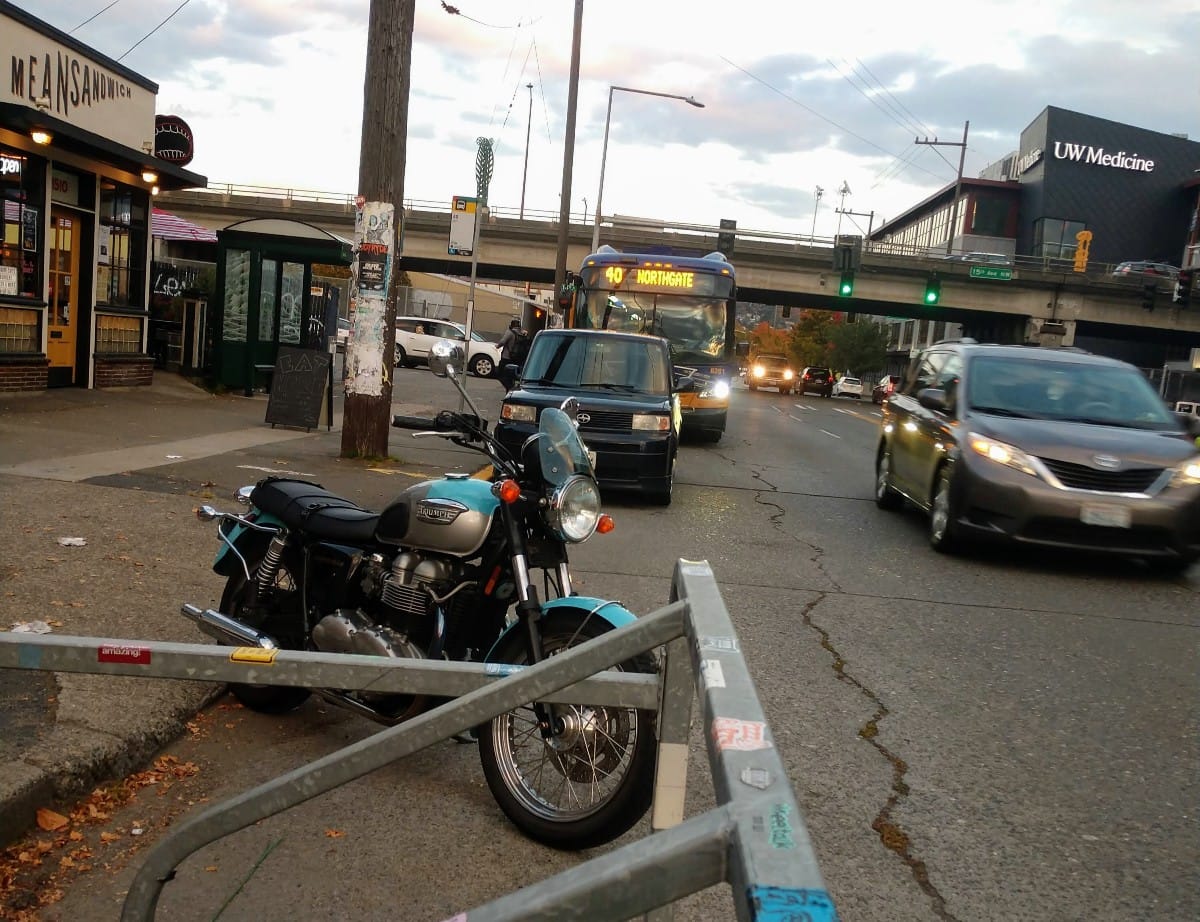
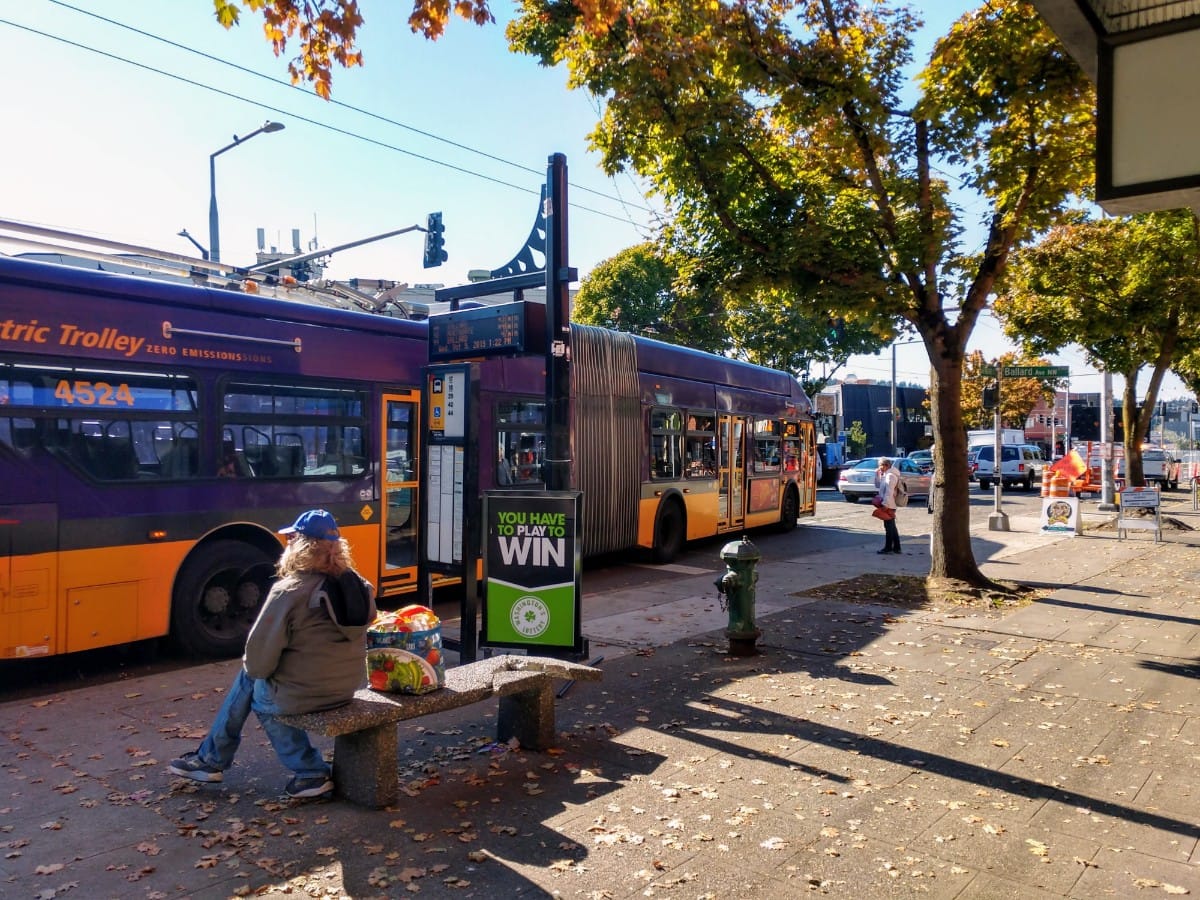
King County Metro’s third busiest bus route doesn’t have fancy RapidRide branding. You’ll often see it (sometimes represented by some of the oldest buses in Metro’s fleet) slogging through Mercer Mess traffic in South Lake Union or stuck behind boat and car traffic at the Fremont Bridge, or weaving through Ballard traffic jams. For Route 40, the chokepoints are numerous and the smooth sailing few and far between.
And yet on a normal day the route’s articulated 60-foot buses are packed to the gills since many riders don’t have better options. The Seattle Department of Transportation (SDOT) reported daily ridership has climbed past 13,000 (up from 12,600 in fall 2018 figures) and has an upward trajectory (exempting the current COVID slide). Only RapidRide E and D surpass it for total ridership.
“Between 2016 and 2018, weekday rides increased more than 10%,” SDOT states in a handout. “On average, Route 40 is late approximately 20% of the time, but at certain times of the day, the average percent of late trips spikes to 35%.”
SDOT is trying to do something for beleaguered Route 40 riders with planned “Transit-Plus Multimodal Corridor Improvements” and it has a Route 40 survey out to guide planning. Drop-in sessions were scheduled for March have been delayed due to the COVID-19 pandemic. The upgrades are scheduled for 2024.
These “transit-plus” upgrades were funded by the 2015 Move Seattle Levy, which originally promised a full RapidRide+ upgrade for seven corridors including Route 40. However, that promise was based on overly optimistic accounting and timelines, and, in 2018, Mayor Jenny Durkan’s “Move Seattle Reset” trimmed Route 40, Route 44, and Route 48 from RapidRide plans. Rainier Valley’s Route 7, Delridge’s Route 120, Madison Street’s RapidRide G, and Eastlake/Roosevelt’s Route 70 are still moving ahead as RapidRide lines, albeit on delayed timelines. Route 40, Route 44, and Route 48 are getting “transit-plus” upgrades.
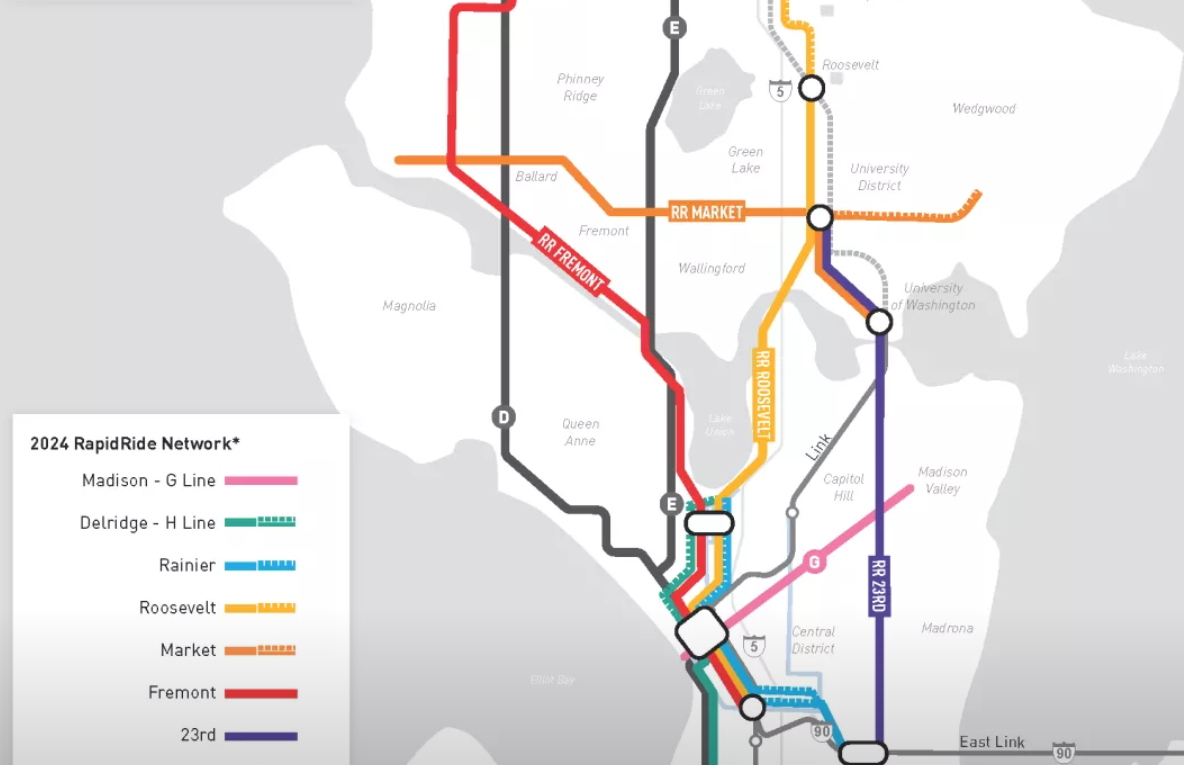
Denied RapidRide-level upgrades–which typically include newer red buses, WiFi, and spiffed up bus shelters with off-board payment and real-time arrival displays–SDOT is still promising lesser improvements for Route 40. This may include a reduction of bus bunching and “5% to 10%” reduction in peak travel times, the agency said, and it’s still floating bus lanes, queue jumps, and transit signal priority as possibilities.
The corridor from Crown Hill to Ballard to Fremont to Westlake to Downtown is a crucial one packed with jobs and residential density. Moreover, the route’s northern terminus is Northgate Transit Center, which will debut as a light rail station next year, making Route 40 a key connection for people accessing Link light rail from Northwest Seattle.
Given the high ridership and even greater potential if only the route was reliable, Route 40 deserves investment–and bus lanes certainly would be wise.
The Urbanist and the Move All Seattle Sustainably (MASS) coalition have pushed the City to forge ahead with bus lanes even though Move Seattle corridor budgets are tight and RapidRide plans deferred. Bus lanes are perhaps the highest impact intervention in SDOT’s arsenal, particularly now that Seattle has won the ability to do camera enforcement via state legislation this year. And there’s ample space, particularly on Leary Way NW, to make bus lanes happen.
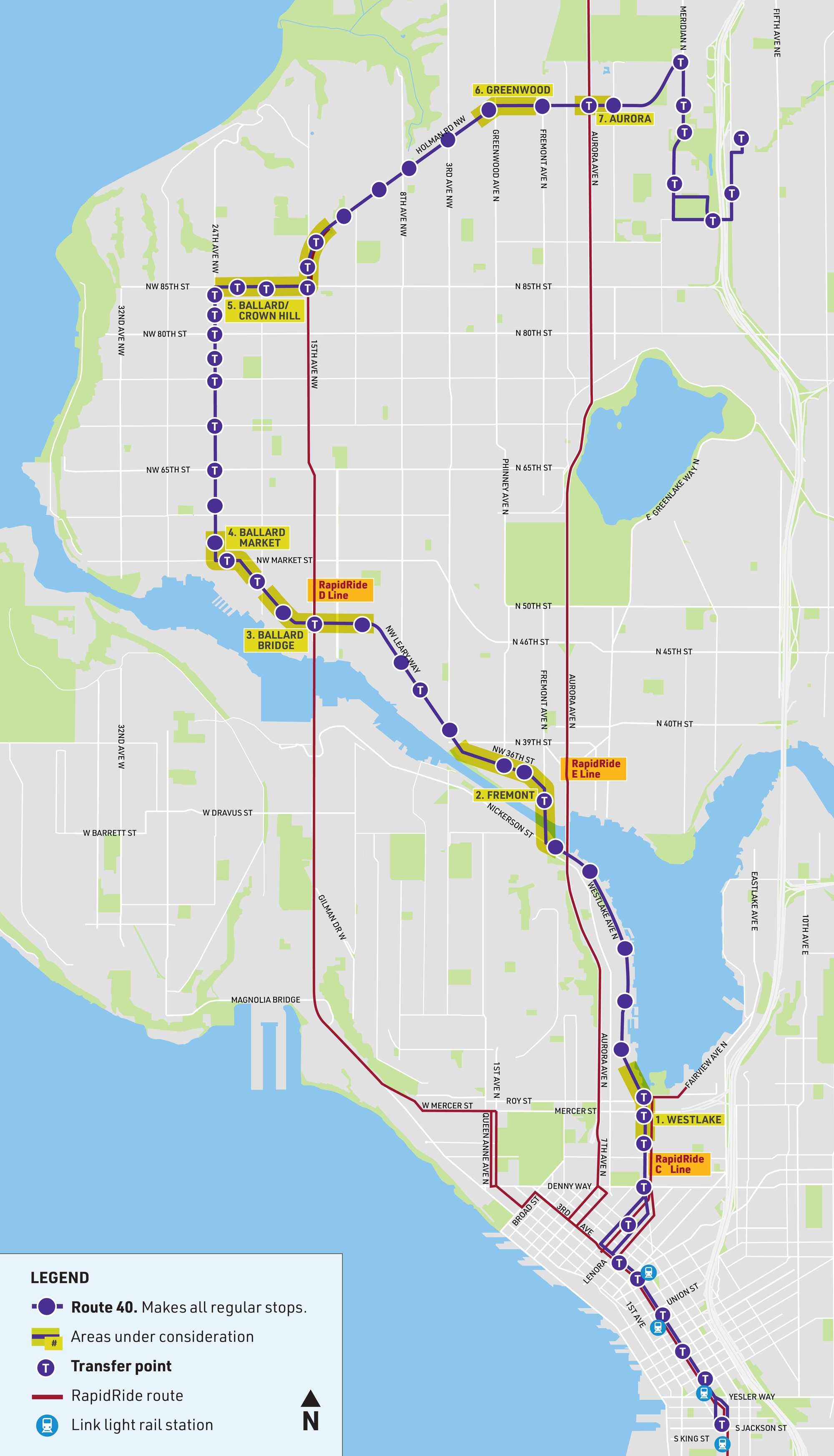
SDOT’s survey suggests pedestrian, bicycling, and transit improvements are all still in the mix, even if resources are more constrained than the agency had hoped and anticipated. Question 12 asks survey takers to set a priority for the “transit-plus” project.
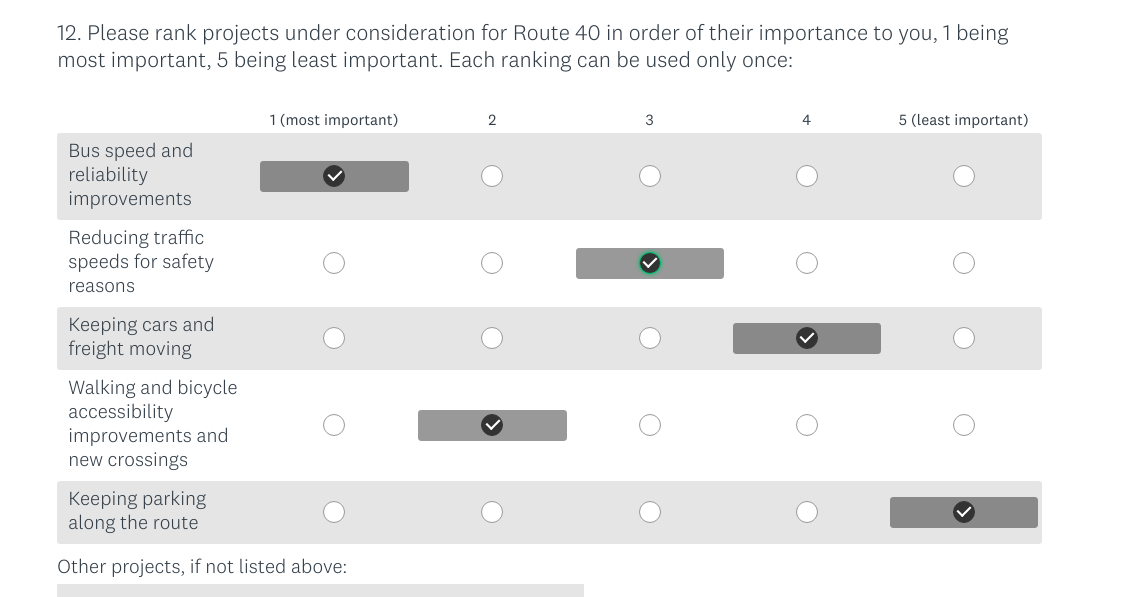
Personally, I ranked “bus speed and reliability improvements” as the top priority–followed by walking and bicycle accessibility and “reducing traffic speeds for safety reasons.” Some sections of Route 40 have abysmal sidewalks and rampant speeding. However, given the original RapidRide promise, I think it’s still important to deliver some significant transit improvements if we want voters to approve another transportation levy anytime soon.
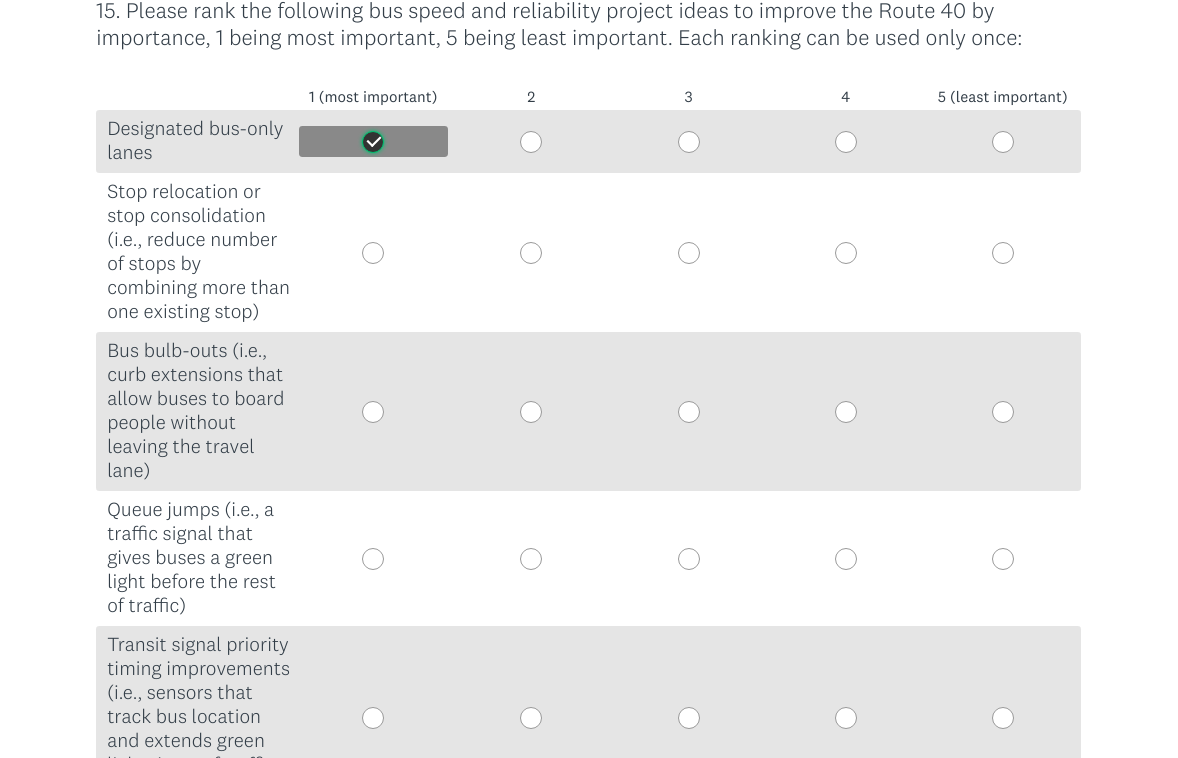
A few questions later, SDOT asks which bus improvements are the most important. All of the ideas–from stop consolidation to in-lane bus stops to queue jumps to transit signal priority–would be important but I’d argue bus lanes are the most important upgrade, particularly when paired with queue jumps and transit signal priority at problem intersections.
Some bus lanes sections could be rolled out relatively quickly since paint would do most of the trick. Last year in our list of immediate priority bus lanes (that could be rolled out soon) MASS called for business access and transit (BAT) lanes on Leary Way NW from N 39th Street to NW Market Street.