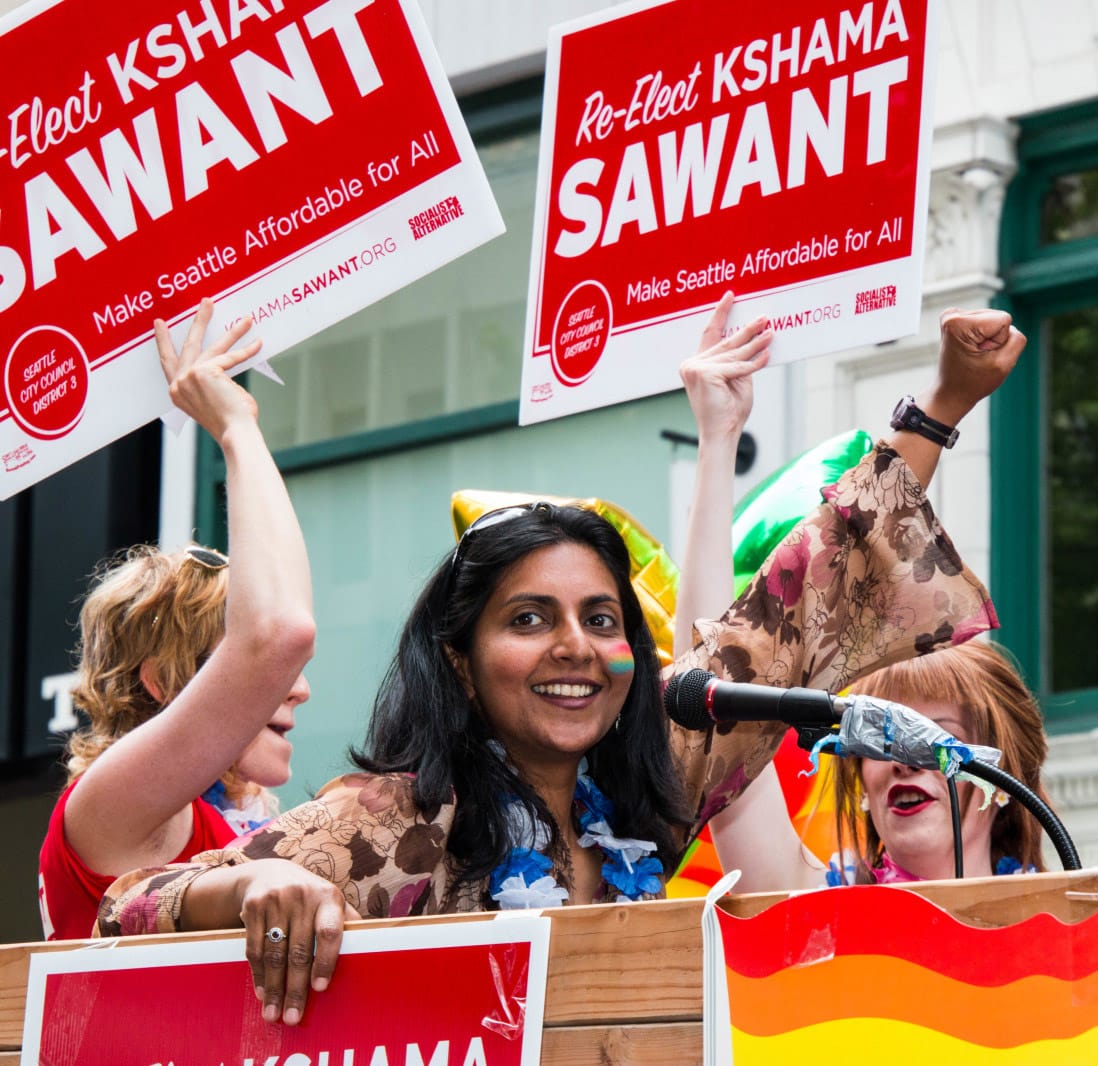
Update: Councilmember Kshama Sawant pulled ahead in Friday returns and is now leading by 3.6 points. She will be reelected.
November 13th Update: Sawant now leads by 4 points.
Councilmember Kshama Sawant was the Seattle Metropolitan Chamber of Commerce’s number one target this election, and her reelection prospects looks dicey in the first batch of returns on Election night–she trailed by eight points. By Thursday’s ballot drop, she had trimmed the margin to just 2.5% and only 739 votes separated her from District 3 (D3) challenger Egan Orion. Sawant will pass him today if she maintains her momentum from yesterday’s drop.
King County Elections announced it will make two ballot count updates today: one at 4pm and another at 8:30pm to deal with the glut of late ballots, which it estimated at 73,000 for Seattle and 13,000 in D3 alone. In all, King County has about 182,000 outstanding ballots to count, the agency said.
Late returns are a standard part of elections in Washington state, where we vote by mail–though sometimes not fully understood by outside observers. The Post Office becomes a bottleneck in the last few days of an election as ballots flood in, as are ballot return boxes. Washingtonians have three weeks to vote, but many still wait until Election Day, either to gather more information on the candidates or out of good old fashioned procrastination. Last minute voters’ ballots can’t be tallied by Election night, but by 8:30 tonight the vast majority of ballots should be counted.
A last minute surge in voting like we saw this election is what propelled Sawant to victory over incumbent Richard Conlin in 2013, shocking the political establishment and guaranteeing the fight for a $15 minimum wage wasn’t going to get sucked into a Seattle Process vortex and disappear.
Fight for 15’s Success
Seattle passed a $15 minimum wage in 2014, and, since being phased in, it’s widely heralded as a success. Even its biggest local critic in libertarian-leaning University of Washington economist Jacob Vigdor has since come around despite the minimum wage study he led initially being highly critical. “If you offer the minimum wage and you can’t hire anyone, the minimum wage is not really your problem, your problem is a labor shortage,” Vigdor said in an article by Seattle PI’s Becca Savranksy.