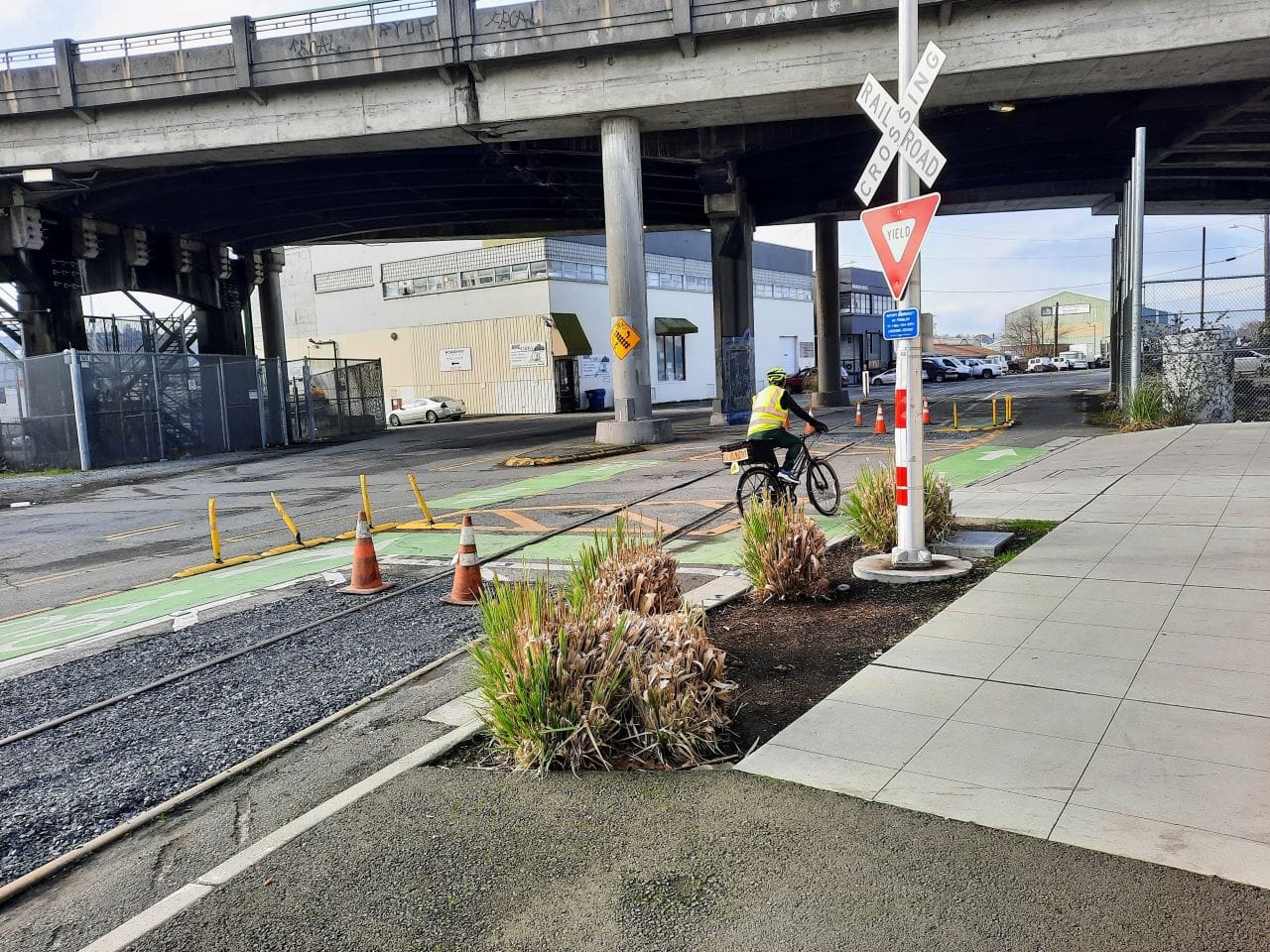
The bloody saga of the Burke-Gilman Trail’s Missing Link never seems to end, and the latest disappointment in this odyssey involves treacherous gravel pits. Ironically, the gravel was intended to make the trail safer by forcing riders to perpendicularly cross railroad tracks in a particularly troublesome section just east of the Ballard Bridge underpass. Through the installation, the Seattle Department of Transportation (SDOT) was attempting to meet (in its own way) a legal settlement requiring them to improve conditions.
Last Thursday, Seattle Bike Blog‘s Tom Fucoloro published a critique of the new design, which confirms (along with comments on the story and social media) that the change was not well received.
“SDOT completed work on an ‘interim’ redesign of the problematic track crossing under the Ballard Bridge for people attempting to bike the Missing Link of the Burke-Gilman Trail, but the new gravel pits sporadically placed in the area seems to be baffling riders rather than helping them,” Fucoloro wrote.
The long Missing Link saga
Fucoloro has closely covered the decades-long Burke-Gilman Trail Missing Link saga, and has a book coming out in August sure to touch on the topic. A lawsuit and a series of appeals funded by Ballard industrialists (the North Seattle Industrial Association often speaks as their collective voice) has delayed and forced the scaling back of a shovel-ready design the City has had since 2017, and squashed a supposed compromise clearing the way.
“People have been crashing on the train tracks consistently for decades as they try to navigate through industrial Ballard after the abrupt end of the Burke-Gilman Trail, and a group of eight injured riders filed a lawsuit against the city last year,” Fucoloro wrote. “There are many hazards in the Missing Link area, but the tracks under the Ballard Bridge are the worst. Many people have been seriously injured — left with everything from broken bones to head injuries — after crashing while trying to cross the tracks, which have wide and uneven gaps on either side of them that can surprise riders by grabbing their tires or otherwise knocking them off-balance.”
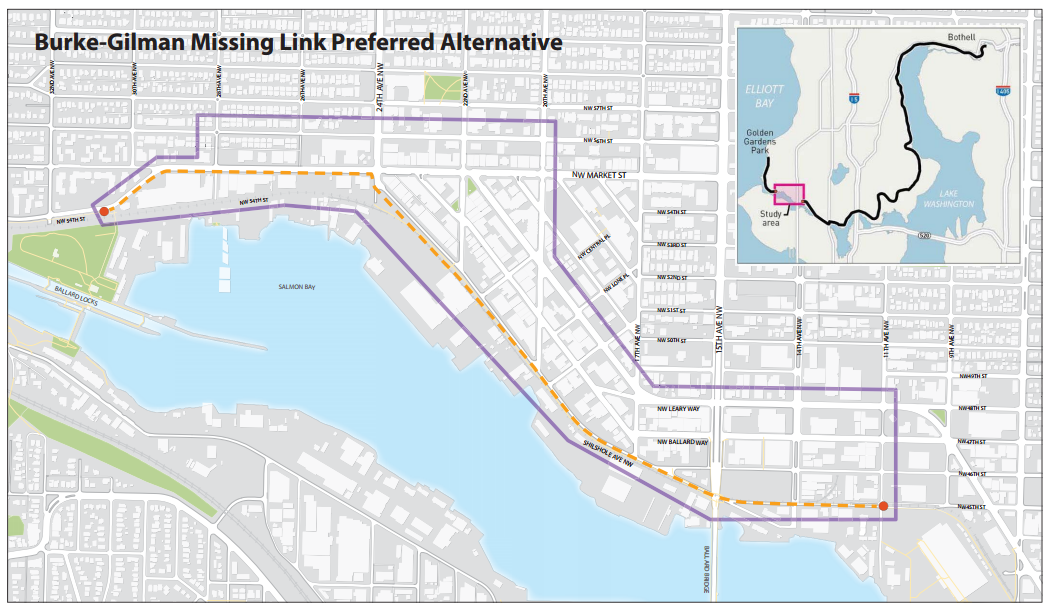
The intent of the gravel pits was to force people biking to cross the railroad tracks at a perpendicular angle or close to it. SDOT has further changes, such as fencing and a new crossing location, planned to reinforce that behavior. However, because SDOT designed a tight and awkward turn to cross the tracks, many people biking attempt to cross at different locations in order to avoid the slow, awkward pinchpoint or a potential collision with oncoming bike traffic navigating the hazard from the opposite direction.
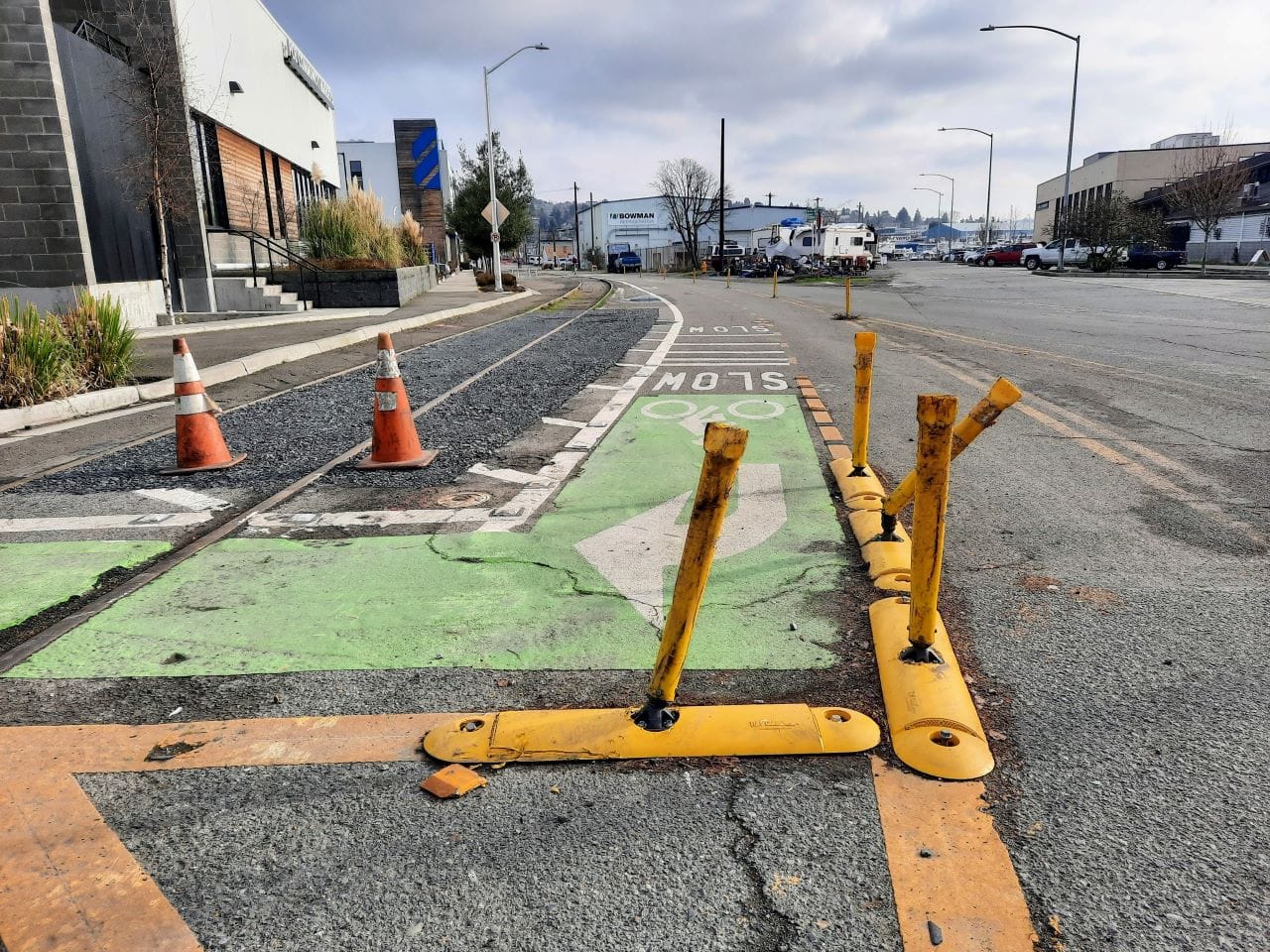
In fact, around 80% of people biking through the stretch in Fucoloro’s 20 minutes of observation did not take the route SDOT is attempting to force them to take, instead taking a gentler turn through the area now consumed by gravel. The new design has likely led to some close calls and the loosely packed gravel is already deeply rutted with tire tracks, he reported. Fucoloro sketched the most common routes on the diagram below.
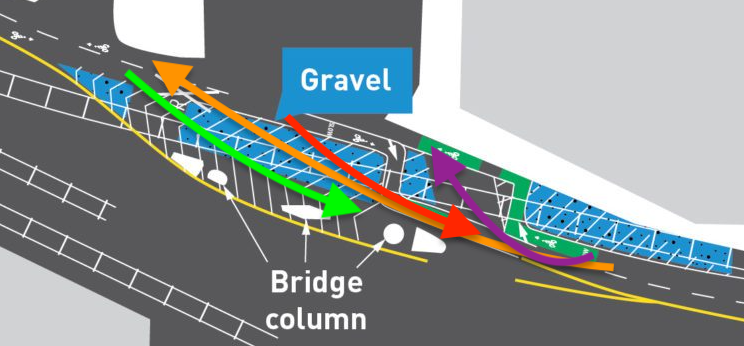
“As you can see, only the purple route avoided the gravel (this is also my suggested alternative in either direction if you can’t make the city’s sharp turns,” Fucoloro wrote. “Everyone else ended up riding through at least a little gravel, and a surprising number of people rode significant distances through the middle of the pit. I suspect this is the route they were used to riding before the gravel pits were dug out. I talked to several riders and asked them what they thought of the gravel, and they all absolutely hated it. Words were not minced.”