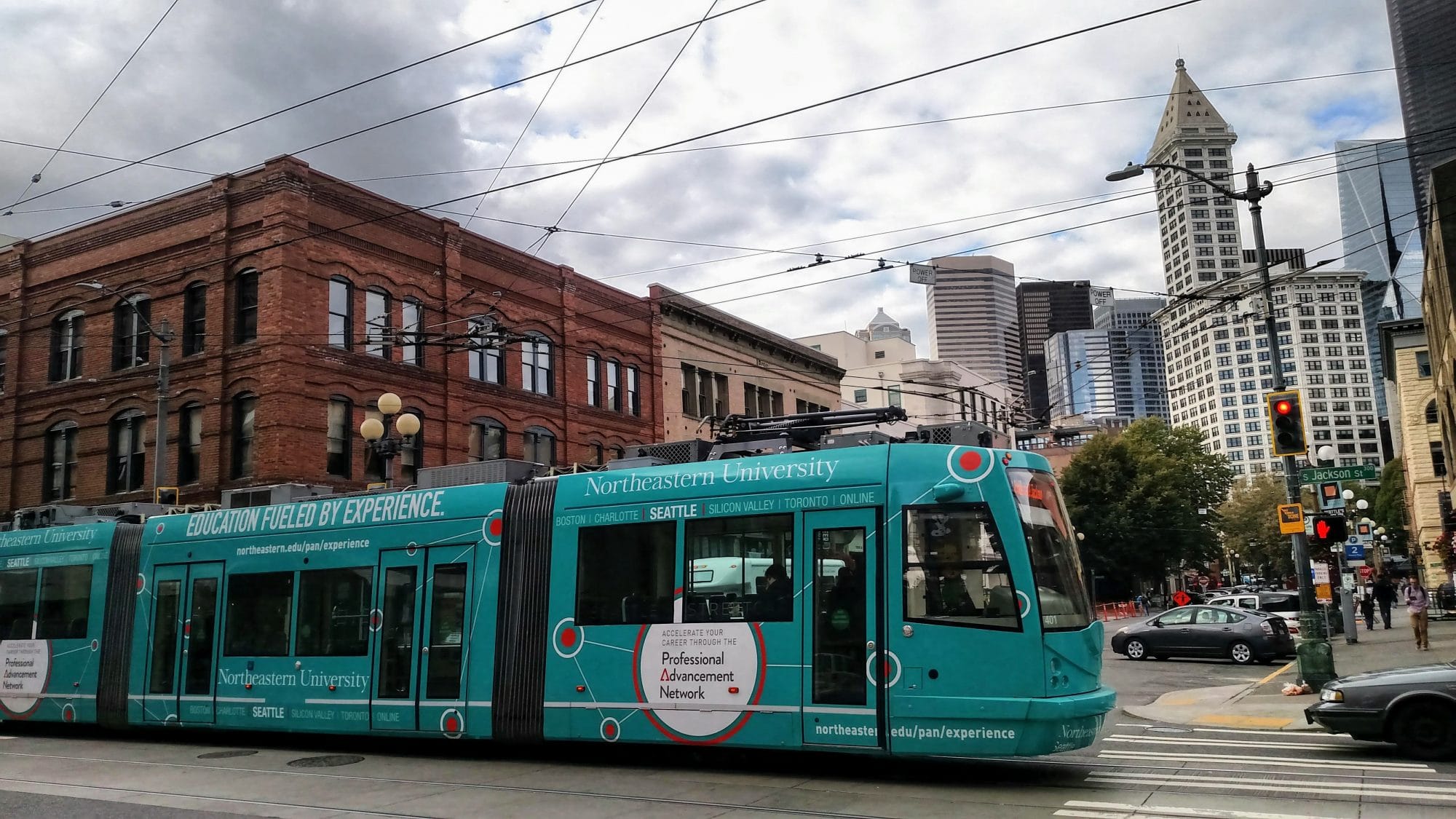
On Wednesday, the Seattle Department of Transportation (SDOT) announced a series of “paused” transportation projects to respond to the economic fallout from the Covid epidemic. The delayed projects cover many corners of the city and some parts of the transportation budget, including six Bicycle Master Plan projects, the perennially besieged Center City Connector Streetcar, and the long-promised pedestrian-focused green street on Thomas Street. Director Sam Zimbabwe called the cuts “thoughtful, but immediate action.” The cost savings from stopping the projects is $58.3 million or 8% of SDOT’s $739 million adopted budget.
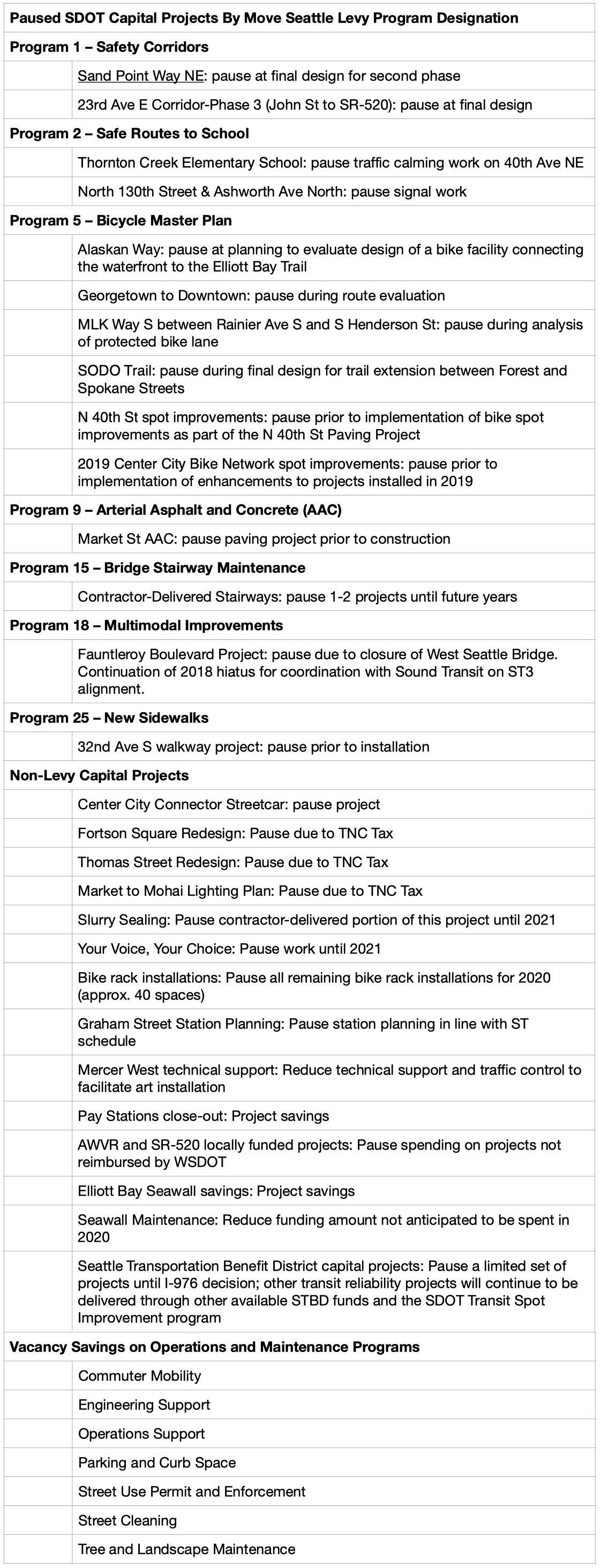
In his message accompanying the list of cuts, Director Zimbabwe said the pauses allow for SDOT to “understand our fiscal constraints, identify immediate cost savings to address budget shortfalls, and establish a thoughtful, equity-first process for 2021 and beyond.”
The department highlighted projects that will continue, many of which are in advanced stages of construction. Automobile bridges like the Lander Street Overpass and Fairview Bridge Replacement, bike facilities on MLK Way north of Rainier and from Georgetown to South Park, and Rapid RideH Line in Delridge and RapidRide G Line in Madison will all continue, as is construction of the Northgate Bike and Pedestrian Bridge.
A number of holds are on projects that were moving ahead of their projected need. Planning for Sound Transit 3 (ST3) at Graham Street is paused to move in line with the Sound Transit schedule for the station’s opening in 2031. This comes after the community’s push to get the infill station on ST3. The West Seattle Bridge repair or replacement will itself continue, whatever form that may take. However, the dependent Fauntleroy Boulevard Project that was already paused for ST3 will continue to be delayed until the West Seattle Bridge is sorted out.
A group of “paused” projects are reliant on funding from other sources. Seattle was supposed to bring in $8.9 million in 2020 from the new ridehailing tax. Numbers have not been released on how Covid is impacting this 57 cent tax on every Lyft and Uber trip, but the companies are not faring well and Heidi Groover has reported revenues are expected to be half of expected. Projects based on that tax have been paused, including lighting from Pike Place Market to MOHAI, and redesigned street projects on Fortson Square and Thomas Street–which was a signature bike and pedestrian upgrade meant to accompany the SR-99 tunnel and new Seattle Center Arena.
While the text of Director Zimbabwe’s message emphasizes the pedestrian and transit projects that will continue, it belies the underlying preference for automobiles that are written into the SDOT budget to begin with. The value of the Lander Street overpass exceeds the entire 2020 Levy to Move Seattle budget. The 3,900 miles of street lanes in the city cost $61 million per year in maintenance and another $38 million goes to bridges and structures. Everything else–sidewalks, signs, bike paths, and trails–costs about $7 million in maintenance. Pardon if four more miles of Open Streets seems small. It is also unclear what the impact of “vacancy savings” will be on divisions like Street Use Permit and Inspections when neighborhoods and Councilmembers are fighting to open right-of-way to restaurants and retail uses.
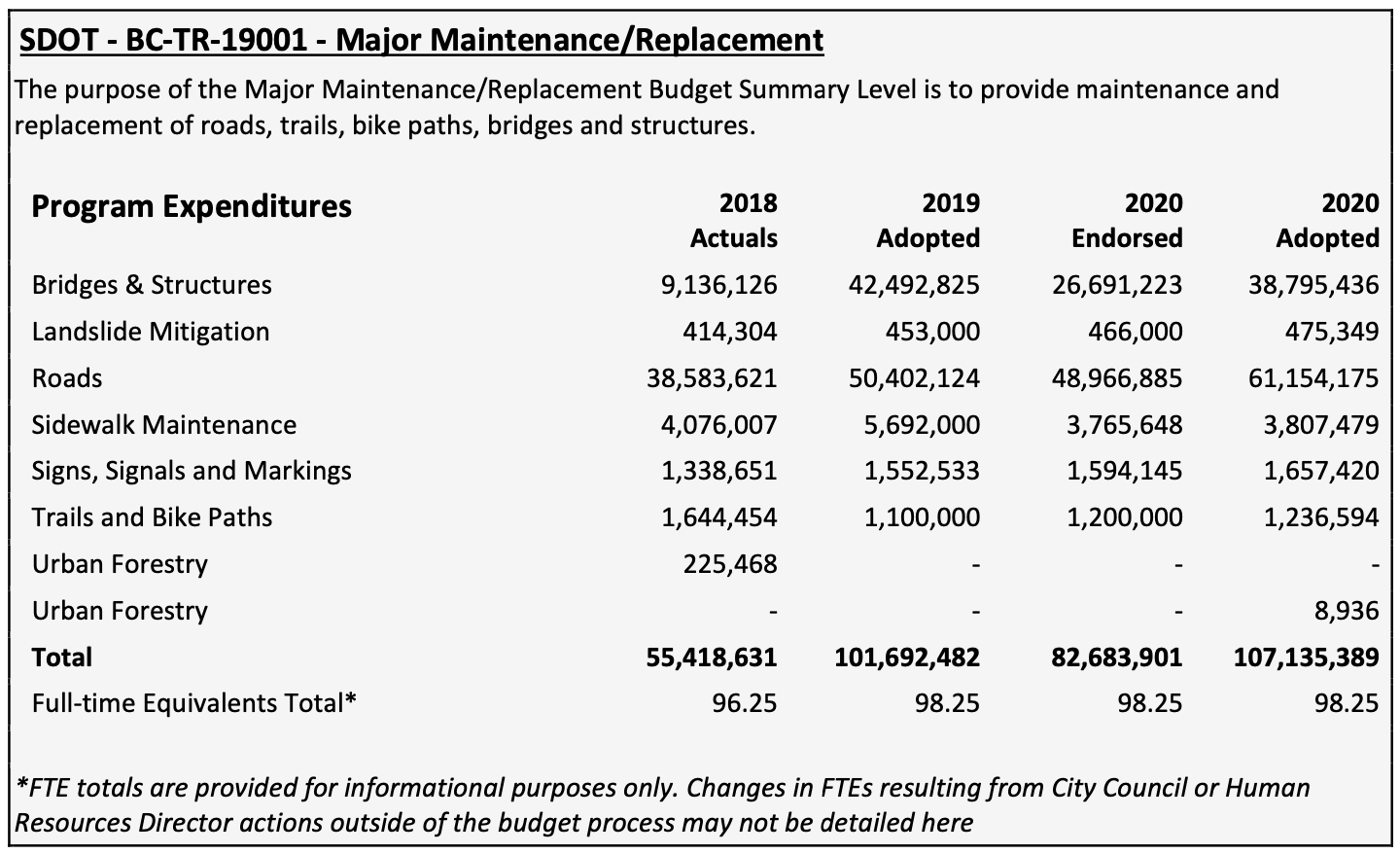
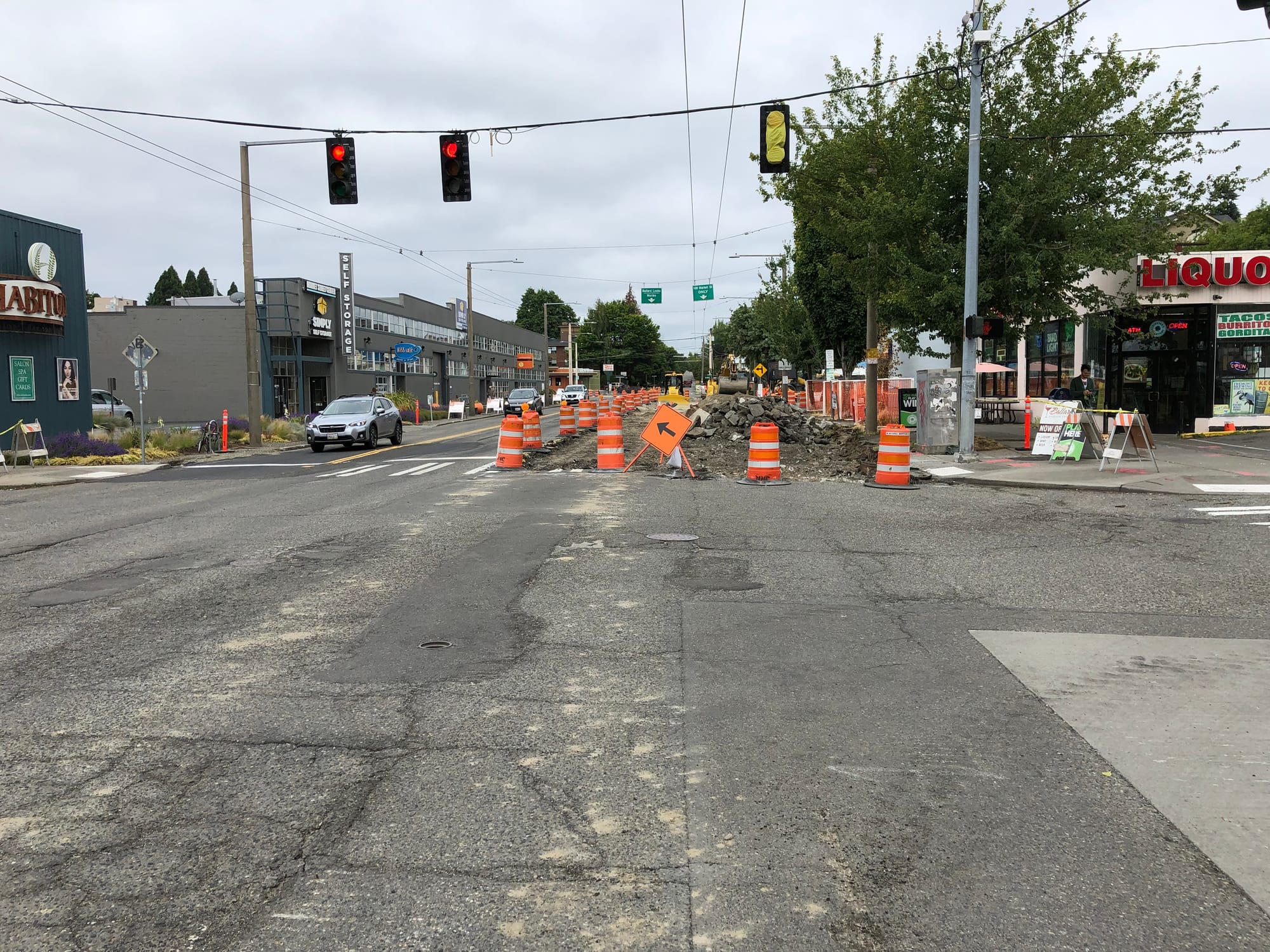
More than a quarter of the 2020 Move Seattle Levy funds, $38 million of $141 million, is just maintaining Arterial Roadways. All of those projects will continue except the NW Market Street repaving, which some community members were asking to be put on hold. The second largest part of the levy budget, $12.1 million in 2020, is multimodal improvements. These fall under Congestion Relief, and involve improving bus transit within a network of free flowing automobiles.
Even in third place at 10% of the Levy budget, bike lanes get the longest list of cuts. Six Bicycle Master Plan projects are paused: two spot repairs and four projects paused in planning phases. The balance through the city is not very equitable–the Alaskan Way project is in Downtown (promised as part of the $4 billion viaduct replacement project) and the other three–MLK, Georgetown, and SODO–are in South Seattle. Together they total seven miles of bike lanes, which exceeds the number of bike lanes that have been built in any year of the Move Seattle Levy.
Like many SDOT projects, bike lanes are almost never just bike lanes. Many involve repairs to automobile road surfaces and signalization to merely accommodate the bicycles in car space. Infrastructure like the Northgate Pedestrian Bridge is literally just separating the problem of pedestrians from the highway instead of reconsidering the existence of such an impassible barrier.
For projects not based on the Move Seattle Levy, the headline “pause” is the Center City Connector Streetcar. Re-approved by the City Council for a $9 million design budget after a long hiatus, the project to connect the city’s two existing streetcar lines through downtown was just getting restarted and targeted a 2026 opening. Given the Durkan administration’s delays and antagonism towards the streetcar, it appears that Covid is a convenient excuse to kill the project, and long-time streetcar critic Councilmember Lisa Herbold said her intent was not a pause but to kill the project during Budget Committee on Wednesday.