The war of spin is well under way to frame the outcome of a 8-1 vote setting next year’s City budget.
After weeks of debate, the Seattle City Council has approved the 2021 budget and Mayor Jenny Durkan has said she will sign it. The dust had not yet settled as Councilmembers, the Mayor, and everyone else began the mad dash to frame the budget.
Budget Chair Teresa Mosqueda pitched it as a historic win: “This council has stepped up in the midst of a historic crisis.”
In contrast, Councilmembers Kshama Sawant (District 3), Alex Pedersen (District 4) and Debora Juarez (District 5) heaped plenty of criticism on the process and final product.
Sawant was the lone vote against the budget, as has been her custom since she took office in 2014. Her major criticism was the Council should have cut the police budget by 50% (rather than the 18% reduction on which they landed) and they should have increased the tax on corporate payrolls to boost spending on social services, as she proposed with her Amazon Tax.
Meanwhile, Pedersen objected to cutting the Seattle Police Department (SPD) budget as much as they did. Both Pedersen and Juarez voted against both the JumpStart tax, and the rebalancing package and veto override that cut SPD funding this summer.
Juarez is still steamed at protesters
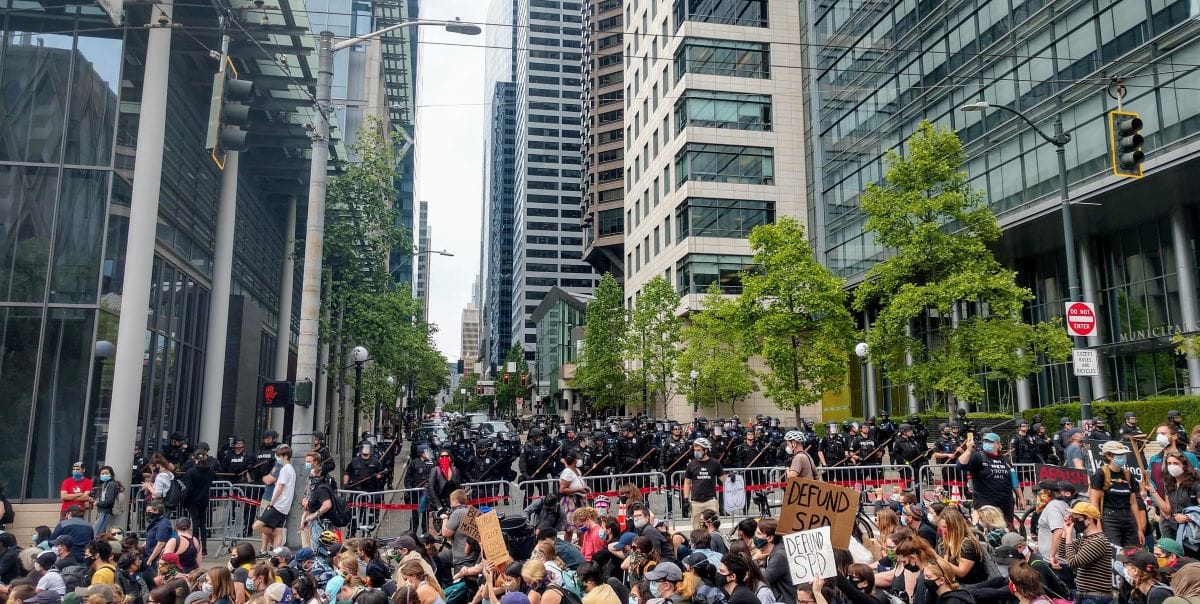
Juarez’s complaints were more process-oriented. She gave a review of various slogans and their efficacy, arguing Black Lives Matter and indigenous land acknowledgements were good, but Defund The Police was bad and people who used it were overly “entitled.”
“When you say that ‘I want to acknowledge that I’m on Indigenous ground,’ that means you behave as a guest and you listen,” said Juarez, who grew up on the Puyallup reservation and is a member of Blackfeet Nation. “Defund the police by 50% was a slogan, and it was an empty and misleading slogan. It caused damage. It caused pain. It caused trauma. It caused the anger. But I understand the aspirational, emotional feeling of why that some of my colleagues felt the need to do that, and I’ve done that before.”
In her comments, Juarez acknowledged cutting SPD by nearly 20% in one year was a big step and a nation-leading accomplishment, but she intimated they should think twice before cutting deeper. She blamed rather than credited activists under the broad Solidarity Budget coalition (which The Urbanist joined) that pushed for cutting SPD’s budget, and particularly to the protesters who used direct action tactics, such as showing up at her house and the homes of other City leaders.
“When you undo these racist institutions–take from me who has been around a long time–it doesn’t happen overnight,” Juarez said. “It doesn’t happen because you have a chant and a T-shirt. It’s being in the trenches, and some of us have been there a long time in the trenches, moving forward marching toward a plan to do right by everybody.”
The Solidarity Budget Coalition hosted a teach-in Monday night summarizing their reactions to the budget and reiterating the group’s desire to keep divesting from policing and reinvesting in community with a goal of 50%.
Juarez riffed on how terrible it was activists want more and sooner: “The privilege of entitlement, that’s what I call it,” She proceeded to give her version of a Defund pledge, and it definitely didn’t fit or a T-shirt of a bumper sticker.
“We are going to slowly and systematically as much as we can redirect funds for the Seattle Police Department to upstream programs to meet the needs of what a police department we believe should look like, within the confines of the Consent Decree, our bargaining responsibilities, and everything else,” Juarez said. “So when you hear people say and scream at you that ‘you’re not doing enough,’ we are doing, and we’re going to continue doing, and continue working with the Executive…”
Echoing the Durkan administration, Juarez’s appeal to the Consent Decree illustrates how a federal process started because Seattle police were killing too many people of color, and is now being wielded as a tool to shield the department, deflecting calls to reduce the role of policing and fire violent cops. While that may seem like a surprising turn of events, some, like former Mayor Mike McGinn, have argued the Consent Decree was flawed almost from its inception and has been thoroughly co-opted.
Pedersen has concerns
Pedersen’s view was a little different: he argued the City didn’t have a plan in place to ensure public safety as they reduced SPD funding. He also complained there wasn’t enough bridge maintenance funding, upset that his colleagues narrowly rejected his plan to immediately dedicate revenue from a $20 car tab fee to it. Pedersen had a bigger megaphone than his colleagues. And as Pedersen is the only Councilmember to survive the Seattle Times Editorial Board endorsement last year, they figured why not give him a column to broadcast his budget take.
The police contract is the real flashpoint and should be the focus, Pedersen contended–although pointing that out is not particularly helpful because it will be Mayor Durkan who negotiates that deal in a bargaining process separate from the budget. The Council can approve the contract or reject it, but has a limited role other than that. The Council waiting around for the police guild contract to solve everything would be an abdication of responsibility.