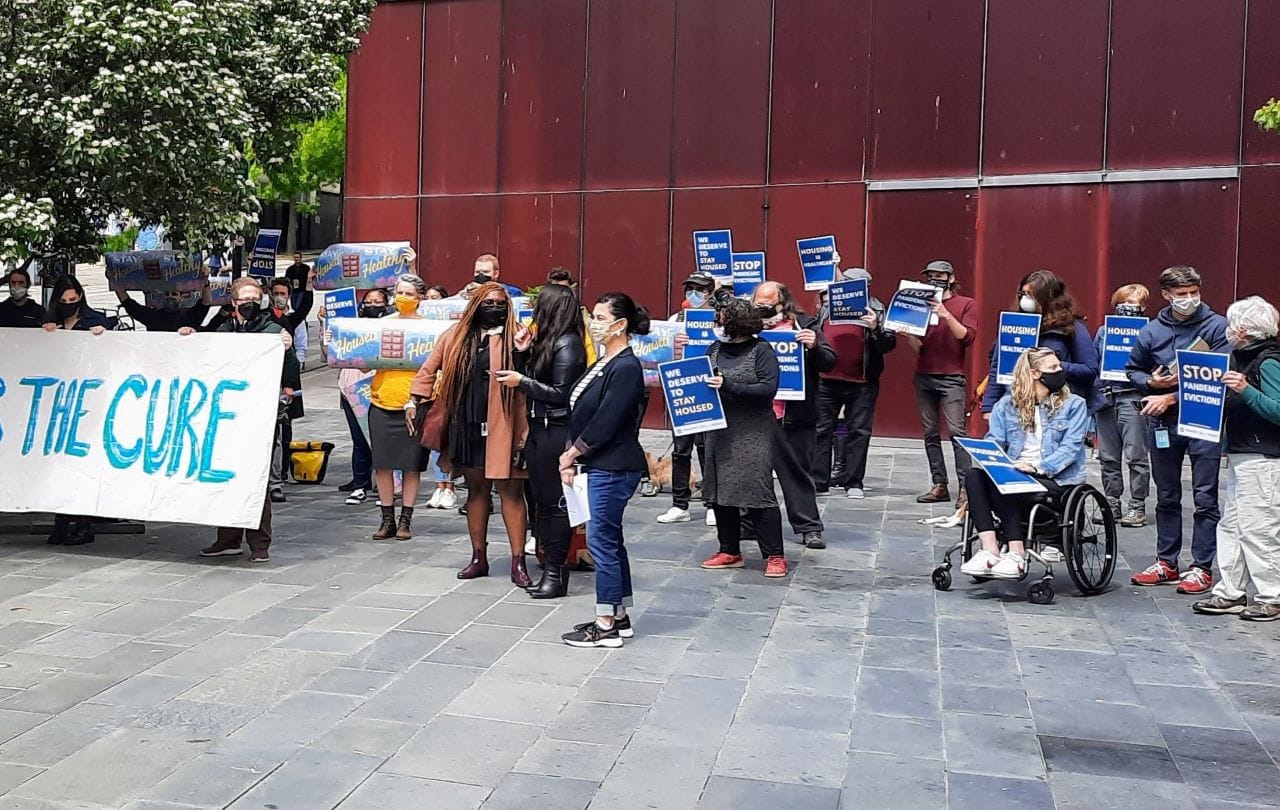
Yesterday, the Seattle City Council passed three bills extending protections for tenants facing the threat of eviction. They also voted unanimously to send a letter to Mayor Jenny Durkan and Governor Jay Inslee asking them to extend their respective eviction moratoriums, which both expire June 30th, through the end of the year.
Councilmembers Kshama Sawant, Tammy Morales, and Andrew Lewis led on crafting the package and voted the three bills out of the Sustainability and Renters’ Rights Committee. Their fellow committee member Alex Pedersen dissented and voted no after his amendments to water down the legislation were stonewalled. The lack of a unanimous committee recommendation delayed the bills by a week based on Council rules but ultimately proved inconsequential.
Councilmember Debora Juarez joined Pedersen in opposing two of the bills, but voted for the school-year eviction ban. Councilmembers Dan Strauss and Lisa Herbold were absent for the meeting, which were excused absences they motioned for last week during Council Briefing. Council President M. Lorena González and Councilmember Teresa Mosqueda backed all three bills, giving the package a majority.
Here is what those three bills do:
- The eviction defense bill will allow tenants to fight evictions by declaring a financial hardship from the pandemic. Passed 5-2.
- The school-year eviction ban will prevent the eviction of households with students, educators, or public school support staff during the school year. Passed 6-1.
- The end of tenancy loophole fix expands Just Cause eviction protections to close a loophole that allows landlords to evict tenants at the end of fixed-term leases simply by not offering an extension. Passed 5-2.
Public comment at the start of the Council meeting was split, with landlords turning out to share some horror stories and predict doom and gloom. Some of the anecdotes implied the package of law did things it didn’t, such as preventing landlords from evicting tenants who have harassed them and threatened violence. And, to be fair, few landlords backed the eviction defense bills, too.
Anecdotes aside, the data shows landlords overwhelmingly using eviction to boot tenants behind on rent and often just a month or less, instead of frequently making the case for an eviction based on nuisance or criminal grounds. The 2018 Losing Home report from the Housing Justice Project is a font of knowledge here as the authors analyzed 1,218 unlawful detainer (eviction) cases filed in 2017: “86.5% of eviction filings were for nonpayment of rent and of these, 52.3% were for one month or less in rent.”
Councilmembers Morales and Sawant warned of a “tsunami” of evictions as the eviction moratorium is lifted, exposing tenants who fell behind on rent during the pandemic. Morales reiterated her warning that this could spell disaster for an already strained homelessness service system: “If even a quarter of renters who currently owe rent debt fall into homelessness, our entire system could collapse.”
Eviction defense
One of Councilmember Juarez criticism’s of the eviction defense bill was that is may not ultimately successfully protect tenants. This expanded on Pedersen’s attacks in committee, which largely centered on the plight of landlords.
“I’m always afraid of raising expectations,” Juarez said. “So what you’re going to have is somebody to come into court, assert the defense of Covid — that’s why you couldn’t pay your rent during the moratorium — that doesn’t mean a judge or a jury is going to buy it.”
There is a kernel of truth here, but it also is misleading about how eviction court has historically worked. Most evictions are processed long before seeing a jury, and many may not even see a judge. The vast majority of evictions happen by default with the tenant declining to show up at their hearing. The ‘no shows’ are sometimes intentional because an uncontested default ruling will buy tenants more time (two weeks) than an accelerated eviction proceeding from the superior court might have. The first time an eviction case is heard is often in front of a commissioner of the court, rather than a judge or jury, and if the landlord’s attorney can sway them, then they may have their eviction order.
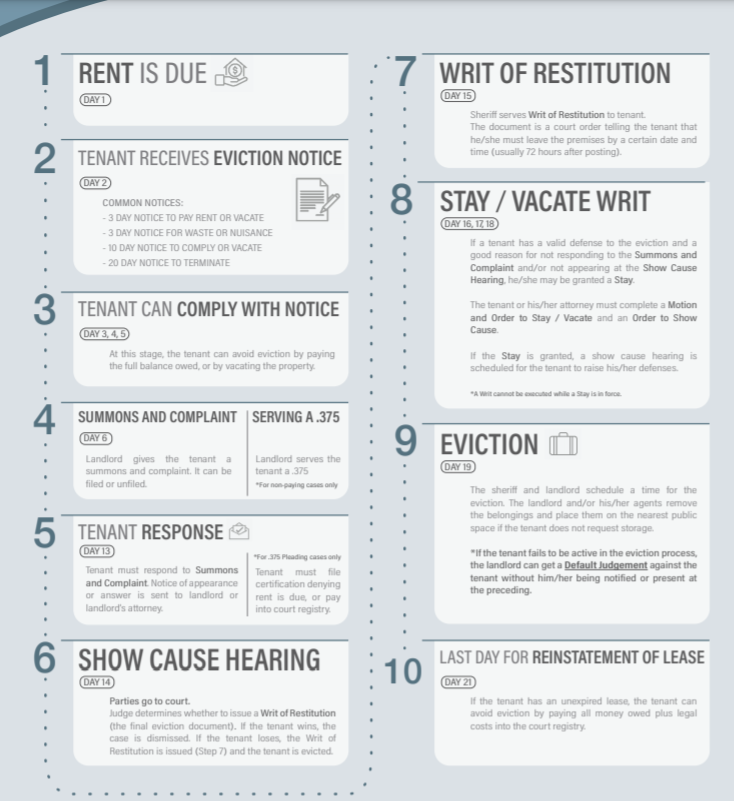
This pattern of pumping out evictions without much of a fair trial may change: the right-to-counsel legislation passed earlier this year is intended to encourage more tenants to go to court to assert their rights. The bills today give them more tools to win and may dissuade landlords from filing so many evictions in the first place. That means more tenants will win before even having to face a trial — a system to which landlords had grown accustomed from the opposite angle.
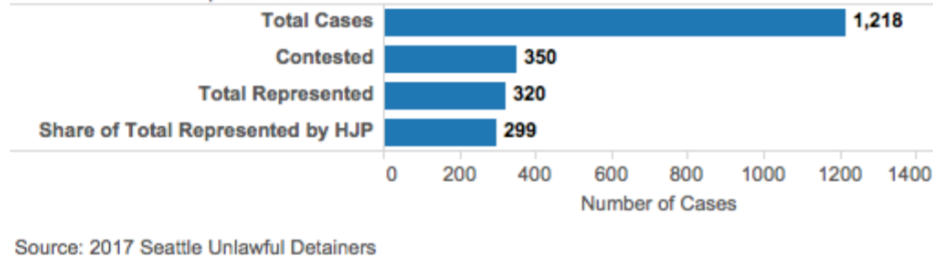
In the 2017 data, only 26% of tenants in eviction proceedings had legal counsel. Seattle’s new right-to-counsel law intends to fix that, but the system is going to taxed coming out of the eviction moratorium with many landlord itching to evict tenants behind on rent.