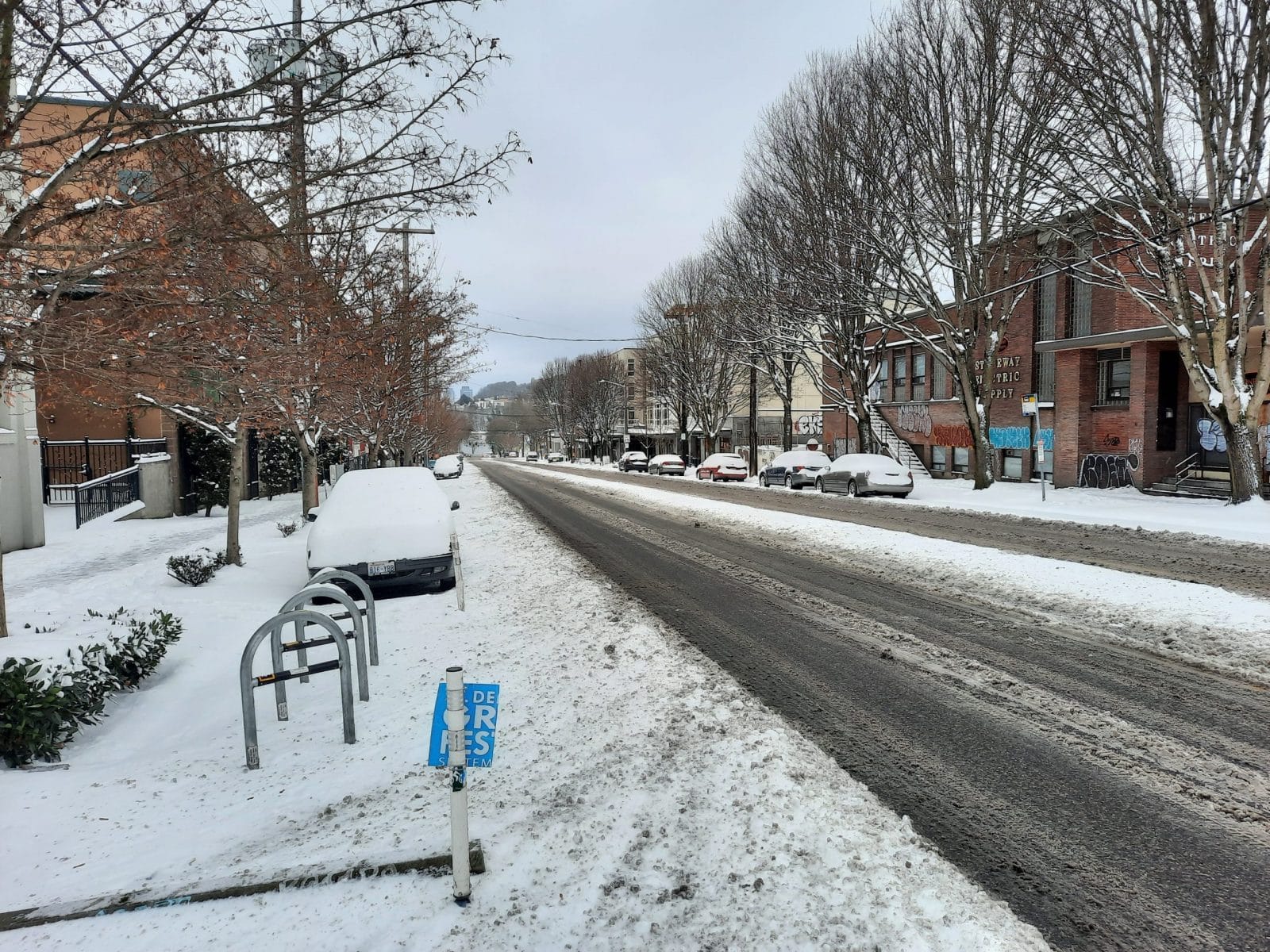
Puget Sound cities cannot continue to neglect sidewalks, bus routes, bike lanes, and multimodal trails when winter storms hit.
Today King County Metro finally (mostly) restored normal transit operations after an eight-day hiatus due to winter weather — albeit with a big dose of canceled trips. Metro had retracted bus service to a skeleton network of 60 routes leaving many riders without access to reliable transit. Sidewalks were also an icy mess across the region, which made it very difficult to get anywhere, especially for those without access to a car. Throughout this period, leaders urged people not to drive but failed to provide viable alternatives.
Such a severe blizzard and cold snap used to be fairly foreign to a city as temperate as Seattle, but it’s likely to be the new normal as climate change accelerates and temperatures extremes at both ends of the spectrum will get more commonplace. As a result, cities in Western Washington must get serious about preparing for winter storms like other northern cities do. We must devise a set of policies that ensure sidewalks are cleared, bus routes plowed and treated in a timely fashion, and bike lanes and trails are not forgotten so that everyone can get around the city. Week-long shrugs and advice to stay home will not cut it.
On the issue of sidewalk clearance, two main camps have emerged emphasizing either government or greater landlord responsibility using enforcement and education to rally property owners.
The public option camp believes the Seattle Department of Transportation (SDOT) must take on responsibility for sidewalks because expecting property owners to clear sidewalks is unfair, hard to enforce, and will result in gaps where residents are not able to handle this responsibility. They point out to shoveling-related injuries, temporary shortages of shovels, and the not insignificant cost of deicer and road salt to bolster their case.
The greater property owner responsibility crowd, meanwhile, point out the cost of tackling snow clearance for the city’s entire sidewalk network would be expensive and would result in bottlenecks as one centralized entity is forced to prioritize limited resources across an 84-square-mile city. It would also let corporate landlords off the hook when they have ample resources to tackle the problem themselves. Mobilizing landlords to take responsibility for snow clearance offers the possibility of a faster response.
The ideal solution could well be a hybrid approach to snow and ice removal. Increasing resources at SDOT could fill in key gaps, such as sidewalk networks near transit stops and the bus routes themselves. But keeping the requirement and responsibility on landlords, especially with increased enforcement on the largest landholders, would avoid spreading SDOT too thin.