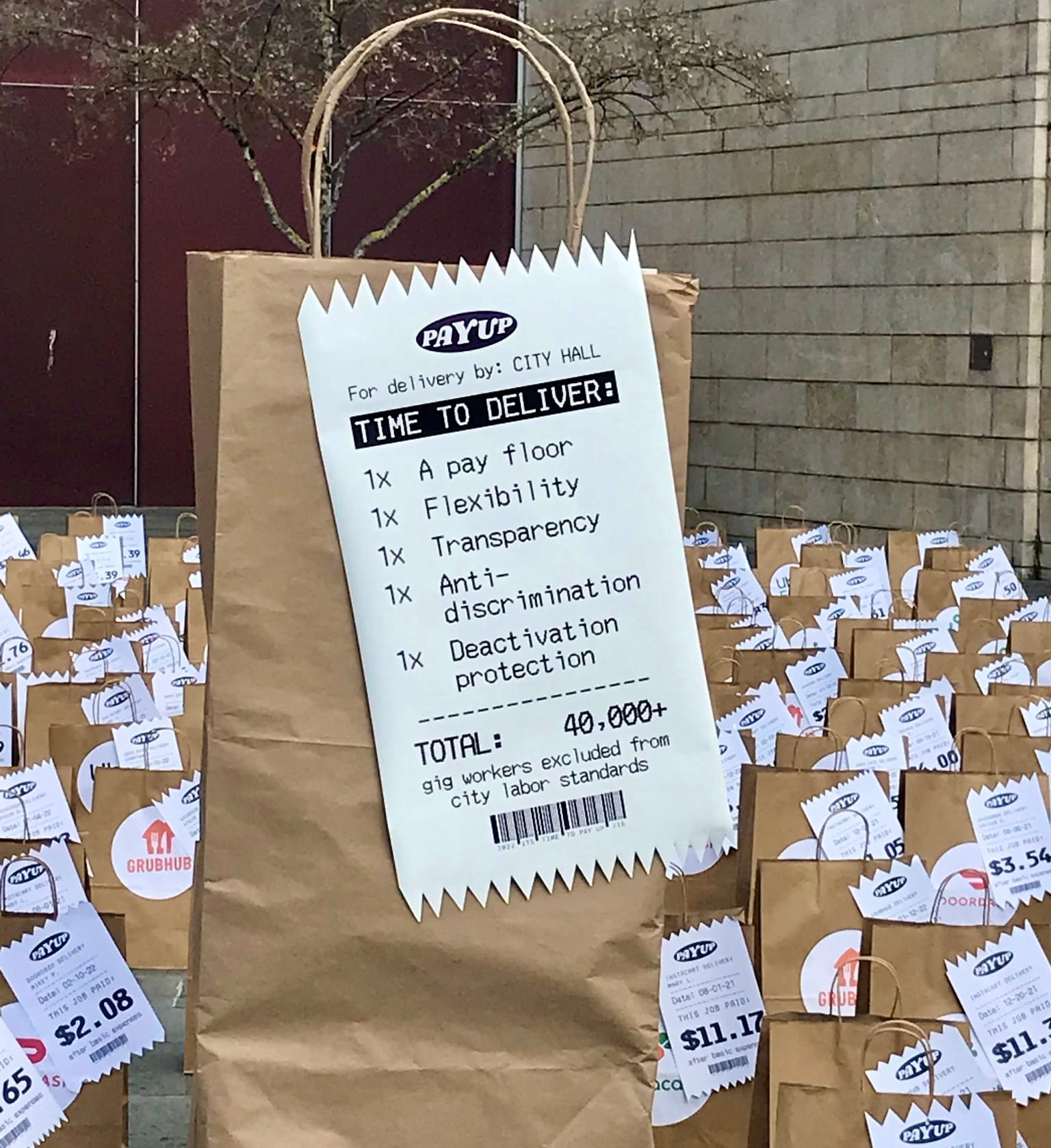
Last week, the Seattle City Council unanimously passed a bill to ensure app-based delivery workers earn at least Seattle’s minimum wage of $17.27, among other protections. What sounds like a modest gain is actually an important achievement for labor, especially when considered in the broader gig-economy. As a result, advocates like Working Washington, which spearheaded the legislation in partnership with allies on the City Council, are still celebrating.
One week later, and we’re still celebrating this HUGE victory: Seattle gig workers across apps won landmark #PayUp protections to raise pay, protect flexibility, & provide transparency.
— Working Washington (@workingwa) June 7, 2022
It’s the first law of its kind created by & for gig workers!https://t.co/ArfCb3fKD3
However, the passage of an amendment sponsored by Councilmember Alex Pedersen (District 4) in committee to exclude marketplace workers from the current protections was a source of disappointment for some. Councilmember Andrew Lewis (District 7), one of the bill’s sponsors, provided a swing vote in favor of the exclusion that has been a source of criticism among some app-based worker advocates.
“[Lewis] did undermine his own bill here in a relatively strange move that he said was to ‘take down the temperature on the issue,’ The Stranger’s Will Casey said in a recent appearance on the Hacks and Wonks podcast. “But that didn’t really seem to happen because advocates for the workers are very upset that that exemption was inserted last minute into the legislation.”
As Working Washington Campaign Director Safe Wilson put it: “If the plan was that excluding thousands of workers at the last minute would make everybody happy, it didn’t work.”
A report, Seattle’s App Gap, published in May by Working Washington details how marketplace apps like TaskRabbit, Handy, and Rover, engage in practices that drive down worker earnings such as providing “suggested” rates that fall below the minimum wage threshold once expenses and time costs associated with taking on independent contract work are taken into consideration. While workers have the option to set higher rates, pressure within the marketplace often keeps wages low. Additionally, some sites like Rover do not assign a floor rate for certain services, like dogwalking, which can result in workers offering hour long dog walks for as low as $10 per hour.
Pay reductions resulting from rescheduling a service, late arrivals, or early departures can also decrease worker earnings. In fact, the app-based company Handy has been investigated by the Seattle Office of Labor Standards for possible violations of the Seattle Domestic Worker’s Ordinance because of workers reporting earnings falling below minimum wage standards.