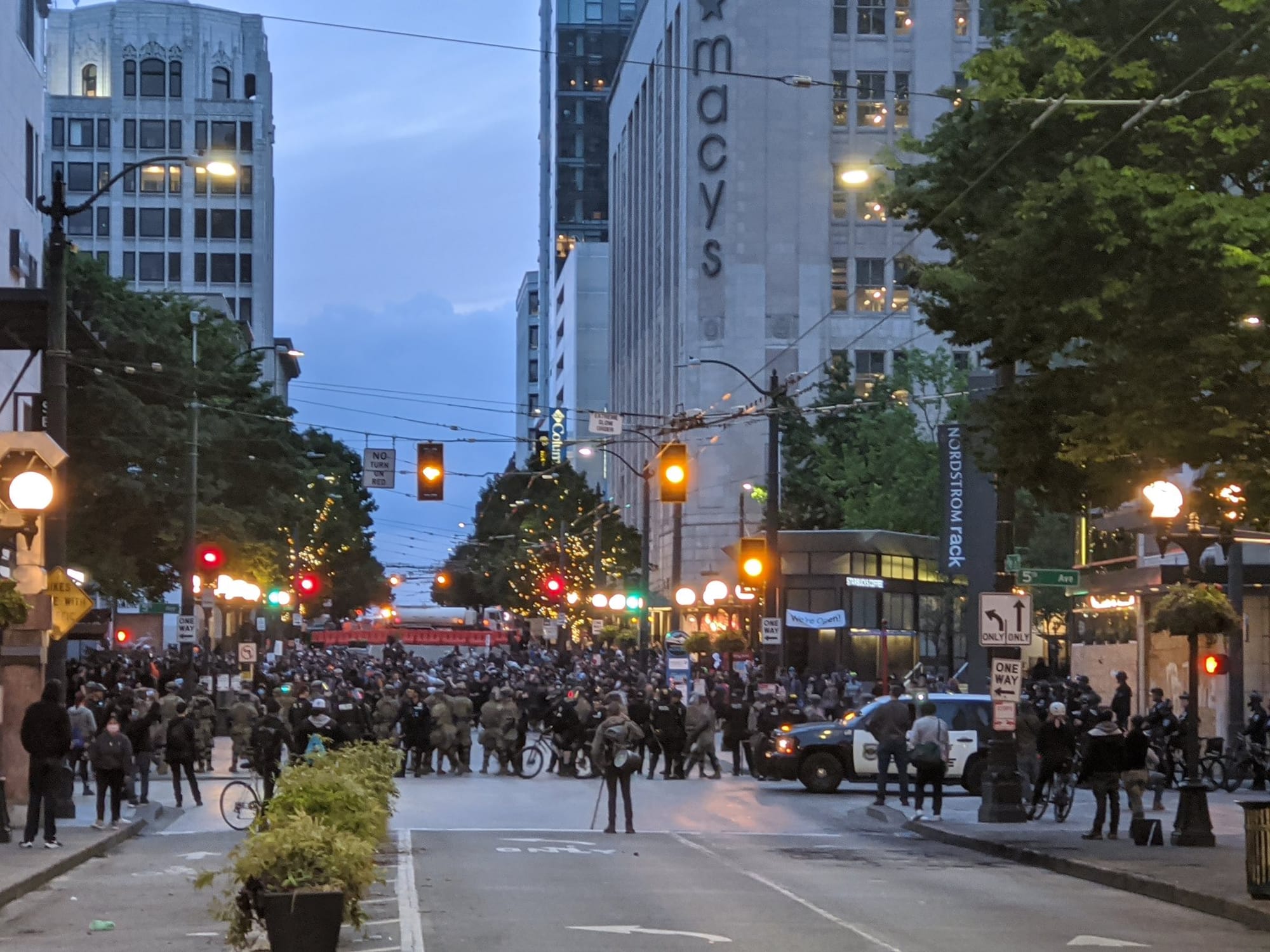
Cities across America are on edge right now. Many have seen clashes between police and protesters, resulting in injuries, arrests, and destruction. It was hard to focus on much of anything else as news feeds were inundated with images of violence–police in riot gear, cars on fire, and protesters taking beatings.
George Floyd’s murder in Minneapolis was the spark but America was a giant powder keg with every city having its own example of wanton police killings, brutality, and police reform thwarted by feckless politicians and a deeply entrenched system.
Seattle Police have killed two people this month–one in Columbia City and one in Interbay–but neither case blew up like Floyd’s murder, which was incredibly heinous and caught on cell phone preventing police from controlling the narrative. So it was the spark from Floyd’s murder that ignited our smoldering powder keg in Seattle, with efforts to defuse it going awry.
On Thursday, Mayor Jenny Durkan demanded justice for Floyd and urged prosecution of the police officers involved, but presented Seattle’s progress on reform in contrast. However, by Saturday she was sending police and the national guard after her own citizens and imposing a 5pm curfew with no notice and a march in progress. It’s a little more chaotic than most, but we’ve seen this story before.
So what do we do to break free of this cycle of violence: police killing, protest, yet more violence as police crackdown on protests, and repeat? Campaign Zero, which is an arm of Black Lives Matter, has some policy recommendations. First among them is ending broken windows policing, which seems to be making a bit of a comeback under Mayor Durkan. (Incidentally, after a riot, it’s the broken windows that centrist leaders focus our attention on and lament most of all.)
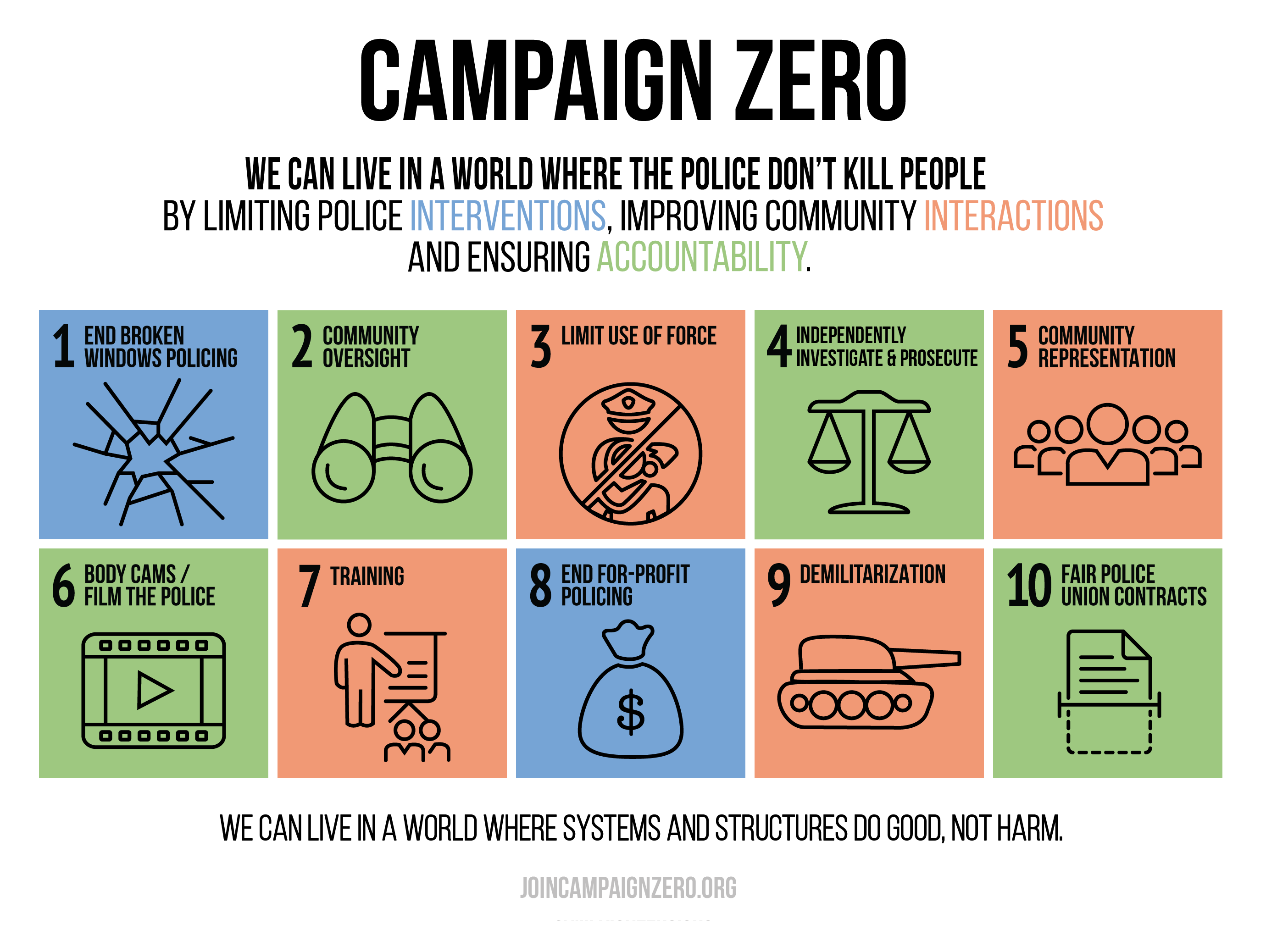
Also on the list are adding community oversight of police conduct, limiting the use of force, demilitarization, and independent investigation and prosecution of misconduct. Unfortunately, winning those reforms has proven elusive in Seattle and many jurisdictions nationwide.
The goal of greater police accountability and meaningful civilian oversight sounds simple enough but the politics are complicated. The police union (Seattle Police Officers Guild or SPOG) doesn’t want civilian oversight and they oppose measures that increase accountability. And since SPOG is a member of the MLK County Labor Council, labor leaders have defended police bargaining rights rather than focus energies on holding police accountable to the public (the irony given the council’s name is unfortunate).
Moreover, police seem to equate accountability and criticism to disrespect and complain to the press, blaming reform advocates and Seattle City Councilmembers for their low job satisfaction. As of the 2010 census, more than 80% of Seattle police officers resided outside city limits, which seems to exacerbate the divide and accentuate the department’s siege mentality. Police officer retention is a challenge.
Mayor Jenny Durkan caved to their demands in 2018 police contract negotiations, weakening the limited civilian oversight that was recently won, thanks in part to the federal consent decree Seattle Police Department (SPD) came under in 2012 due to a pattern of excessive use of force and misconduct. Mayor Durkan, though she helped (at least outwardly) as a U.S. Attorney to establish the consent decree, is now rushing to get Seattle out of it even though U.S. District Judge James Robart has said SPD isn’t ready. A Republican administration may be more likely to grant her wish given their thirst for tough policing and aversion to reform. Lifting Seattle’s consent decree isn’t an example of resisting Trump, but of collaborating with him.
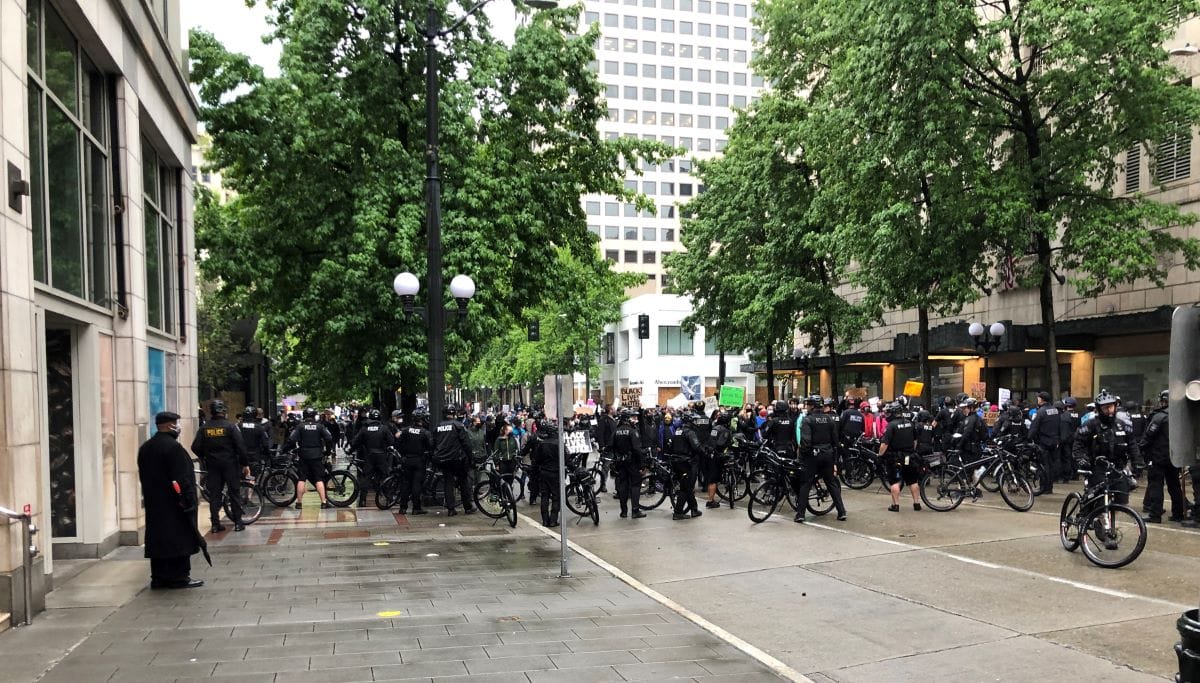
During the protests, we saw police (apparently with the Mayor’s blessing) put into action a system that seems designed to shield them from responsibility. Many officers covered up their badges with black tape or bands to make it harder to identify them via their badge number despite regulations against obscuring police identification. After the fact, Mayor Durkan and Police Chief Carmen Best said this was part of a ritual to mourn fellow officers who have passed away, but it’s hard to excuse the timing or lack of intervention to reduce the practice.