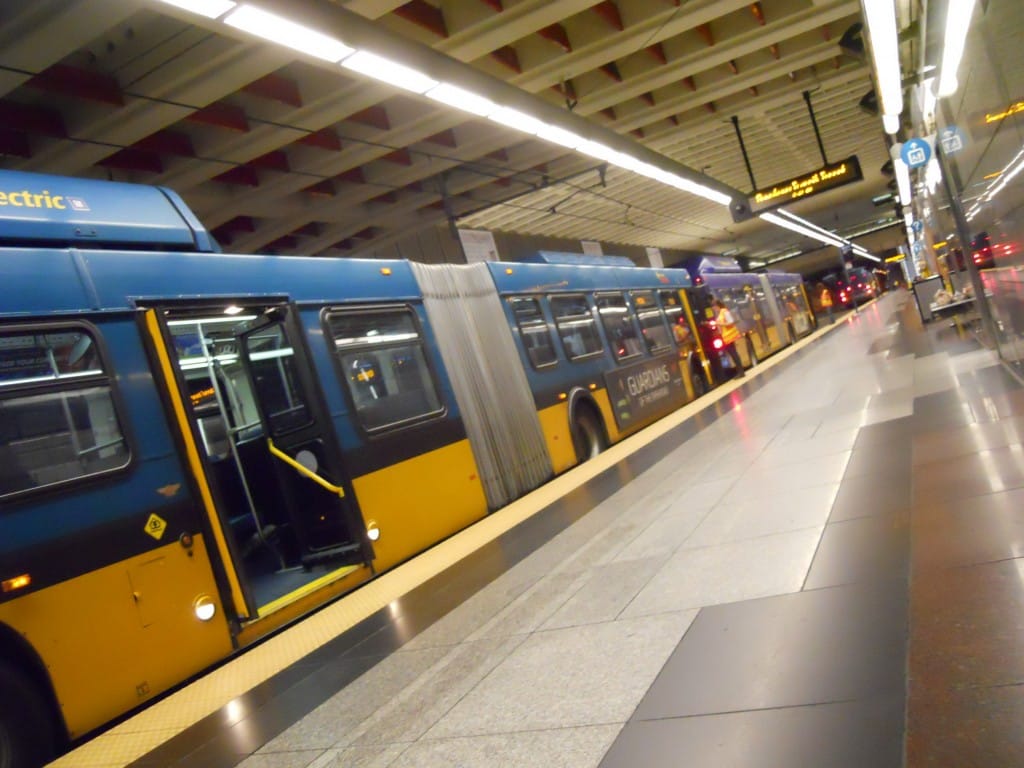

Early Saturday morning I had the opportunity to participate in a simulation of bus and light rail service in the
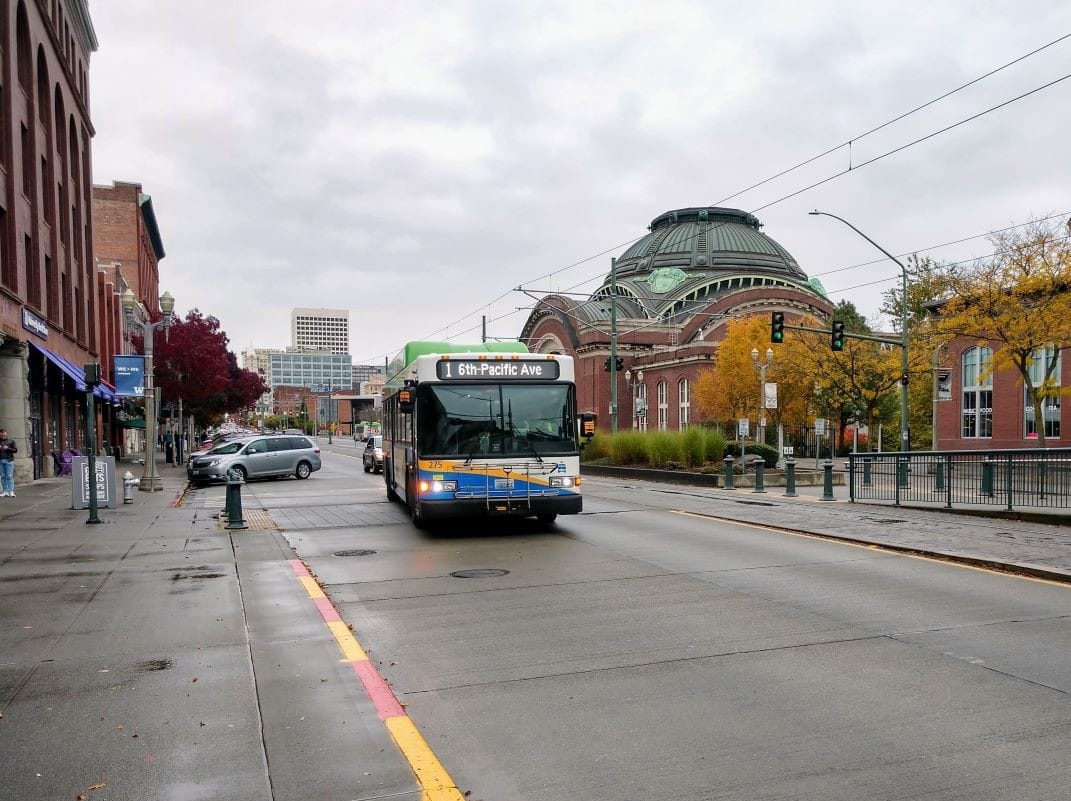
Downtown Seattle Transit Tunnel(DSTT). The DSTT is unique among transit systems, with both buses and trains sharing the roadway and stopping at the same platforms. With the tunnel already facing mass-transit congestion (a good problem to have), the simulation tested if the tunnel could support increased capacity.
The tunnel was conceived in the
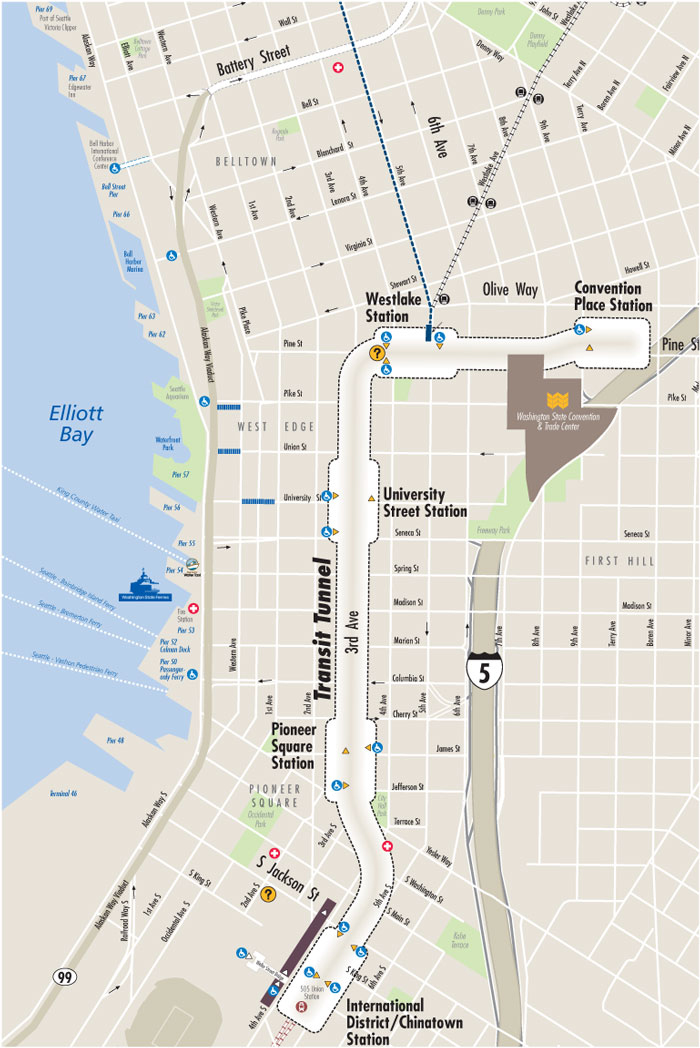
early 1980sas as a solution to buses’ sluggish travel times between the north and south ends of downtown. Construction of the 1.3 mile project took three years and cost $455 million. Five stations, each with a unique design and adorned with colorful art, make up the DSTT: Convention Place, Westlake Center, University Street, Pioneer Square, and International District. Between each station are pairs of 18-feet diameter tubes.
Service
officially beganin September 1990 with dual-mode buses that switched to overhead electric power when entering the tunnel. The tunnel closed 15 years later for a
two-year retrofitthat included replacing the original unused rails, lowering the roadway to facilitate level boarding, and constructing a stub tunnel where trains could reverse direction. The tunnel reopened in September 2007 with hybrid buses, and Link light rail began operating between Westlake Center and Sea-Tac Airport in July 2009.
In 2016 Link is expected to begin extended service from downtown to Capitol Hill and the University of Washington’s Medical Center and Husky Stadium. The latter neighborhood is second only to downtown as a regional transit destination, so frequency of service during peak hours (currently 6am-8:30 and 3pm-6:30) will be increased to every 6 minutes (up from 7.5 minutes currently). This will exacerbate the current conflicts between buses and trains; buses are not allowed to proceed when the tunnel between stations or station platform ahead of them are occupied by a train. Saturday’s simulation tested whether buses can be efficiently run between trains.