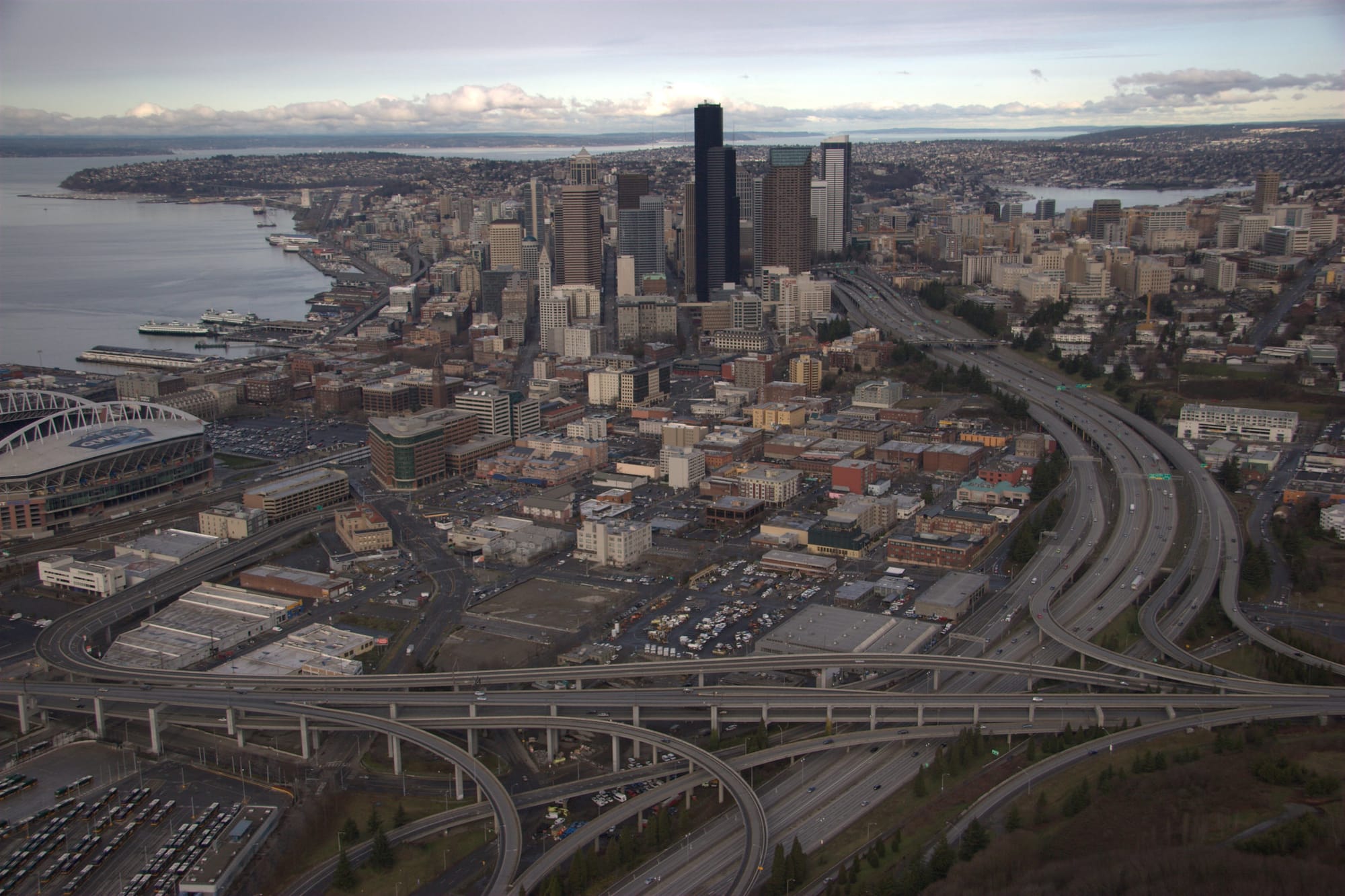
When President Joe Biden’s $2.25 trillion jobs plan proposed $20 billion for a Reconnecting Communities fund that could be used for urban freeway removal and mitigation efforts in American cities, it felt too good to be true. Urbanists aren’t used to getting big wins like this from Congress. Alas, too good to be true may end up being prescient if Senate leaders get their way in gutting the plan and slashing the Reconnecting Communities program to a piddling $500 million.
The damage goes far beyond the freeway removal and mitigation program. A bipartisan Senate negotiating group has also slashed transit, housing, and clean energy spending, while prioritizing highway spending and bridges, which get $110 billion. The infusion of money into the Highway Trust Fund is the latest confirmation that the gas tax revenue falls far short of paying for car infrastructure. On the bright side, rail gets $66 billion, so Amtrak is slated to get a major boost.
However, public transit gets $39 billion, leaving local transit agencies fighting for scraps. Politico‘s Sam Mintz reported that the top five states pulled in $30.4 billion, a whopping 78% of the public transit allotment. The rest of the country splits the remaining $8.6 billion, with Washington state apparently pulling in $1.79 billion of that in the Senate plan.
Here’s the transit spending breakdown per Politico:
- New York: $9.8 billion
- California: $9.4 billion
- New Jersey: $4.1 billion
- Illinois: $3.9 billion
- Texas: $3.2 billion
- Washington: $1.8 billion
The Senate plan is bad news for Puget Sound policymakers hoping that Biden’s infrastructure plan would be complete salvation for Sound Transit ambitious ST3 light rail expansion plans, which face a $6.5 billion affordability gap and the prospect of significantly delayed timelines. The $1.79 billion boost to the state isn’t enough to make all those problems go away.
With 44 states sharing about $7 billion in public transit money, mid-sized transit agencies and some fairly large ones aren’t going to make out well. Philadelphia’s SEPTA, Boston’s MBTA, Washington, D.C.’s WMATA, Atlanta’s MARTA, Portland’s TriMet, and the various poorly funded transit agencies of Florida appear to be in this group.
Bipartisan Infrastructure Group is 100% White
The bipartisan infrastructure negotiating group included 22 senators: 11 Republicans, 10 Democrats, and Senator Kyrsten Sinema, who ostensibly is a Democrat but doesn’t act like it much. All members of the group are White, which could be why the freeway removal program was cut by more than 97%. The argument for freeway removal centers on erasing past harms when state transportation agencies overwhelmingly targeted Black and Brown neighborhoods when siting urban freeways, often destroying vibrant commercial districts and dooming remaining residents with high pollution levels and decreased property values that diminished wealth building opportunities and increased rates of asthma.