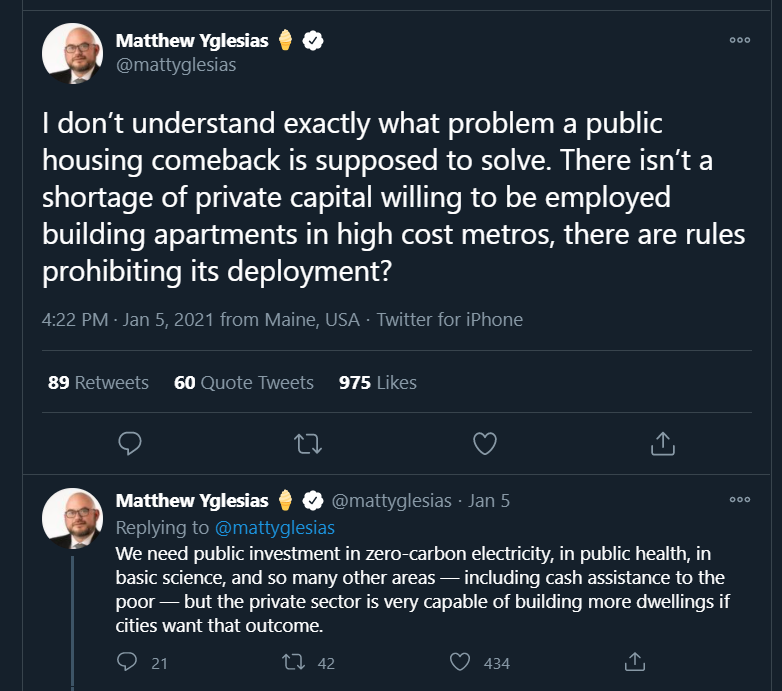
Last week was a weird week for public housing. On Tuesday, Substack pundit Matt Yglesias opined that public housing doesn’t solve a single problem and isn’t worthy of investment. Later that day, Raphael Warnock won his election for the United States Senate. It was the first time Georgia has ever elected a black senator. Warnock, like Big Boi of OutKast, grew up in Savannah public housing.
On Wednesday, Trump supporters, aided by police officers and with some waving Confederate flags, broke into the Capitol in a coup attempt seeking to block Joe Biden and Kamala Harris from starting a new administration, as the will of the people dictates after their decisive win with a whopping seven million more votes than Trump. It’s the first time in our nation’s history a Black woman is Vice President. With Warnock’s and Jon Ossoff’s victories, Harris will be the decisive vote breaking ties in a Senate split 50-50 between Democrats and Republicans. Needless to say, White supremacists like those that invaded the Capitol aren’t happy about the turn of events, particularly as a Black man and a Jew delivered Democrats a Senate majority by winning a formerly Confederate state.
With Democrats having control of both legislative chambers and the presidency, major legislation could be on the horizon. This is likely why folks like Yglesias and neoliberal think-tanks are hard at work discrediting public housing. Yglesias’s contention that Democrats will need to prioritize among competing needs is true, but the idea that public housing isn’t one of the needs is ludicrous.
Democrats have a wide spectrum of positions on social housing–a term covering not just public housing but also other forms of below-market homes like non-profit housing. While a Joe Biden housing plan calls for 1.5 million affordable homes, Representative Ilhan Omar (D-Minneapolis) has introduced legislation intended to create 12 million social housing units. Rarely do you see a 21st century Democrat calling for zero new social housing.
The market can’t solve the low-income housing shortage.
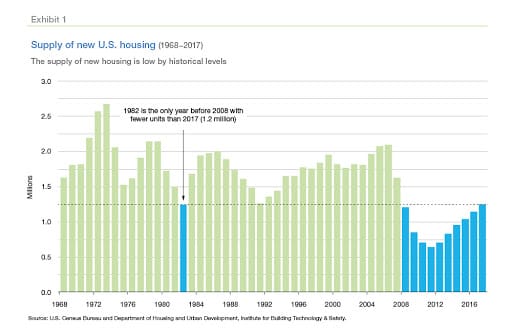
While implying a superior understanding of markets, Yglesias actually betrays that notion by operating with a stilted, oversimplified understanding. Private capital is interested in housing, but this isn’t a permanent condition. It’s hard to rely on the market alone to just build and build until the shortage is gone. If prices drop, the private capital spigot turns off as we saw dramatically in the 2008 housing crash. A unique advantage social housing can provide is countercyclical production that can fill in the gaps during market downturns or crashes.
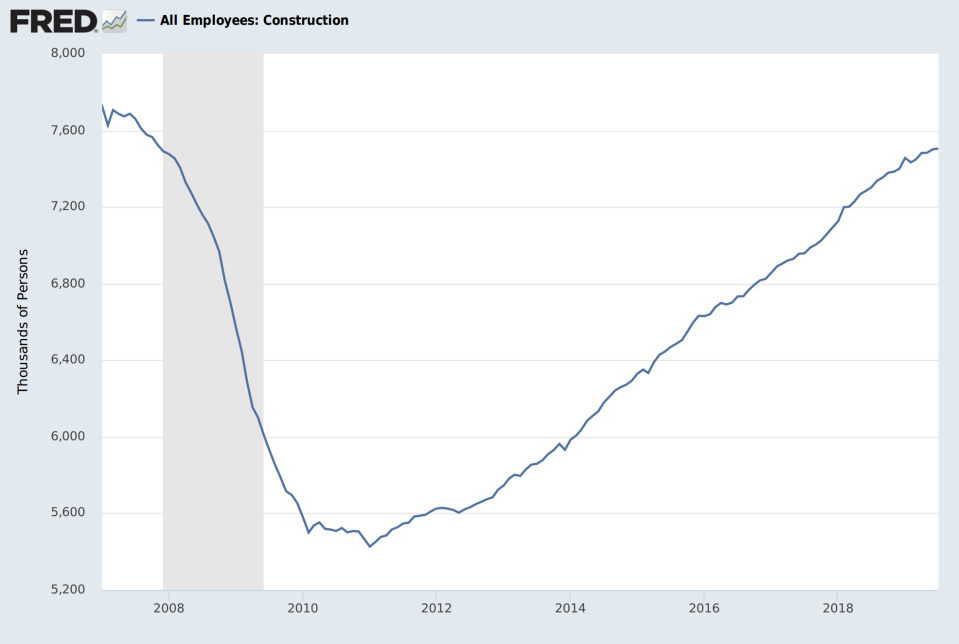
Beyond boosting housing production, this strategy could help limit the bleeding of construction workers and firms during the next crash–2008 absolutely devastated the industry with 1.5 million jobs disappearing, and we’re still suffering the consequences with higher construction costs due to a construction labor shortage. Pretending like housing crashes won’t happen again (and thus not preparing for them) is naïve. Imagine reconstituting the Works Progress Administration (WPA) and training a new generation of construction workers that would increase our housing production capacity.
In addition to coming with booms and busts, the private market tends to only add new homes at the upper half of the market. Social housing is essential to prevent wealthier folks from buying up older housing and upping displacement pressure. However, if a region is booming like Seattle is, filtering of aging housing stock down to the lower-income folks doesn’t happen in sufficient numbers–too many people are moving in or forming new households for that to happen. Seattle added 150,000 residents in a decade, jumping from 610,639 in 2010 to more than 761,000 in April estimates. King County’s Regional Affordable Housing Task Force estimated the county faces a deficit of 156,000 affordable homes and needs to create a total of 244,000 new affordable homes by 2040, in its Five-Year Action Plan.
If the cost to build a typical home is $300,000–a reasonable ballpark figure for Seattle–the market cannot provide housing below that price (without assistance anyway). Enter $350,000 into a mortgage calculator and younfind the monthly payment is approximately $1,655. This isn’t a perfect conversion to likely rents for an apartment, but it gives an idea of the kind of rental prices the market responds to versus the rents that are too low to support market-rate construction. If you were hoping new full-sized apartments will hit the market with rents below $1,600 in Seattle, it appears a pipe dream at this point–a fact underscored by the fact developers qualify for the Multifamily Tax Exemption (MFTE) if they hold a quarter of their apartments at a reduced $1,628 rent for income-qualifying households (75% of area median income for a one-bedroom apartment, typically).
Microhousing can help for some, but doesn’t work for families. That leaves the bottom half of the market bargain hunting in older housing stock or at the mercy of government or nonprofit assistance. There’s not enough to go around. Investing in social housing gets us closer to enough, and empirical research suggests it’s twice as effective at reducing displacement pressure compared with market-rate housing. We can’t leave on the shelf one of our most effective tools for countering displacement and promoting mixed-income neighborhoods in high-demand cities.