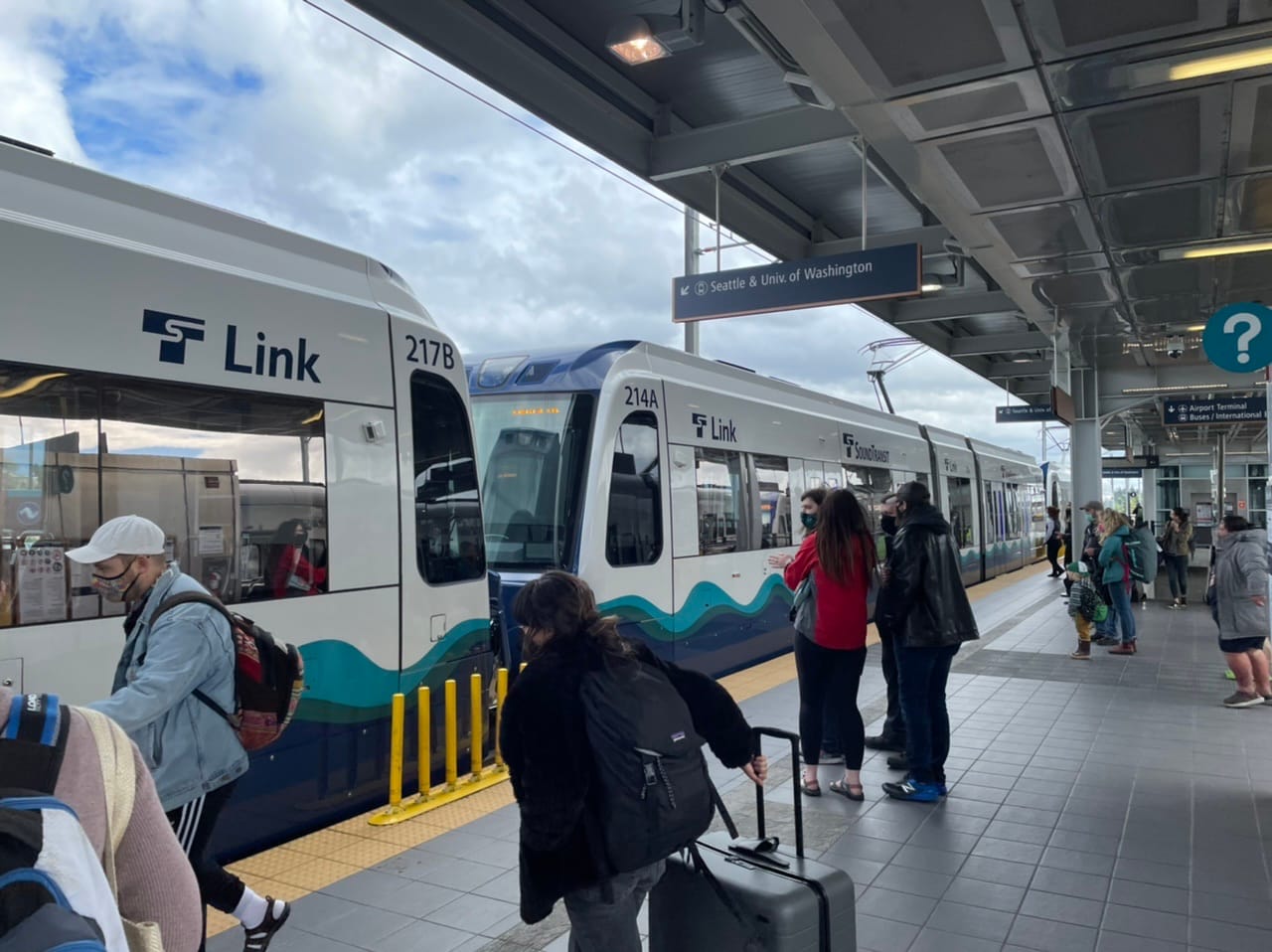
NE 130th Street Station opens in 2025 and Graham Street and Boeing Access Road Stations open in 2031 under the amended plan.
The Sound Transit Board of Directors voted Thursday to pursue a hybrid plan that mostly avoids delays beyond modest “planning delays” to the vast majority of the Sound Transit 3 (ST3) program. An amendment also moved up the opening of the NE 130th Street Station to 2025 as the agency flirted with last year, which is just after the rest of the Lynnwood Link extension opens in 2024.
The realignment plan was long in the making and triggered after an affordability gap of $12 billion emerged at the height of pandemic pandemonium, with the worsening economic outlook a drag on revenue forecasts. After improving forecasts continued to whittle away at that figure, the affordability gap is now estimated at $6.5 billion, and stems largely from jumps in project cost estimates. Legal requirements and hopes of keeping its sterling credit rating pushed Sound Transit to adjust its financial plan to react to the gap. The hybrid plan does that with a mixed approach paired with some measured schedule delays and offsets, which could include new revenue or controlling costs through engineering and design changes.
The initial plan to deal with the affordability gap was Chair Kent Keel’s “flexible” realignment plan. That plan immediately reset timelines with considerable delays to rebalance the budget rather than considering new revenue and cost control measures. While Keel called his approach flexible, transit advocates — The Urbanist included — worried that delaying transit timelines would send a bad message and sap momentum for solving the problem with additional revenue or cost controls. For months, it seemed like the Sound Transit board was drifting toward that option and pushing to rush a vote in July.
Balducci’s push leads to hybrid plan
Fortunately, Boardmember Claudia Balducci emerged with an alternative plan that avoided most immediate delays and provided tools to control costs and acknowledge the hope of additional revenue. She convinced her colleagues to give her a little extra time to fine tune the plan.
Her efforts also ended up convincing Chair Keel to merge elements of her framework with his, resulting in the hybrid plan approved yesterday. Plan A tracks to Balducci’s approach, while Plan B uses Keel’s framework for managing the budget via schedule delays, with some tweaks on where exactly the delays would fall. Plan B provides a backup if Balducci’s approach of controlling project costs and adding revenue doesn’t succeed in fully closing the affordability gap for individual projects.
Balducci expressed hope that timelines could be accelerated further, but acknowledged the challenge was just beginning after the vote: “Now the hard part: making good on the commitments we approved this afternoon,” she tweeted. “It will not be easy but it is essential for our region’s success that we complete the light rail and bus rapid transit lines that will connect our economic centers and build a more sustainable transportation future in the face of the climate crisis.”