Seattle Mayor Bruce Harrell voted against taking fare violations out of the court system, blocking that amendment, and against taking fines out of collections, which passed 13-3 without him.
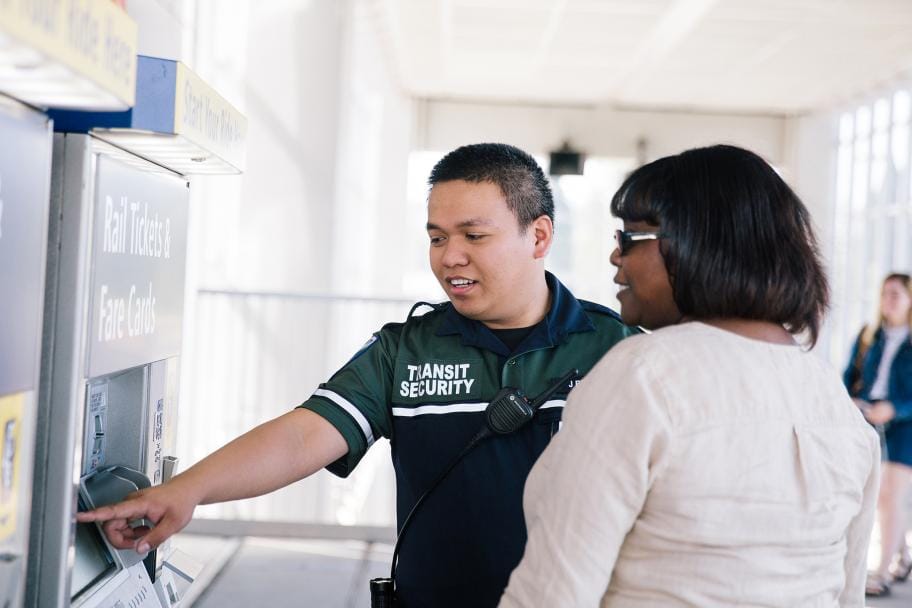
Yesterday, the Sound Transit Board of Directors unanimously passed a much anticipated fare reform package that is aimed at reducing the racially disproportionate impact of fare enforcement and the criminalization of poverty. The new system would require five violations in a 12-month period in order to become a civil infraction in the court system, increasing from just two times under the old system. Additionally, fines will drop from $124 after two warnings to $50 for the third violation, $75 for the fourth violation, and $124 for the fifth violation and subsequent infractions in a 12-month period. The reform will go into effect in the fall.
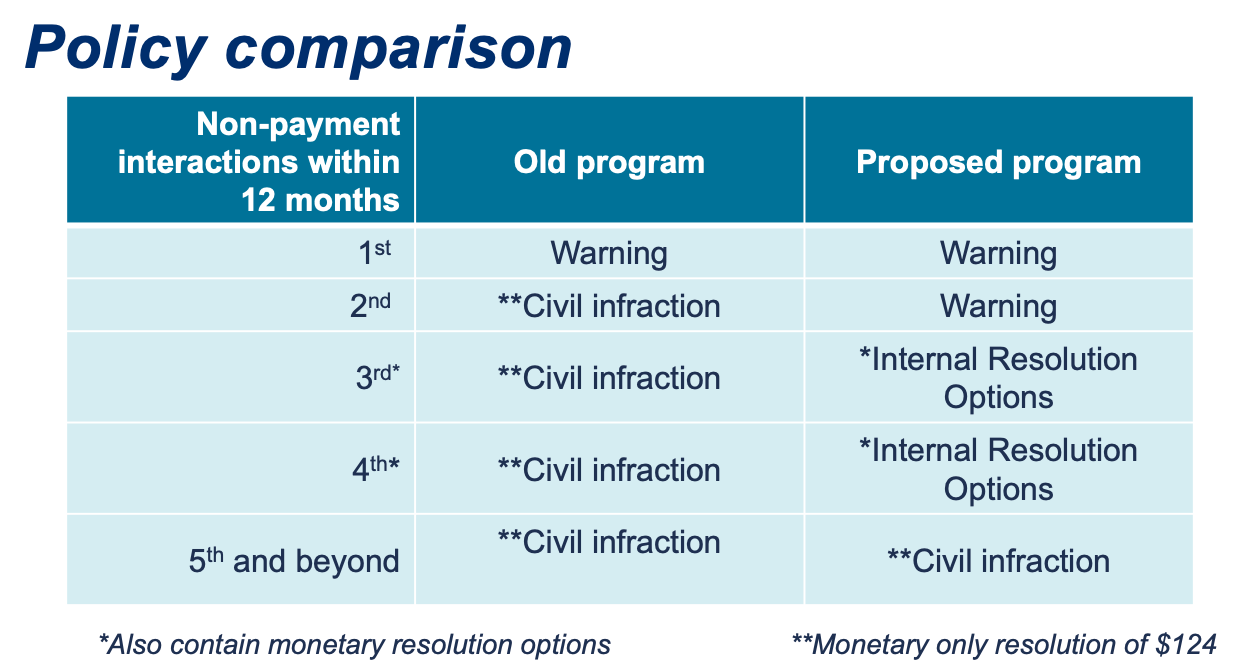
Sound Transit follows in the footsteps of King County Metro, which implemented a pilot program in 2018 and enacted permanent fare reform shortly thereafter, albeit belatedly and with less sweeping changes. Both agency’s data has consistently demonstrated disparate racial impacts. Writing in The Urbanist in January, Guy Oron noted that a persistent pattern of Black riders facing far worse outcomes, suggesting the fare enforcement system was racially biased.
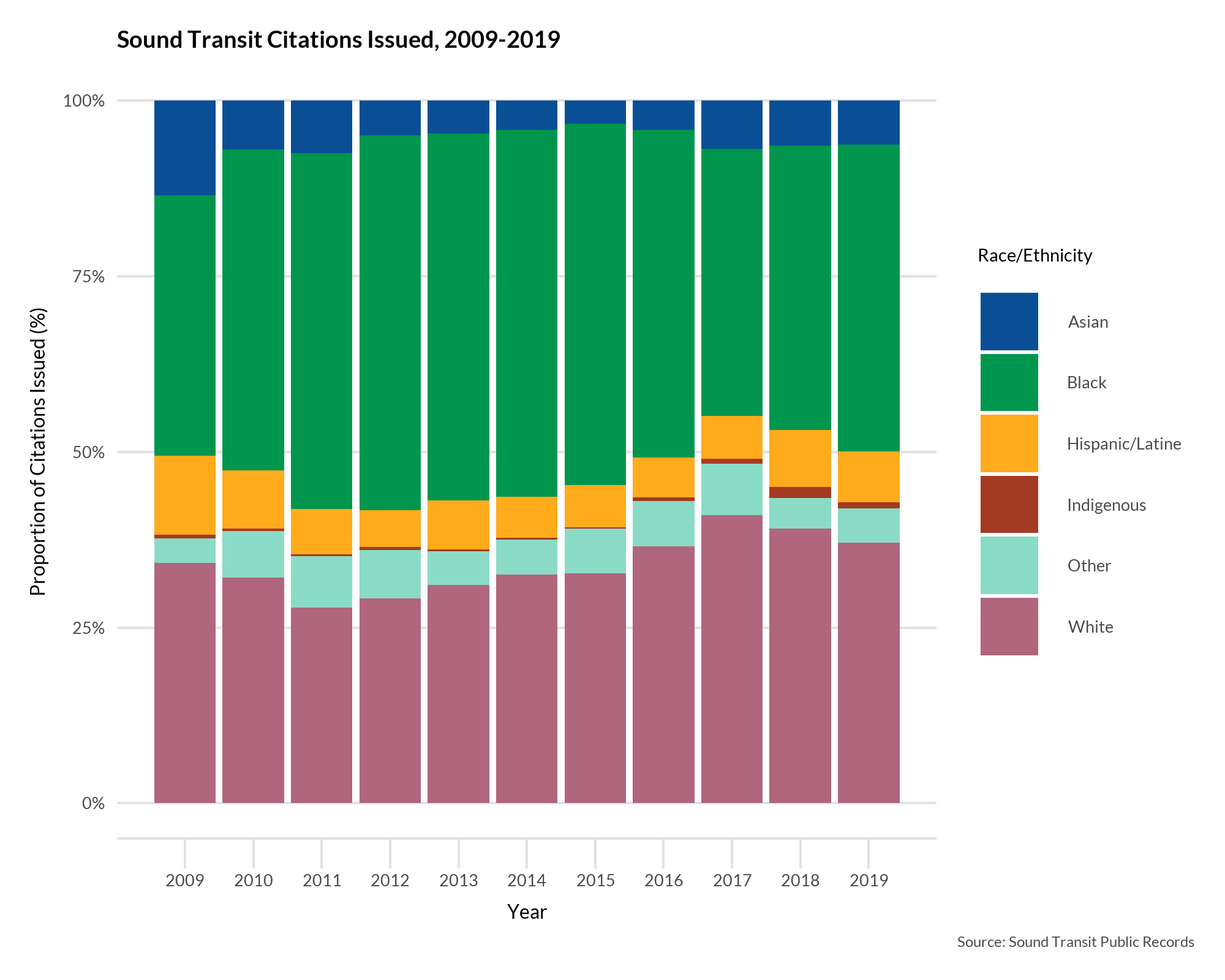
“Between 2009 and 2019, Sound Transit issued nearly 38,000 citations and over 3,000 theft charges to Sounder and Link light rail riders who failed to pay fares,” Oron wrote. “Black passengers received 46.7% of citations and 56.9% of theft charges, compared to White passengers who received 34.5% of citations and 26.9% of theft charges.” The population of the Seattle metropolitan region is 7% Black.
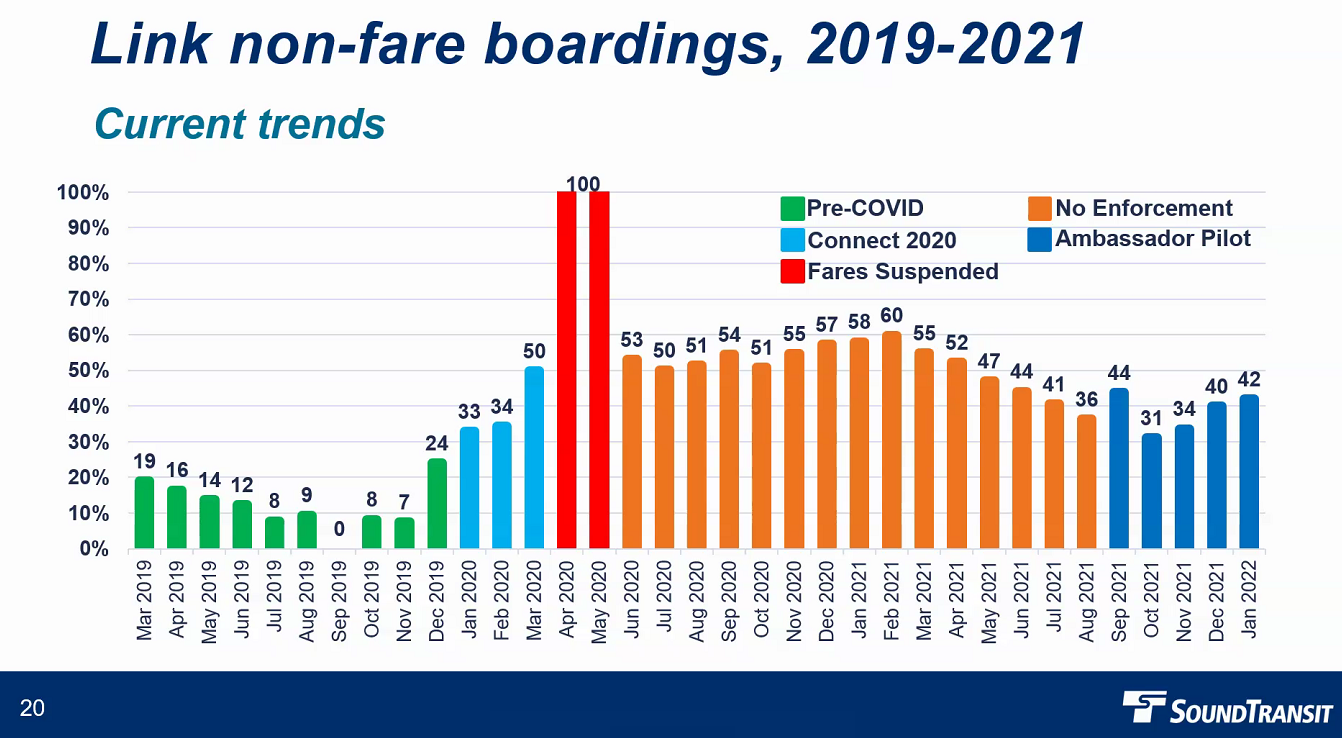
Sound Transit CEO Peter Rogoff has repeatedly expressed concern about waning fare revenue and linked it to high rates fare evasion. However, the agency has not yet been able to quantify the cost of fare evasion in concrete terms, King County Council President Claudia Balducci said, and most of the lost fare revenue is due to cratering ridership and reduced service levels during the pandemic. Link ridership is at 82% of pre-pandemic level (albeit buoyed by the opening of Northgate Link light rail extension in October 2021) but the agency’s Sounder train and express bus ridership are still way down. Some transit advocates, including Seattle Transit Riders Union, have called for phasing out fares altogether.
The board is composed of mayors, councilmembers, and county executives from across the three-county Sound Transit taxing district. Representatives from Snohomish and Pierce County expressed the most reluctance to ease fare nonpayment penalties, but Seattle Mayor Bruce Harrell shared their concerns, breaking from most of the King County delegation on two key amendments.