The climate crisis is an accelerating problem–while President Joe Biden has re-entered the United States in the Paris Climate Accords, temperatures are still rising, and disasters are worsening in both frequency and impact. Much of the Pacific coast spent weeks of 2020 trapped inside, not just due to Covid-19 but due to the toxic clouds of smoke resulting from wildfires. The amber skies above San Francisco, Portland, Seattle, and elsewhere are a clear sign that we are experiencing the impacts of the climate crisis right now and drive home the urgency of this crisis. We must act quickly to address this challenge–and one of the most straightforward ways we can do this is by developing sustainable, zero-emissions public transportation in high-density areas.
Leveraging federal funds for Seattle and Washington state
Cars are the largest carbon emissions source in Washington State and account for more emissions in Washington State than all other emissions sources combined. Getting cars off the road by building sustainable, zero-emissions public transportation as part of a Washington State Green New Deal is crucial to addressing the climate crisis. With an estimated 1.8 million new residents expected to join the Puget Sound Region by 2050, the primary corridor for this transit development is the Puget Sound Region. In particular, Seattle has a massive opportunity to improve our transportation options while preparing for regional growth.
With President Biden’s election, Seattle and Washington state have an opportunity to leverage his planned Build Back Better agenda and $2 trillion plan to build modern sustainable infrastructure and an equitable clean energy future. We can build Washington State’s public transit system and create sustainable, well-paying jobs by leveraging the Biden climate plan’s commitment to investing in sustainable transportation.
Biden wants to implement federal investments with strong labor protections to help fund the development of zero-emission public transportation for every American city with 100,000 residents or more. Washington State has nine eligible cities, with a 10th (Federal Way) close behind at approximately 97,000 residents. Even with no significant growth in the 2020 census, at least nine cities in Washington meet the size requirement for these federal investments, and of those cities, six (plus Federal Way) are in Snohomish, King, or Pierce county. They are already linked or planning to be connected through the Sound Transit system.
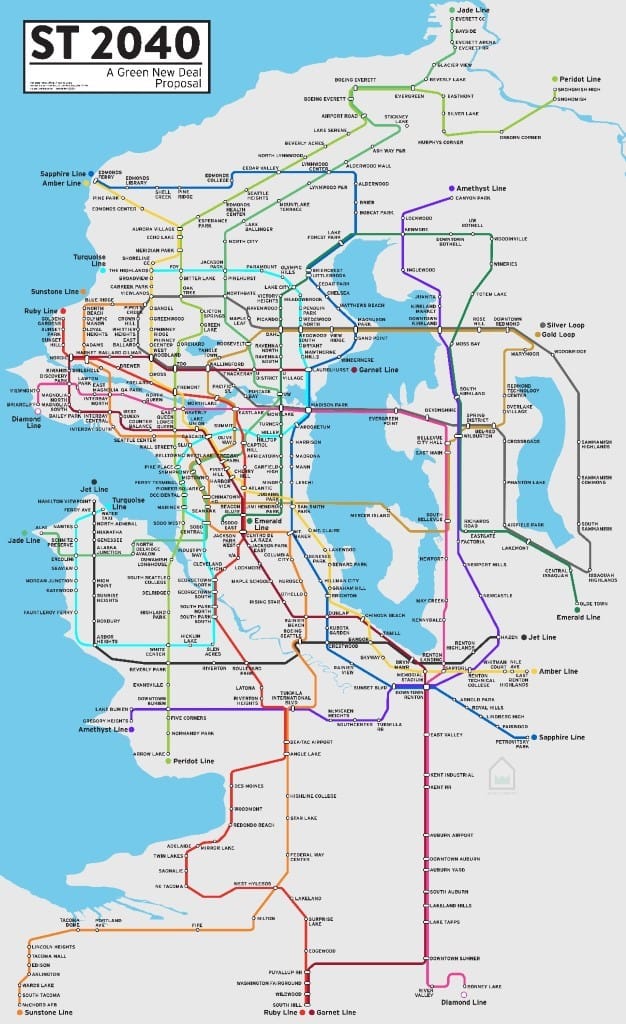
To prepare for this potential influx of federal dollars, we need a shovel-ready plan to prepare our region for growth and create a world-class transit system. Seattle Mayoral candidate Andrew Grant Houston’s sustainable Seattle SST 2040 plan and the ST 2040 vision does just that while ensuring every Seattleite is within 10 minutes or 0.5 miles of some form of frequent transit.
What is ST 2040?
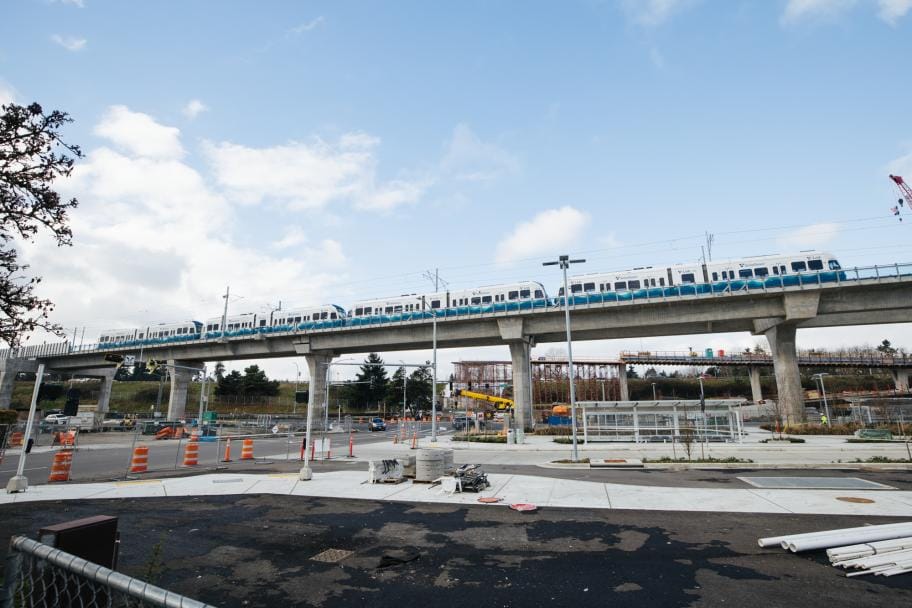
With the approval of the $54 billion Sound Transit 3 (ST3) expansion in 2016, Sound Transit began developing the most ambitious transit expansion in the United States. The system expansion plans to include over 70 stations and 116 miles by 2041, with five lines across all three counties.
However, the sad truth is that the Sound Transit effort is an effort to catch up to other cities, not prepare us for the future. Seattle voters rejected mass transit investment at the ballot box in 1968 and 1970. It wasn’t until 1996 that the first Sound Transit proposal was approved. This short-sightedness has left our region playing catchup on mass transit.
We need to go further than the investments we’ve already made in ST3–by leveraging the Biden administration’s public transit funding to implement a version of the sustainable Sound Transit 2040 (ST 2040) plan. ST 2040 builds off the first three Sound Transit ballot measures’ success by creating a fully-fledged Link light rail system for the Central Puget Sound Region.
ST 2040:
- Connects job centers and as many cities in the three counties as possible;
- Leaves the system open outside of Seattle to allow local communities to influence the specifics of implementation;
- Ensures every Seattleite is within one mile of a light rail station; and
- Creates a massive transit system that can be built in 20 years while preparing us for tremendous regional growth.