Stanwood, a fast-growing town 25 miles north of Everett, is considering overhauling its main street to embrace walkability and good old fashioned main street urbanism. The effort is being championed by Councilmember Steve Shepro, who is an adherent to “Strong Towns” philosophy pioneered by Minnesotan traffic engineer turned national urbanist celebrity Charles Marohn.
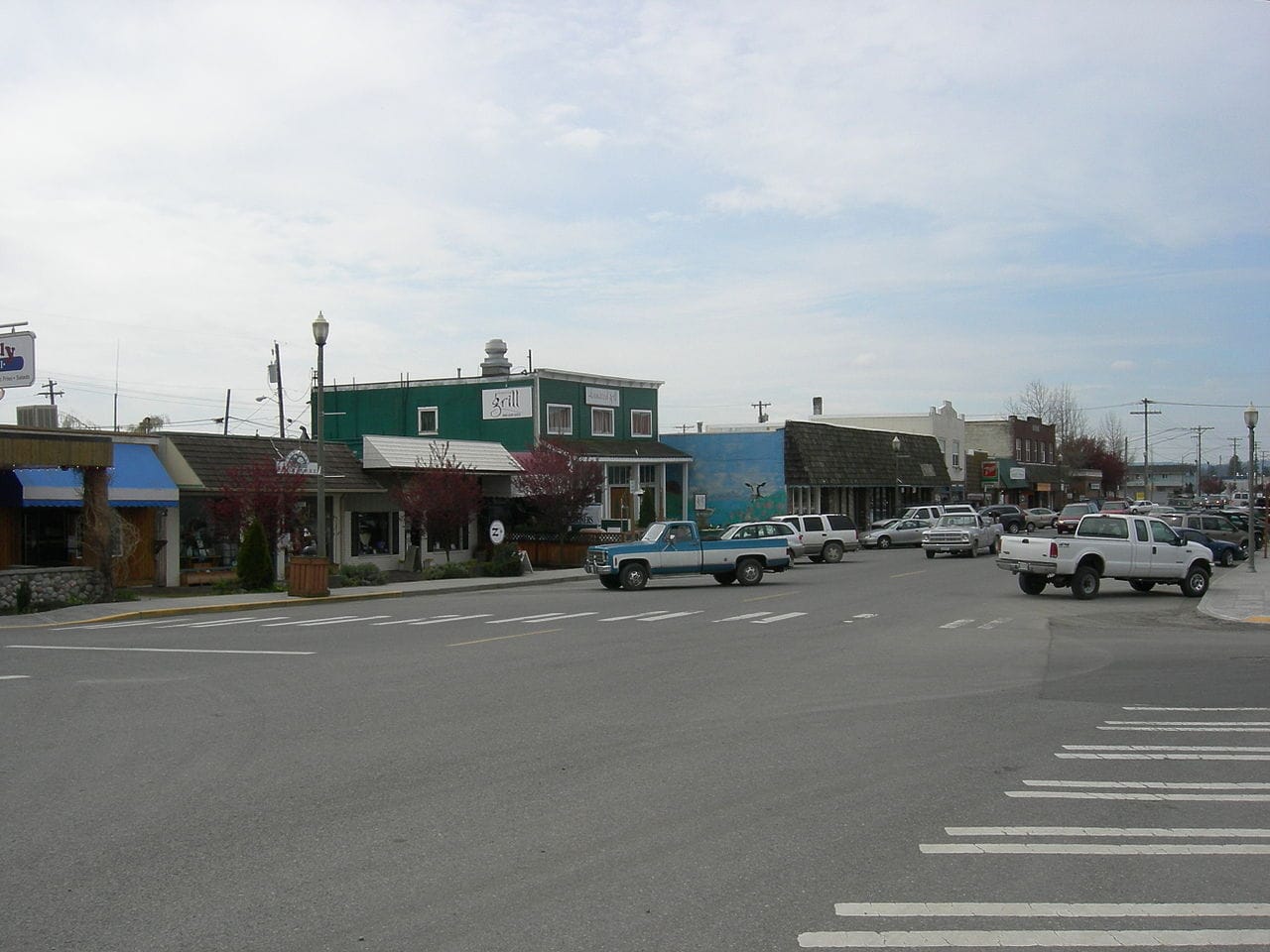
Marohn has long cautioned against the creep of stroads, a portmanteau of street and road referring to overly-wide, high-speed roads through commercial districts prone to collisions and ultimately economic decline. Shepro sees Stanwood as beset by a stroad and he’s seeking an identity for the town that is more centered around walkability and small business vitality.
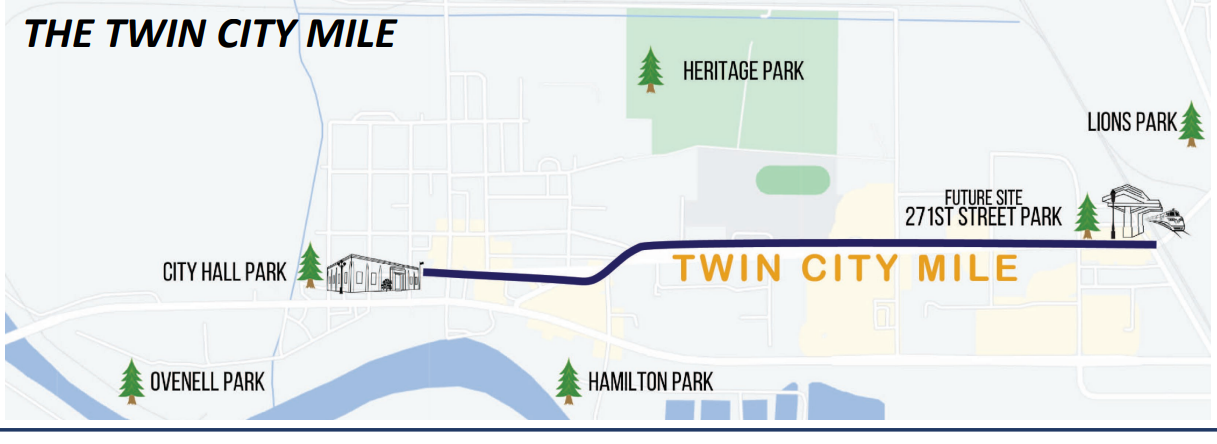
The downtown revitalization proposal, which is being called the Twin City Mile, is seeking to improve walkability and street life along 270th Street NW and 271st Street NW, a mile-long stretch of the main streets in Stanwood that connect the Amtrak train station to City Hall Park. The proposal suggests widening sidewalks, adding engaging storefronts, planning for street festivals, creating usable urban park spaces, public art, and promoting the concept of buying local. Stanwood has a survey out gathering feedback on the idea through the end of today (May 20th).
Stanwood is on the mouth of the Stillaguamish River and in a floodplain that also includes the mighty Skagit River. The town of 7,700 residents is also the gateway to Camano Island — a popular getaway and retirement spot home to about twice as many people as the town itself. Stanwood also functions as the primary business district for the island given the dearth of commercial activity on it.
Highway 532, which runs through Stanwood, is the only land route to Camano Island. As a result the two-lane highway has a tendency to back up and impatient drivers then use Stanwood’s the streets targeted for the Twin City Mile project as a cut-through route to avoid traffic snarls. Relatedly, speeding on through the neighborhood is common, Shepro said, with motorists frequently going 35 or 40 miles per hour even through the 20 miles per hour school zone.
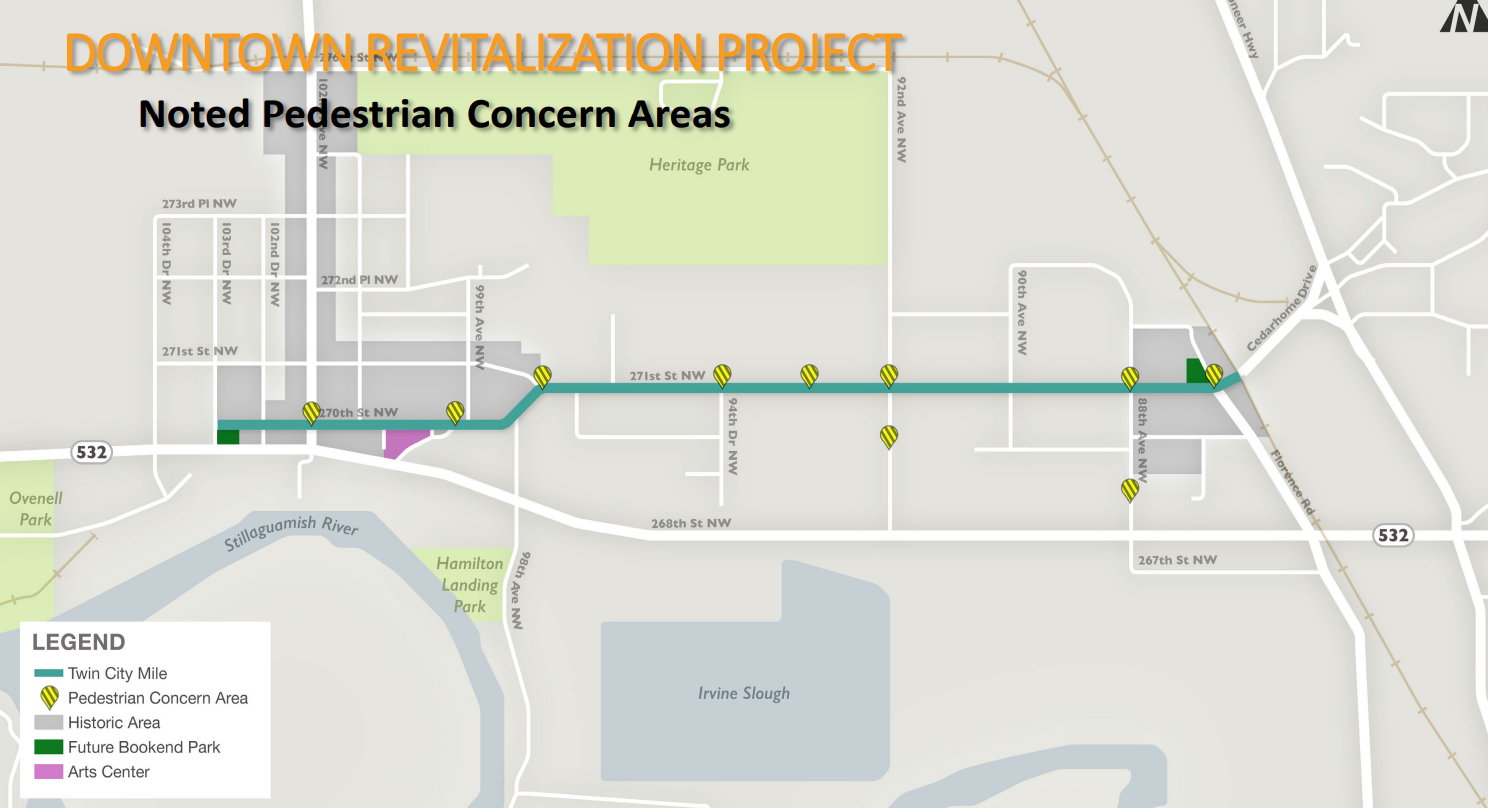
“Our main street in between West Stanwood and East Stanwood is a perfect example of a stroad,” Shepro said. He noted the highway department is also under pressure to widen Highway 532 to four lanes, but he opposes that change, adding he “doesn’t feel the need to drive fast everywhere” he goes.
The two main commercial nodes in the town are centered on the west and east ends of main street, but the middle part is a bit of a dead zone. Shepro said this is the section that feels most dangerous and unpleasant as a pedestrian. The two ends of town also have distinct feels, which is a vestige of Stanwood formerly being two separate towns, East Stanwood and West Stanwood, before unifying in 1960. The project website notes the goals of both better connecting the two ends of town and also establishing more cohesive design elements throughout the entire streetscape.