Editor’s note: This is a two-part article cross-posted from The Northwest Urbanist, see Part 1. Yesterday, Scott covered the points of aesthetics and accessibility, and costs and funding.
A group of Seattle residents called Park My Viaduct is campaigning to convert the city’s waterfront freeway into a linear park, akin to New York’s High Line. They are proposing to save 14 blocks of the concrete double-decked structure, put the idea to a vote in the November 2015 election, and construct safety improvements at a cost of $250 million. But this idea is in opposition to the entire purpose of the ongoing waterfront reconstruction, which has already had a public participation process and is currently being built. The entire viaduct should be demolished as planned.

Don’t start the process over
A major point of the campaign is that similar elevated parks in New York and Paris have attracted large amounts of private redevelopment around them, contributing to tax revenue and neighborhood vitality. This is more likely to happen with implementation of the approved Waterfront Seattle plan because waterfront businesses have been able to get involved and shape it to meet their needs. At 25 feet high and significantly narrower, the High Line is less than half the size of the viaduct and runs through an area that was mostly dilapidated industrial properties, so it’s not directly comparable. If Park My Viaduct was around earlier a case could have been made for keeping the lower deck of the three-quarter mile section south of King Street which was demolished in 2011; there the viaduct ran along the rear of the seaport beside railroad tracks and could have provided a scenic connection to the Duwamish River crossing.
Much of the land uses adjacent to the viaduct are parking lots and loading docks, and there’s little reason to think that would change because there’s a bike path five stories above. Foster said there have been recent changes to development regulations for the core area between Columbia and Union Streets that includes encouragement of more hotel and residential uses, screening of parking from the street, and no changes to height limits. He also said the City is putting together new urban design standards for properties facing Alaskan Way.

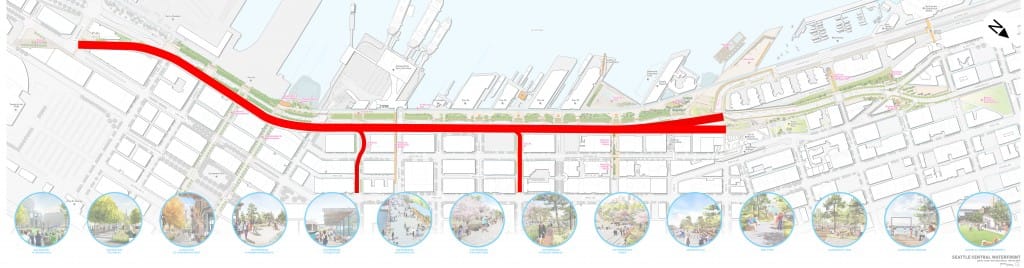
But the opportunity to voice their opinion and work the viaduct into the waterfront plan has mostly come and gone. Since 2011, Waterfront Seattle has hosted or attended some 300 events for community outreach and collecting public feedback. It is unreasonable for this minority to expect to be seriously acknowledged when the city is becoming invested in the current plan after such a long and thorough process. Preserving the viaduct would also interfere with a number of planned features, including the Railroad Way promenade, a new Marion Street pedestrian bridge, and the Overlook Walk. It would also directly prevent the Alaskan Way redesign from happening, though the size of that new street has its own problems.