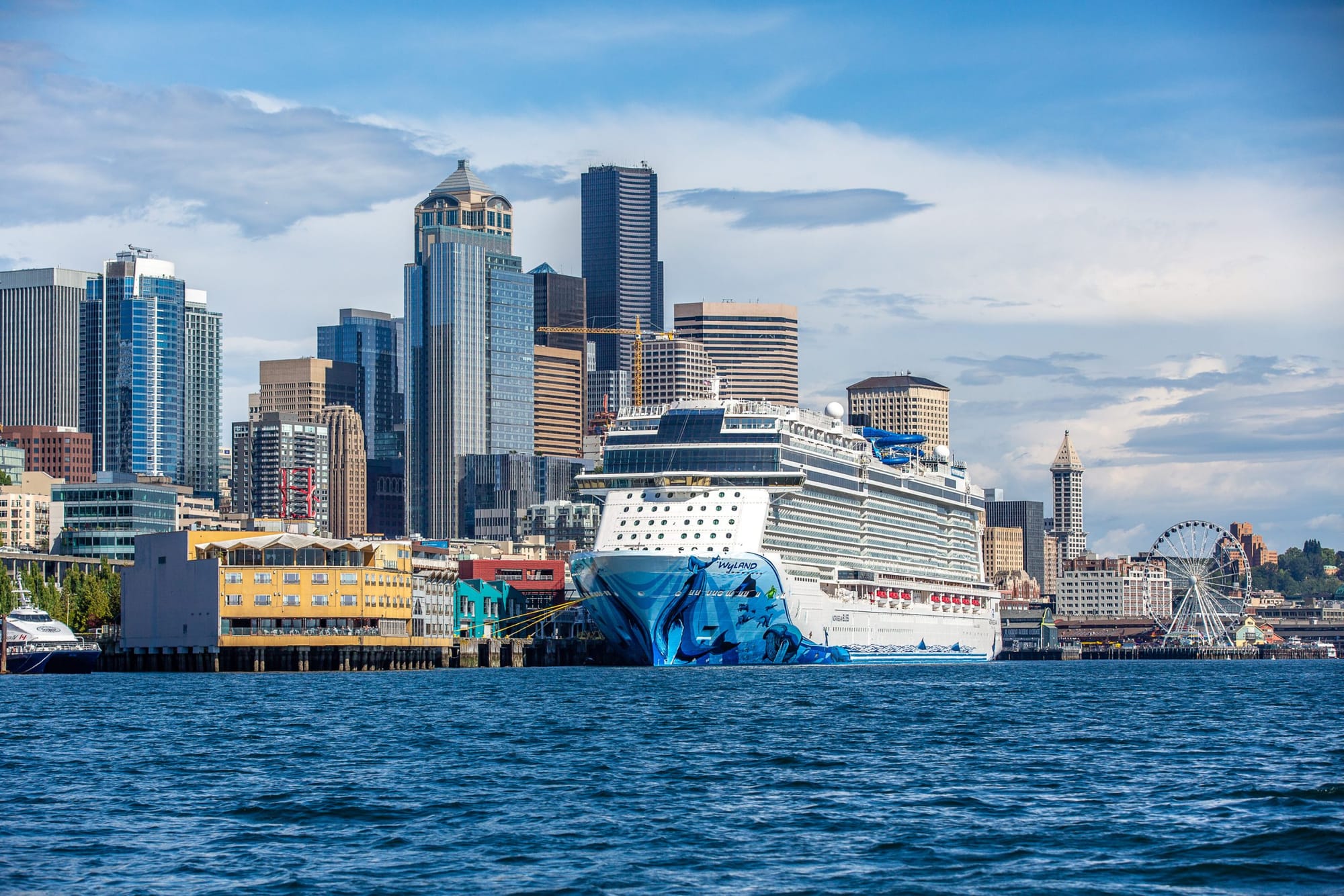
“Is your port doing business with a dangerously unregulated industry?”
If you live in Seattle, a city that prides itself on protecting workers’ rights and prioritizing the health of the environment, your first reaction may be to say no. Unfortunately, as one of over 20 U.S. cities home to a cruise terminal, the answer is yes.
Cruise companies use the loophole of sailing their ships under the flags of foreign nations whose safety, environmental, and labor standards are minimal in order to avoid paying U.S federal taxes or adhering to labor laws and safety regulations. The result is cruise ship workers holding down 12-hour shifts for six or seven days a week while earning monthly salaries of $550 to $2,000 per month, according to a 2020 investigation published by Business Insider.
A 2021 report by Marine Pollution Bulletin, based on 200 research articles, found cruise ships to be “a major source of environmental pollution and degradation, with air, water, soil, fragile habitats and areas and wildlife affected.” Human harm is not limited to labor exploitation; the report also found the transmission of infectious diseases, like Covid-19, and injuries sustained during on the job accidents to be widespread problems in the cruise industry as well.
Seattle may currently provide harbor for cruise ships, but activists Seattle Cruise Control are hopeful a recent decision by the Port of Seattle to cancel plans for construction of a third cruise terminal at Terminal 46, near Pioneer Square in Downtown Seattle, may signify a new direction forward.