We know two things are true: we need more housing—1.8 million more people are expected to move to the Puget Sound region before 2050—and our region is falling behind our climate goals, as evidenced by the fires raging across the West Coast and the smoke choking off our ability to breath.
Yet people are still moving here in droves, and why wouldn’t they? Washington State is beautiful, offers economic juggernauts in the form of companies such as Amazon and Microsoft, a continually growing tech community that is powering the innovations that will shape our future. Plus, with a temperate climate, we are likely to be able to deal with the effects of climate change for longer than many other regions.
With potentially millions more people on their way over the next 30 years, we need to build more housing–and if we’re going to meet our climate goals, we need to do so sustainably. Otherwise, we risk merely exacerbating our climate problems–concrete and steel production account for 14% of global emissions to date, and buildings in the US account for about 40% of our total energy use.
Mandating or heavily incentivizing more Passive House buildings in the Pacific Northwest might be the best way to do that, while also helping us to combat the air pollution risks posed by forest fires and other results of climate change.
What is Passive House?
Passive House is an energy standard for high-performance buildings that provides 100% fresh filtered ventilation, uses very little energy–40-60% less energy than a normal building–and requires almost no energy for heating or cooling, significantly reducing the ecological footprint of new buildings.
The five building-science principles that passive buildings are designed with are:
- Continuous insulation throughout the building without any ‘thermal bridging’ (places where heat can escape through the insulation
- Airtight enclosure, preventing outside air from infiltrating and minimizing conditioned air loss
- Balanced heat- and moisture-recovery ventilation that provides 100% fresh, filtered air–something that is critical to address as air pollution rises and the risk of wildfires increases due to climate change.
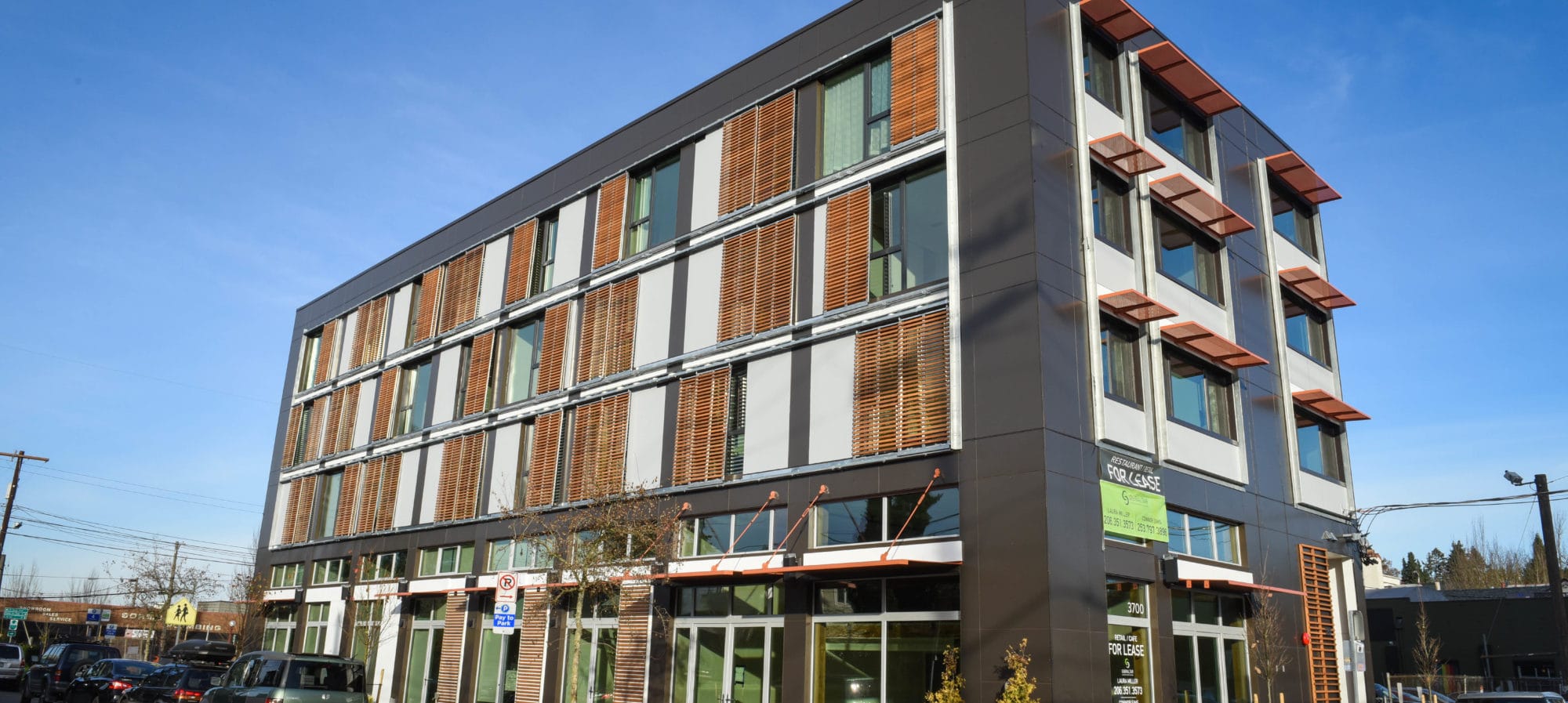
- High-performance windows and doors (triple-paned windows for our region’s climate) with correct solar orientation and shading–they should exploit the sun’s energy for heating purposes and minimize overheating during hot times.
- Minimal space conditioning system (e.g., the systems responsible for heating or cooling, or otherwise affecting the spaces in a building), enabled by smart design – this ensures that future work will require smaller and even more efficient systems.
When used together, these design principles result in buildings that are super energy efficient and tightly designed with no excess air or heat escaping. The heat gain from people within the building as well as the electronic appliances – even that of televisions and other low heat appliances–is accounted for and used to heat the space and keep it at a proper level. In conjunction with triple-pane windows, you get buildings that remain at comfortable temperatures year-round with little need for energy intensive heating or cooling. Another favorite feature of passive designed buildings for many tenants is the lack of external noise: the tight design of the buildings makes it so that the sounds of a city, whether sirens, roadways, or anything else are minimized. Add this to extremely low energy bills, and these buildings are a great place to live.