This Transpo Notes roundup touches on a mix of transit and bike stories, including:
- An update on staffing levels a local transit agencies;
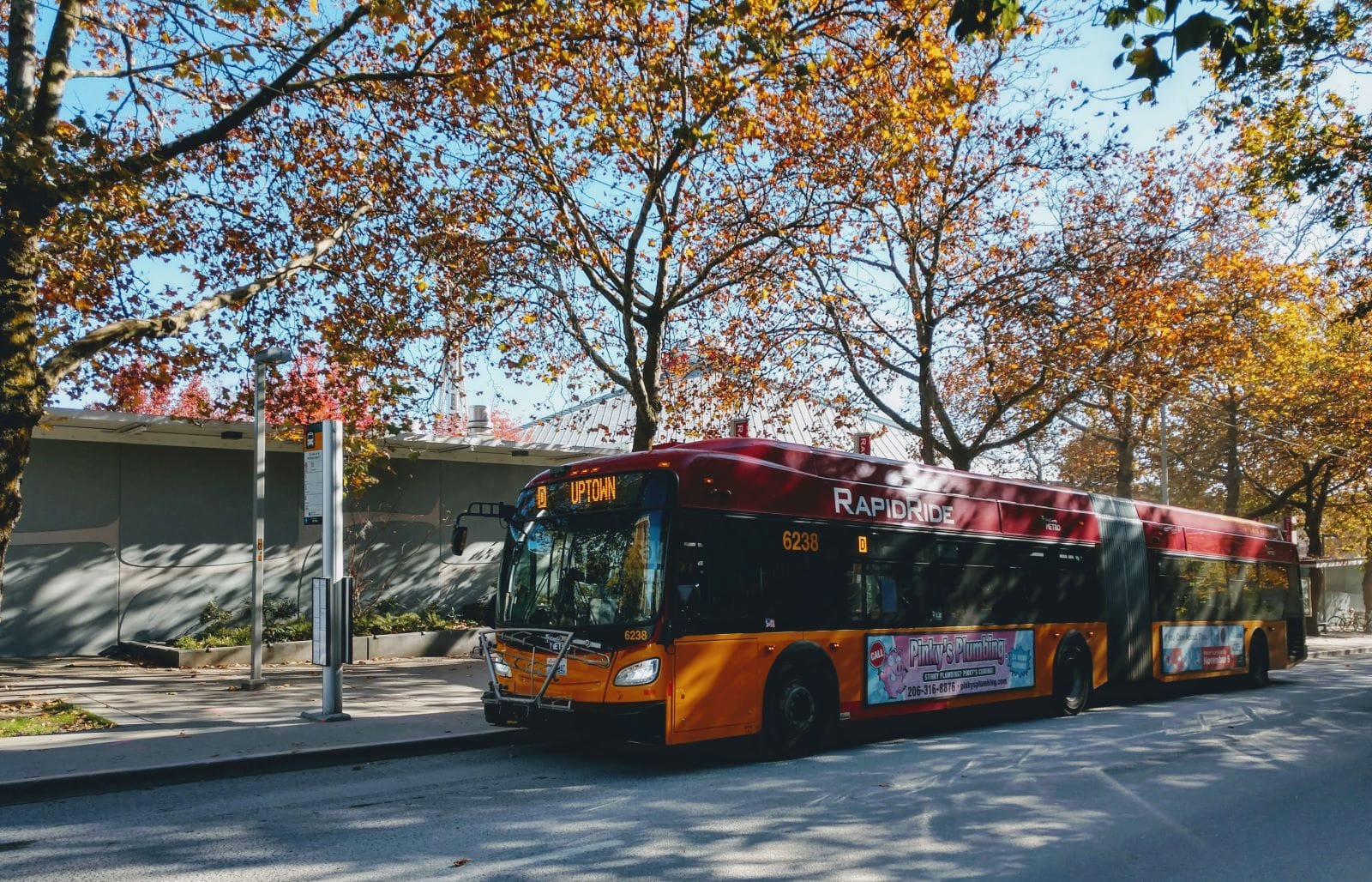
- Details on a forthcoming study of candidate RapidRide corridors;
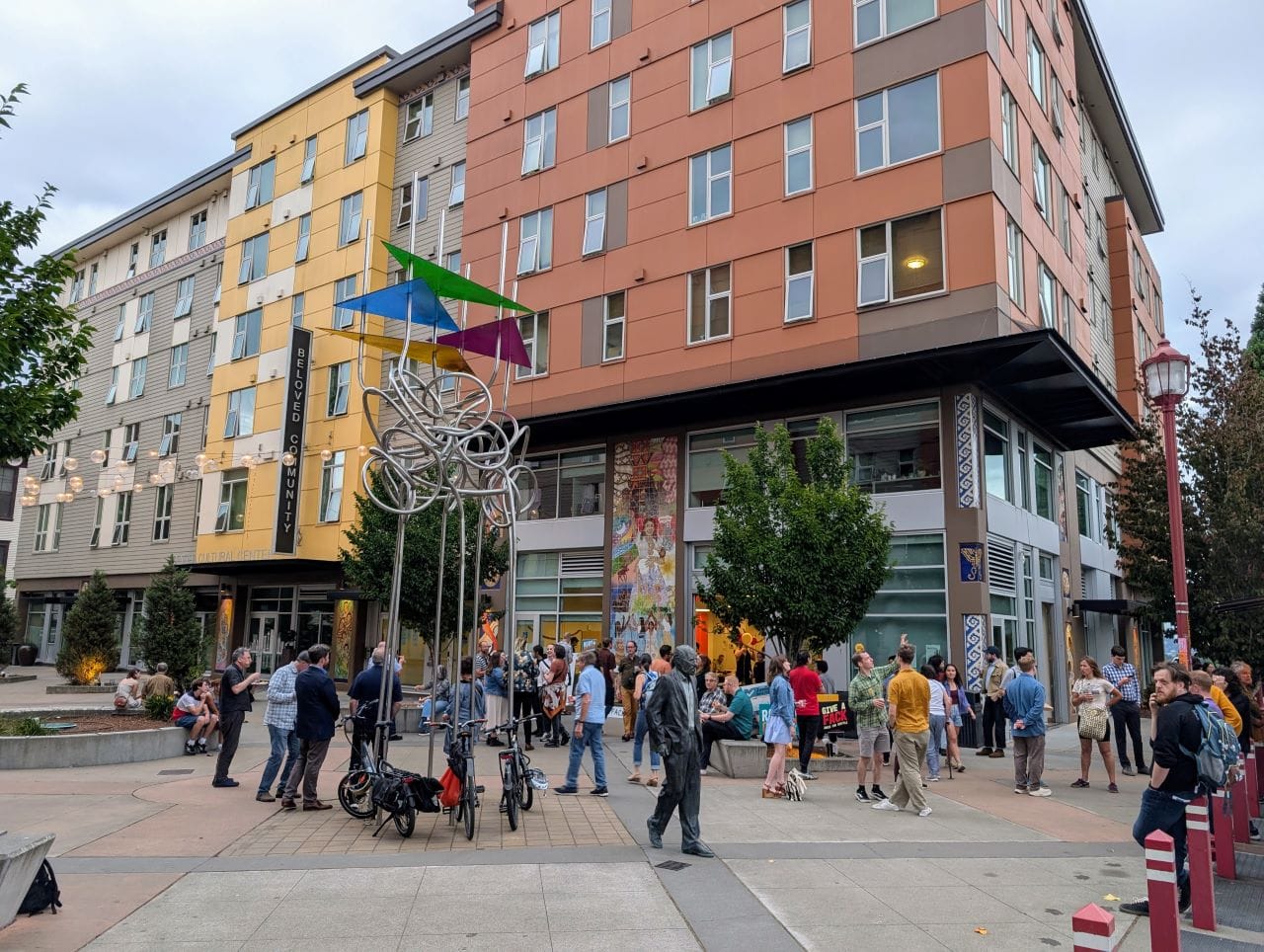
- News on the opening of and equitable transit-oriented development in Roosevelt;
- An update on the Green Lake Outer Loop; and
- Details on competing King Street Sounder platform improvements to be studied.
Staffing levels still mostly down at local transit agencies
Once again, transit agency operator staffing levels are largely down this month compared to August.
King County Metro is budgeted for 2,723 transit operators, including about 2,100 full-timers, but short about 163 operators. In the past month, however, many part-time operators moved into full-time roles, which will likely help with operations in addition to schedule changes that just went into effect.
| Month | Full-Time | Part-Time | Total |
| July | 1,982 | 585 | 2,567 |
| August | 1,982 | 578 | 2,560 |
| September | 2,002 | 558 | 2,560 |
Trainees: Nine part-timers currently in training. Addition five additional training classes of operators split between full- and part-time will begin over the next three months.
For Link 1 Line, staffing is seeing some fluctuations as Link operator numbers as well as reserve trainees. However, the number of Seattle Streetcar operators has held steady.
| Month | Streetcar Operators (including reserve) | Link Operators | Link Trainees |
| July | 31 | 105 | 11 |
| August | 31 | 104 | 9 |
| September | 31 | 98 | 4 |
Community Transit is down another seven operators for the month, continuing a trend of slow staffing shrinkage.
| Month | Full-Time | Part-Time | Total |
| July | 328 | 4 | 332 |
| August | 326 | 4 | 330 |
| September | 319 | 4 | 323 |
Trainees: 14 trainees are currently taking classes and will graduate between September and mid-November, depending upon when they started training.
Pierce Transit staffing levels were up slightly this month two net new full-time operators, but there’s hope that numbers will grow even more in the next few months. The agency has a target of 430 full-time operators and budgeted for 515 operators total.
| Month | Full-Time | Part-Time | Total |
| July | 430 | 8 | 438 |
| August | 424 | 0 | 424 |
| September | 426 | 0 | 426 |
Trainees: A class of 13 trainees graduated on September 6th and are not represented in the numbers in the table. Another class of 26 trainees started on September 12th and is the largest one this year — and in years, in fact.
Candidate RapidRide corridors may get study
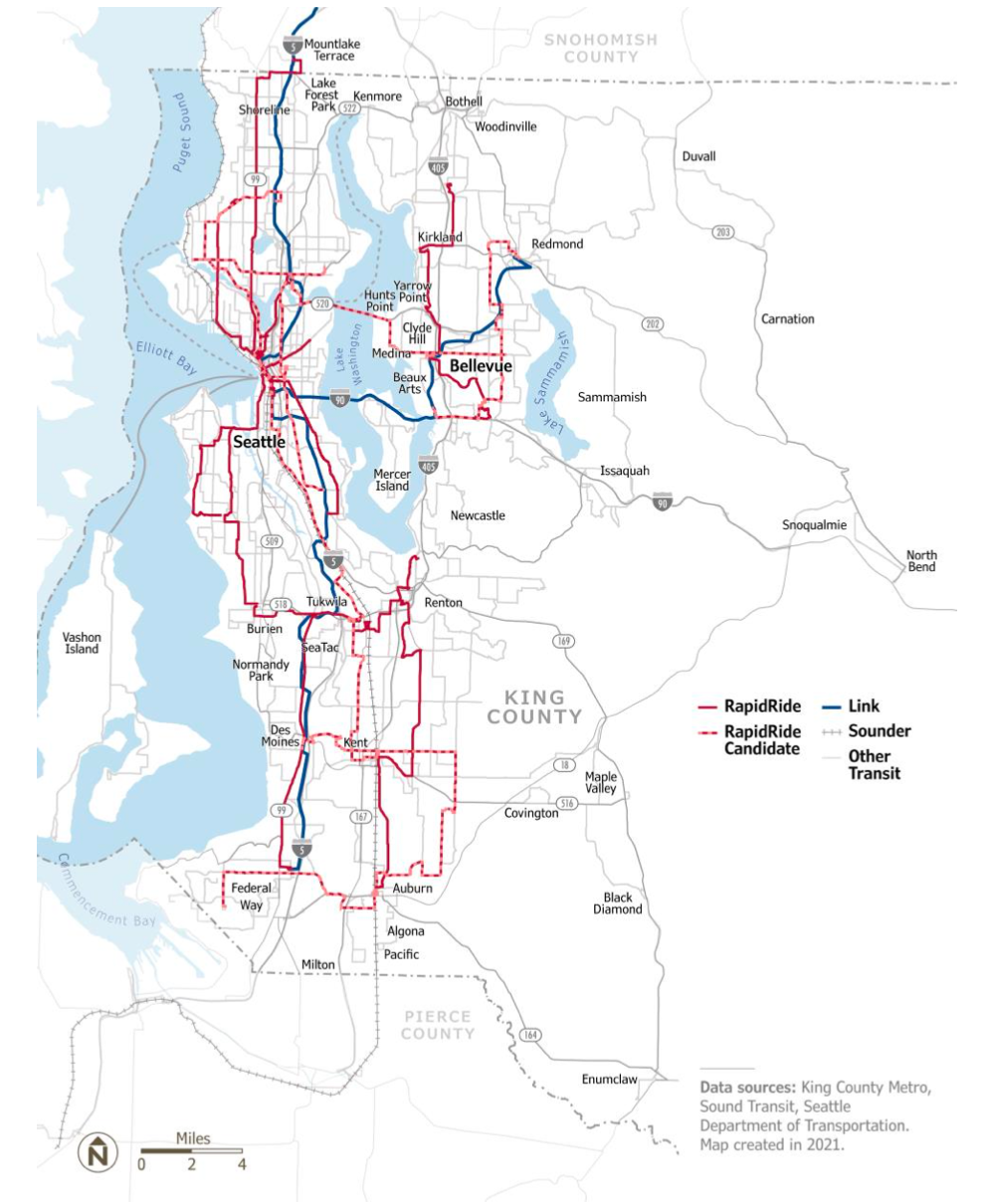
Next week, King County Metro will brief the Regional Transit Committee — a federated board of city and county officials — on candidate RapidRide corridors that the agency wants to study. Five to six corridors could be selected to advance to the study phase, setting them up for project development and implementation as part of Metro Connects’ 2035 Interim Network.
RapidRide is best characterized as an enhanced bus service with off-board payment capabilities, all-door boarding, higher service frequency and expanded span service, modest right-of-way priority, and lower stop frequency. It, however, generally ranks fairly low under the bus rapid transit standards.
Metro is already work on developing several RapidRide projects, including the G, H, I, and J Lines which are either under construction or soon to be and the K and R Lines which in the early project development phase. The G through J Lines have planned openings through 2026, but there is no set timing for construction and opening of the K and R Lines since there is no identified funding and implementation plan for them yet.
There are candidate corridors in the Metro Connects Interim Network plan, which are described in the following table:
| Metro Connects Corridor Number | Candidate Description |
| 1012 | This candidate project would be a new RapidRide line and follow much of the Route 44 corridor running from Ballard to Children’s Hospital via Wallingford and University District. |
| 1049 | This candidate project would be a new RapidRide line and follow much of the Route 150 corridor running from Kent to Downtown Seattle via Southcenter. |
| 1052 | This candidate project would be a new RapidRide line and follow much of the Route 181 corridor running from Twin Lakes to Green River Community College via Federal Way. |
| 1056 | This candidate project would be a new RapidRide line and follow much of the Route 165 corridor running from Highline College to Green River Community College via Ket. |
| 1064 | This candidate project would be a new RapidRide line and follow much of the Route 36 and 49 corridors running from Othello Station to the University District via Beacon Hill, First Hill, and Capitol Hill. |
| 1993 | This candidate project would be a new RapidRide line and follow much of the Route 40 corridor running from Lake City to Downtown Seattle via Northgate, Crown Hill, Westlake, and Ballard. |
| 1999 | This candidate project would be a modification and extension of RapidRide line and follow portions of the RapidRide B Line and Route 226 corridors running from Redmond to Eastgate via Overlake. |
| 3101 + 1028 | This candidate project would be a modification and extension of RapidRide line and follow portions of the RapidRide B Line and Route 271 corridors running from Crossroads to the University District via Downtown Bellevue and Medina. |
The study is expected to confirm representative alignments and develop clearer information on cost estimates, capital needs, and operation plans as well as develop a prioritization framework for the projects. The study should be delivered in early 2024.