This week’s Traspo Notes highlights: schedule changes to Link, statewide transportation package funding policy, a new trail segment in Bellevue, staffing challenges at King County Metro, and key transportation funding requests by Governor Jay Inslee.
Sound Transit making changes to Link schedules
Today, Sound Transit implements a revised schedule for Link 1 Line service. The agency says that the revised schedule will better reflect real-world travel times. However, the schedule revisions should have little impact on span of service and frequency. The changes essentially boil down to the following:
- Between Northgate and University of Washington Stations, nine minutes of travel time instead of seven minutes;
- Between University of Washington and Westlake Stations, seven minutes of travel time instead of six minutes;
- Between International District/Chinatown and Mount Baker Stations, nine to ten minutes of travel time instead of just nine minutes;
- Between Rainier Beach and SeaTac/Airport Stations, 13 minutes of travel time instead of 12 minutes; and
- Between SeaTac/Airport and Angle Lake Stations, three to four minutes of travel time instead of just four minutes.
On balance, that brings scheduled travel time increases along the line to four minutes with a total run time of about 57 minutes end to end.
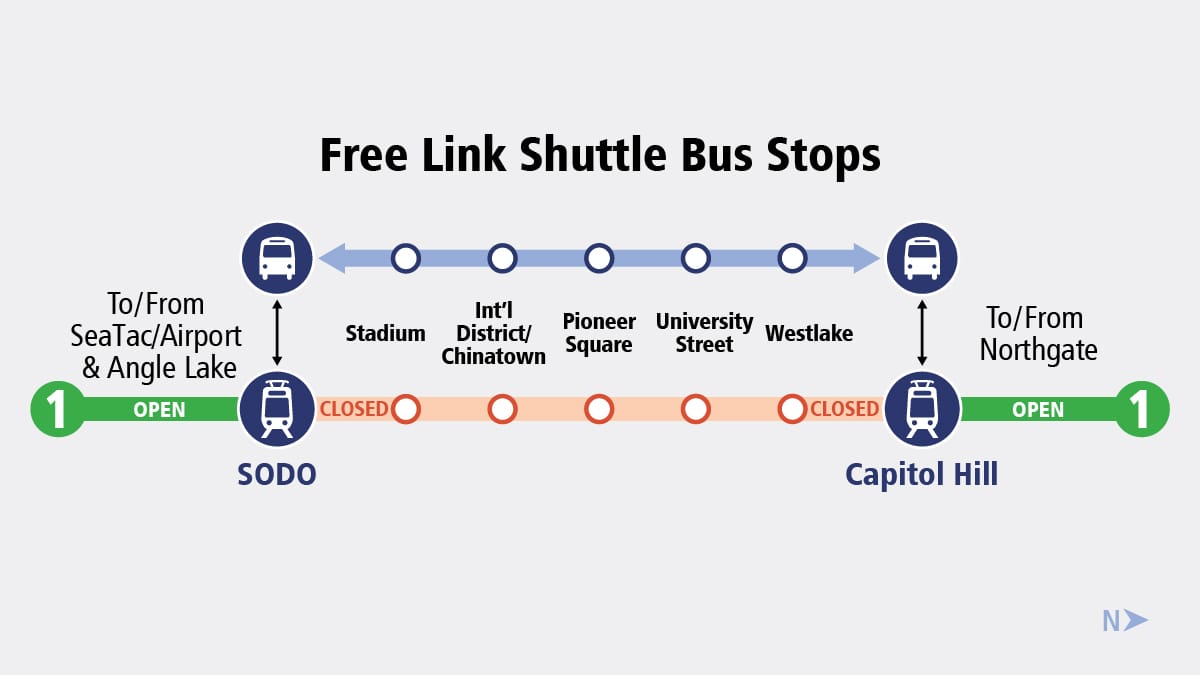
Also, Sound Transit plans to temporarily close stations in Downtown Seattle for the weekend of January 15th and 16th for maintenance. That will sever the light rail line in two between Capitol Hill and SODO Stations. Free shuttle bus service will bridge the divide with buses running every 15 minutes and stopping at all stations between the two segments running. This, however, will affect travel times for riders, which may make streetcar and local bus service better options.
Senate Democrats retreat from a gas tax increase
In a statement Friday, Senator Marko Liias (D-21st District) said that he would not include a gas tax increase as part of transportation funding package if he has his way. “As we begin the 2022 session, I want to be clear that any transportation package I introduce in the Senate this year will not include a new gas tax,” he said. “We can maintain and fund projects like the I-5 Columbia River Bridge, ensure the timely delivery of Stride bus rapid transit on I-405, and more while investing in accessible and equitable transportation services without a new gas tax.” The statement came in a press release from Washington Senate Democrats, which could indicate that the position is widely shared by members of the majority party.
Liias now serves as Chair of the Senate Transportation Committee and controls much of the transportation policy levers in the chamber. Setting aside the gas tax certainly would seem to complicate designing and passing a statewide transportation package. It has traditionally been the easiest funding tool at the state level given that car tab fees and motor vehicle excise taxes are perennially fought as funding sources. Even former Senator Steve Hobbs (D-44th District) planned to significantly bankroll his highway-heavy transportation packages by increasing gas taxes.
In explaining why he opposed using the gas tax as a potential funding source, Liias pointed to supposed economic pressures. “As our state continues to confront and recover from the pandemic, working class families still face the brunt of the economic burden,” he said. “In light of these challenging times, it is imperative that we put people first to invest in communities and projects across the state without punting the cost to those struggling the most.” It’s not clear what funding sources might be used instead, but Democrats have recently been trying to reduce prices at the gas pump. President Joe Biden even tapped the nation’s Strategic Petroleum Reserve to flood the market with cheaper oil in recent months. However, higher fuel prices generally reduce consumption and thereby reduce driving and pollution. Proceeds from the gas tax have also taken a hammering in recent years with higher vehicle fuel efficiency and the pandemic both reducing tax collection.
How both chambers of the legislature and governor hash out a deal will be something to watch for this year. If they fail to do so but the legislature succeeds in its lawsuit against Governor Jay Inslee’s line-item veto, which severed the Clean Fuels Standard from passage of a new statewide transportation funding package, that could lead to very real environmental harms by delaying implementation of the law.
New Mountains to Sound Greenway trail segment opens
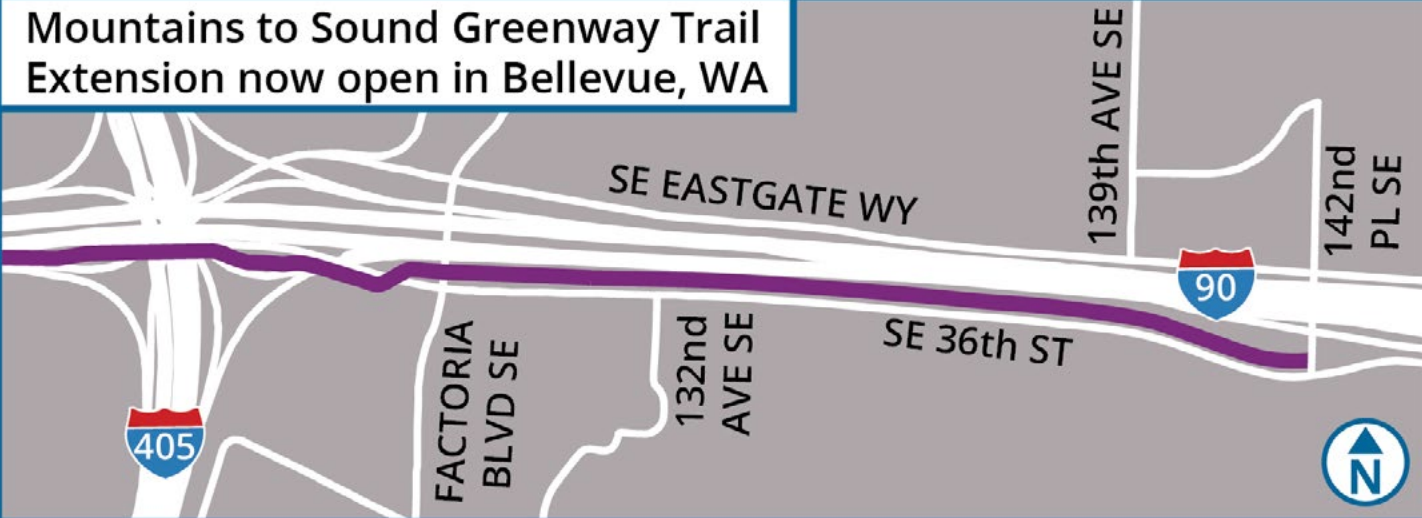
Also on Friday, a new segment of the Mountains-to-Sound Greenway Trail opened in Bellevue. It adds 1.2 miles of trail between I-405 and 142nd Place SE. The segment includes a new tunnel under the I-405-to-I-90 eastbound ramps. There’s also a new 12-foot wide pedestrian and bicycle bridge over Factoria Boulevard SE. Together, these improvements help trail users remain fully separated from motorists and intersections. The remainder of the trail extension follows along the south side I-90 to 142nd Place SE. Trail users can also link up to the Lake Washington Loop Trail and Eastrail via 118th Avenue SE west of the I-90/I-405 interchange and continue on the western portion of the I-90/Mountains-to-Sound Greenway Trail.