This Transpo Notes roundup touches on a mix of transit stories, including:
- ORCA now offering one trip protection;
- Pierce Transit’s evaluation of bus rapid transit expansion alternatives;
- Sound Transit’s maintenance program starting next week;
- Puget Sound transit operator July staffing levels; and
- Community Transit and Pierce Transit’s free youth fare proposals.
ORCA cards now offering one trip protection
On Tuesday, ORCA announced a new trip protection program where riders can exceed their e-purse balances on a limited basis. The goal is to ensure that riders aren’t left stranded when making a trip and have valid fare for their journeys. The program will allow riders to travel with a negative balance of up to -$2.75. As an example, the typical rider traveling from Northgate Station to Angle Lake Station on Link would pay $3.50 for the entire trip, but could have a starting balance of $0.75 on ORCA e-purse and pay the remainder using the full trip protection of -$2.75. Riders will need to reload their ORCA cards to make additional trips. Initially, ORCA will be allowing riders to hold a negative balance of up to -$10.00, but this will change in September when the limit will go to -$2.75.
Pierce Transit shares details on future bus rapid transit expansion
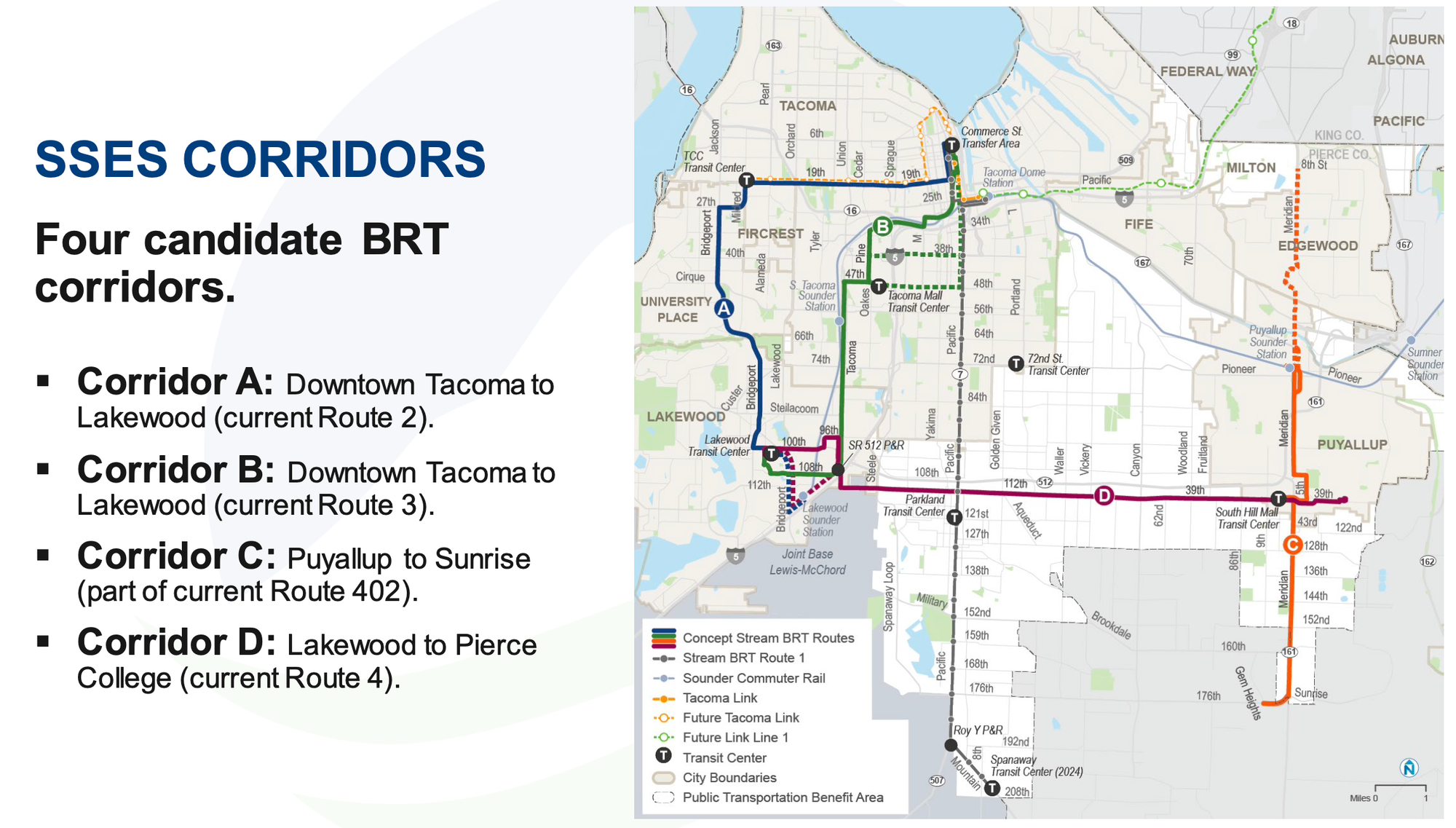
On June 29th, Pierce Transit shared details on early results for future Stream bus rapid transit (BRT) expansion. Four potential corridors are under evaluation for BRT deployment in the coming decades. A first Stream BRT line is expected to be launched in 2027 along the SR 7 corridor, meaning that five lines could be in operation by the 2040s.
According Pierce Transit’s report, Corridor A has the highest ridership potential of all expansion corridors even though it’s not the longest potential corridor. The evaluation suggested several different alternatives by corridor, as follows:
- Corridor A: Alternative A from Downtown Tacoma to Lakewood Transit Center via S 19th Street and Bridgeport Way W/SW, Alternative A1 same as Alternative A but with an extension to Lakewood Sounder Station, and Alternative A2 from Tacoma Community College to Lakewood Transit Center;
- Corridor B: Alternative B from Downtown Tacoma to Lakewood Transit Center via S Tacoma Way and 108th Street SW, Alternative B1 same as Alternative B but via Pacific Avenue and S 38th Street/S 47th Street, and Alternative B2 same as Alternative B but via Pacific Avenue and S 48th Street;
- Corridor C: Alternative C from Puyallup Sounder Station to Sunrise via Meridian and Alternative C1 same as Alternative C but extended to Edgewood via Meridian.
- Corridor D: Alternative D from Lakewood Transit Center to Pierce College via 100th Street SW, S Tacoma Way, and 112th Street S/E, Alternative D1 same as Alternative D but terminating at South Hill Mall Transit Center, and Alternative D2 same as Alternative D but extended to Lakewood Sounder Station.
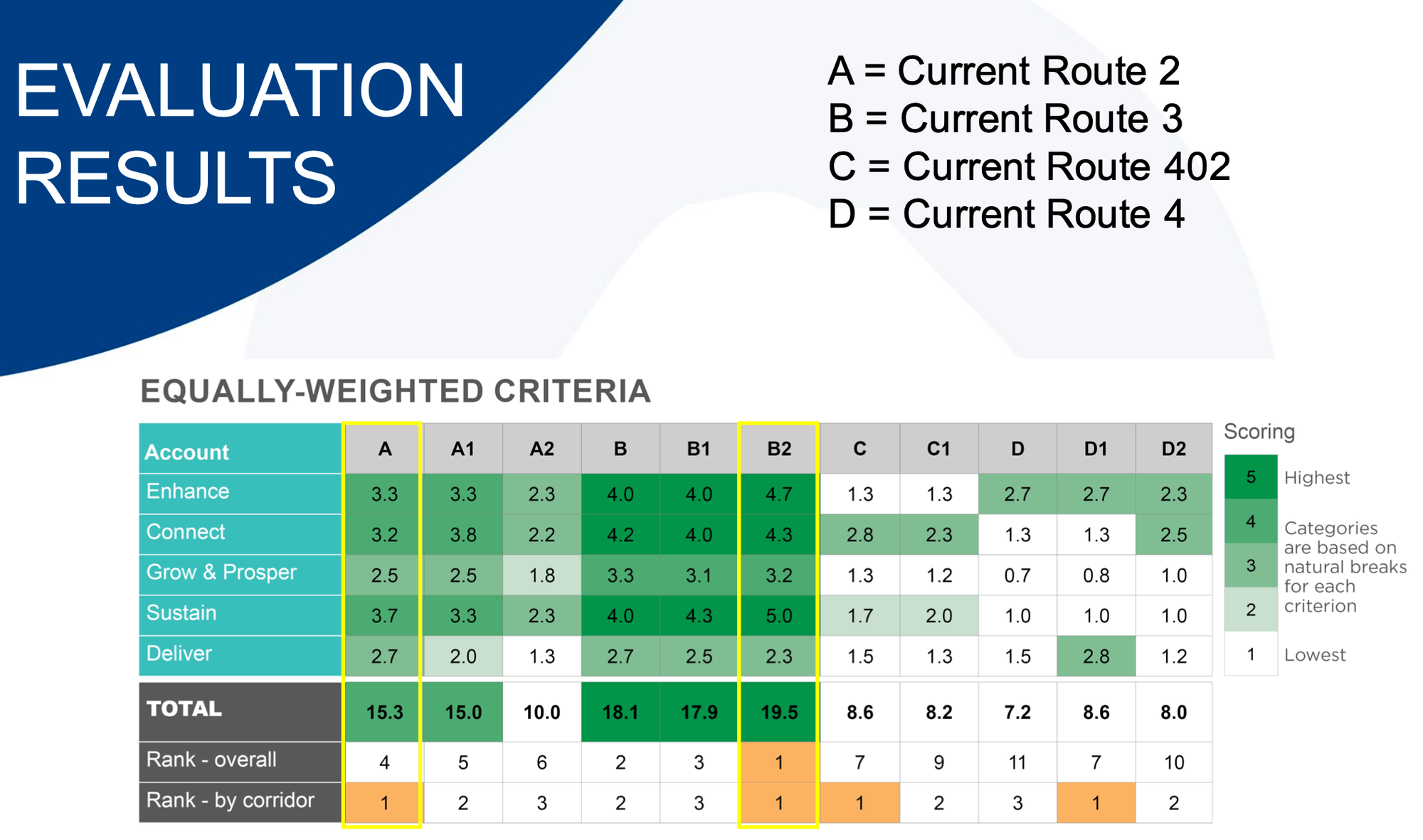
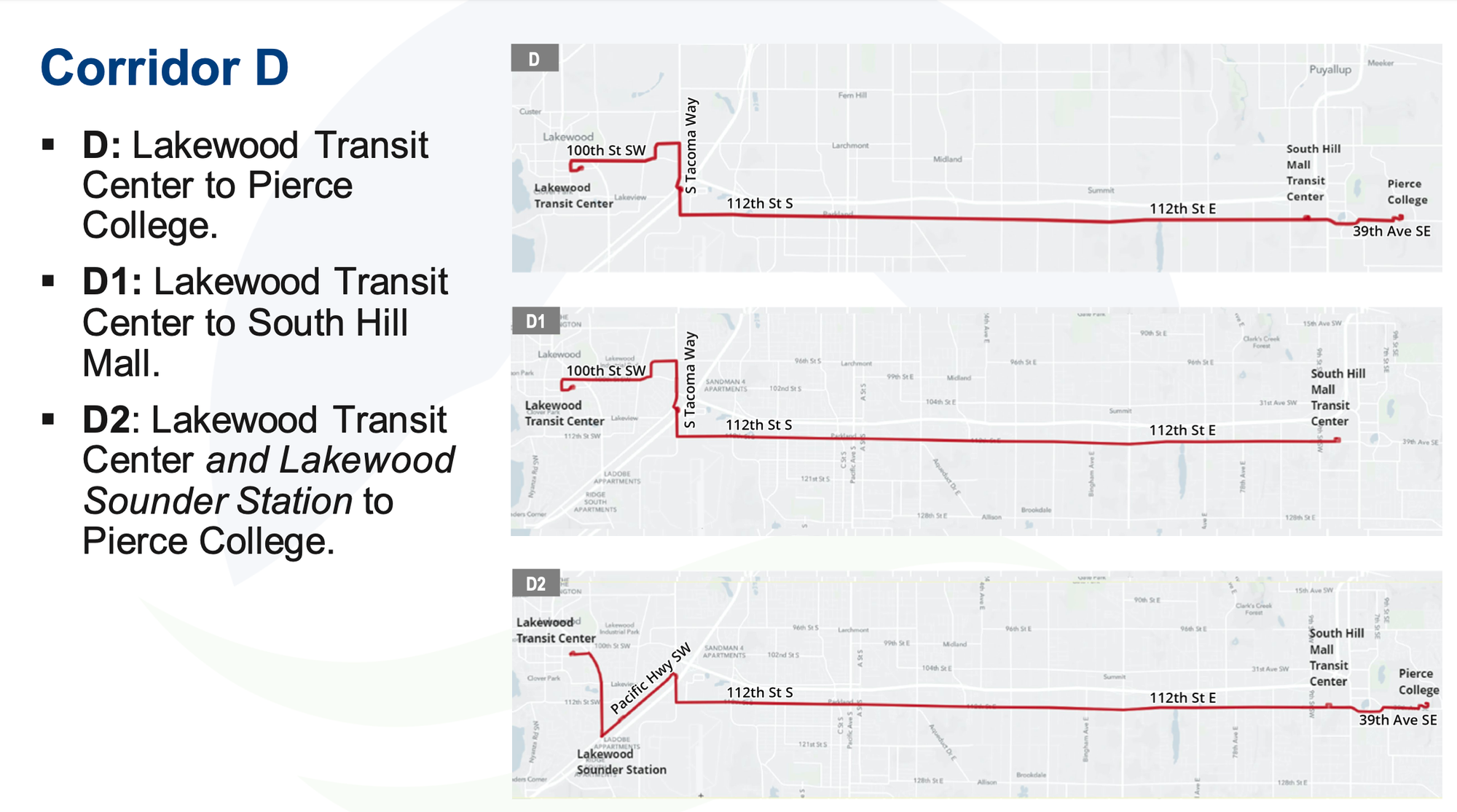
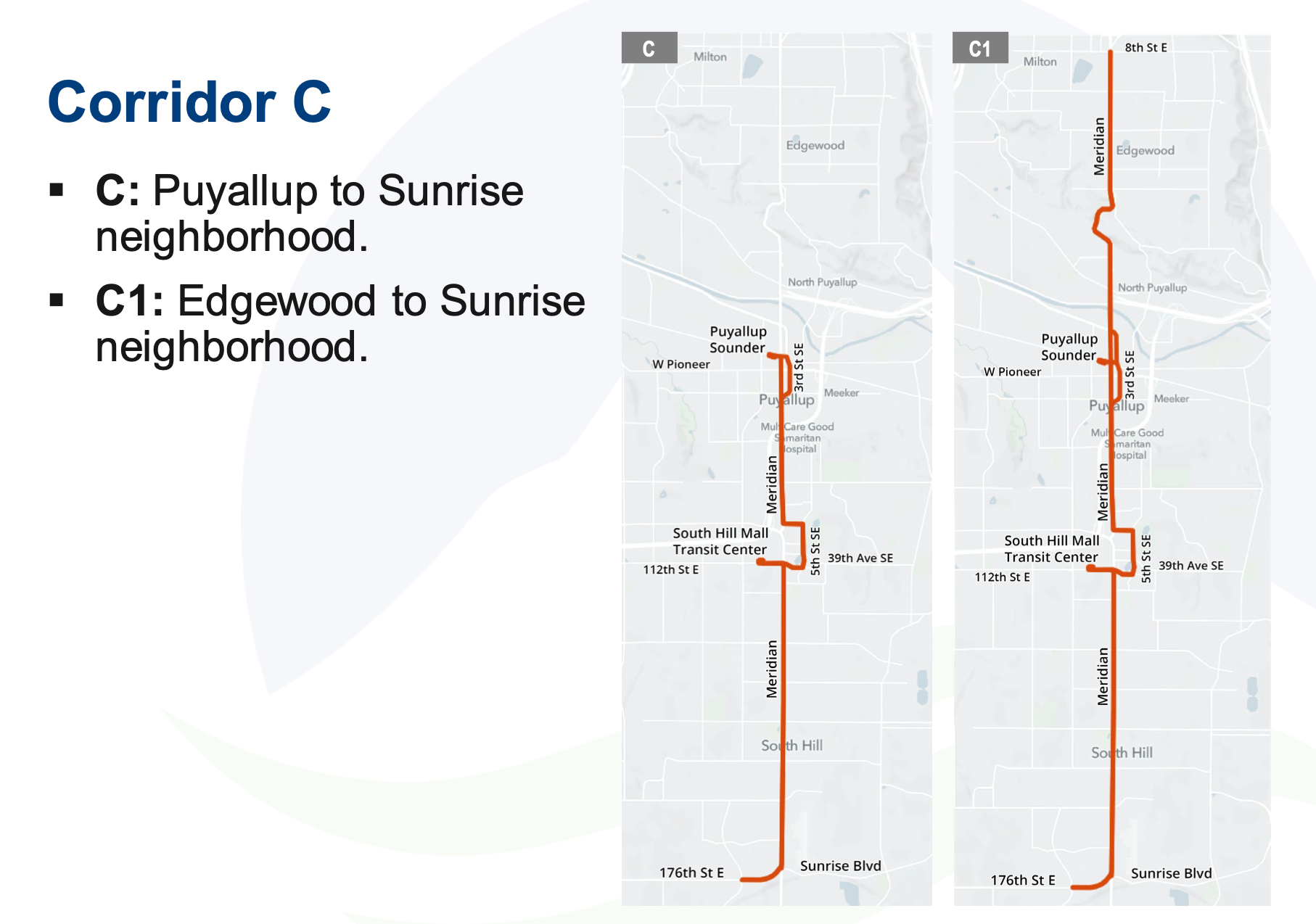
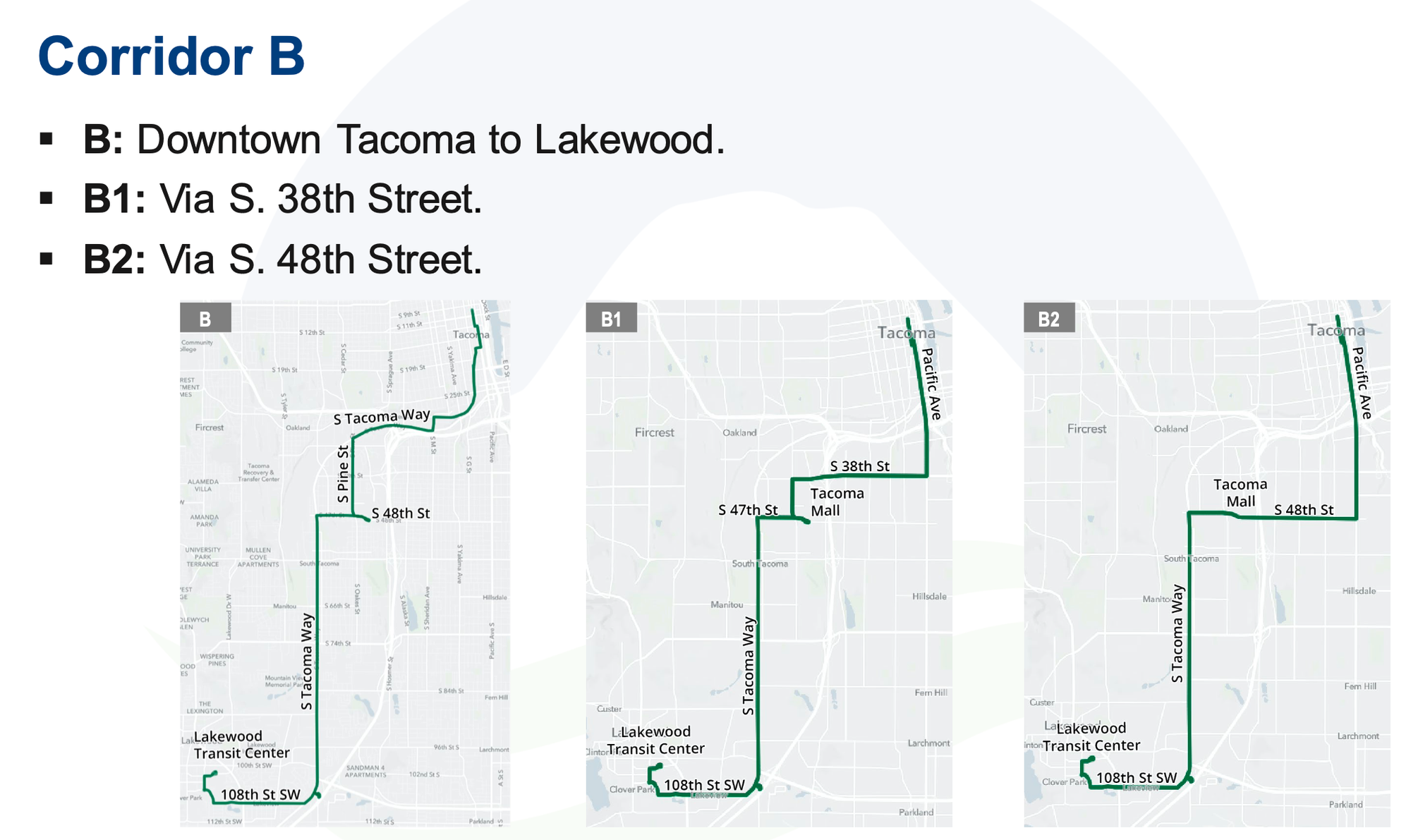
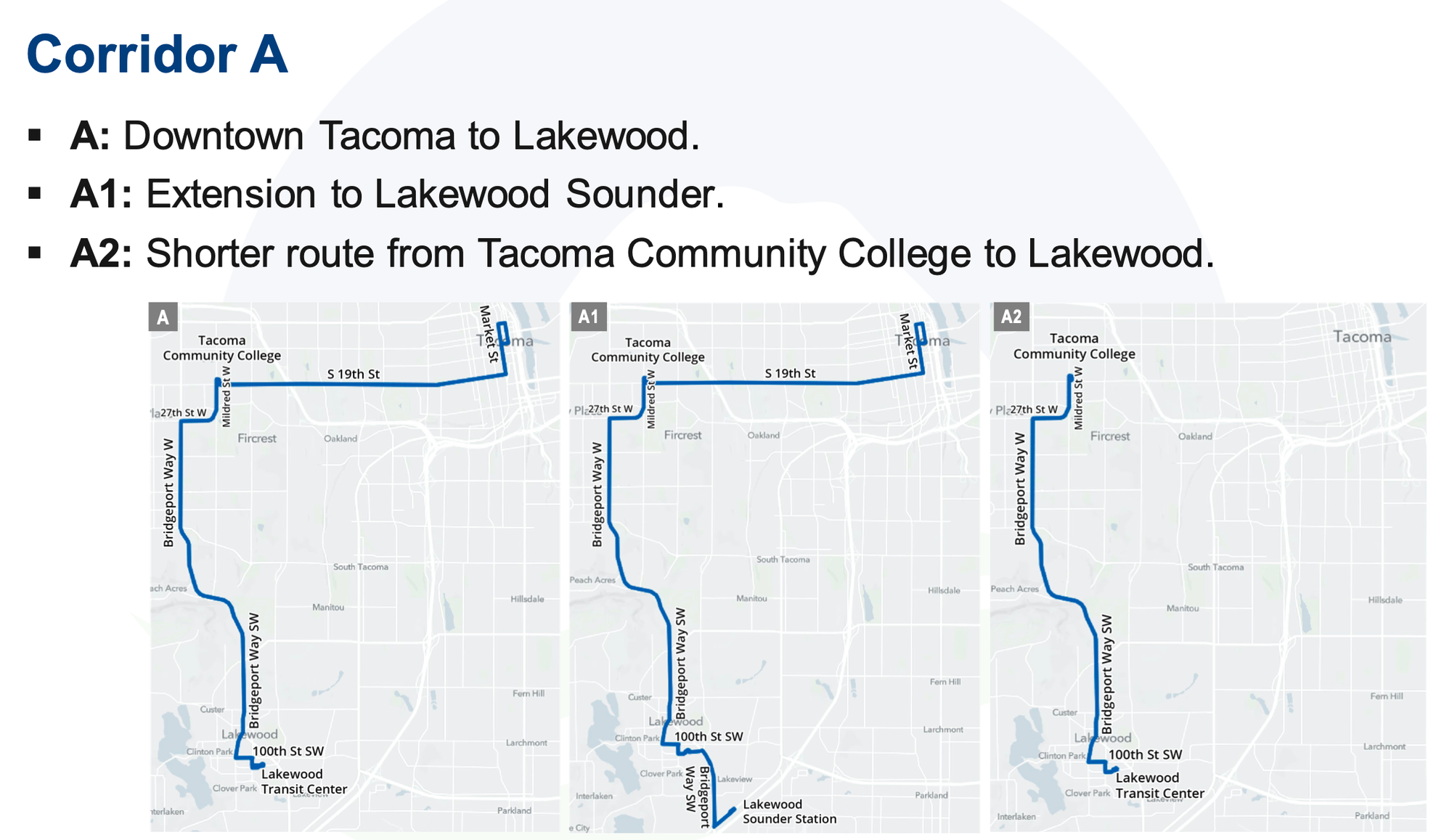
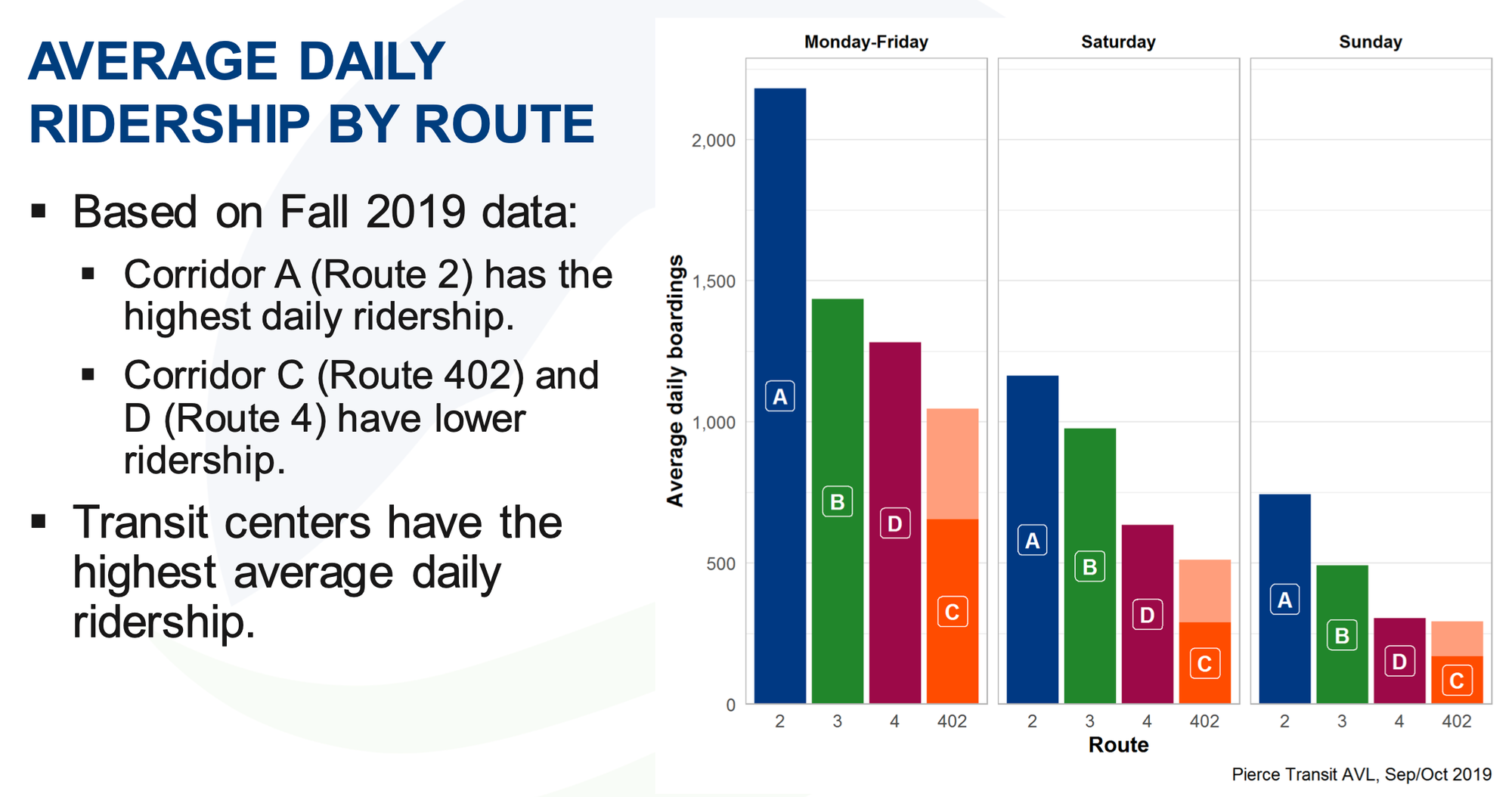
The evaluation results take into account connections, sustainability, growth, and other factors to determine the best alternatives. Of each corridor, Alternatives B2, A, C, and D1 — when ranked in order — performed best on the weighted metrics. However, in context, it is surprising that Alternatives A and D1 outperformed Alternatives A1 and D2, which would serve the Lakewood Sounder Station. That connection seems relatively critical for the future. Additionally, the S 19th Street segment on Corridor A could quickly become redundant to the T Link extension planned for somewhere between 2039 and 2041 on the same street, but perhaps this could encourage Sound Transit to move the streetcar alignment to 6th Avenue, which is a comparably higher density corridor.
The second Stream BRT line will move into project development sometime in 2023 or 2024. A final evaluation report due by the end of year should help determine what corridor moves into project development.
Sound Transit’s ‘Future Ready’ maintenance starts next week
Beginning on Monday, July 11th, Sound Transit’s first wave of “Future Ready” maintenance work will commence. The work will be focused on platform tile and mortar replacement over a two-week period at Columbia City Station that runs through July 24th. A second round of work at the station is scheduled from August 19th through September 1st.
During the work, Sound Transit will be running reduced Link 1 Line service with trains operating between Northgate and Angle Lake Stations every 20 minutes and layering on additional service between Northgate and Stadium Stations such that combined frequency is every 10 minutes between the latter two stations. The additional service will run from 6:00am to 10:00pm daily, meaning outside those hours 20-minute frequencies will be in effect.