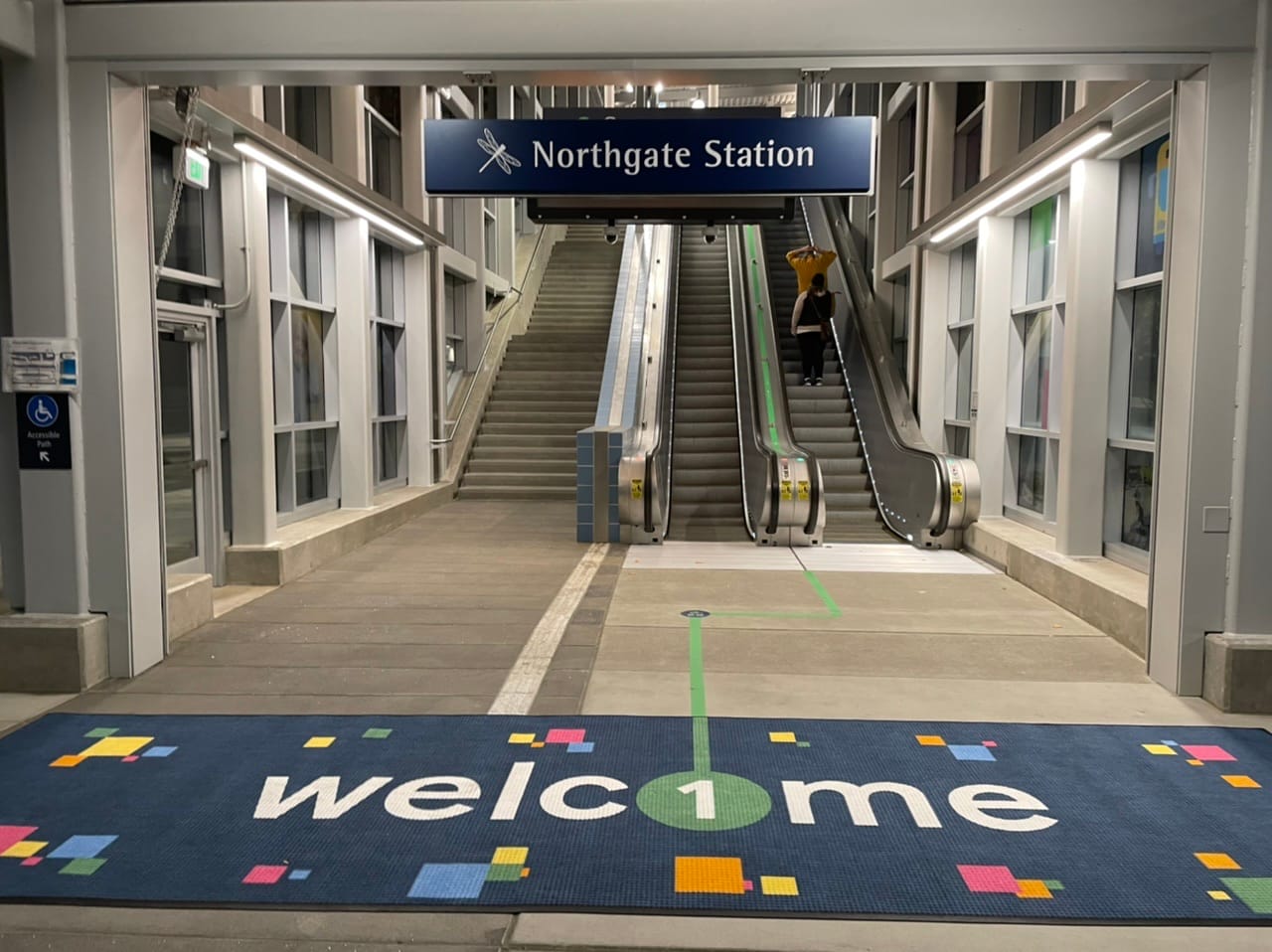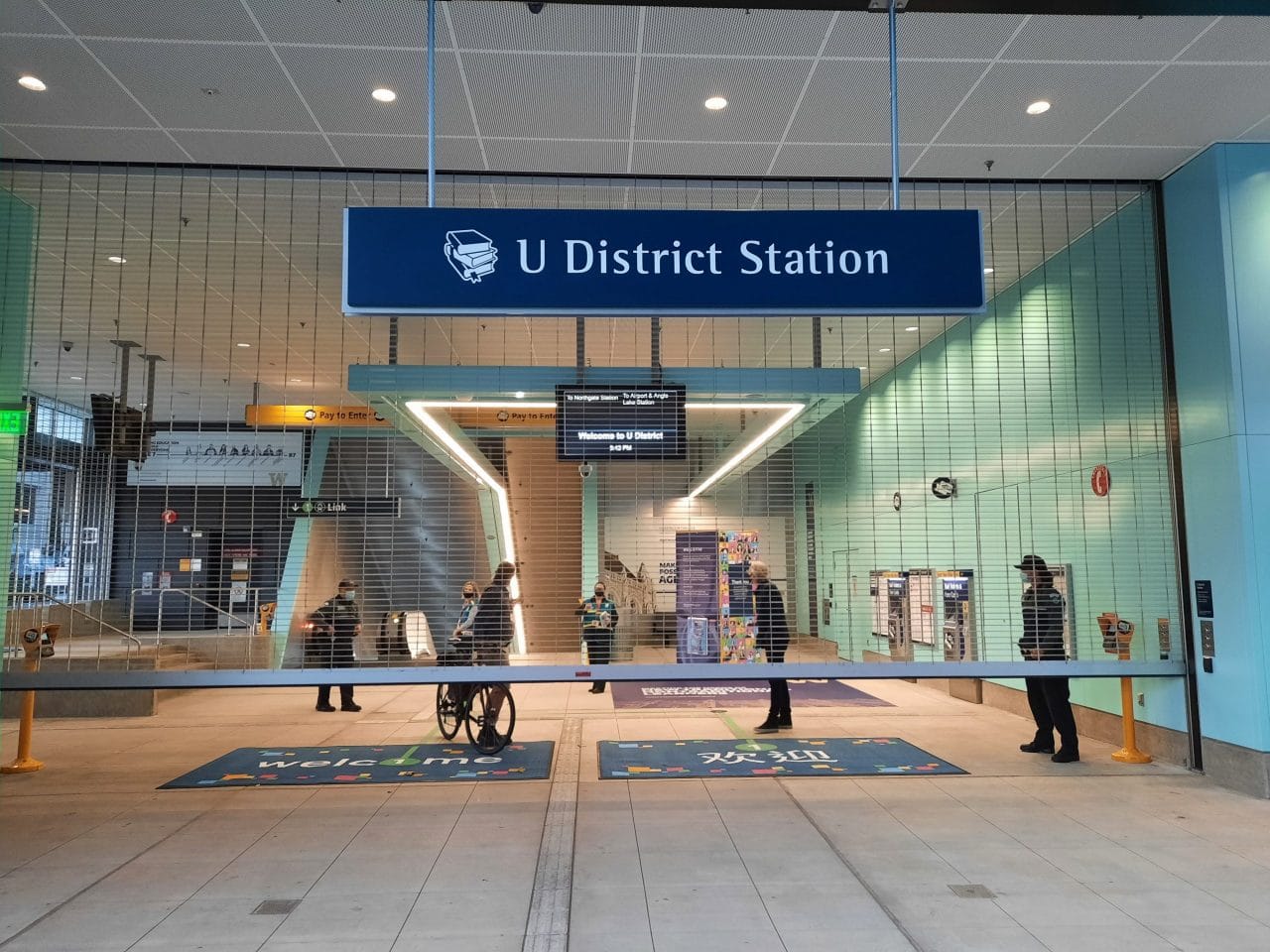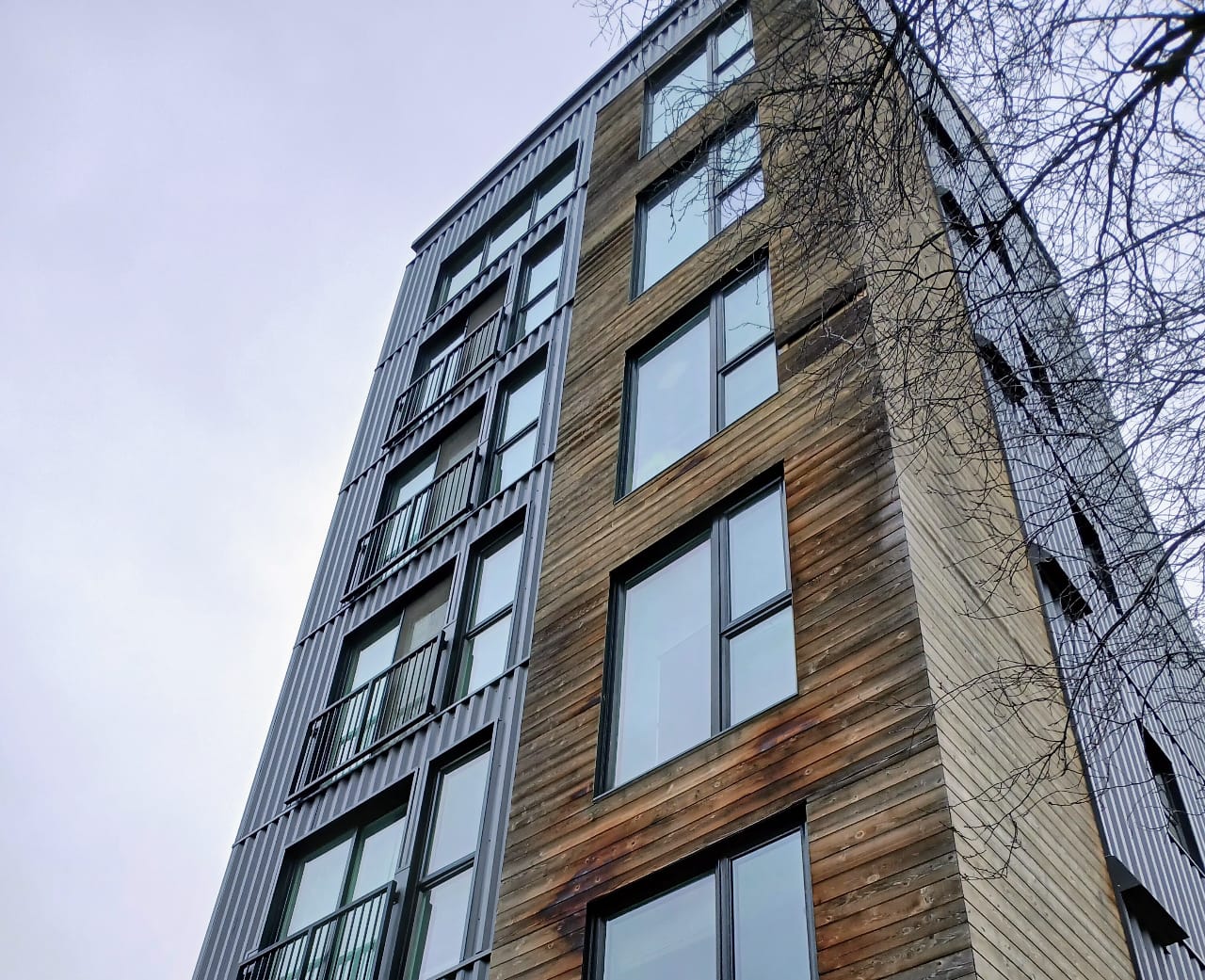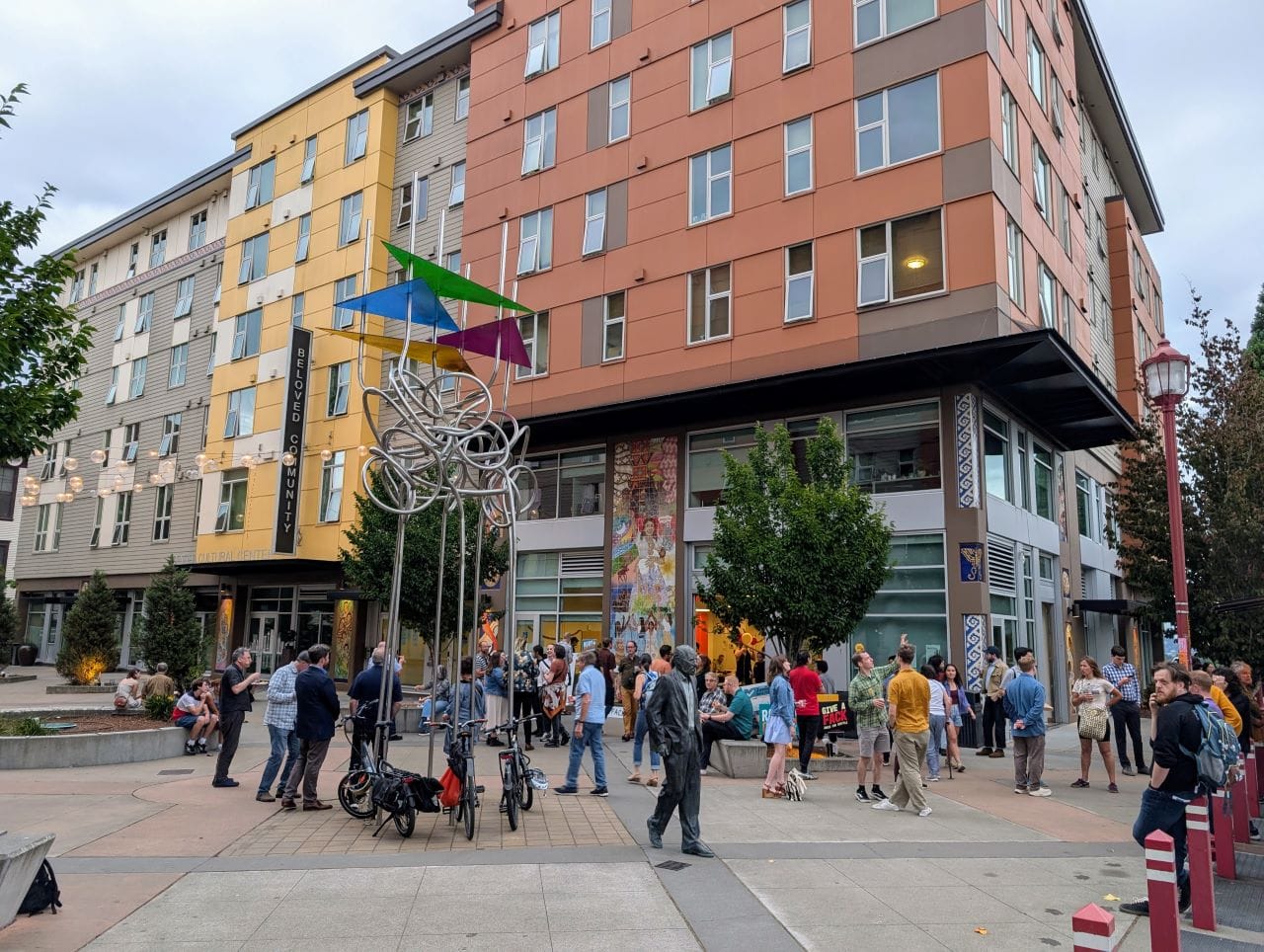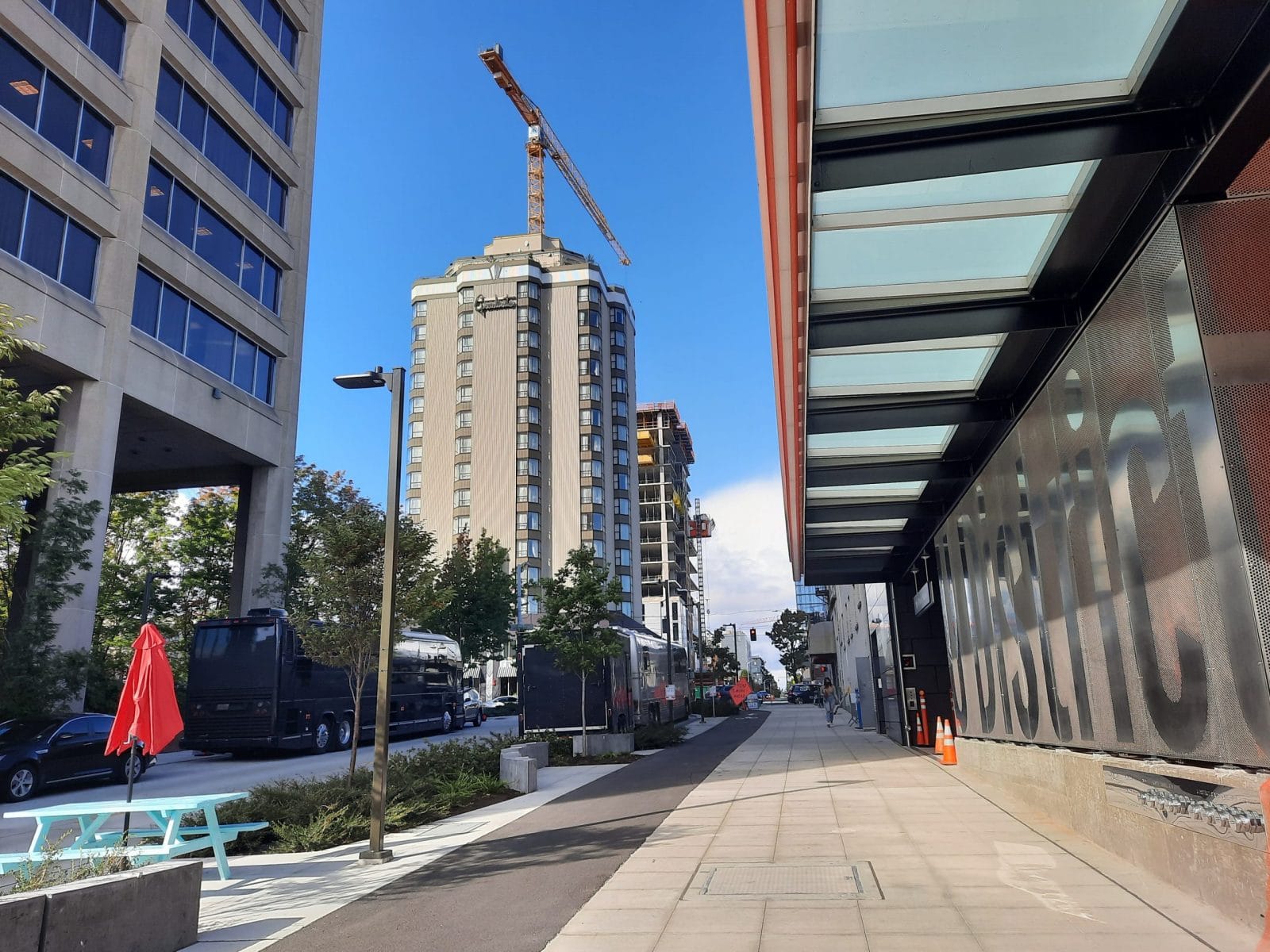
Northgate Link, which just opened as of today, has already transformed the neighborhoods surrounding the three stations on the extension. Northgate Station still does feel like it’s plopped into a mall parking lot, though that will change in time. Roosevelt feels the most completed, having undergone a transition to midrise development over the past five years. The U District, however, feels like one big construction zone with highrises and other large projects going up in all directions. It feels like a burgeoning city in its own right.
The Urbanist has covered this trend as it unfolded, from the initial U District rezone in 2017 to the first tower winning design approval in 2018 to an early development roundup in late 2019 and a comprehensive update in June. The U District has added 2,173 new homes since 2015 and has about twice as many in development. That puts U District well ahead of the other neighborhoods getting a light rail station on Saturday. In his recent development updates, Shaun Kuo tallied more than 4,000 homes new, under construction, or in permitting in Northgate and another another 3,300 in Roosevelt since 2015, but U District is on another level, with more than 6,000 homes completed, underway, or in permitting.
Most of the new units in Northgate are still under construction or in permitting, but Roosevelt has already seen 1,626 new housing units since 2016, a 95% increase, Mike Lindblom reported. Impressive, but the U District still reigns supreme and has much more on the way.
Either station entrance provides a great view of the transformation, with half a dozen towers rising along Brooklyn Avenue. The north entrance is next to Neptune Theater and opposite UW Tower, U District’s tallest tower at 325 feet, though it may soon have company given the new 320-foot and 240-foot zoning in the core of the neighborhood.
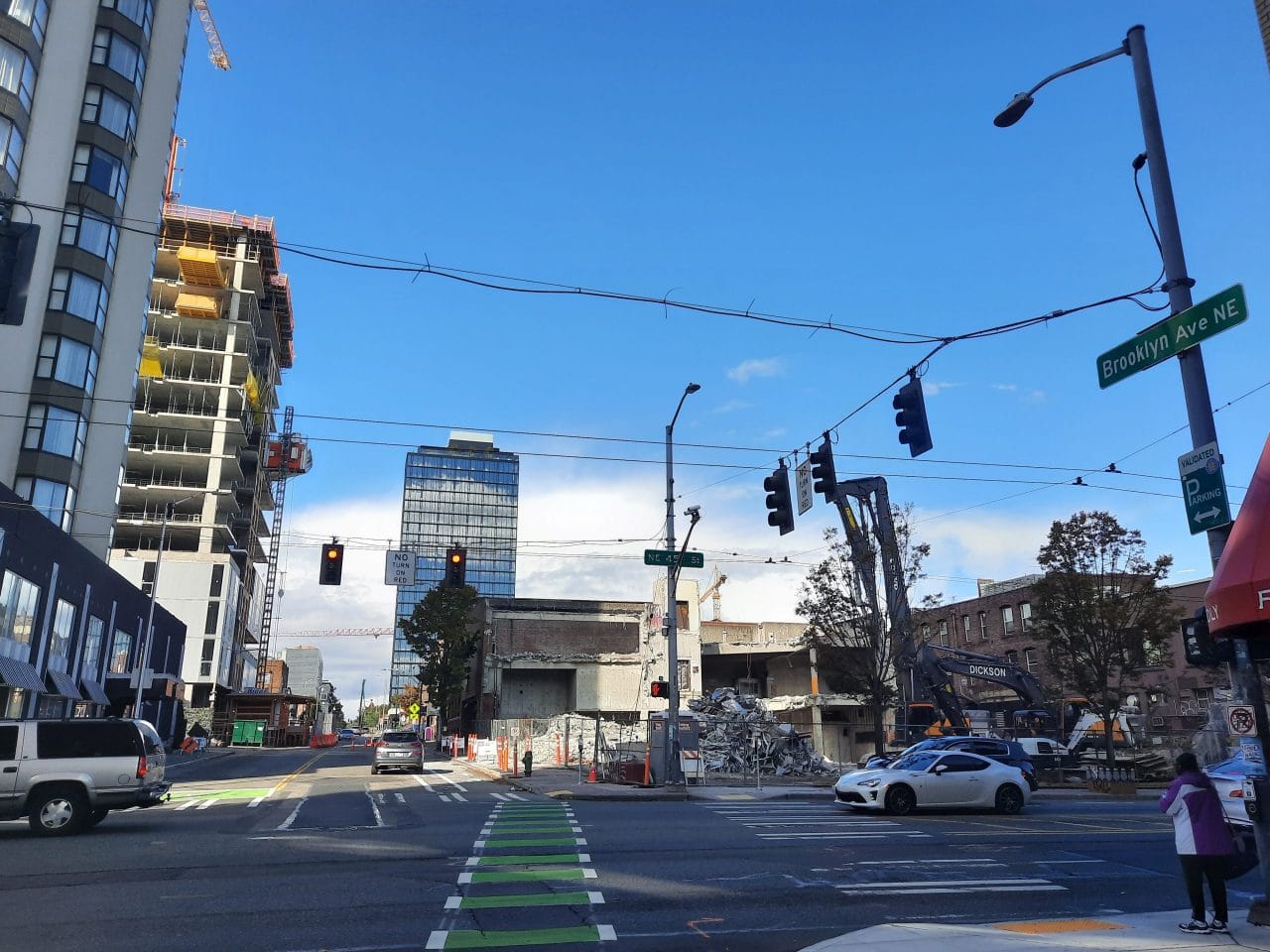
Since most of this wave of development happened via Mandatory Housing Affordability (MHA) inclusionary zoning program, it also has come with major contributions to affordable housing. Developers have mostly opted to pay into the City’s affordable housing trust fund rather than set aside affordable MHA units inside their projects, but the influx of money has helped the City boost investments in social housing. With all the U District construction projects and proposals tallied, Kuo counted $133 million in MHA contributions. For U District highrises, MHA requires either setting aside 9% of units for tenants making less than 60% of area median income or paying a fee of $25.79 per square foot of gross floor area — the fee is adjusted annually to keep pace with inflation.
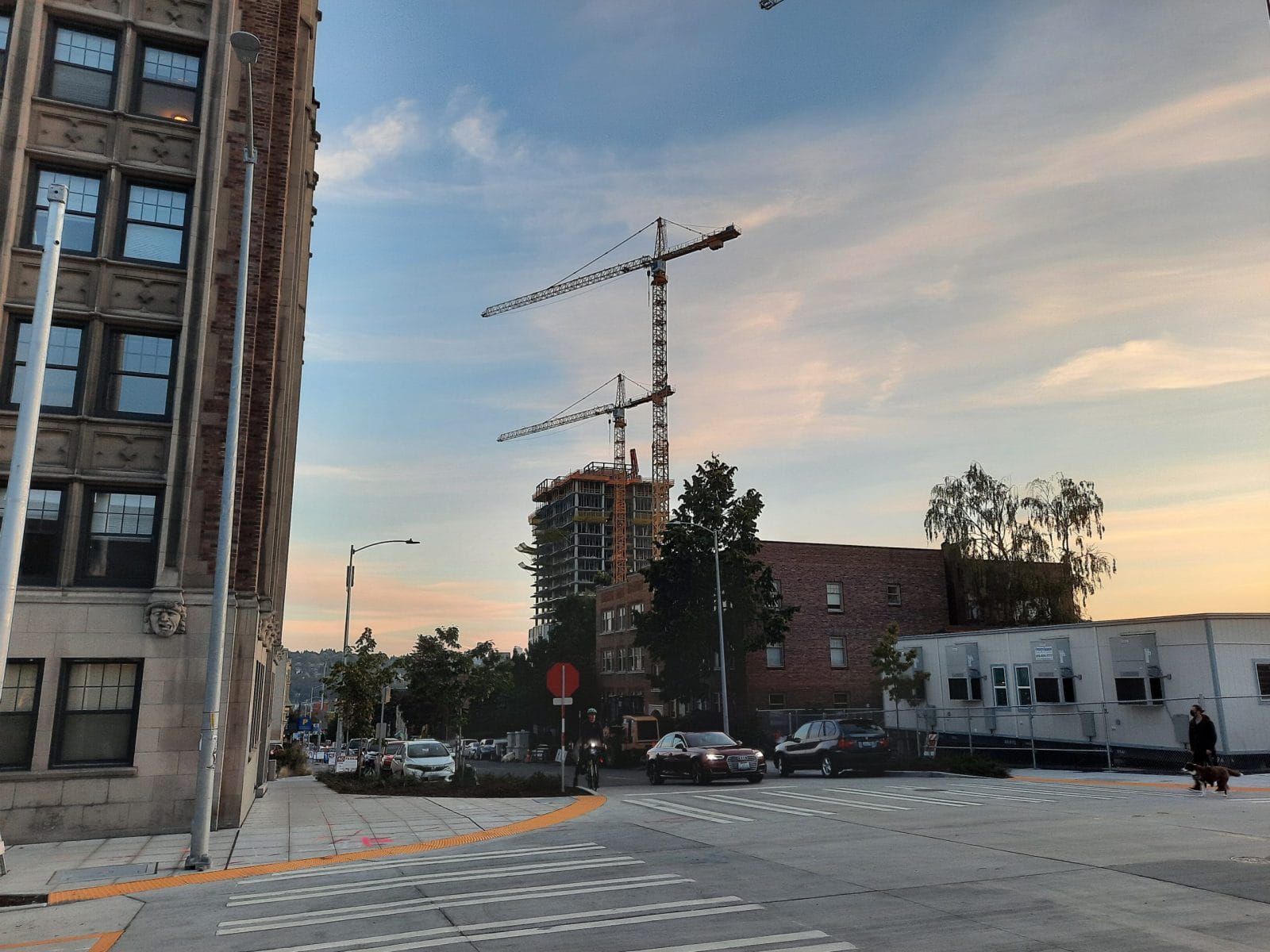
A growing neighborhood for a growing campus
Though station construction is complete, the area between the two station entrances will become a future construction site for a 13-story office building that will rise above the underground station and serve the University of Washington’s (UW’s) growing needs as part of the its plans for ambitious growth over the next decade.
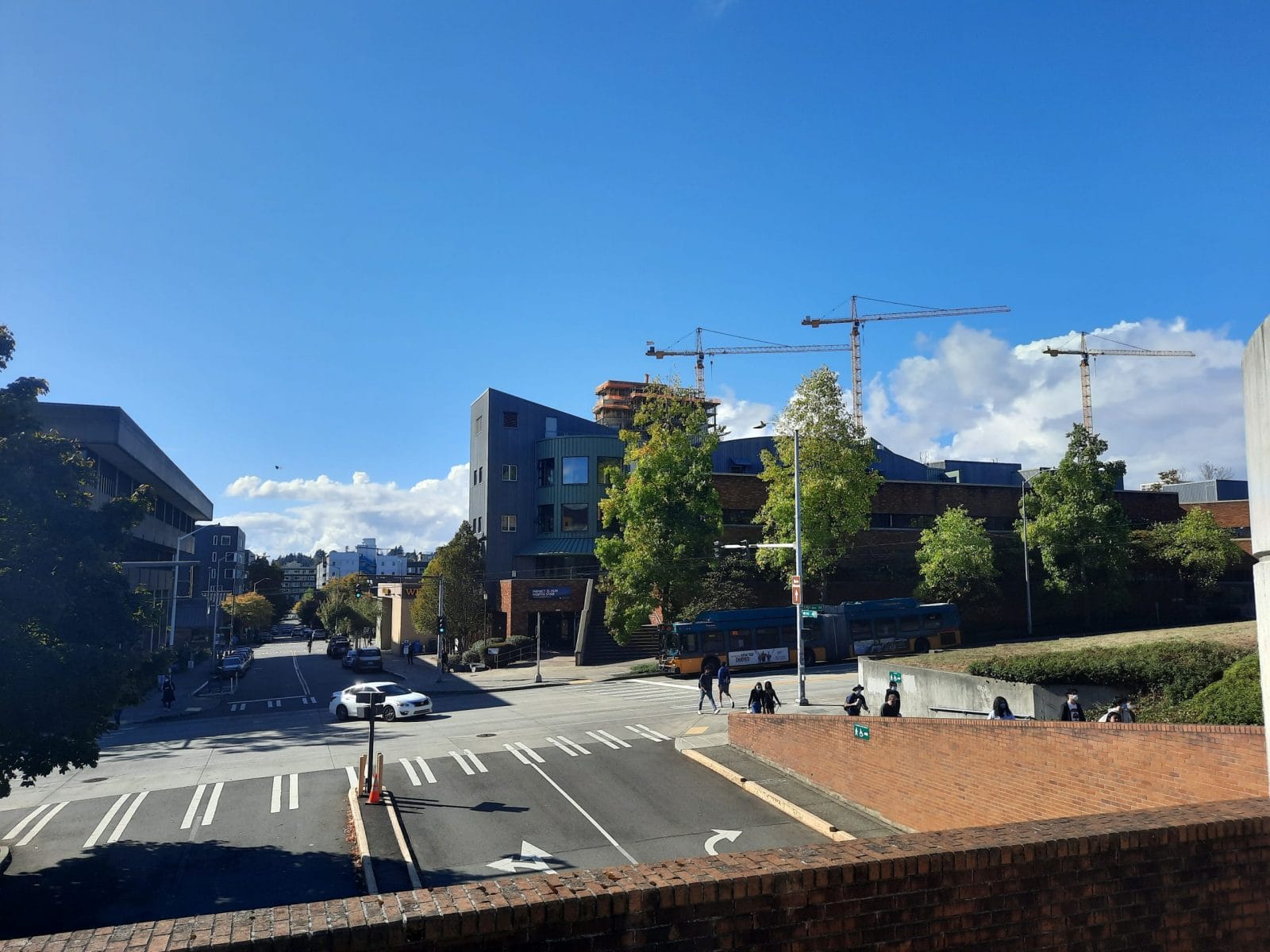
“The university is growing rapidly and planning to add space for thousands of additional students in its master plan–already more than 32,000 undergraduates and 14,000 graduates are enrolled at the Seattle UW campus.” The Urbanist reported in 2019 “The university estimates that space needs at the main campus will grow through 2028 as another 8,675 students and 4,649 faculty are added. That equates to 20% growth over the total student and faculty population of 67,155 today.” The pandemic may have disrupted those goals a bit, but the University is welcoming students back to campus this fall and expecting its momentum to return.
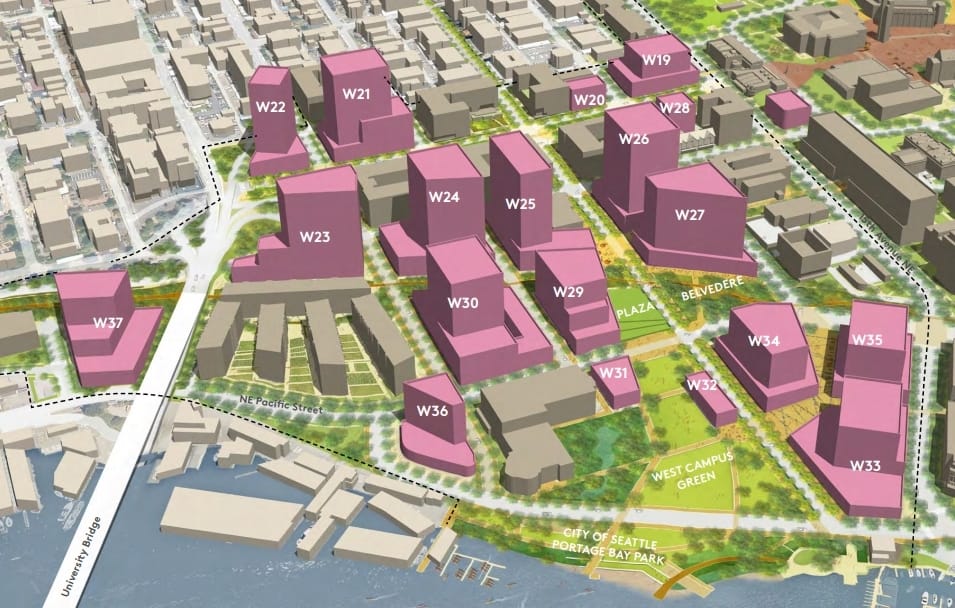
To achieve this 20% growth in campus population, UW is also embracing high-rise development on its campus to fit all the new classroom space. Shaun Kuo detailed some of the large new projects in the works on campus, with UW aiming to add six million square feet of space in a decade. The West and South quadrants of campus would get much of the highrise attention, with towers of up to 240-feet envisioned.
Mapped below are the towers and some of the larger midrise projects on the way in the U District. Orange boxes denote construction sites, while the dark gray boxes are still in the design review and permitting process. Purple connotes completed towers, just “The M” so far.