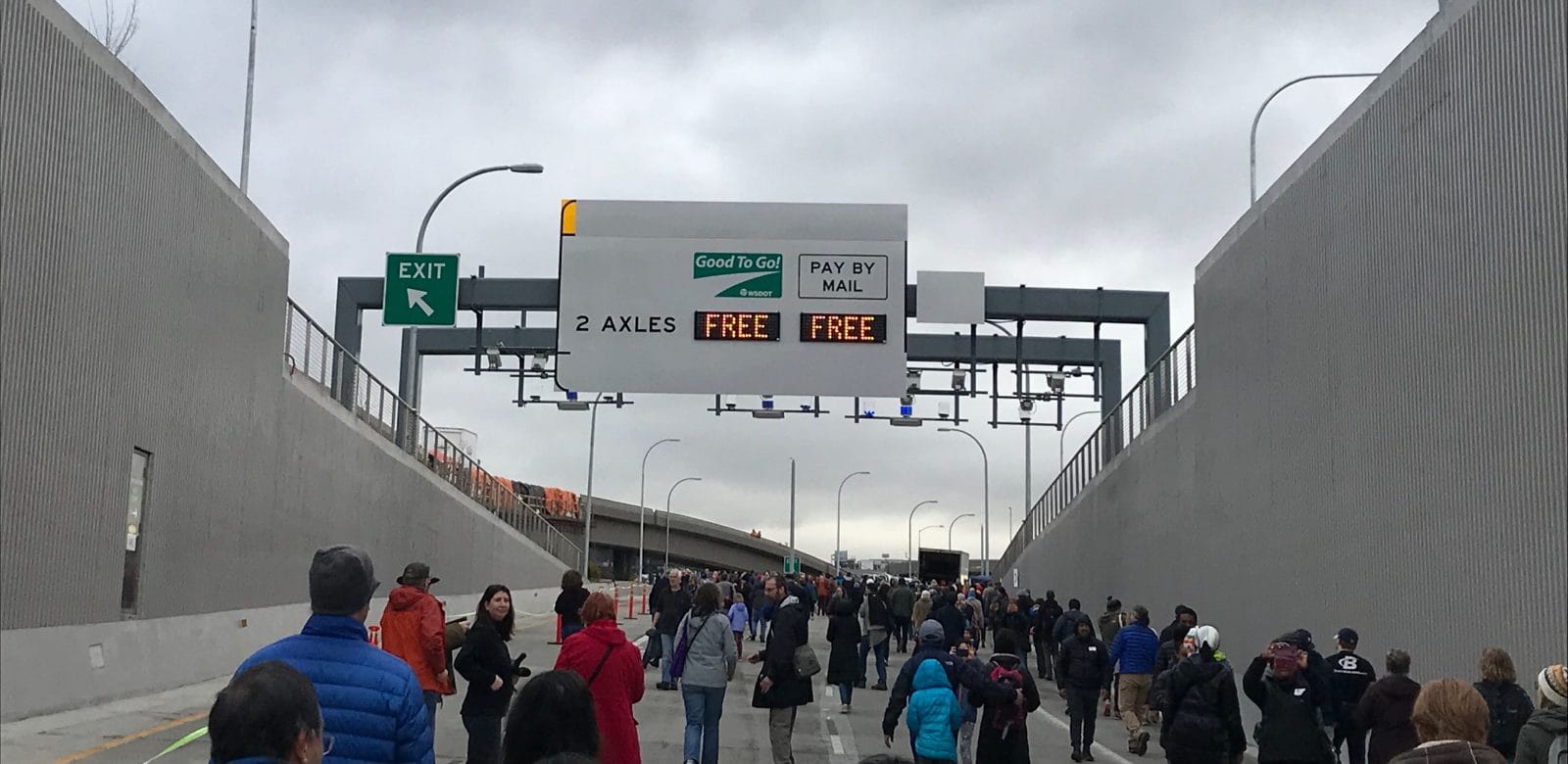
On Tuesday, the Move All Seattle Sustainably (MASS) coalition released a post-mortem report on the three-week viaduct closure and proclaimed the success of non-car commutes.
“The closure of the Alaskan Way Viaduct was hyped as a potential traffic disaster that Seattle would have to endure for three weeks,” MASS stated in its press release. “Instead we saw more people on transit and bikes, and a blessedly quiet downtown. The twenty buses Metro added turned out to be much nicer than the 90,000 cars that formerly streamed across our waterfront and up Aurora Ave.”
The three-week exercise doesn’t mean the fight to lower car dependency is over. In fact, traffic actually seemed to be worse this week with the tunnel open, foreshadowing plenty of work ahead.
“‘Viadoom’ is over but the Seattle Squeeze is not. We hope the experience of these three weeks will embolden Mayor Durkan and SDOT to move forward with dramatic improvements to transit, biking, walking and rolling infrastructure, as recommended by the MASS Coalition,” said Katie Wilson, General Secretary of the Transit Riders Union, a MASS coalition member. “‘Build it and they will come’–all the evidence points in this direction.”
SDOT Tries to Explain Lack of Viadoom
That same day, Heather Marx, who is the director of downtown mobility for the Seattle Department of Transportation (SDOT), briefed the transportation committee of the Seattle City Council on data from the closure and what the agency learned from it. She admitted she underestimated the potential of bikes to move people, referring to when she called getting more people to bike in January “a heavy lift.”
“I’ve never been so happy to be so wrong,” Marx said, pointing to bike counts that jumped big time, even doubling at the West Seattle Bridge.