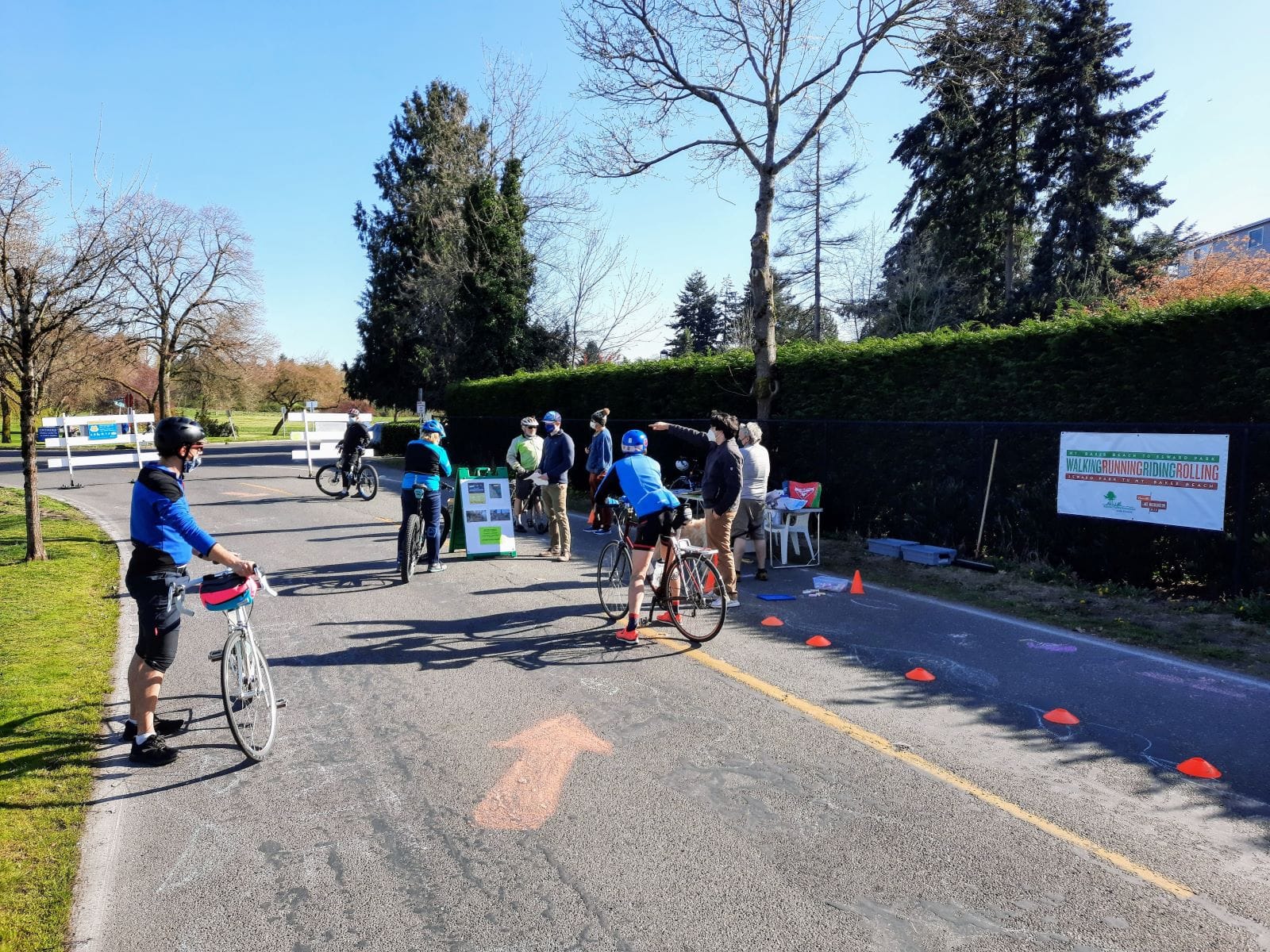
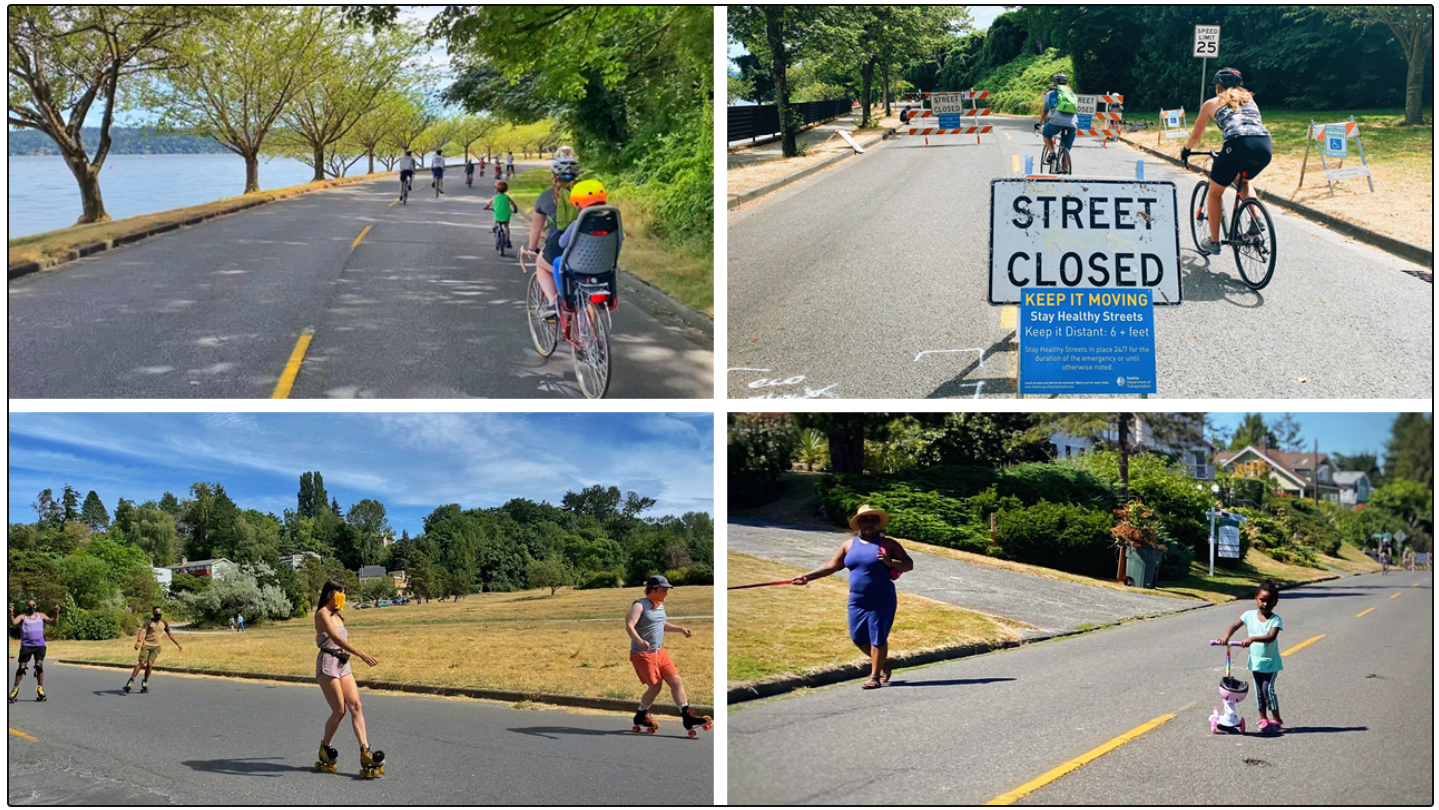
During the height of the pandemic last year, Seattle Parks and Recreation teamed up with the Seattle Department of Transportation (SDOT) to create what it called “Keep Moving Streets.” With signs and temporary barriers, the agencies restricted car traffic on the streets to create more space near popular parks for people walking, rolling, biking, and recreating in a physically-distant fashion. The popular program was mostly short-lived. Many Keep Moving Streets reverted back to allowing vehicles at the end of summer, though plenty of people have wished for their return. Fortunately, last week, SDOT announced the status of Keep Moving Streets for 2021’s summer season and some are returning.
By the way, a separate but very similar SDOT program called Stay Healthy Streets is still mostly in place now, surviving the winter, sabotage, and battering attempts of motorists. However, usage of Keep Moving Streets in 2020 was higher on a per-mile basis than Stay Healthy Streets, which is another argument for their restoration.
Lake Washington Boulevard
Last Summer, SDOT opened a three-mile stretch of Lake Washington Boulevard between Seward Park and Mount Baker Beach to people walking and rolling, with drivers still able to access driveways along much of the route. This is the same route that has been used for Bicycle Sundays, a 52-year-old Seattle tradition that opened the street one day a week for a few hours. The result was a big increase in people able to use the street when they aren’t in a car, with very little traffic diversion seen on neighboring streets, according to SDOT’s traffic count data.
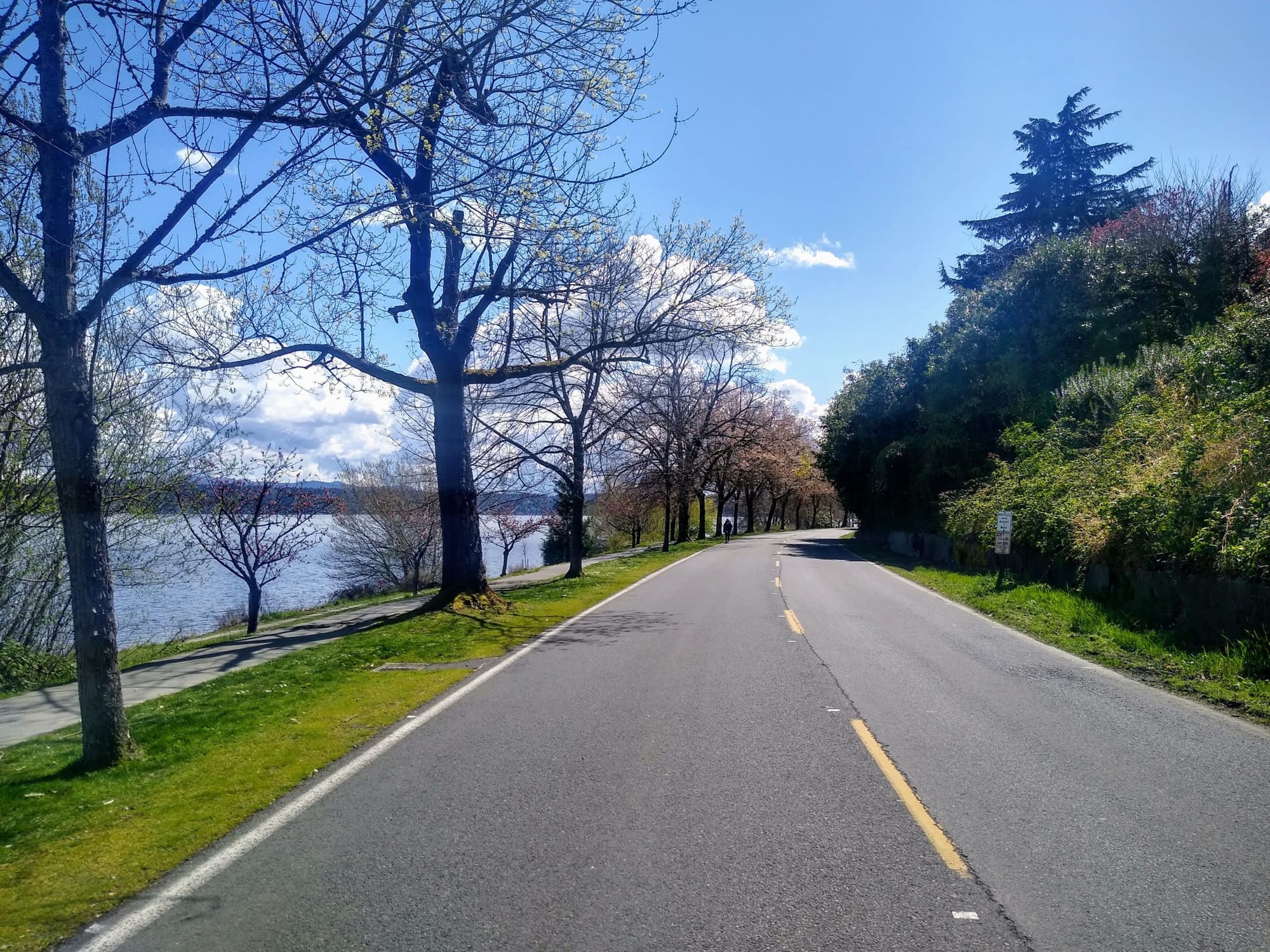
Since the summer pilot, SDOT moved to implement a shorter open street on Lake Washington Boulevard over holiday weekends and school breaks. This one-mile closure between Mount Baker Beach and Genesee Park has been tantalizing; venturing down to Seward Park anyway means sharing the road with drivers who may be annoyed at the one-mile closure or navigating the narrow path along the road.
For this summer, both options are on the table, with a new survey asking for input on what the public would like to see. On the table: the three-mile option at all times, the one-mile option at all times extended to three-miles on weekends, the three-mile option on weekends only, and the one-mile option. The survey asks you to rank your choices: the order I have listed them here seems like the best way to rank them in terms of providing an open street to the most people. The three-mile option at all times is clearly the best and safest option.
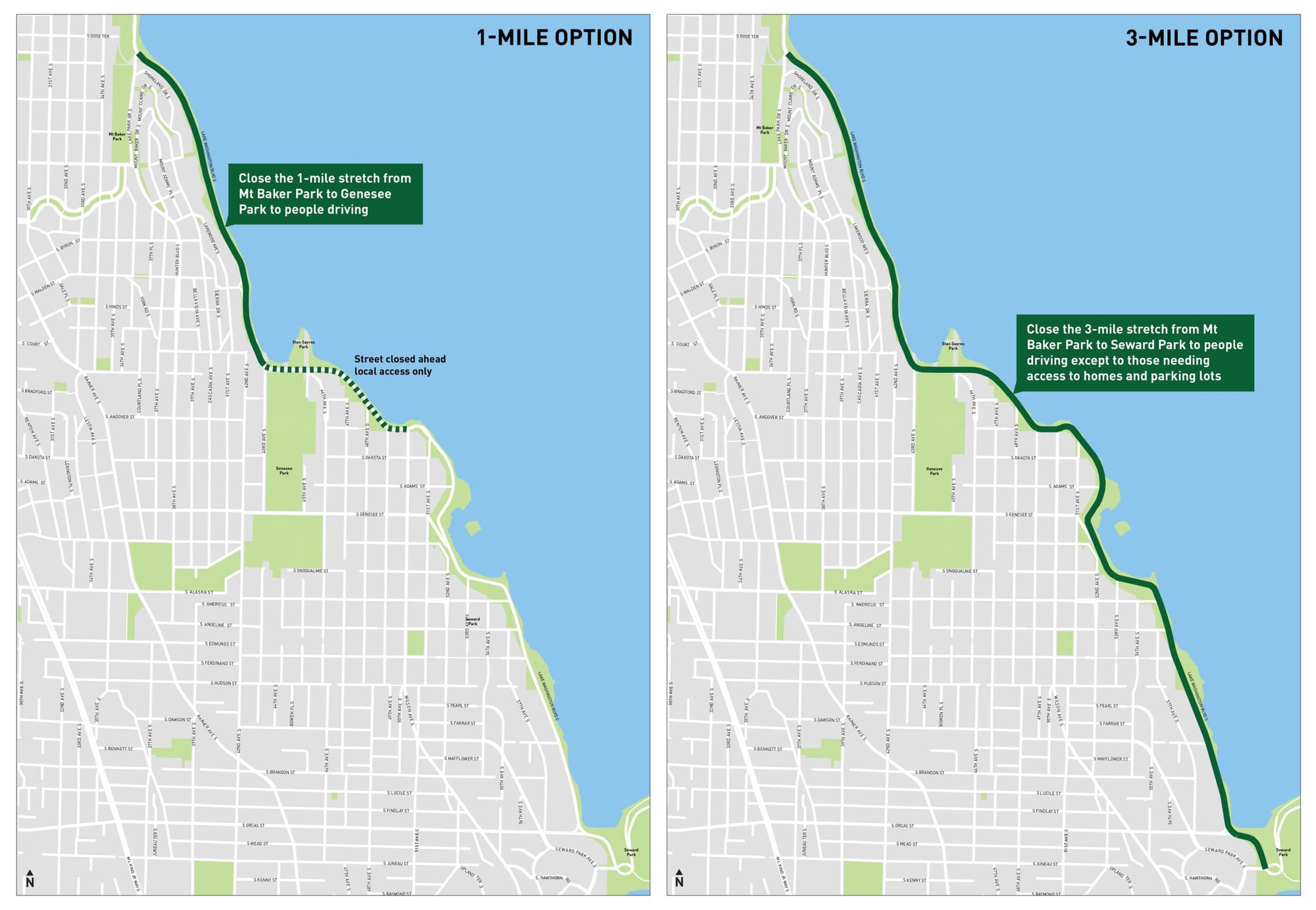
The long-term future of this stretch of Lake Washington Boulevard remains unclear. Permanent diverters where the one-mile stretch has been implemented would definitely cut down on the amount of through-traffic on the corridor as a whole and is hopefully explored further — there are almost no driveways that would be impacted on that stretch.
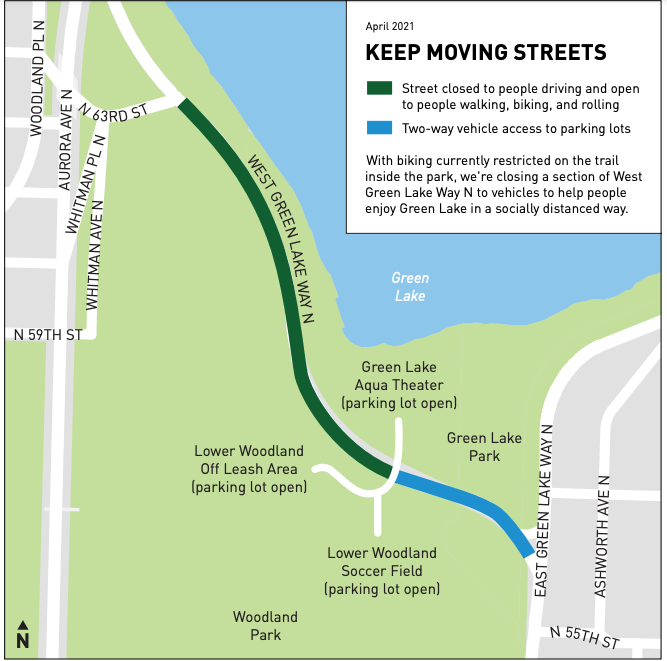
West Green Lake Way
Until recently, SDOT had opened nearly the entire southwest quadrant of the street circling Green Lake. But late this winter one of the travel lanes allowed vehicles again, to provide access to the parking lots along the street, to the off-leash dog park in particular. After reports of some people driving cars in the wrong lane, this configuration will be reverted back on most of the street, but the segment between the parking lots and East Green Lake Way will be available for people driving to use. This change is expected any day now.