It ain’t much, but that’s all the Board’s going on too.
This week, the Sound Transit Board of Directors will be deciding on preferred Ballard Link alignments and station locations. Some are still up-in-air, with the most critical ones in the Midtown-to-I-90 segment. Impacts to the Chinatown International District (CID) have emerged as primary concerns.
In response, the agency whipped up two alternative station locations in the eleventh hour that have only preliminary, unvetted studies, but could suddenly find themselves in the Environmental Impact Statement (EIS) that is the next step before seeking federal approvals and local building permits.
Selecting those late-emerging options would mean delaying the EIS in order to conduct further study on the new alternatives to bring them on par with the other options Sound Transit has been studying for years and that had been included in the 8,000-page Draft EIS released last January.
Let’s take a closer look at each of the options still in contention. Jump to:
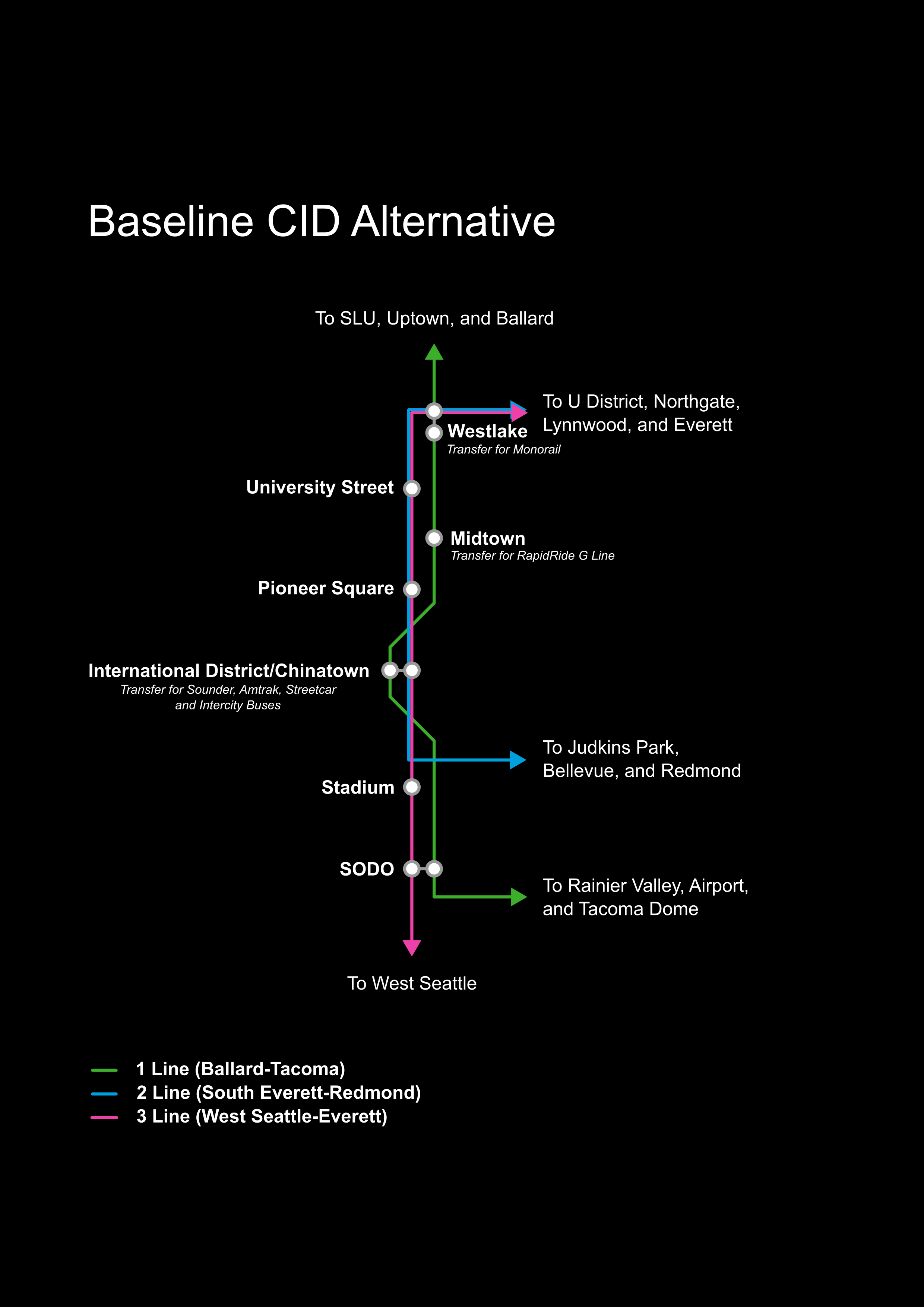
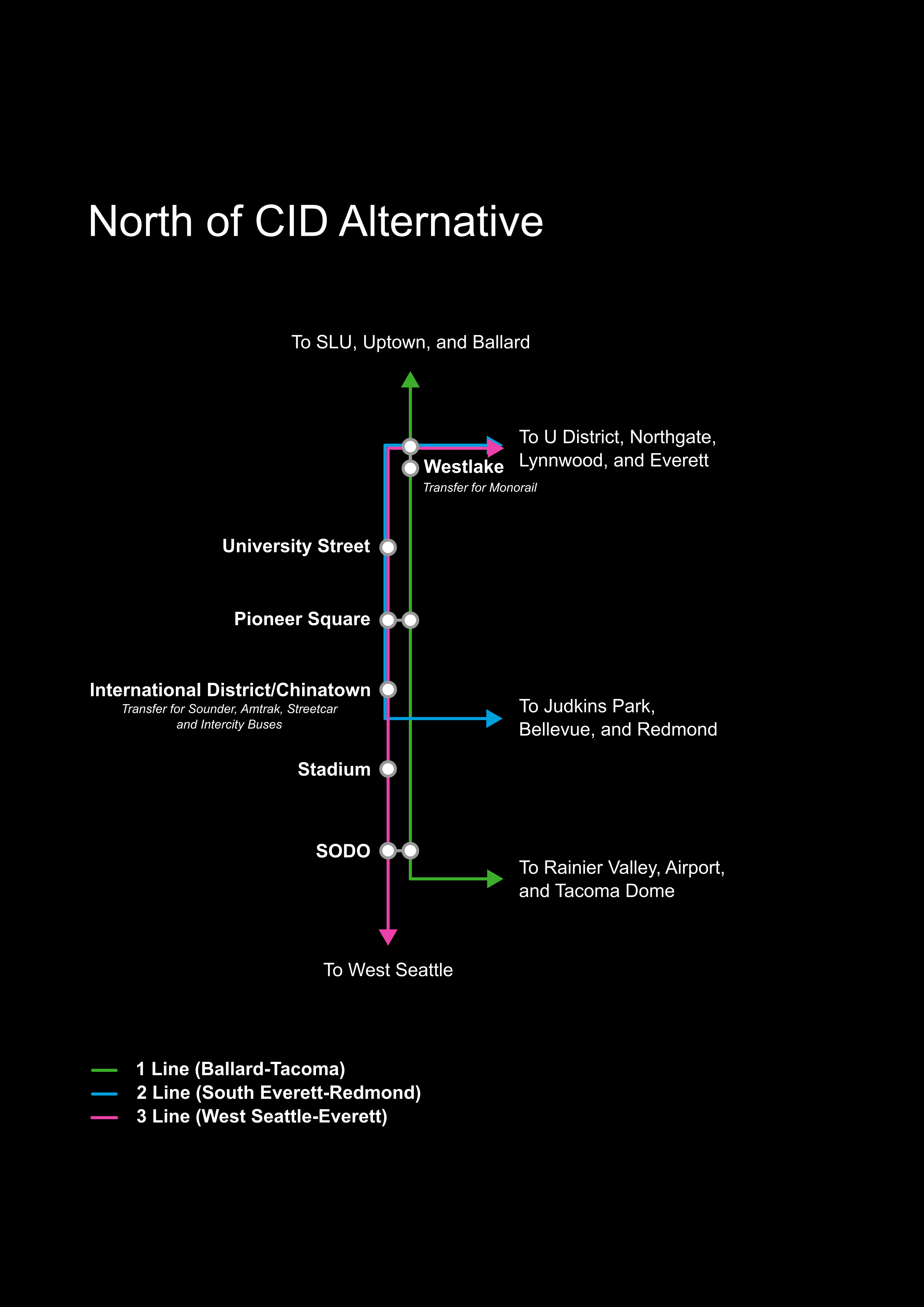
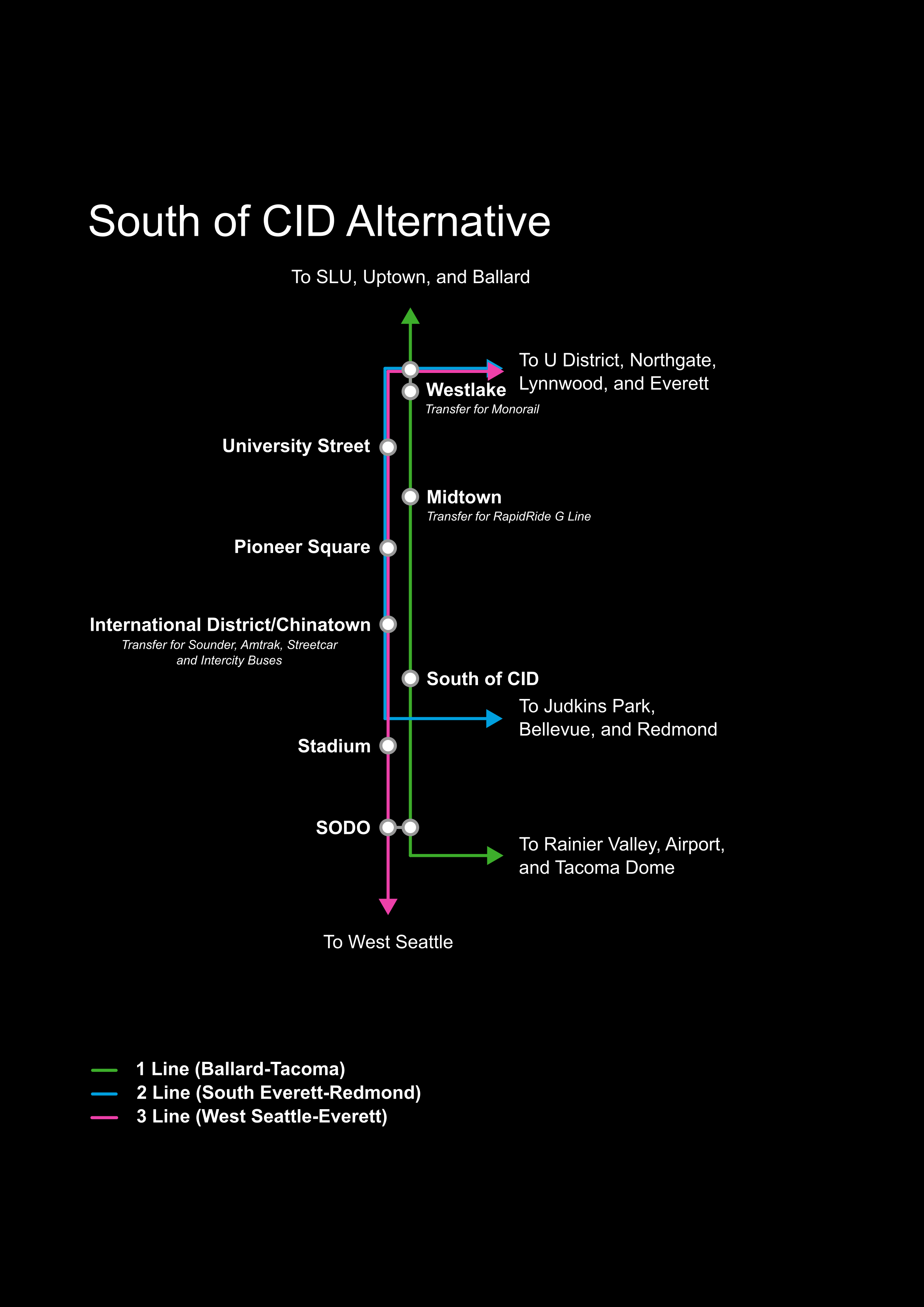
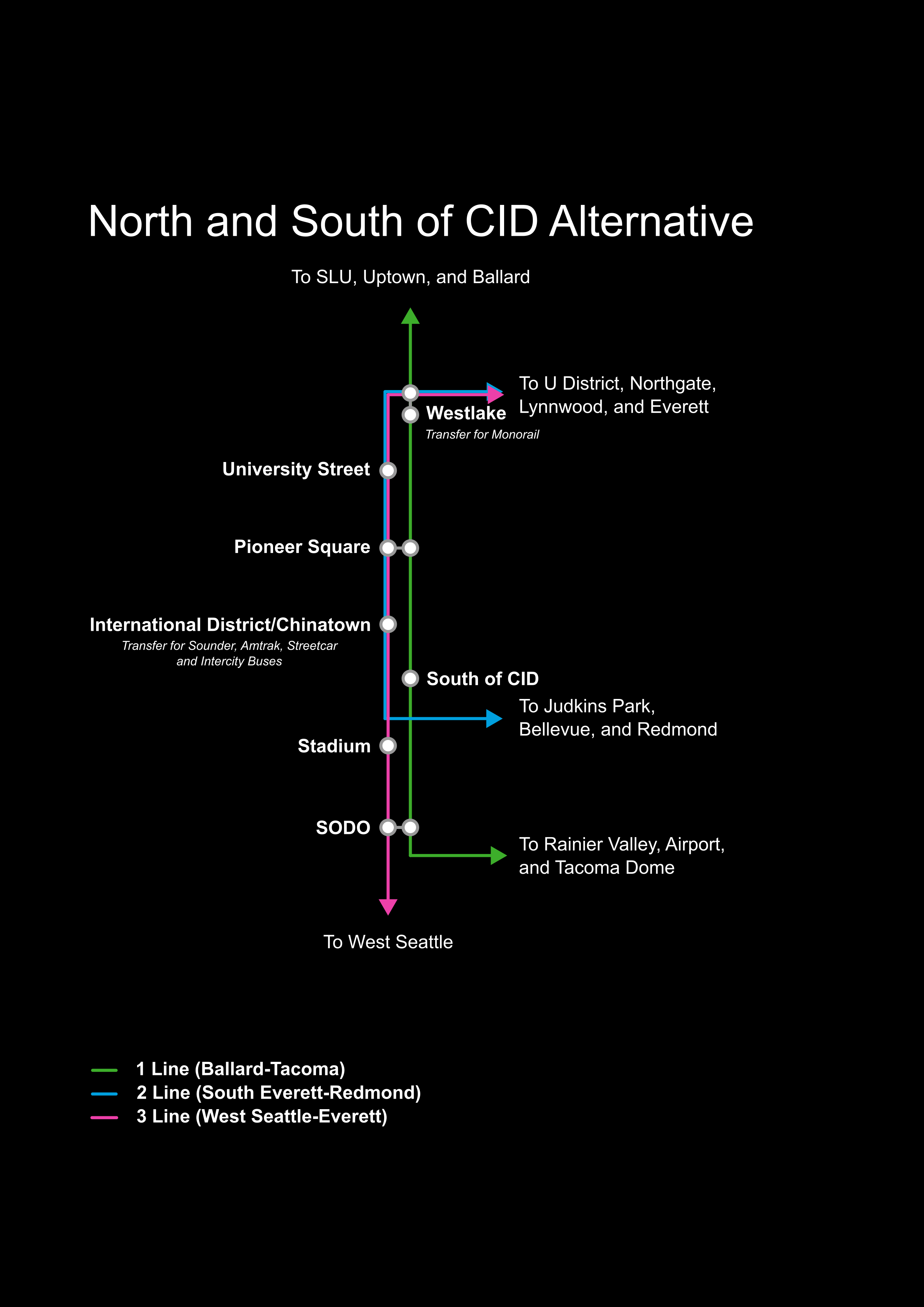
The 4th Avenue options place the station at Union Station, on the opposite side of the building from the existing Chinatown-International District Station. It pairs with a new downtown tunnel and a Midtown Station at approximately 4th Avenue and Madison Street across from the Central Library. In the alternatives, the South of CID station will be on the large site south of Seattle Boulevard and 6th Avenue, and the North of CID station will be at James Street and 4th Avenue, the site of the County Administration Building. In the proposed “North and South of CID” option, those two stations are paired together with a tunnel under the CID. In all cases, the North of CID station precludes the 4th Avenue and Midtown stations.
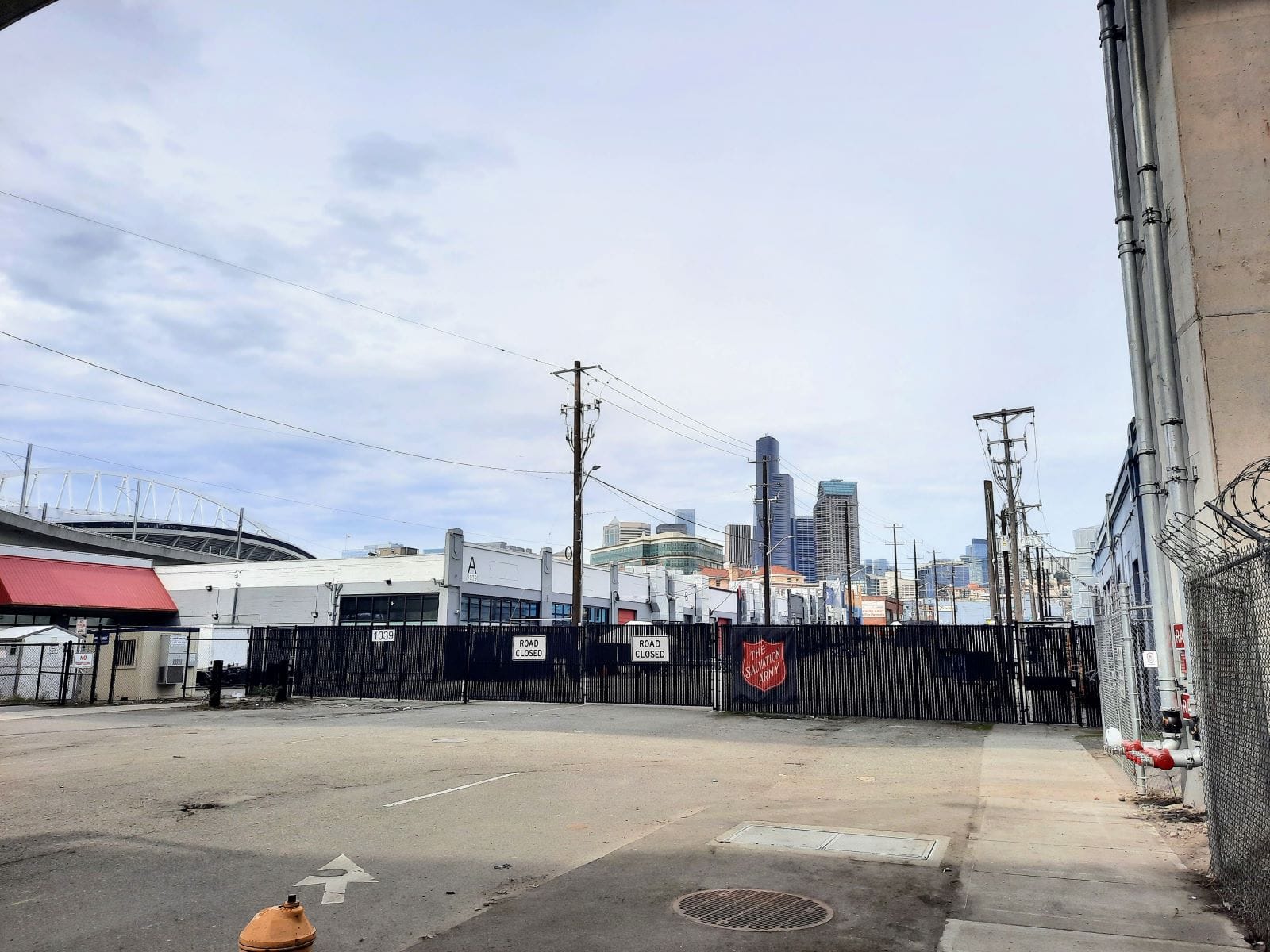
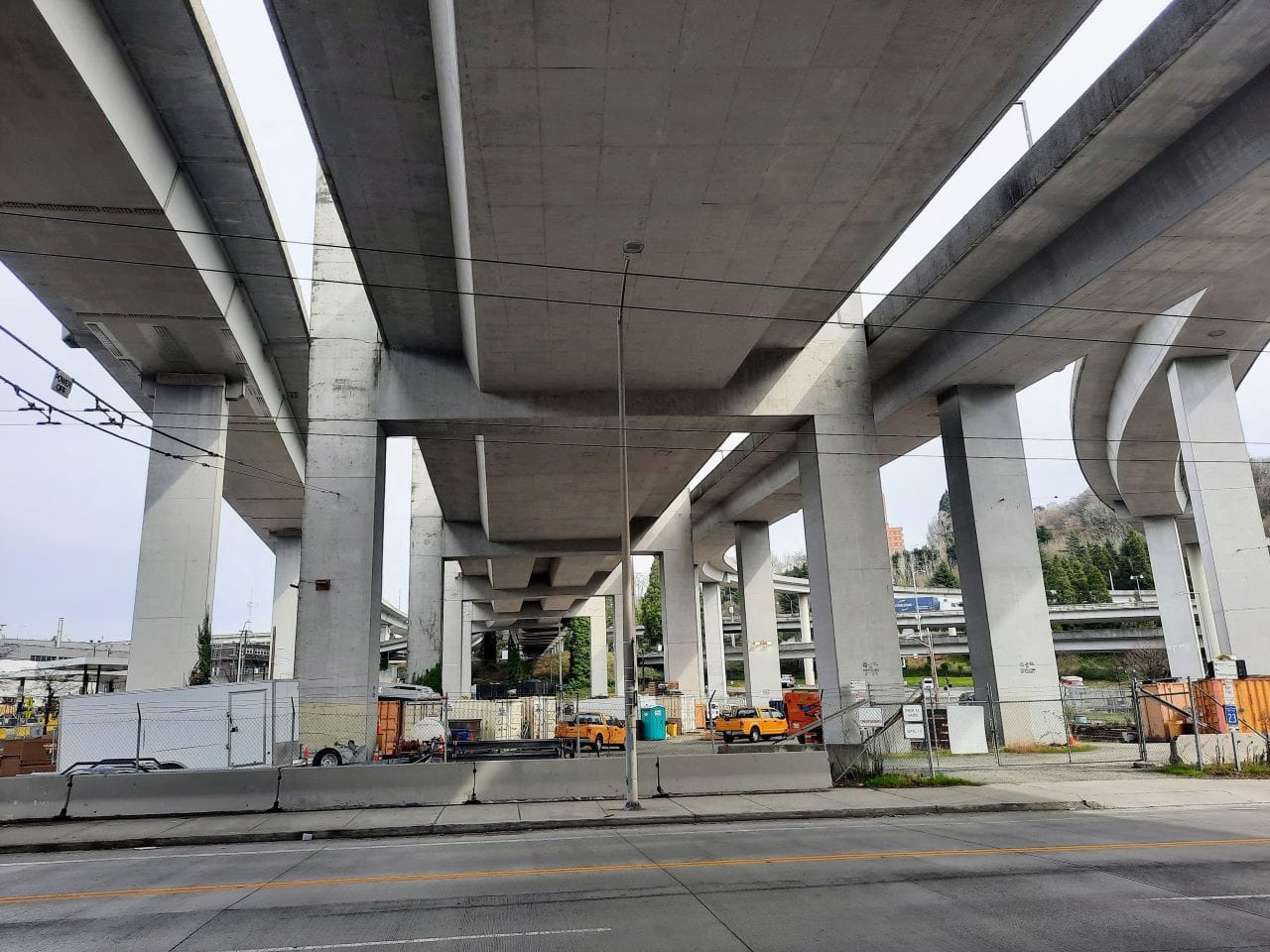
South of CID dumps riders at a web of highways.
There’s been little conversation about the South of CID station location that Sound Transit has pitched, but it’s important to understand its context. The agency is contemplating building it about 95 feet to 115 feet underground immediately under 6th Avenue S a few blocks to the south of Uwajimaya Asian Market.
The north end of the platforms would be approximately at S Plummer Street and stretch south toward the I-90 ramps. The baseline station concept also envisions only two headhouses at either end of the platforms.
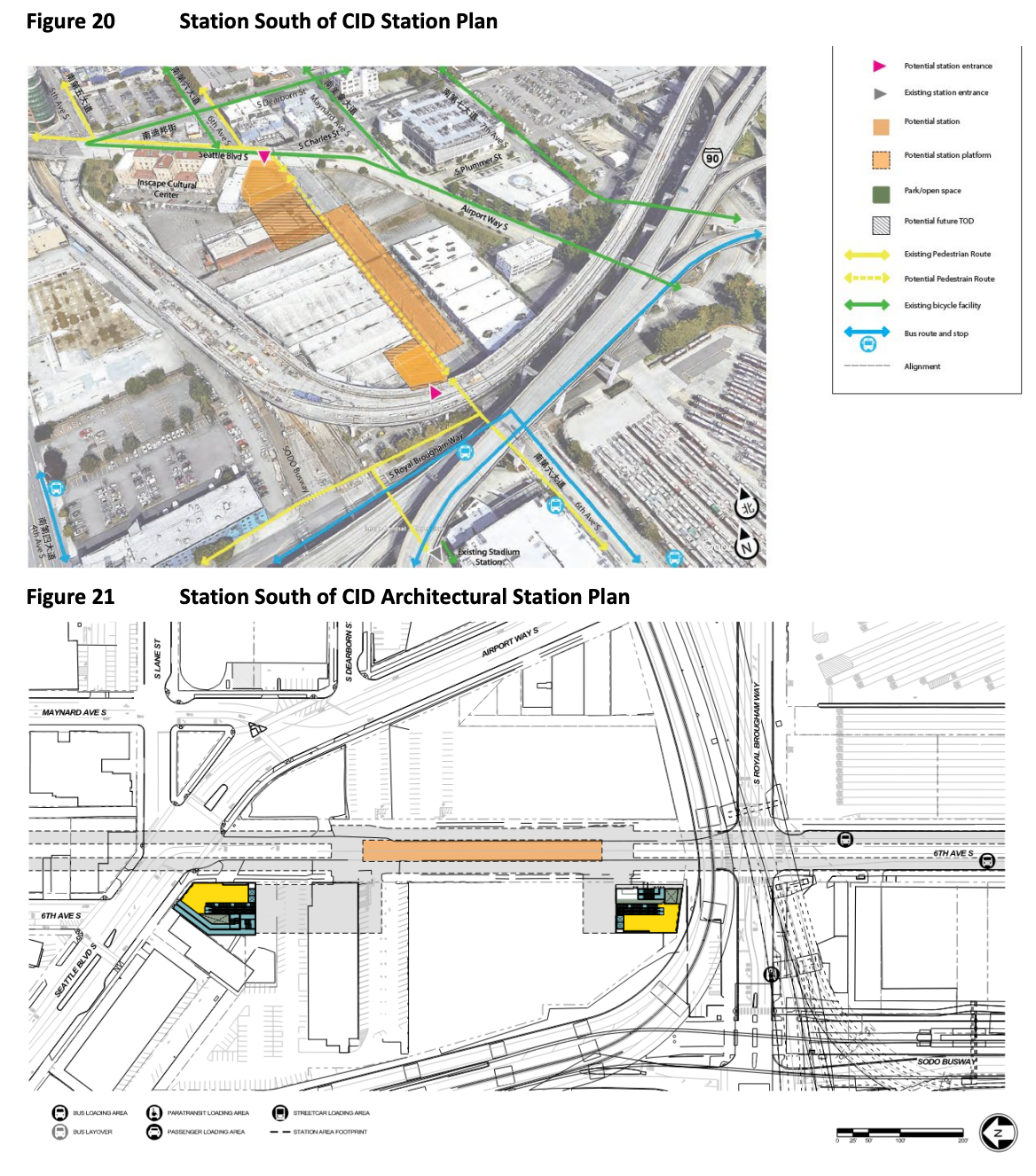
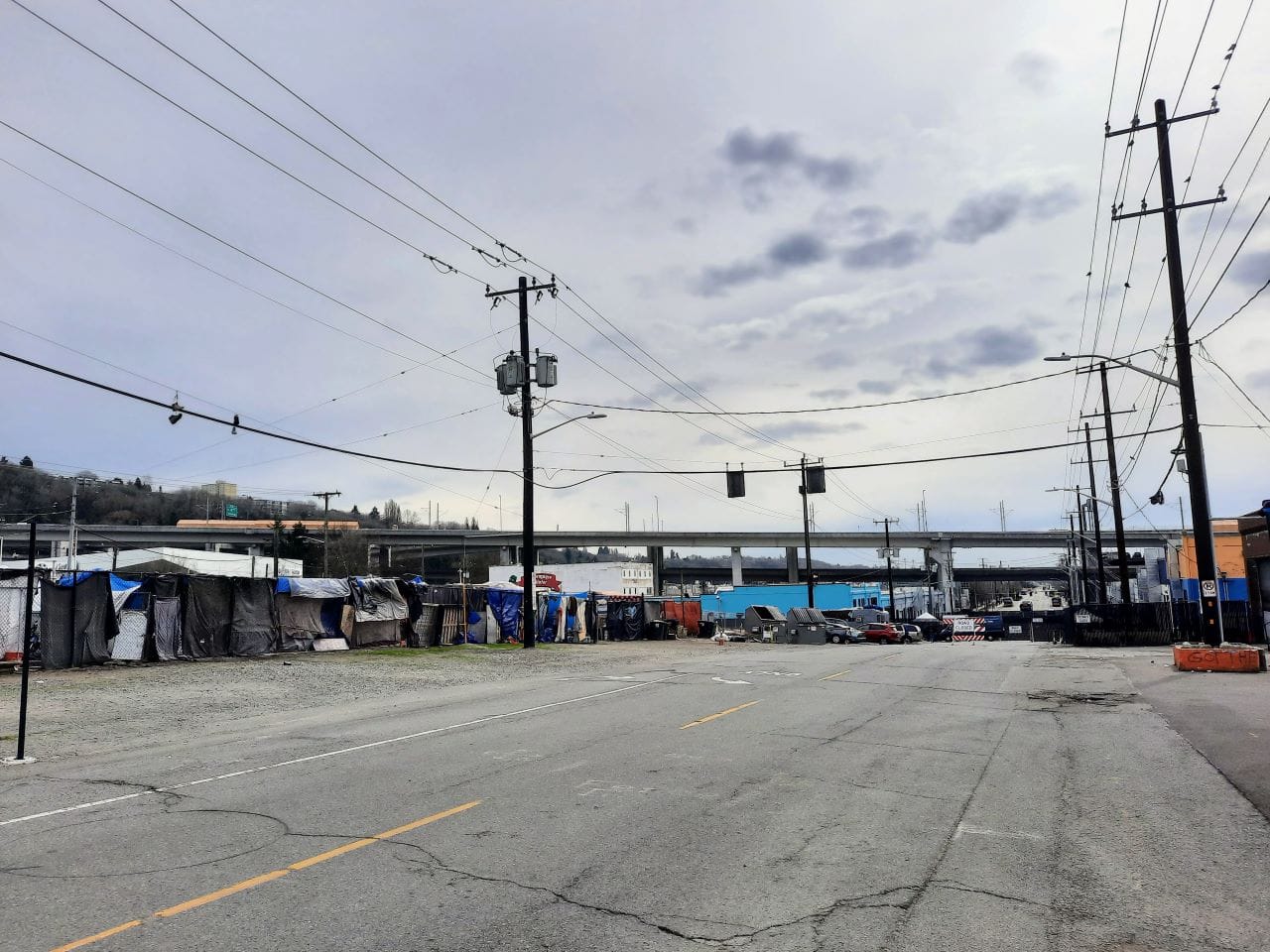
The fate of the area is uncertain. Right now, about a dozen buildings and a portion of 6th Avenue S serve as an emergency shelter site for about 400 people experiencing homelessness. Other than the Inscape Arts and Cultural Center to the northwest and a handful of buildings north of S Charles Street, the immediate area is full of surface parking and abandoned buildings. It is bounded by a web of I-90 and East Link flyover bridges and a BMW car dealership. Things might change though and that could affect how a station would be constructed and if equitable transit-oriented development could even be realized.
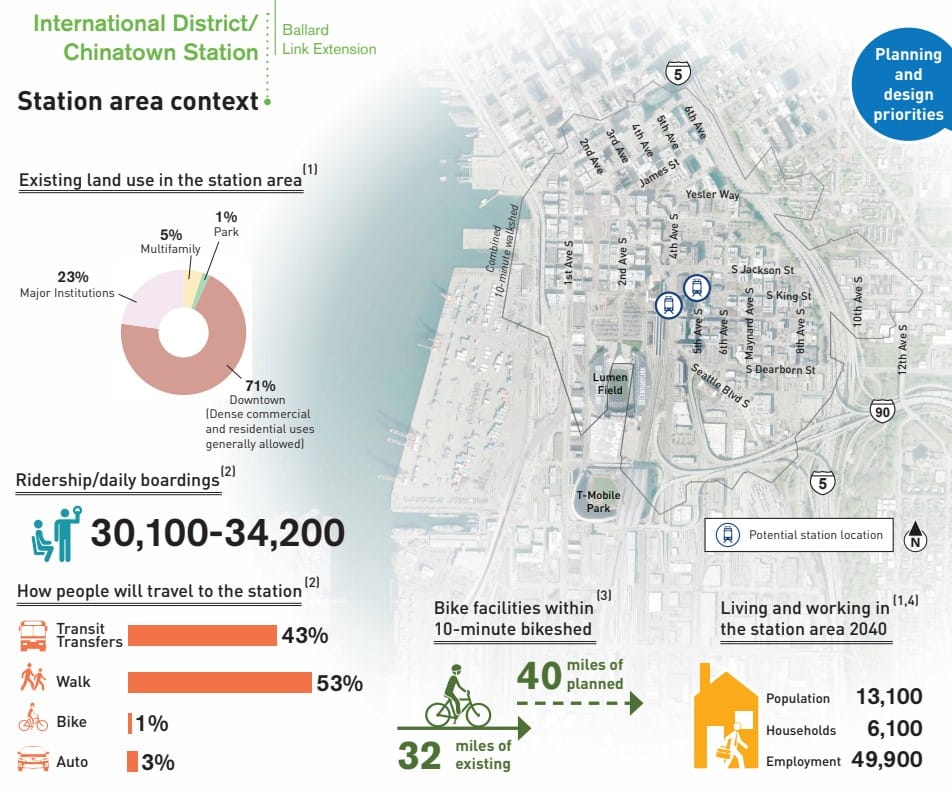
Urban Visions, one of the largest development firms in Seattle, has hefty landholdings in the area with several speculative plans in the works. Founder and CEO Greg Smith traces its lineage to one of the earliest mayors of Seattle: Leonard P. Smith and his family has had its fingerprints all over downtown Seattle real estate for generations. The younger Smith pumped $20,000 into Seattle’s 2019 municipal election hoping to bolster the corporate-friendly centrist side, with $10,000 going to Tim Burgess’s “People for Seattle” political action committee, Open Secrets records show. Burgess is now a senior official in Mayor Bruce Harrell’s cabinet.
Urban Visions recently filed preliminary plans for a 340-unit residential development at the southwest corner of Seattle Boulevard S and 6th Avenue S and has development entitlements for a major mixed-use project on the remaining lots west of 6th Avenue S and east of 6th Avenue S.
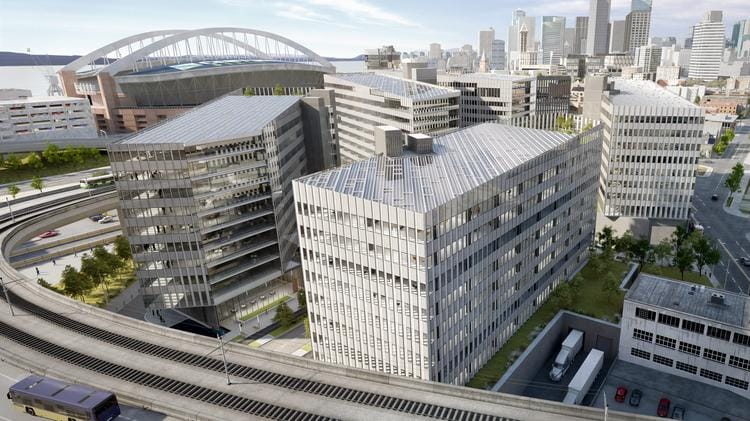
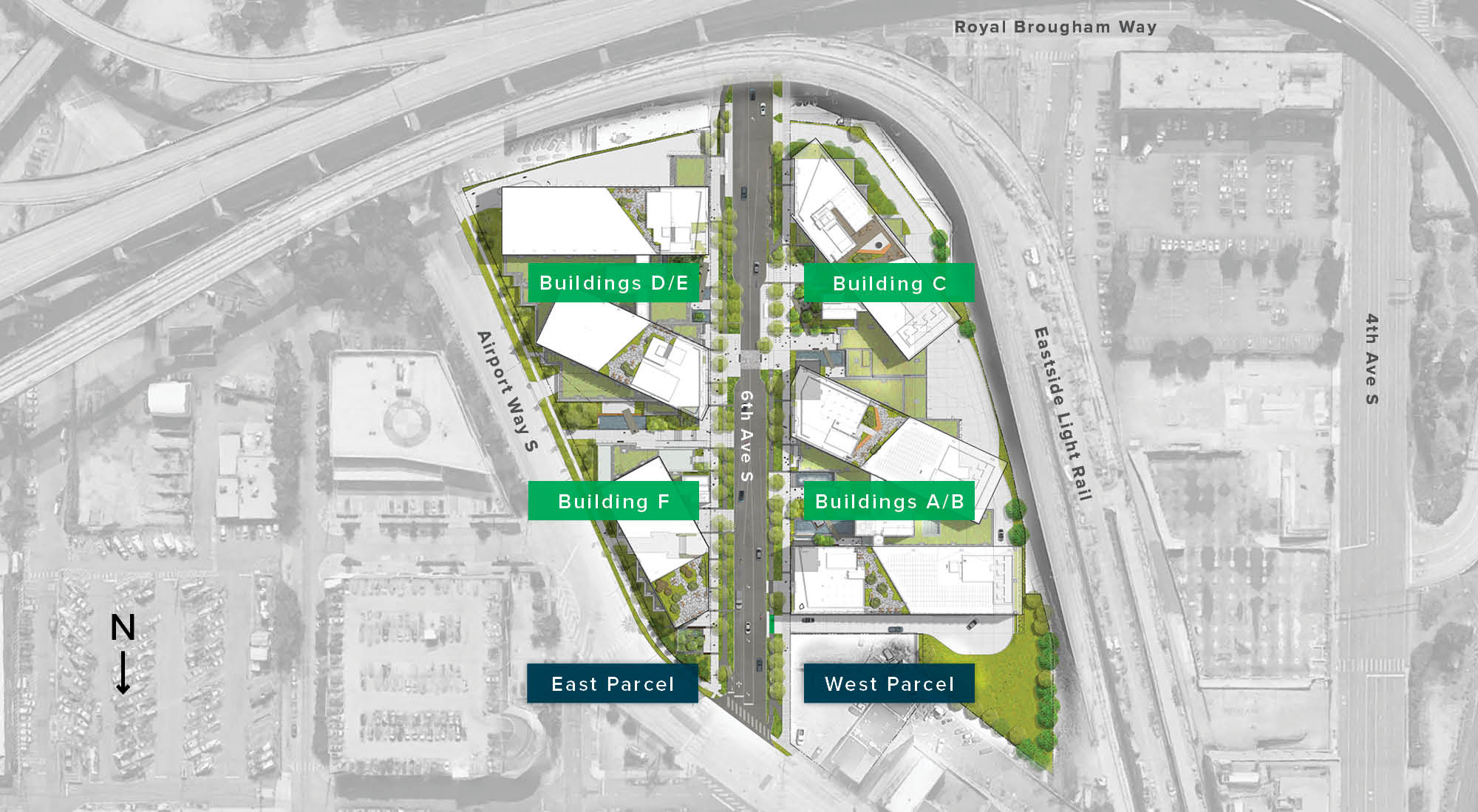
Collectively dubbed “S-Campus,” the development would add 1.25 million square feet of Class A office or laboratory space spread out in six shiny buildings on a nearly seven-acre campus. Valued at over $600 million, none of the planned developments would comport with conceptual headhouses that Sound Transit has sketched out for preferred station entrances. Urban Visions has been working on proposals for that site since 2014 and appeared close to breaking ground in 2020. And then the pandemic happened, office demand tanked, construction costs spiked, and the project was paused.
Urban Visions has not publicly acknowledged the S-Campus project is dead, but they have been maneuvering to buy themselves some time by extending leases to tenants on the property. First, the company negotiated a deal with King County to extend the lease of the 270-bed Salvation Army homeless shelter on the site and clear the way for an expansion. Through the deal, Urban Visions pocketed a tidy sum of $54.3 million for a five-year lease in addition to help paying taxes and upkeep. One-time American Rescue Plan Act dollars were set to pay for the project.
However, the proposal kicked up neighborhood pushback, with some arguing they hadn’t been consulted and that too many homelessness services were being concentrated in the CID as opposed to wealthier, White neighborhoods. This uproar caused King County Executive Dow Constantine to pull out of the deal and say he intended to rededicate the time sensitive funds to other projects. However, a Constantine spokesperson confirmed the County still holds the lease on the S-Campus property.
In his State of the County speech, Constantine announced his support for a light rail alignment that puts a station on King County Administration Building in the north and the S-Campus site in the south. With the station plan likely requiring that Sound Transit or the County purchase the site rather than just leasing it, Urban Visions again is poised to profit handsomely. With a five-year lease costing $54.3 million, the price to permanently purchase the site is likely to be very expensive, especially given the aforementioned project valuations over $600 million.
Questions about this arrangement remain as the developer, City, and County have so far declined to divulge details, even with the Thursday vote approaching and the success of the option hinging on the deal adding up.