Whether it sparks anticipation or dread, Election Day 2024 is upon us, and the outcome will have a huge impact on the lives of residents in Seattle and Washington state more broadly. It starts at the top of the ticket with a presidential race set to be settled in swing states, rather than a left-leaning Washington state that Donald Trump has all but conceded. But four Republican-sponsored statewide initiatives also have huge implications for the lives of everyday Washingtonians and could erase much of the progress of the last decade on climate action and economic justice, as The Urbanist Elections Committee wrote in our endorsements.
Prop 1 aims to “Keep Seattle Moving”
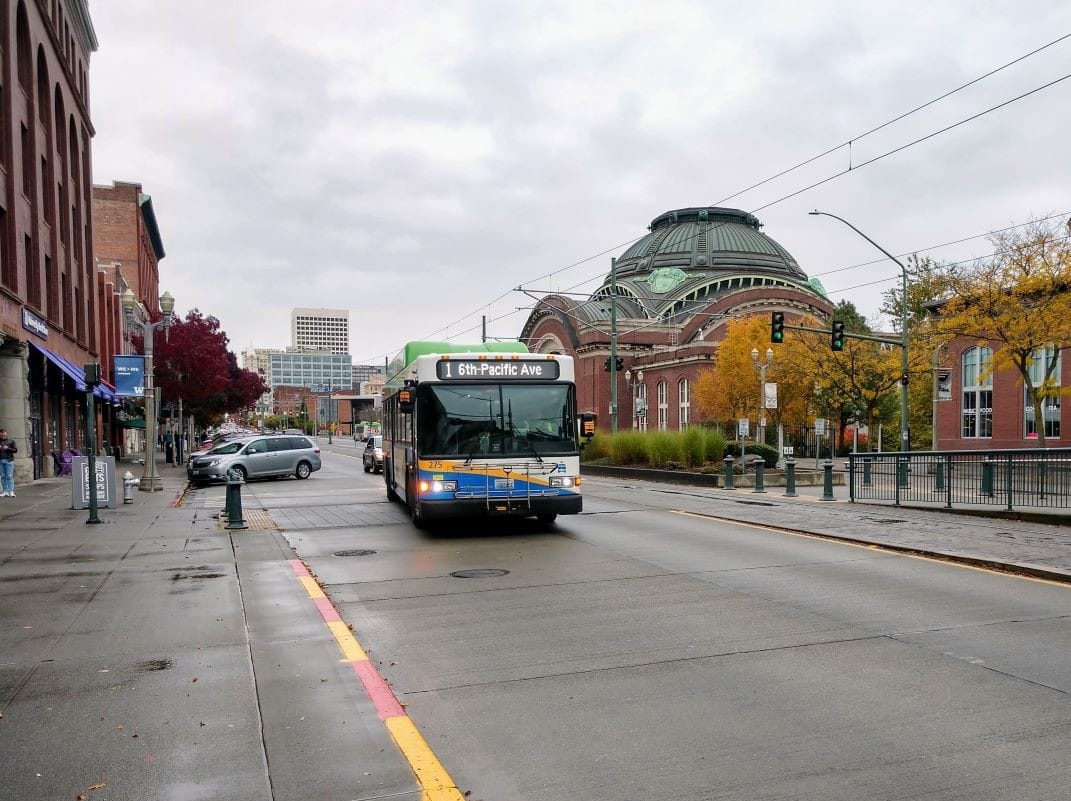
Seattle Proposition 1, meanwhile, holds the potential to expand Seattle’s sidewalk network, ramp up street and bridge maintenance, and improve bike and bus networks. Failure to pass Prop 1 would force big cuts at the Seattle Department of Transportation, which about one-third of its budget is derived from the existing Seattle transportation levy that it would be renewing. The Urbanist endorsed a yes vote, as did most other transportation-focused organizations.
Seattle’s last transportation levy, the 2015 Levy to Move Seattle, won by a comfortable 58-41 margin. How close the margin is this year will be something to watch. A loss for the levy would send a city council still trying to figure out how to govern back to the drawing board.
Opposition to the transportation levy has been spearheaded by former councilmember Alex Pedersen and the Seattle Times Editorial Board. The Seattle Times has opposed every transportation levy in history, though, which decreases their credibility on the matter, as does their convoluted arguments in their “no” endorsement.
Rinck could swing momentum back to progressives at Seattle City Council
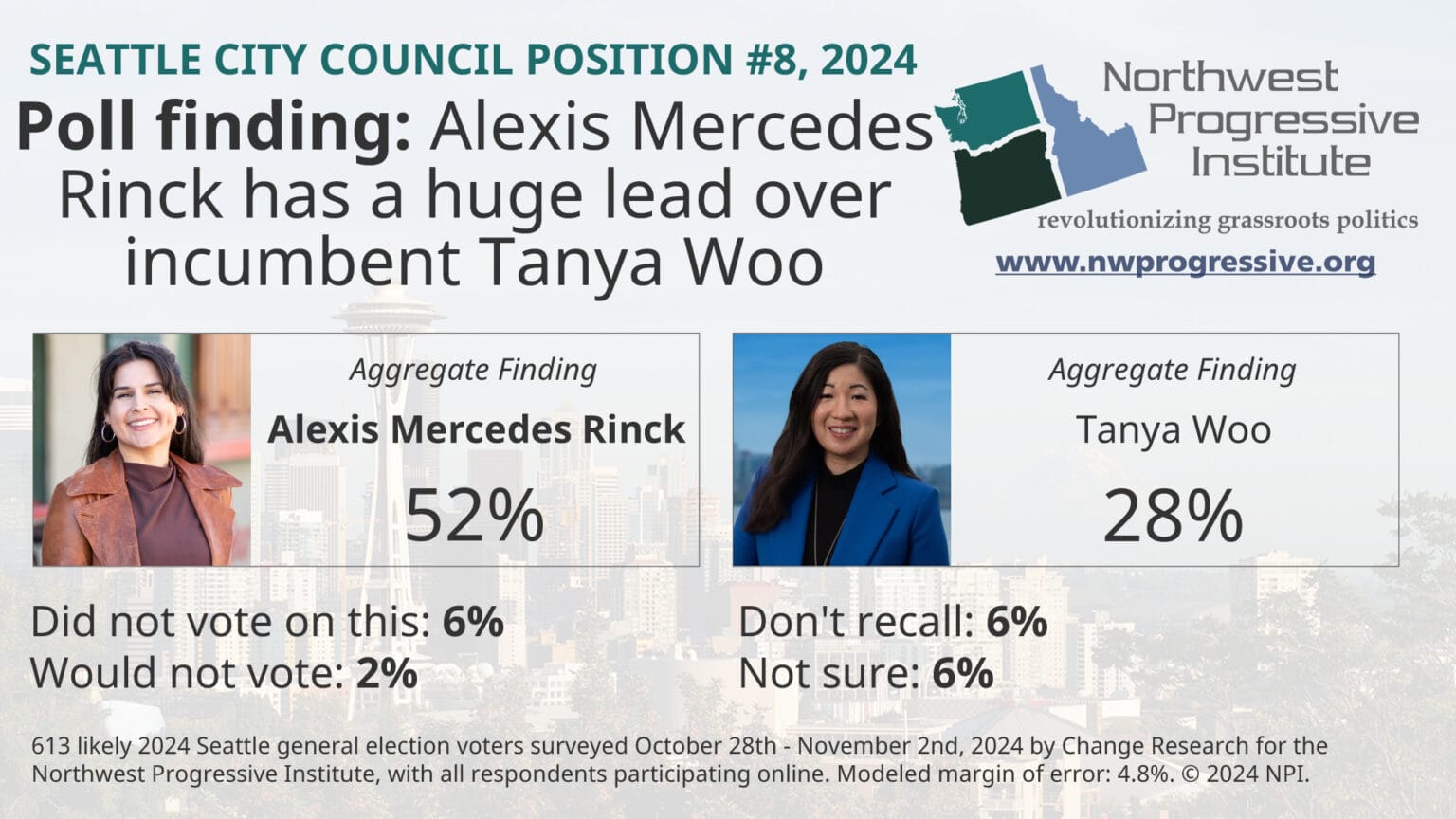
Electing progressive Alexis Mercedes Rinck would chip away at the centrist stranglehold on Seattle City Council. While all of her centrist colleagues have endorsed Tanya Woo, who they appointed as a fill-in councilmember in January at the bidding of conservative donors, voters have preferred Rinck, who has The Urbanist’s endorsement. Rinck handily won the primary, and a recent Change Research poll commissioned by the Northwest Progressive Institute showed Rinck with a massive 24-point lead over centrist appointee Woo.
Rinck has kept pace in the fundraising battle with the help of a new progressive political action committee (PAC) called Progressive People Power. That development, paired with a Rinck win, could give progressives added momentum headed into a mayoral election next year.
Ryan Mello’s bid to lead Pierce County
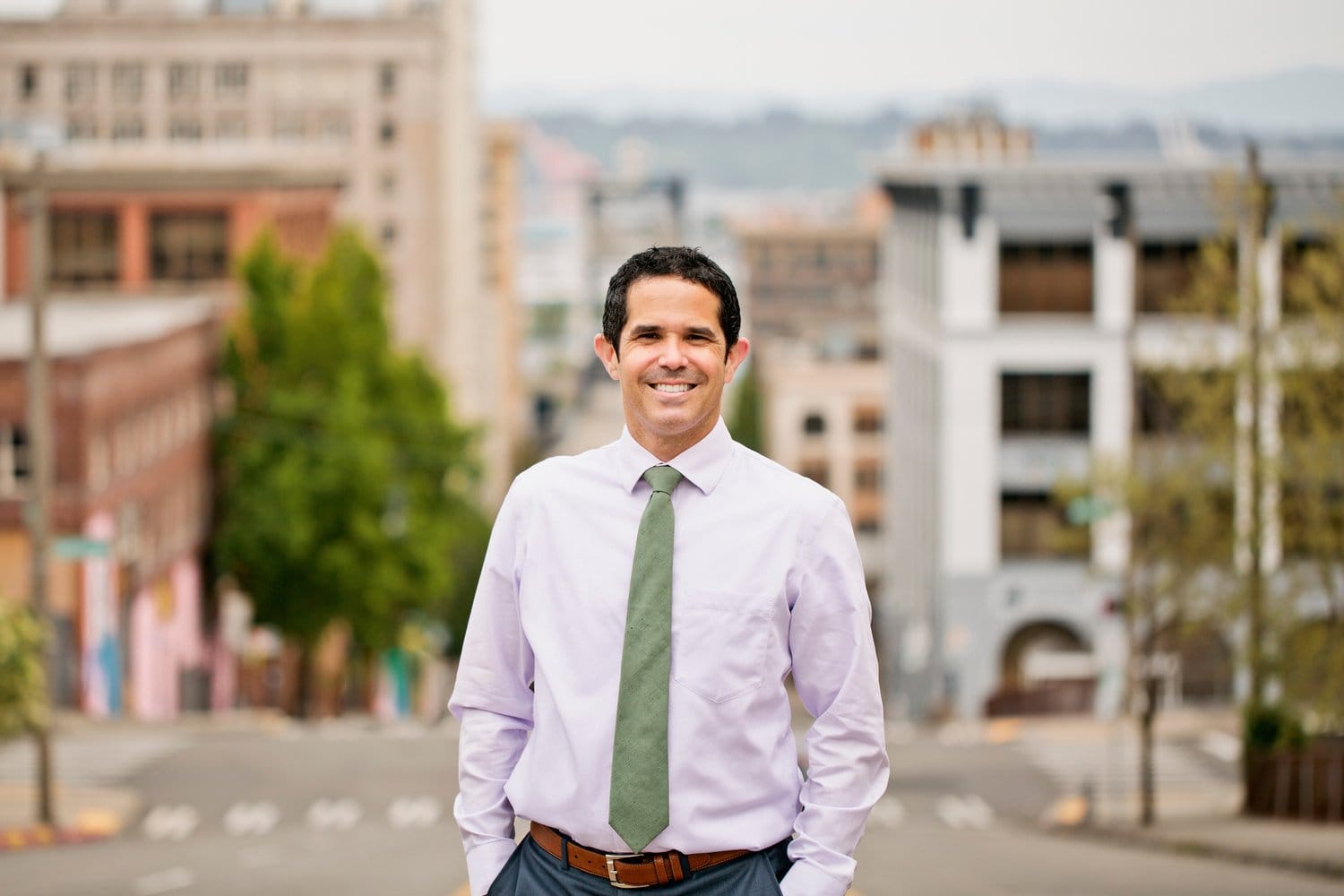
Progressive momentum is not limited to Seattle, though. Ryan Mello is mounting a strong campaign for Pierce County Executive, and he’d mark the first progressive urbanist to ever hold that seat, which is why he earned our endorsement. As a County councilmember, he has distinguished himself on transit, safe streets, homelessness, housing, and more. It’s an opportune time for that kind of leadership at the County, as crises worsen around street safety, housing, and homelessness.
The Pierce County Executive also has a big say at the Sound Transit Board of Directors since county executives automatically get a seat. They also make the appointments for the rest of their county delegation, which is four total seats in Pierce County’s case. While termed-out Republican Bruce Dammeier has taken some bad votes, Mello could help get Sound Transit back on track as it grapples with huge routing decisions and operational issues. Mello’s time at the Puget Sound Regional Council has shown a willingness to put in the work on transportation policy.
A Democratic supermajority in the state legislature?
Today’s election will also welcome new faces to the Washington State Legislature, and the shakeup does hold the possibility of giving Democrats a supermajority in both chambers. A 60% supermajority would open the door to passing bonding measures without needing Republican votes, which rarely come easily. It would take a two-thirds supermajority to pass constitutional amendments without Republican votes, which is are far more unlikely bar.
Currently, Democrats control 58 of 98 seats in the State House and 29 of 49 seats in the State Senate, which puts them just shy of the 60% threshold in each chamber. One pickup in the house and one in the senate would put them over the supermajority threshold, and they have a reasonable case to do it.
A senate pickup for Democrats appear likely in Legislative District 10. Republican incumbent Ron Muzzall was below 50% in the primary and is facing Democrat Janet St Clair. The two Democratic candidates had more votes than Muzzall in the primary. Muzzall won by less than two points in 2020, so expect another close race, but the district continues to drift to the left. The unpopularity of Trump in Washington state could make it hard to be a Republican down ticket this cycle.
In the house, the path to Democratic pickups is likely through Legislative District 26 or 14 — Democrats already flipped the 10th in the lower chamber. State Senator Emily Randall proved that a Democrat could win in the 26th, but Democrats have been unable to repeat her success in the house, as of yet. Expect razor-close races here, but the Democrats have a good shot.
Legislative District 14 is a true wildcard this election after the borders were redrawn to comply with the federal Voting Rights Act, which a lawsuit was able to show the previous map violated by diluting the electoral power of Latino voters. The new majority-Latino district in the Yakima Valley typically has very low voter turnout and the region has elected Republicans traditionally, but the new map and high turnout in a presidential year could put it in play, as Washington Community Alliance pointed out.
Progressive legislation will also benefit from the departure of conservative Democrat Kevin Van De Wege from his Legislative District 24 senate seat. A frequent name in my annual Heroes and Zeroes post for thwarting progressive bills, Van De Wege resigned his seat to run for public lands commissioner, but lost the primary. Rep. Mike Chapman is running for the promotion to the senate, and had the decided advantage in the primary over Republican Marcia Kelbon. It will be interesting to see if Chapman continues in Van De Wege’s vein or stakes out a more mainstream and collaborative course.