Over this series of articles, I have laid out an argument that Seattle should mix industrial uses in our residential and commercial neighborhoods. A long history of exclusion keeps interesting and useful things out of our communities, an absolute loss for building a vibrant and vital city. Now is the time to change this because the lines have disappeared between the places we work, create, build, and live. Right now, every neighborhood is mixed use.
- Read part one of the series here introducing the concept of neighborhood industrial use.
- Read part two showing how zoning has been a terror since it was permitted in the United States.
- Read part three showing that the way we apply zoning through a broken and malignant use table is a joke.
- Read part four showing what a cool neighborhood industrial use can look like, but recognizing the heavy legislative lifting to make it happen.
Which begs the question, why does a terrible zoning ordinance or the potential of a cool new building necessitate change? We have spent a century putting industrial uses in very specific places. Seattle seems to be chugging along pretty well without having haberdasheries and cobblers on every street corner. Why change that now?
Because our city’s not actually chugging along very well. Our zoning perpetuates many of the problems we’re experiencing, from expensive housing to declining industrial jobs. All this is exacerbated by coronavirus. The most basic foundation of zoning–the hard separation of uses–actually breaks the city and makes every discussion of development into a death match.
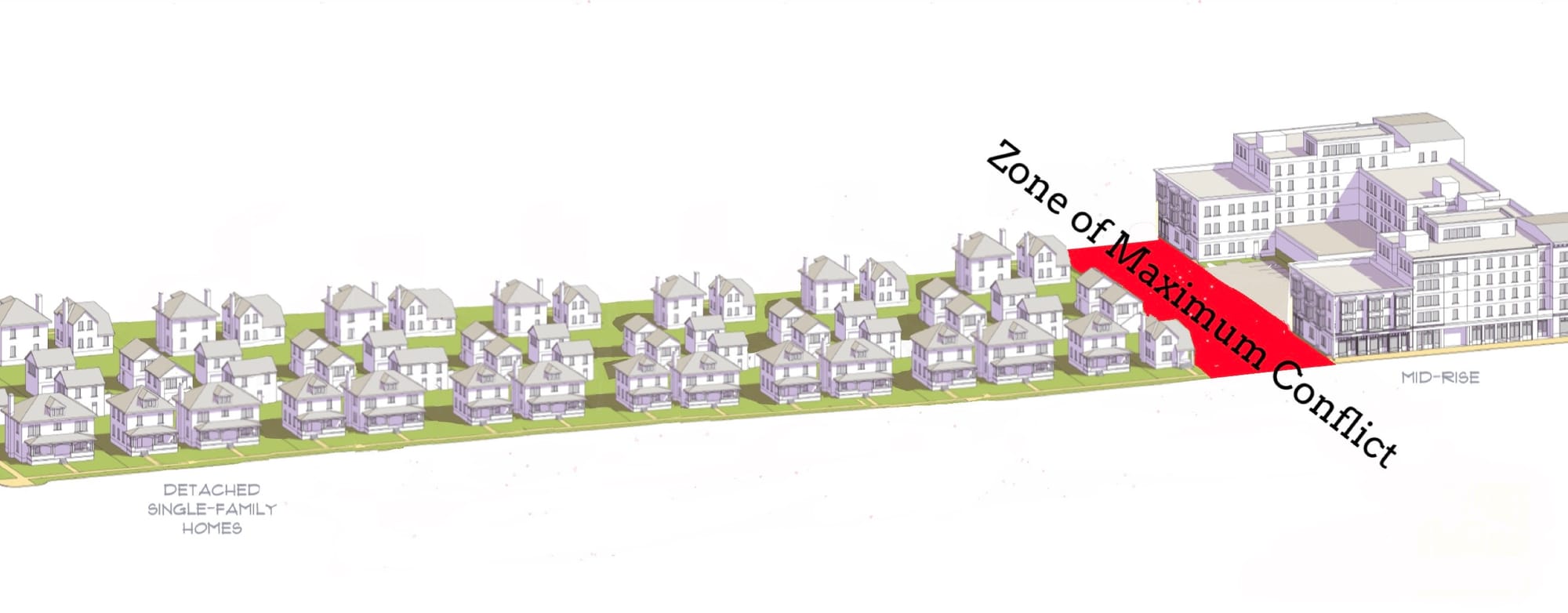
The Zone of Maximum Conflict
We have an idealized image that urban development should taper up to more intense uses, with stages of growing height and heavier use going from a hinterland to a dense urban core. We imagine urban development being a spectrum. This is supported by everything from the original development scheme in SimCity through our current infatuation with the Missing Middle typology.
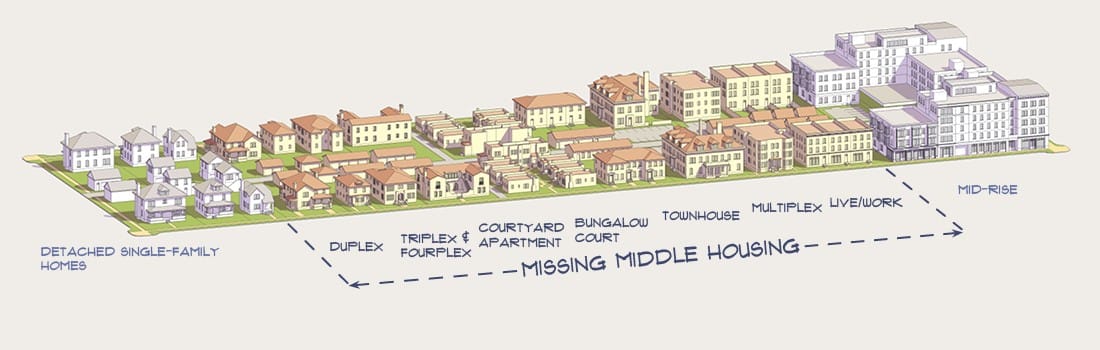
While we imagine this spectrum of density, the way we write our zoning ordinance prevents gradual intensification. We create groups of disfavored uses, defined broadly and outright banned. We impose hierarchies that conflict with one another. We carve out exceptions that are so narrow as to only impact a single building. We whittle down zones to specific lot lines, then lock those restrictions into perpetuity. We defer design decisions to the neighbor with the most restrictive zone.
The result is that the vast majority of land in the city defaults to the most exclusionary use: single family detached housing. This presses the disfavored, intense, or expansive uses into small clusters and forces competition for land between uses that shouldn’t be competing. Officials can talk all they want about saving good paying industrial jobs, but it’s mainly lip service if zoning forces big-box wine shops and mini-storage on industrial land.
More acutely, our zoning puts low density homes right against the uses zoning was designed to separate. By removing the ability to gradually intensify, we’ve caused more conflict. All of the pressure that could be dissipated with gradual increases condenses into a zone of maximum conflict.
Such segregation of uses pushes necessary, vital businesses far from most of the residents that use them. However, this does not stop the uses from appearing in neighborhoods. It sucks to drive across town to do stuff we like, so we bring stuff we like into our homes. Industrial uses are all over residential areas. From catering kitchens to massage parlors to climbing walls. From distribution centers to gyms, workshops to metal forges. Everything is allowable, if it’s wrapped in a single-family detached house.